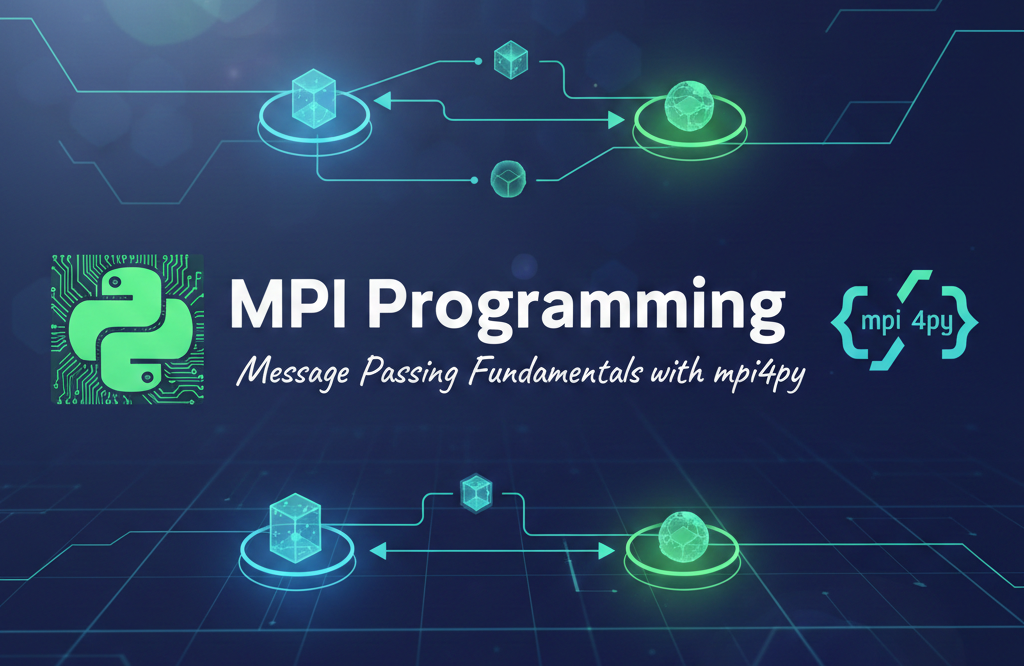
Short course: Building a Neural Network, Code Preparing for Multi-GPU HPC and Running Large-Scale Training

University of Montenegro, a member of NCC Montenegro team, is organizing a short training dedicated to students, young researchers and professionals from industry, willing to learn about using HPC in their work, through a practical example. After learning how to create a simple neural network, training participants will be trained to prepare local environment for the development and then to copy and run the code on HPC, thus enabling model training on multi-GPU HPC.

  • Date: 12.12.2025 at 12:00h
  • Venue: Faculty of Science and Mathematics, University of Montenegro, Room 210
  • Title: Training on Building a Neural Network, Code Preparing for Multi-GPU HPC and Running Large-Scale Training
  • Designed for: students, researchers, and professionals with basic Python knowledge
Short course on Neural networks using Multi-GPU HPC and Running Large-Scale Training

Training content overview

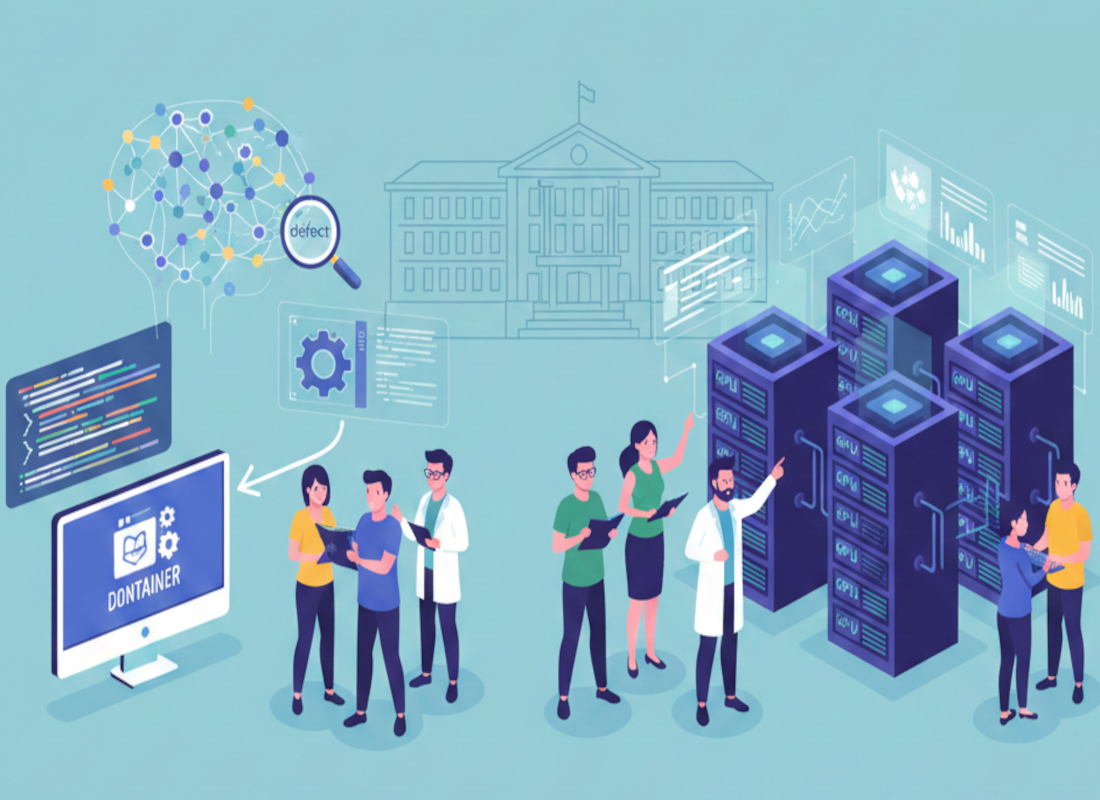
  • Creating simple neural network for defect detection in manufacturing (1h)
  • Explaining docker containerization tool, and preparing local environment for development (2h)
  • Copying local environment to HPC (0.3h)
  • Running model training on multi-GPU HPC (1.2h)

Modern Conversational AI – From Classic NLU to LLMs

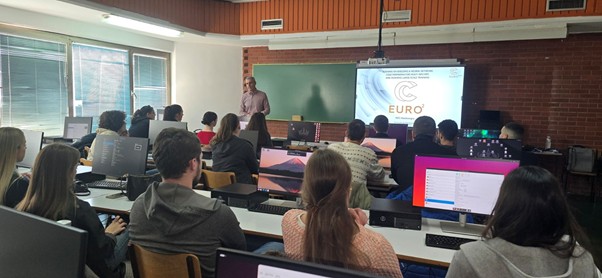
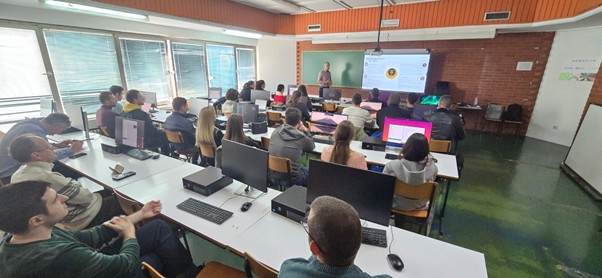
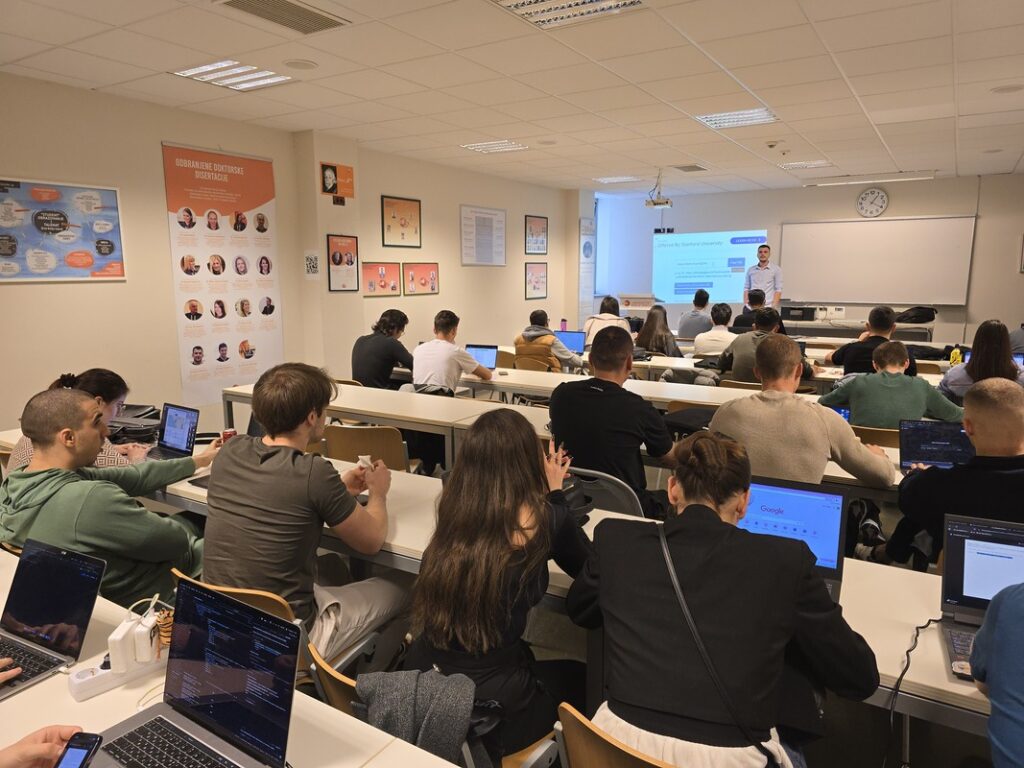
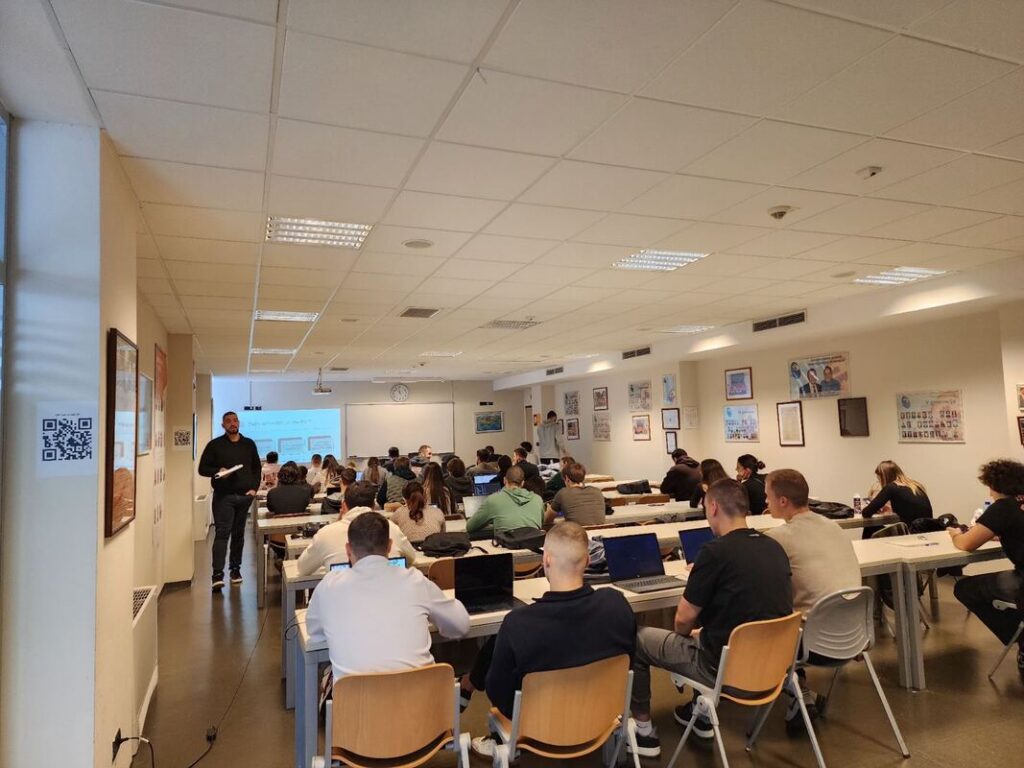
On 21.11.2025, NCC Montenegro successfully delivered a short course as part of the EUROCC 2 and EUROCC4SEE initiatives. The program brought together an excellent cohort of students, researchers, and industry professionals who demonstrated remarkable curiosity, teamwork, and practical problem-solving skills throughout the training.

The course was delivere by mr Dejan Babic and mr Ivan Jovovic

The course explored the evolution of conversational AI, beginning with traditional natural language understanding (NLU) approaches based on intents and entities, and progressing toward modern Large Language Model (LLM) architectures and Retrieval-Augmented Generation (RAG) systems. Participants were introduced to prompt design, tool and function calling, and essential aspects of safety, privacy, and guardrails in AI systems. The curriculum also covered embeddings, vector indexes, hybrid search techniques combining BM25 with dense vectors, and re-ranking strategies for improving retrieval quality.

A significant component of the course was a hands-on laboratory session where participants built a small RAG-based chatbot using domain-specific documents. The HPC perspective was also highlighted, including batch embedding generation, large-scale indexing considerations, and methods for stress testing AI pipelines. The course concluded with live demonstrations using Azure AI Foundry, showcasing Prompt Flow, Evaluate, and AI Search capabilities.

There was around 20 participants in the event

Participants quickly absorbed the theoretical concepts, engaged with thoughtful and challenging questions, and worked independently during practical sessions. By the end of the course, they delivered functional prototype systems featuring grounded answers and clear evaluation reports—demonstrating both strong technical understanding and applied competence.

Short course: Modern Conversational AI — From Classic NLU to LLMs

This short course covers the foundations of conversational systems—classic NLU (intents, entities, slot filling, dialogue design) and modern LLM workflows (prompt engineering, function calling, RAG). Participants build a practical chatbot grounded in their own documents, evaluate quality and safety, and deploy a lightweight interface. An HPC module is included for large-scale embeddings and offline evaluation/load testing.

  • Date: 21.11.2025 at 11:45
  • Venue: PS, UDG
  • Registration required: https://forms.gle/SRW6GYiRAbi8pFBe8
  • Designed for: students, researchers, and professionals with basic Python and web/API skills.
Short course on NLP and LLMs

Course content overview

Session 1 (90 min) – theoretical framework

  • From classic NLU (intents/entities/slots) to LLM “agents”
  • Dialogue design: state machines vs. tools/functions
  • RAG essentials: indexing, chunking, hybrid search, source citations
  • Evaluation & safety: relevance/groundedness, moderation, PII
  • HPC view: when batch embeddings and batch evaluation matter

Session 2 (90 min)- hands-on lab

  • Project setup and starter RAG pipeline
  • Document import/index, prompt + function calling
  • Quick evaluation and guardrails
  • Deploy a web chat

Learning outcomes

  • Contrast intent-based vs. LLM-based chatbots.
  • Design dialogue and implement a grounded RAG pipeline with citations.
  • Ship a lightweight production chatbot with evaluation and safety.
  • Apply HPC techniques to scale embeddings and offline performance testing.

EuroCC Researchers Participate in the Montenegrin Machine Learning Workshop

Researchers from EuroCC Montenegro participated in the Montenegrin Machine Learning Workshop, a one-day event aimed at popularizing topics related to Machine Learning (ML) and Artificial Intelligence (AI) among students, researchers, and practitioners. The workshop was organized in cooperation with the Montenegrin Artificial Intelligence Association (MAIA) as a satellite event to the EEML summer school. Participants attended lectures covering deep learning and its applications in earth observation, graph neural networks, power grids, biology and genomics.

During the poster session, visitors had the opportunity to learn more about the EuroCC project and its efforts to promote AI and HPC research in Montenegro.

Two AI Short Courses Successfully Completed by NCC Montenegro

Over the past two weeks we delivered two focused courses, conducted under the EUROCC 2 & EUROCC4SEE project, with an outstanding cohort of participants — students, researchers, and professionals who excelled in curiosity, teamwork, and results.

Dejan Babic giving presentation on CV &CNN supported by HPC

Computer Vision & CNNs with HPC – Short Course

  • From raw pixels to features and robust visual representations
  • Hands-on lab: building and training an image classifier
  • Running experiments on the NCC Montenegro HPC cluster
  • Participants mastered concepts quickly, asked sharp questions, and worked independently in the lab
Ivan Jovovic, giving a presentation on Edge/AI supported by HPC

EdgeAI – Artificial Intelligence & the Internet of Things supported by HPC

  • Designing efficient AIoT data pipelines
  • Deciding when to process at the edge vs. in the cloud
  • Deploying lightweight ML models on resource-constrained devices
  • Model optimization using HPC infrastructure
Demonstration by Elvis Taruh and Ivan Jovovic on running HPC created models on NVidia Jetson platform

Stay tuned for the next sessions and advanced workshops!

Artificial intelligence and the internet of things – EdgeAI

This focused short course explores how artificial intelligence (AI) can be embedded into Internet of Things (IoT) systems, with a special emphasis on edge AI – running ML models directly on devices, close to where data is generated. Participants will learn how to design AIoT pipelines, when to process data on the edge vs. in the cloud, and how to deploy lightweight ML models on resource-constrained hardware. The course is intended for students, researchers, and professionals who want to move from “connected devices” to intelligent devices.

Course date: 05.11.2025 at 13:30
Venue: S34, UDG
Registration: required
Registration link: https://forms.gle/2DktEUqf5KZosFth7

Designed for: students, researchers, and professionals interested in AI, IoT, edge computing and applied ML.

Course Content Overview

Session 1 — AI + IoT theoretical framework

  • AI–IoT convergence: from sensing to intelligent action
  • edge vs. cloud vs. fog: latency, bandwidth, privacy, cost
  • edge AI pipeline: device → preprocessing → inference → actuation
  • lightweight/embedded ML (TinyML, quantization, pruning)
  • platforms and use cases (Raspberry Pi, Jetson, smart agriculture, industry)

Session 2 — hands-on edge/AI lab

  • preparing the edge/IoT environment and data source (sensor/camera/mock)
  • deploying a small ML model to the device
  • running inference locally and sending results to backend/cloud
  • monitoring and simple performance checks
  • how to scale to real deployments

Learning outcomes

By the end of the course, participants will be able to:

  • explain the relationship between AI, IoT and edge computing
  • decide when inference should run on the device and when in the cloud
  • deploy a lightweight ML model to an IoT/edge setup
  • outline an end-to-end AIoT application for their own domain (e.g. agriculture, smart city, industry)

HPC NCC Montenegro gave lecture for final-year students at UDG

As part of the Digital Transformation course, representatives of the National Competence Centre for High-Performance Computing – NCC Montenegro, Ms. Sanja Nikolić and Dr Luka Filipović, delivered a guest lecture to final-year BSc students of the Faculty for Information Systems and Technologies (FIST) and the Faculty of Applied Sciences at the University of Donja Gorica. The session highlighted the growing strategic importance of High-Performance Computing (HPC) in research, innovation and business competitiveness.

HPC and Bussiness Opportunities for Digitial Transformation

Students were introduced to how HPC powers today’s AI systems, large-scale simulations, and data-intensive applications, and how this technological convergence opens new career and entrepreneurial opportunities. The lecture also showcased how HPC and AI are becoming critical enablers for SMEs and start-ups, transforming traditional industries and supporting advanced digital solutions in agriculture, energy, finance, and healthcare.

Ms Sanja Nikolic and Dr Luka Filipovic gave a lecture to final year students

The presenters also provided an overview of NCC Montenegro’s activities under the EuroCC/EuroCC4SEE initiative – including training opportunities, access to European supercomputers, SME onboarding support, and student involvement through research, master’s projects, and innovation-oriented proof-of-concepts. The lecture concluded with an open invitation for students to engage in upcoming NCC HPC/AI programs, internships, and applied research initiatives.