NCC Montenegro Highlights EuroHPC Opportunities at AmCham Future Lab – AI & Tech Conference

Podgorica, 1 October 2026 – NCC Montenegro participated in the second edition of AmCham Future Lab – AI & Tech conference, organised at the Science and Technology Park. Designed as a platform for strategic dialogue between the business, technology and institutional communities, AmCham Future Lab connects global technological trends with local business opportunities. The conference brought together international experts, business leaders, technology professionals and representatives of academia to explore how to accelerate the transition of AI from technological experimentation to practical business applications and generate measurable economic value.

The conference featured prominent speakers, including Alf Rehn, Professor of Innovation, Design and Management at the University of Southern Denmark, who explored human creativity and excellence in the AI era; Vladimir Vulić, President of Digitalizuj.me, who addressed AI-driven business transformation; and Dave Birss, Co-founder of The Gen AI Academy, who delivered a masterclass on strategic AI adoption and business decision-making. The programme also featured business case studies presented by NLB Bank and Roche.

Representing HPC Montenegro, Sanja Nikolić participated in the panel discussion “Beyond the Hype: How AI Is Transforming Business in Montenegro.” She highlighted the critical role of advanced computing infrastructure, high-quality data and specialised expertise in accelerating AI adoption, emphasising the opportunities available to Montenegrin companies through the European supercomputing ecosystem, EuroHPC and AI Factories. Drawing on concrete examples of Montenegrin companies successfully leveraging European supercomputing resources, she demonstrated how access to HPC infrastructure can accelerate innovation, support the development of AI-driven products and services, and create new opportunities to strengthen international competitiveness.

NCC Montenegro’s participation in AmCham Future Lab highlighted the importance of connecting Montenegro’s business community with HPC infrastructure and AI expertize, while reinforcing the Centre’s role in supporting the adoption of advanced technologies and strengthening the national innovation ecosystem. The event also provided valuable networking opportunities, facilitating discussions with business representatives on potential collaboration, training opportunities and access to European supercomputers.

EuroCC3 Presented at INFOFEST 2026 and Panel Session on EU Funds Held in Budva, Montenegro

The National Competence Centre Montenegro (NCC Montenegro), operating within the EuroCC3 project, was presented at INFOFEST 2026, the largest regional festival of information technology achievements, held from 27 to 30 September 2026 at Hotel Avala Resort & Villas in Budva, Montenegro, under the slogan “Human in the Loop”.

This year’s edition of the festival brought together several hundred participants from Montenegro and the region, including representatives of the technology and telecommunications industry, banking, energy, public administration, education, and the academic and media communities. Over three days, the programme addressed cyber resilience and new regulatory frameworks (NIS2, DORA), the role of the IT community in responding to natural disasters, digital infrastructure and energy, the labour market, the digital transformation of public services, education for a world shaped by artificial intelligence, child protection online, trust and security in the digital space, and the impact of AI on the media. The key message of INFOFEST 2026 was that while artificial intelligence is changing the rules, decisions and responsibility must remain with people.

The EuroCC3 project and the activities of NCC Montenegro were presented by Bojana Mališić, member of the EuroCC3 project team, as part of the INFOFEST Impact Forum, the festival’s special closing programme dedicated to projects, funding and impact. She outlined the role of the National Competence Centre Montenegro in building the national HPC and AI ecosystem, democratizing access to European supercomputing infrastructure, and supporting SMEs, academia, and public administration in adopting advanced digital technologies, including the opportunities available through the EuroHPC Joint Undertaking, which provides free access to world-class European supercomputing infrastructure and expertise.

Panel Session: Are We Ready for EU Funds?

As part of the INFOFEST Impact Forum, a panel session titled “Are We Ready for EU Funds? Building a National Ecosystem for Developing Competitive Projects” was organized, bringing together representatives of key national institutions, academia, and the innovation ecosystem: Marko Vukašinović (Ministry of Education, Science and Innovation), Bojan Vujović (Ministry of European Affairs), Branka Žižić (University of Montenegro, Office for Internationalization), Bojana Mališić (University of Donja Gorica, EuroCC3), and Valentina Radulović, MSc (Science and Technology Park of Montenegro, Director).

The panel addressed the readiness of Montenegrin institutions, universities, and companies to successfully apply for and implement projects funded through European Union programmes. The discussion focused on the need to build a connected national ecosystem in which public administration, the academic community, innovation infrastructure, and the business sector work together to develop competitive project proposals, strengthen capacities for project preparation and management, and establish strong international partnerships. Particular attention was given to the role of competence centres such as NCC Montenegro in connecting national stakeholders with European initiatives, providing access to advanced computing resources and expertise, and helping SMEs and research teams turn ideas into fundable, high-impact projects.

The panel session demonstrated that access to EU funds is not only a matter of individual project proposals, but of a coordinated national ecosystem — one in which competence centres, institutions, and the business community jointly create the conditions for Montenegro to make full use of European opportunities in research, innovation, and digital transformation.

Artificial Intelligence in Tourism: Meeting Between NCC Montenegro and Korsakov Group

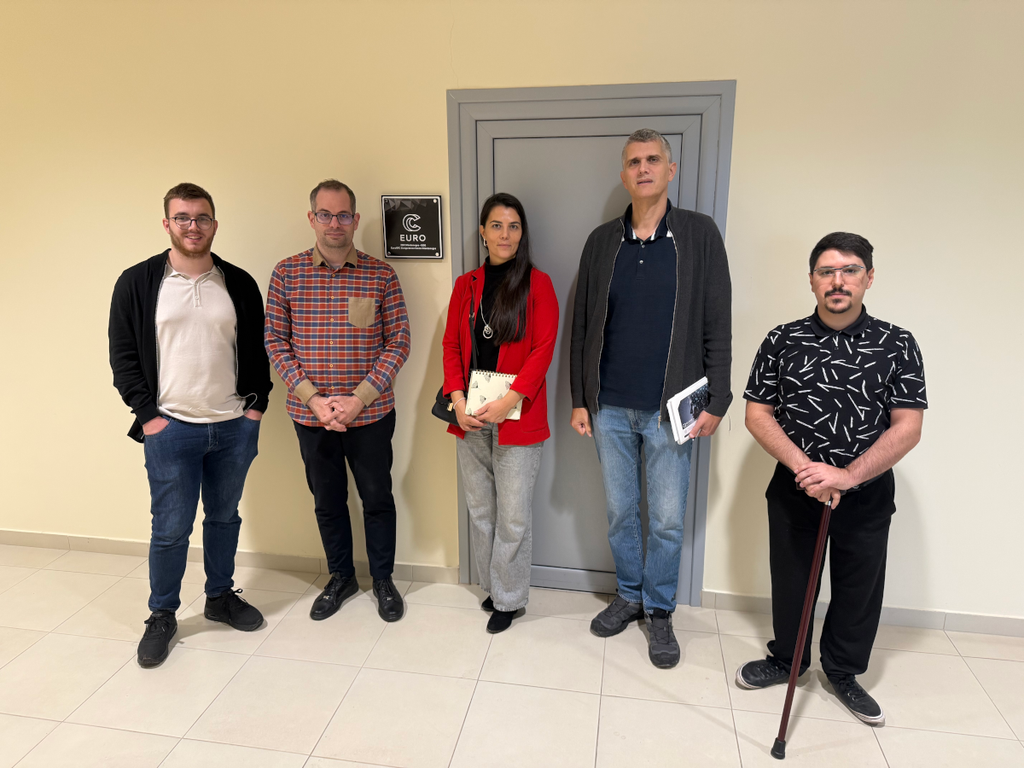
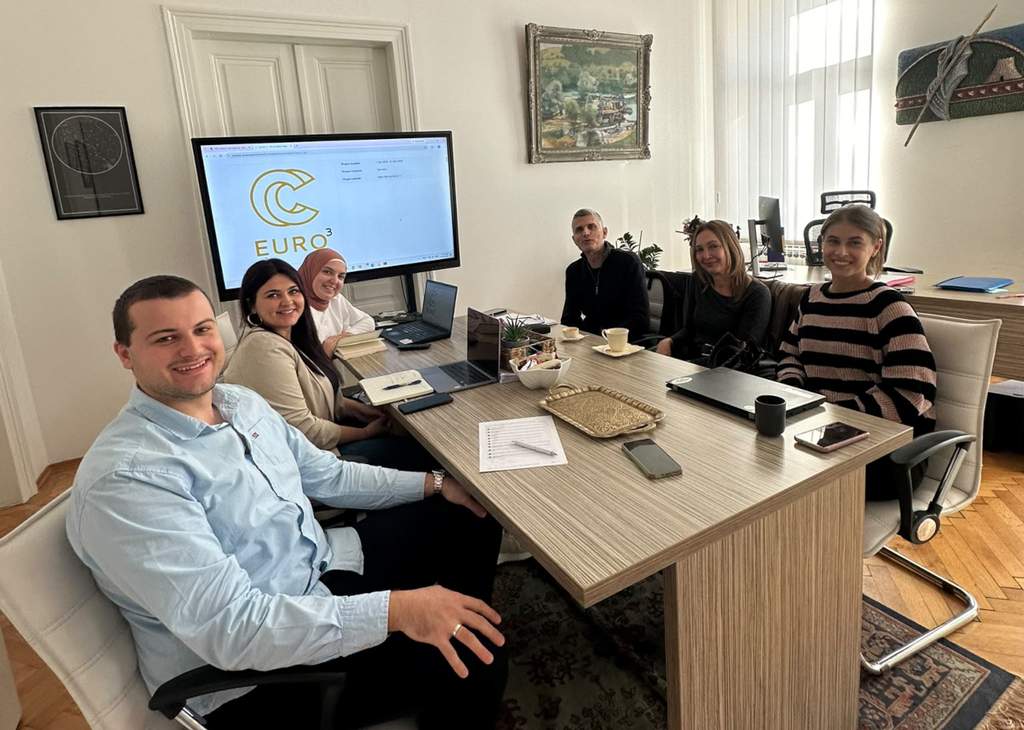
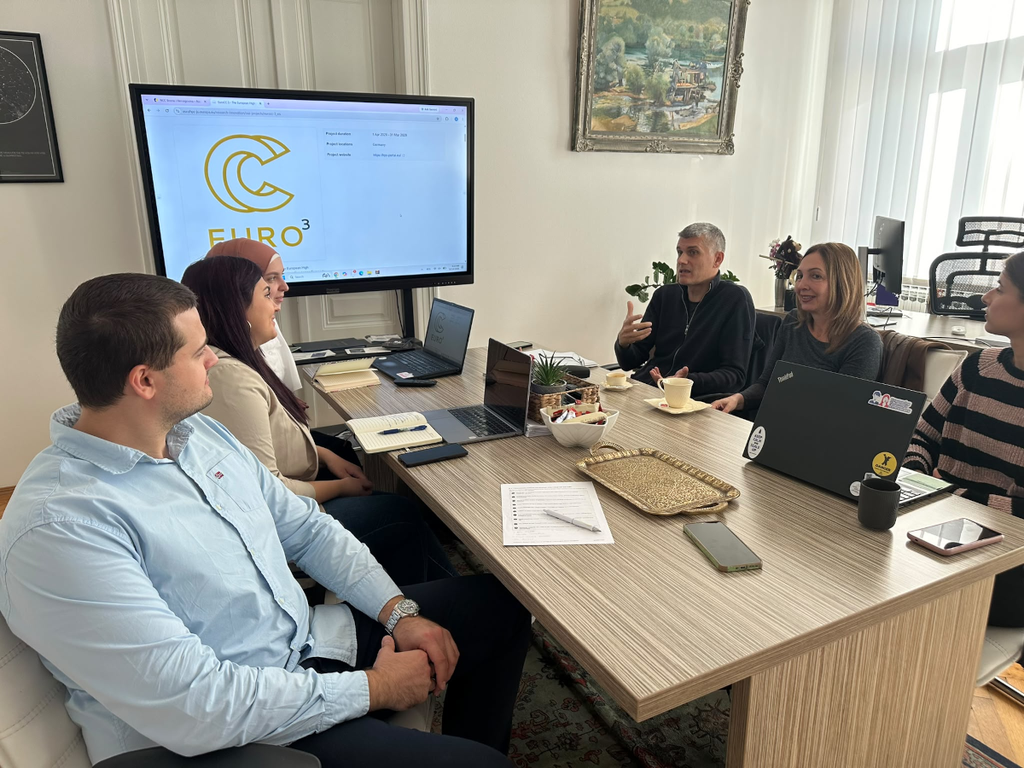
NCC HPC Montenegro welcomed a representative of Korsakov Group in mid-September for talks on cooperation and the use of advanced technologies in tourism. The activities of NCC HPC Montenegro were presented, European EuroCC3 initiative, developing the HPC/AI ecosystem, strengthening digital skills, and supporting industry. The services offered by the center free of charge were also presented — from consultations and HPC/AI maturity assessments to proof-of-concept development and access to European supercomputers.

Particular focus was placed on the application of artificial intelligence in tourism, as one of the strategic sectors of the Montenegrin economy. The participants exchanged ideas on concrete directions for cooperation and joint activities that would put HPC and AI technologies to work in developing tourism services.

HPC Montenegro at the Eastern European Machine Learning Summer School (EEML 2026) in Cetinje

NCC HPC Montenegro took part as a partner of the Eastern European Machine Learning Summer School (EEML 2026), held from 27 July to 1 August 2026 in Cetinje. The school brought together around 300 participants from across the European Union — roughly half of them from Eastern Europe — along with researchers and companies from Montenegro, making it one of the largest AI and machine learning gatherings in the region.

On Tuesday and Wednesday (28–29 July), HPC Montenegro hosted a booth where our team spent two full days talking with participants about high-performance computing (HPC) for AI and machine learning. These conversations connected us with representatives from industry and academia — both from Montenegro and from across Europe — and gave us the chance to understand their computing needs and show how HPC resources can support their work.

On Thursday, 30 July 2026, HPC Montenegro delivered a welcome talk to all participants. We presented the activities of NCC HPC Montenegro, traced the history of the EuroCC initiative through the EuroCC1, EuroCC2 and EuroCC4SEE projects, and reported on how researchers and organisations in Montenegro have been using EuroHPC access. We invited participants from Montenegro to collaborate with us and to request our services, and we helped participants from the wider region and other parts of the EU find and connect with the National Competence Centres (NCCs) in their own countries.

Our involvement in EEML 2026 reflects the twofold mission of NCC HPC Montenegro: providing training support to help build HPC and AI skills across the region, and engaging with industry to bring the benefits of high-performance computing to companies and the wider economy.

We are especially proud that several members of the HPC Montenegro team provided hands-on support and training to participants throughout EEML, helping them with practical work and with mastering machine learning tools and concepts. Alongside this, members of our team and students also took part as volunteers in the organisation of the school and in EEML activities.

You can find out more about the school at www.eeml.eu. To learn more about NCC HPC Montenegro, or to discuss collaboration and access to our services, get in touch with our team.

NCC HPC Montenegro featured at the meeting of the President of Montenegro with AI experts

Representatives of NCC HPC Montenegro attended a meeting of the President of Montenegro and the President’s Cabinet dedicated to the development of artificial intelligence, held on 28 July 2026 in Cetinje. Around ten AI experts from Montenegro took part. Among those present were the President of the Montenegrin Academy of Sciences and Arts (CANU), university representatives, members of the diaspora, representatives of the Montenegrin AI Association (MAIA), and representatives from industry. Participants exchanged views with the President and his associates on the directions for developing this field in the country.

The meeting also touched on the Master’s programme in Artificial Intelligence — the first programme of its kind in Montenegro, delivered with the support of NCC HPC Montenegro and the EuroCC projects. HPC Montenegro presented the goals and projects of the EuroCC initiative and the services offered by the NCC, with particular attention to supporting industry in accessing HPC resources. In the discussion on the need for data centres and HPC infrastructure in Montenegro, NCC HPC Montenegro was recognised as part of the platform for further steps in this area.

For NCC HPC Montenegro, this was an important opportunity to be presented at the highest level of public administration and to bring its capacities and results closer to decision-makers. We look forward to taking part in the further steps and activities aimed at strengthening the artificial intelligence ecosystem in Montenegro.

More about the meeting: the President of Montenegro’s Instagram and the post on X.

HPC Montenegro Explores ICT Sector Trends and User Needs for Advanced Digital Services

On 25 July 2026, representatives from NCC Montenegro attended the presentation of the Analysis of Montenegro’s ICT Sector Performance in 2025, organized by the Chamber of Economy of Montenegro and ICT Cortex. The event brought together leaders from business, public institutions, academia, and international organizations to review sector dynamics and future growth trends. NCC Montenegro participated as part of its ongoing efforts to monitor market developments, understand evolving IT needs, and identify opportunities and challenges in adopting advanced digital technologies.

Based on company financial statements, Montenegro’s ICT sector demonstrated positive growth. While the reported number of companies fell by 19% (due to market consolidation and the exit of non-resident entities), overall sector employment grew by 14%, total revenue increased by 12%, and aggregate profit surged by 93% year-over-year. IT services account for over 80% of all ICT companies and employ around 70% of the sector’s workforce, while telecommunications—representing just 4% of ICT firms—generate over 50% of total sector revenue. Software development and programming form the core of the ICT sector, accounting for 75% of companies, 66% of employees, and over 53% of total wages. However, economic activity remains heavily concentrated in Podgorica and coastal municipalities, highlighting a clear opportunity for broader regional development.

The event also highlighted the priorities of Montenegro’s new Smart Specialisation Strategy for 2026–2031. ICT retains its horizontal role in enabling the digital transformation of other priority sectors while being recognized as a vertical driver of economic growth. Almost 40% of the resources planned for the first two years of the Strategy’s implementation will be directed toward the ICT sector and digital transformation initiatives. Furthermore, discussions focused on AI Strategy priorities, supporting mature IT firms, boosting software export potential, and helping junior professionals adapt to AI-driven labor market shifts.

Insights gathered from sector monitoring and stakeholder engagement allow NCC Montenegro to directly align its services with industry demand by identifying HPC/HPDA/AI-related business challenges, targeting companies capable of developing computationally intensive use cases, and streamlining industry access to EuroHPC infrastructure and AI resources. NCC Montenegro will continue collaborating with the Chamber of Economy of Montenegro, ICT Cortex, and the broader business community to advance national digital capabilities and connect local innovation with European supercomputing assets.

BSc Thesis: BabyFlow.AI – A Mobile Assistant for Early Parenthood Support

Marija Gardašević successfully defended her BSc thesis, “Application of Artificial Intelligence in the Development of a Mobile Assistant for Early Parenthood Support,” at the Faculty for Information Systems and Technologies, University of Donja Gorica. Supervised by Prof. Tomo Popović, the thesis resulted in BabyFlow.AI, a functional Flutter-based mobile prototype for recording and reviewing a baby’s daily routines, including sleep, feeding, mood, meals and basic health-related information. The prototype may be considered an early proof of concept for a future digital parenting-support product, subject to further user testing, integration of more advanced analytics and validation in cooperation with relevant professionals.

BSc candidate Marija Gardasevic

ABSTRACT – The thesis presents the development of BabyFlow.AI, a functional mobile application prototype designed to help parents organize and monitor a baby’s daily routine. The application combines modules for sleep, feeding, pumping, mood, meals, calming-noise sessions, vaccination records, growth tracking and relevant health-information resources, while storing user data locally on the device. Basic analytical insights are generated from user entries, and a separate demonstrative Python machine-learning model illustrates a simple data-processing and classification workflow. BabyFlow.AI is not intended for medical, clinical or diagnostic use, but represents a practical proof of concept that could support the future development of privacy-conscious digital services for parents and childcare providers.