

A Proof of Concept for Semantic Search and Intelligent Recommendations in the Domain Name Industry
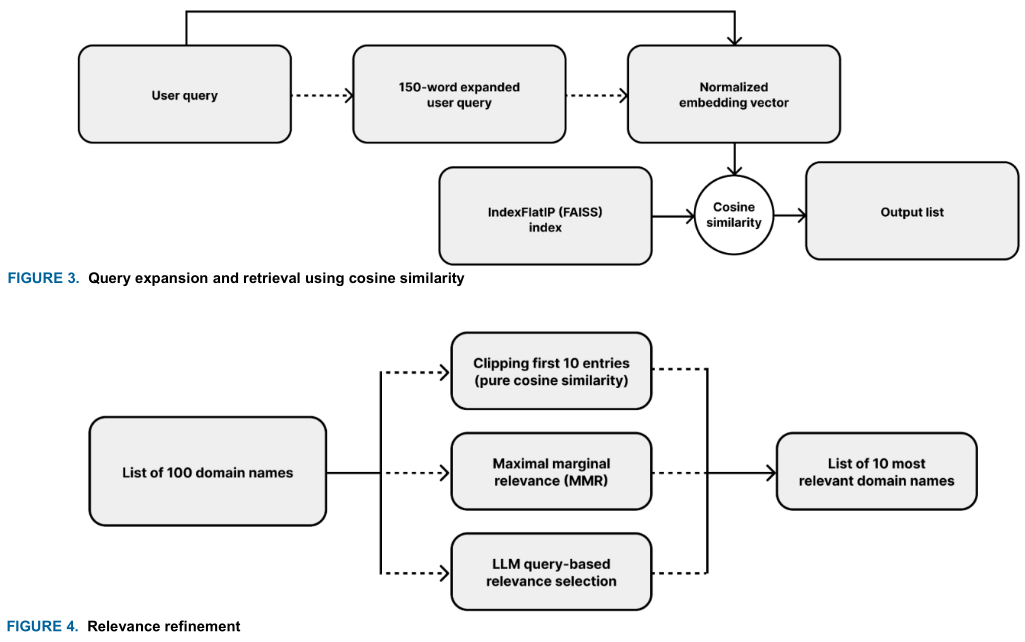
Recommending premium domain names presents a specific challenge: suitable names must be selected from an existing inventory rather than generated freely. Large inventories, limited semantic information contained in domain names, and the need to balance relevance, diversity, and computational cost make conventional search and generative AI approaches challenging for this task.Researchers from the University of Donja Gorica (UDG), in collaboration with industry (Alicorn), have developed and evaluated an AI-based approach for recommending premium internet domain names. The research, published in IEEE Access, demonstrates how large language models (LLMs) and semantic search can support more effective recommendations from large collections of existing domain names, with potential applications in commercial domain marketplaces.
Read more at [link].
Exploring Alternative Language Model Architectures through HPC
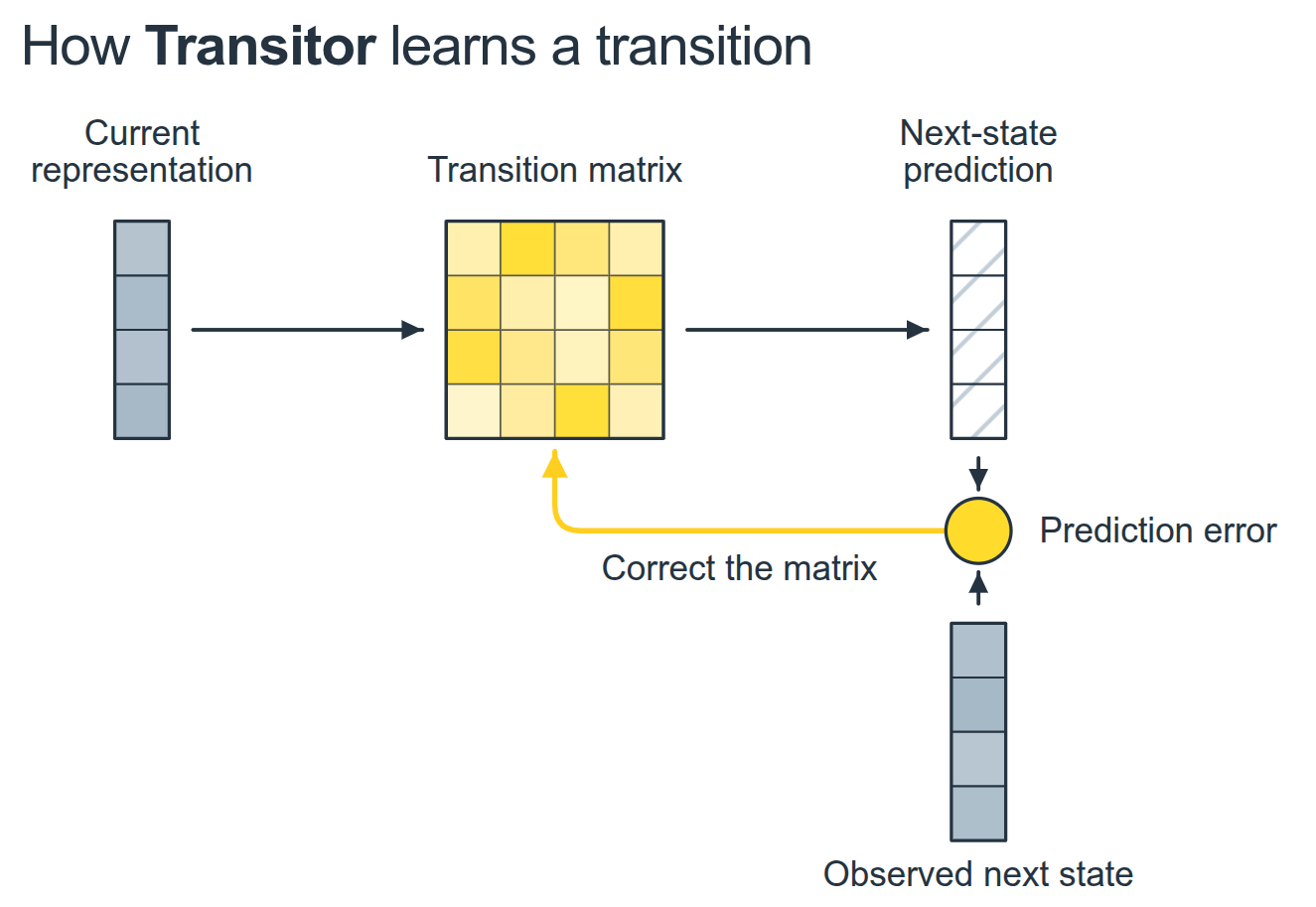
Language models use information from earlier text to predict what comes next. How this information is retained and updated remains an important research question in artificial intelligence, particularly as researchers explore alternatives to conventional language-model architectures. This proof of concept (PoC) examines Transitor, a language model developed by Felix Koba, which learns transitions between internal representations of text. The model maintains a compact state based on transition matrices, using them to predict the next representation and updating them as new information becomes available. Training and evaluation were carried out using computing resources available through HPC Montenegro.
Read more at [link].
GetMoved: AI-Powered Moving Logistics
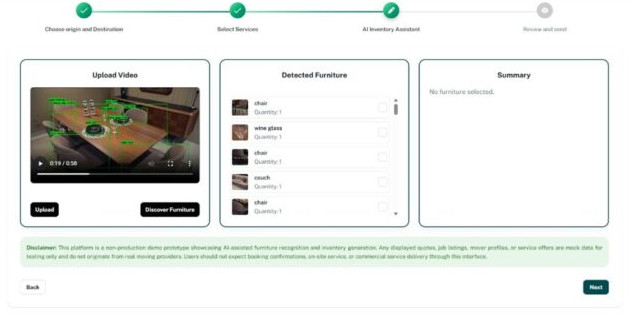
Organising a home or office relocation is rarely a smooth experience. One of the most persistent pain points is the quotation process: moving companies typically rely on manual surveys or rough customer estimates to price a job, leading to inaccurate quotes, last-minute disputes, and inefficiencies on both sides of the transaction. For a digital platform aiming to streamline this process at scale, the solution lies in computer vision — training AI models to automatically analyse short videos recorded by users and generate structured, reliable inventories of items to be moved. This transforms an inherently subjective process into an objective, data-driven one.
Read more at [link].
PathAI project supported by the Innovation Fund of Montenegro
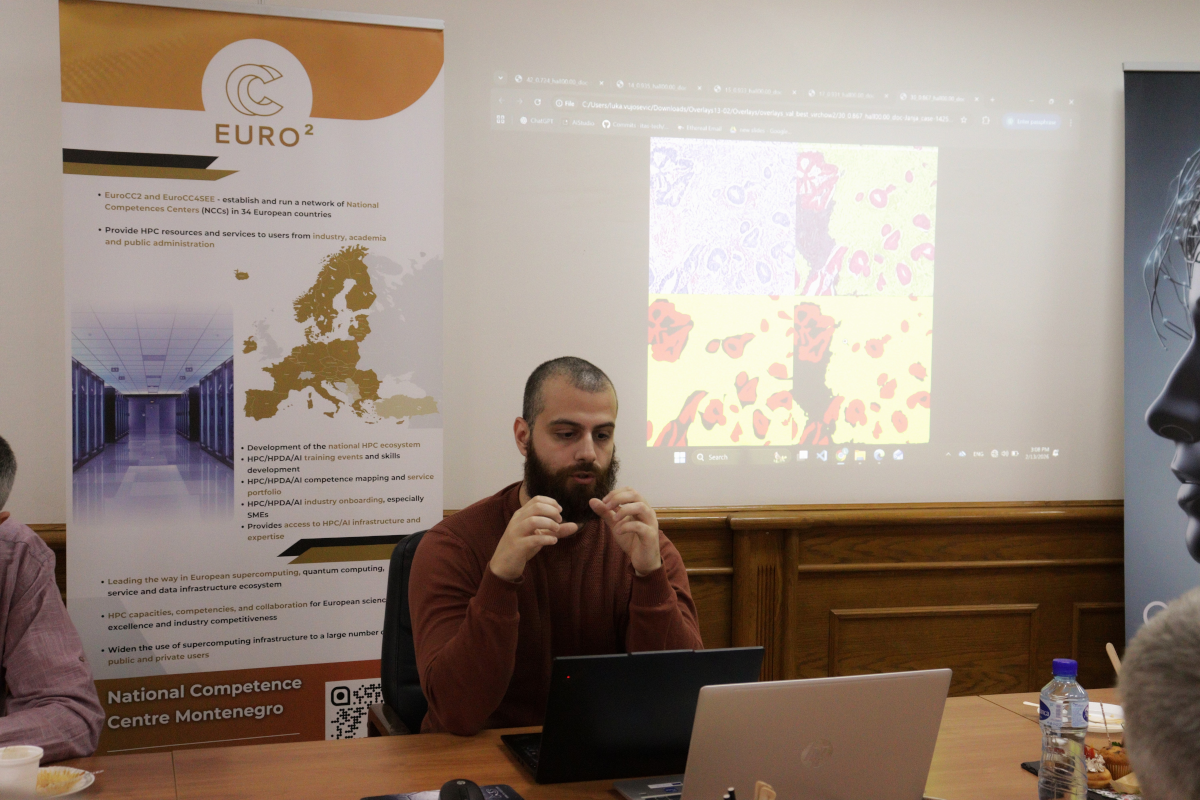
Histopathological analysis — the microscopic examination of tissue samples — remains the gold standard for cancer diagnosis. In the case of adenocarcinoma, one of the most common forms of malignant tumours, accurate and timely interpretation of tissue samples is critical for determining the appropriate course of treatment. However, this process places significant demands on the expertise and time of specialist pathologists, whose capacity is finite. With growing volumes of samples and increasing diagnostic complexity, there is a clear need for tools that can support pathologists in their work — helping to improve consistency, reduce turnaround time, and enhance the reliability of the diagnostic process.
Read more at [link].
GenAI-HPC4WB FFplus Project

HR and recruitment technology has advanced rapidly in recent years, but these advances have largely been built around major world languages — above all English. The languages of the Western Balkans — Montenegrin, Serbian, Bosnian, and Croatian — share a common linguistic root but carry distinct vocabulary, professional register, and regional context that general-purpose AI models handle poorly. When applied to tasks such as parsing CVs, understanding job descriptions, or matching candidates to roles in these languages, off-the-shelf LLMs produce results that are too imprecise for practical use, limiting the ability of regional companies to benefit from modern AI-assisted recruitment tools.
Read more at [link].
AIHeal: Personalised AI Models for Every Patient
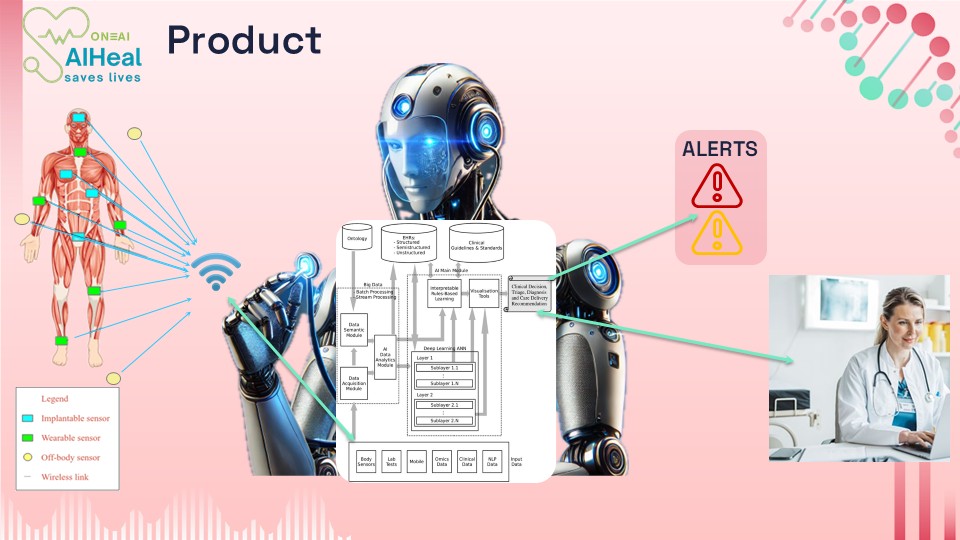
Cardiovascular diseases remain the leading cause of death worldwide, and electrocardiogram (ECG) analysis is one of the most widely used tools for their early detection. However, conventional AI models developed for ECG interpretation are typically trained on large general-purpose datasets and applied uniformly across patients — a one-size-fits-all approach that fails to account for the significant physiological variation between individuals. What is normal for one patient may be a warning sign for another, and generic models are often too imprecise to capture such subtle, patient-specific anomalies reliably. This fundamental limitation reduces the clinical value of AI-assisted cardiac monitoring and leaves a significant gap in the personalisation of digital health solutions.
Read more at [link].
Explainable AI for Medical Decision Support
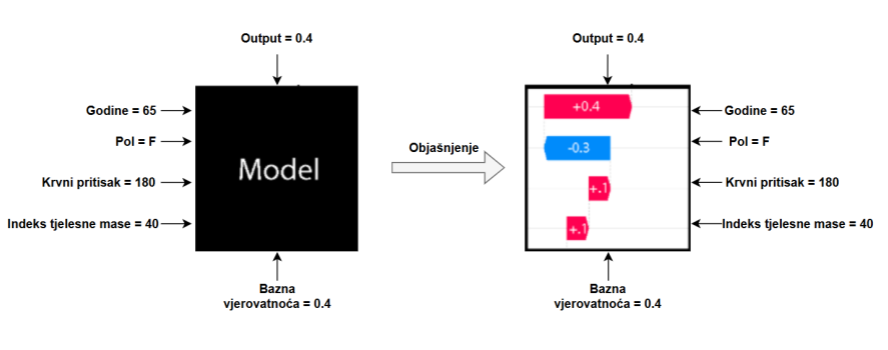
This research, supported by NCC Montenegro and NCC Bosnia and Herzegovina team members through EuroCC2 and EuroCC4SEE, investigates how Explainable Artificial Intelligence (XAI) can strengthen trust and transparency in medical AI systems. By applying XAI to predictive models for respirator maintenance, the work demonstrates how high-performance computing (HPC) enables more reliable, interpretable, and clinically useful AI solutions.
Read more at [link].
Using AI and HPC to Strengthen Honey Authenticity and Trust
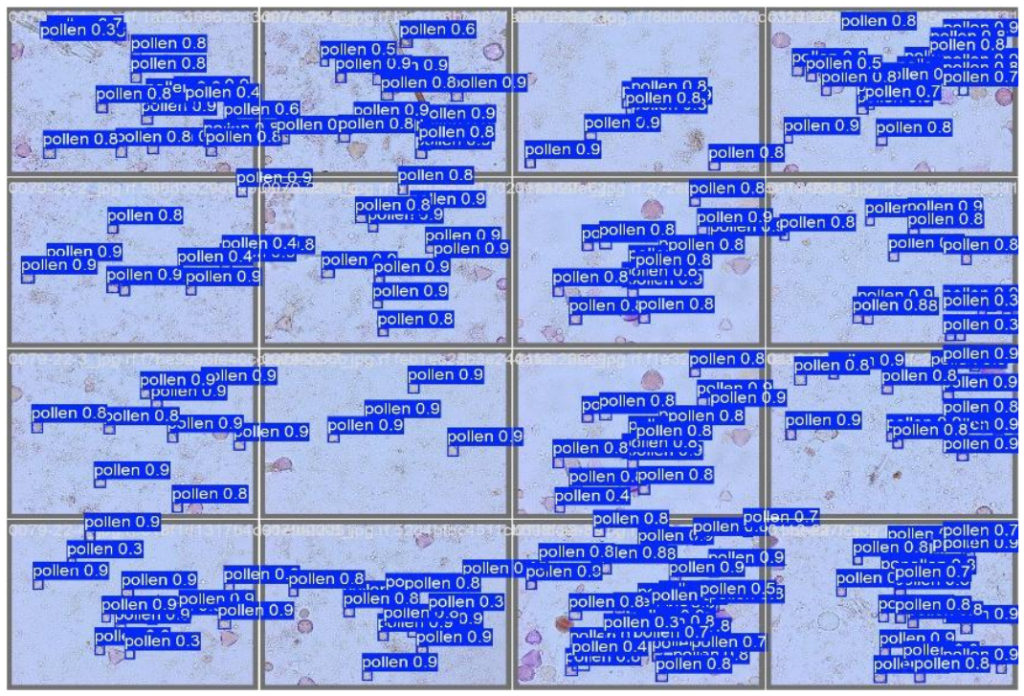
Honey authenticity verification remains a complex and resource-intensive process, particularly when determining botanical and geographical origin through traditional melissopalynological methods. Manual microscopic analysis of pollen grains requires highly specialized expertise, is time-consuming, and introduces variability between laboratories, making it difficult to scale verification while preserving consistency and reliability. For honey producers and farmers, especially small and medium-sized operations, these constraints limit access to premium and export markets, where verified origin and traceability are increasingly mandatory.
Read more at [link].
Wasco AI – Custom AI Assistant Optimization via HPC

The development of advanced AI models for video processing and visual analytics requires enormous computing power and the ability to handle complex data in real time. Standard server infrastructure was not sufficient to enable scaling the models to the level needed for testing, optimization, and the development of new functionalities. The key challenge was how to secure resources that would allow training models on thousands of GPU cores while maintaining stability, speed, and accuracy of results. In addition to technical barriers, there was also the challenge of positioning a local project within the European context, where some of the most advanced research and industrial teams compete for resources.
Read more at [link].
Uhura: Generative AI Intelligent Process Automation Platform

Uhura Solutions is developing AI platform for document-driven process automation in financial services. The “Generative AI Intelligent Process Automation Platform – GAIPAP” project is a transformative initiative aimed at revolutionizing the financial industry through the integration of advanced AI-driven automation solutions that combine capabilities of Large Language Model (LLM), low-code development, and process automation workflows.
Read more at [link].
PAID-T: Advanced Trading Simulations powered by HPC

PAID MNE specializes in crafting scalable software solutions for investment firms, leveraging advanced algorithms, machine learning, and artificial intelligence to optimize trading strategies and risk management. Their PAID-T trading solution dynamically adapts to market fluctuations, offering optimized trading experience.
Read more at [link].
Personalized Banking Software Solutions
The project is developing SaaS solutions to enhance personalized banking and payment services through machine learning and data collection. Building on the SKEN expense-tracking app, the new system will integrate with mBanking and eBanking applications, providing users with automatic, detailed transaction categorization and insights. Using NLP-based ML algorithms, the system classifies transactions into predefined categories like food or services, leveraging data from SKEN and research expertise. This innovation aims to offer financial institutions advanced tools for better customer engagement and improved financial insights.
Read more at: [link]
Forecasting Electricity Market Metrics

Forecasting day-ahead electricity prices and loads is essential for decision-making in the energy market, where participants aim to avoid price volatility. By leveraging artificial neural networks (ANN) and time-series prediction models, this research explores efficient methods for predicting electricity metrics using datasets from markets like HUPX and Montenegro. The study finds that ANN architectures combining fully connected layers with recurrent or temporal convolutional layers deliver the most accurate short-term predictions, highlighting the potential of temporal convolutional networks for further exploration. Standardized comparison methods and collaboration with industry experts ensure a robust evaluation of forecasting approaches and their relevance to the energy sector.
Read more at: [link].
Computer Vision for Poultry Farms

Monitoring chickens on large poultry farms is labor-intensive, requiring constant attention to environmental conditions and animal well-being, which can hinder staff productivity. Using AI and ML with HPC, a solution was developed to create edge AI devices and computer vision sensors that efficiently monitor parameters like chicken behavior, body temperature, and growth. With IoT-enabled cameras and ML models trained using HPC, the approach achieved over 90% accuracy in chicken detection and segmentation, with a 10-fold reduction in model development time. This innovation supports precision agriculture, providing farmers with advanced tools to enhance productivity and ensure humane food production.
Read more at: [link].