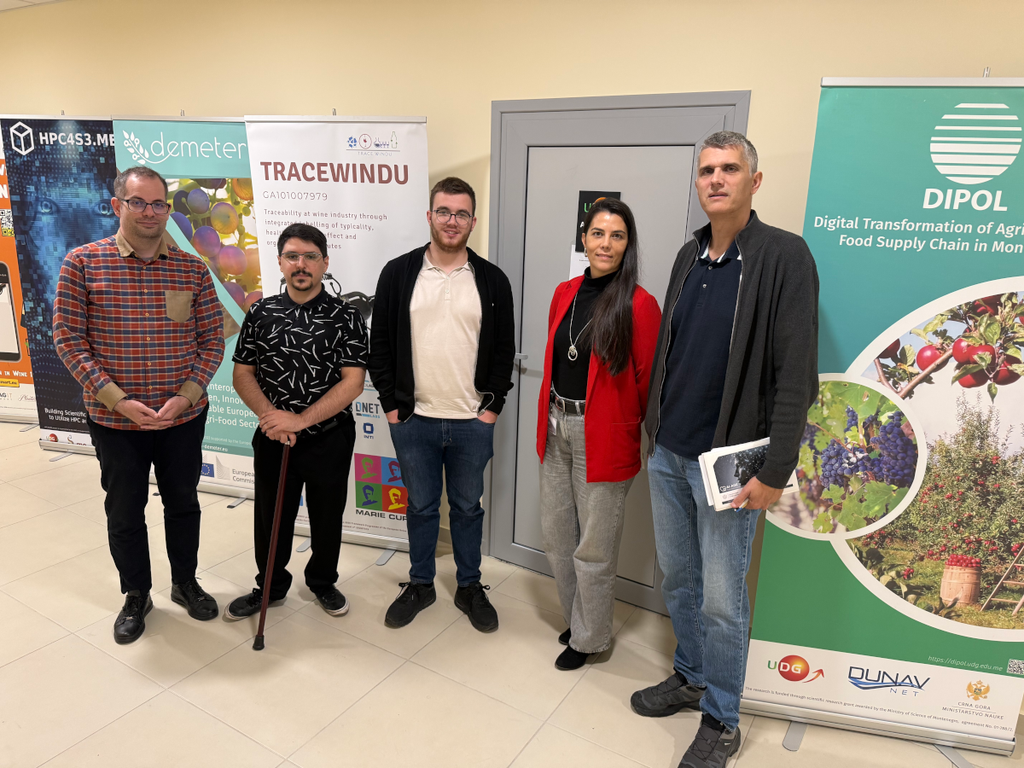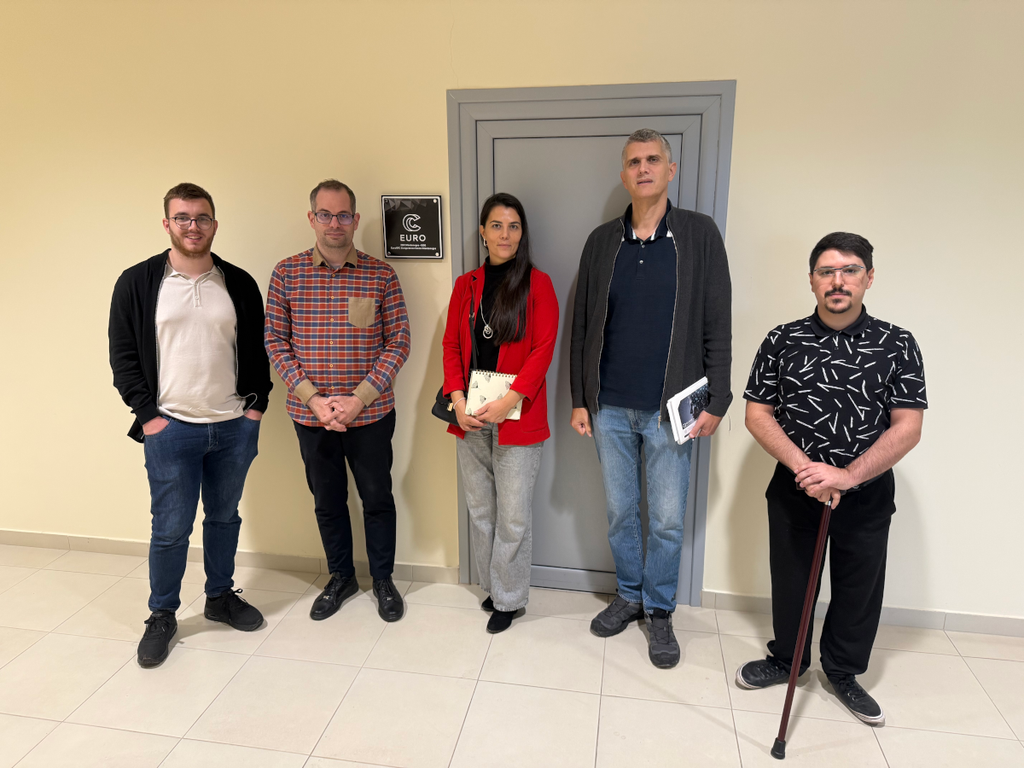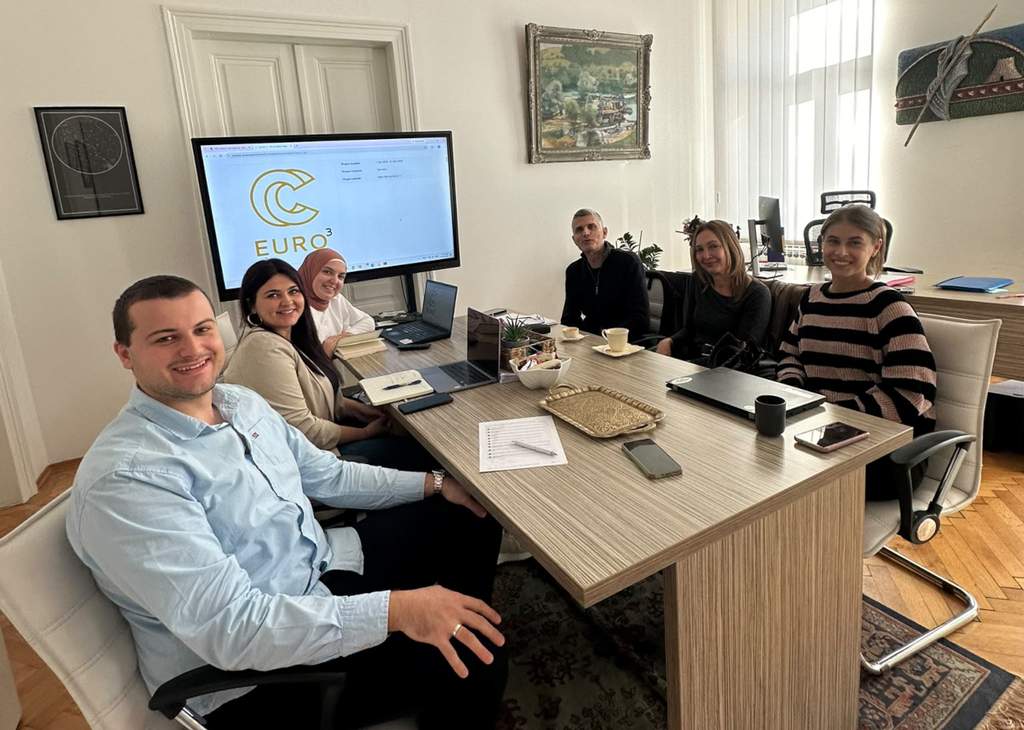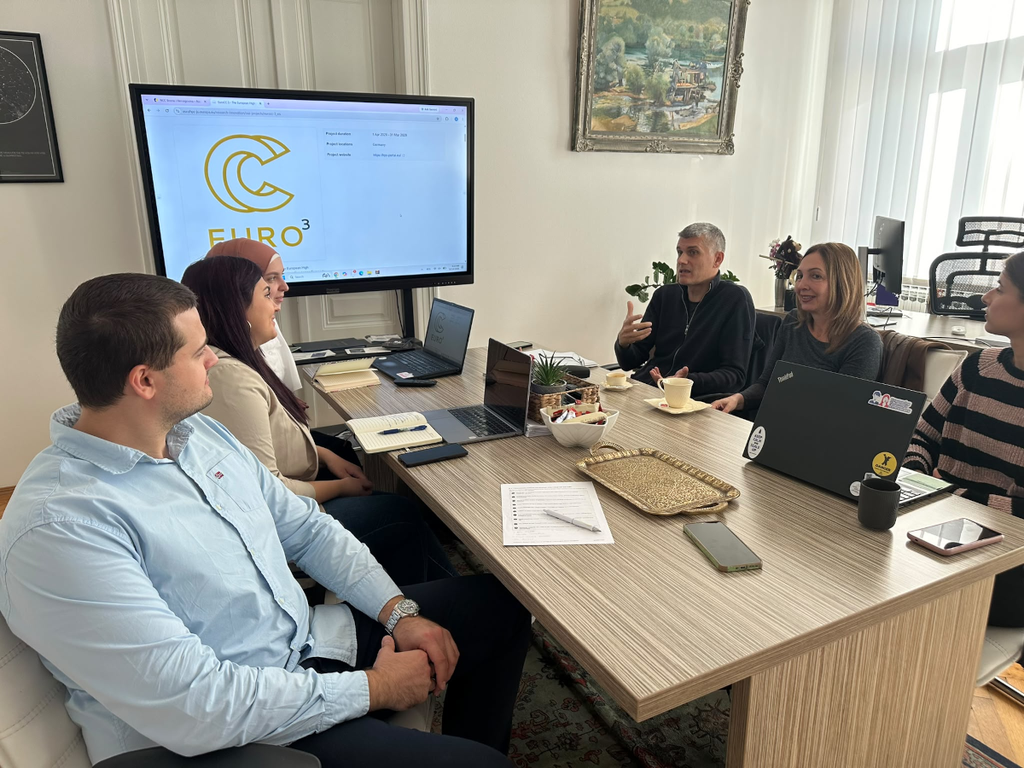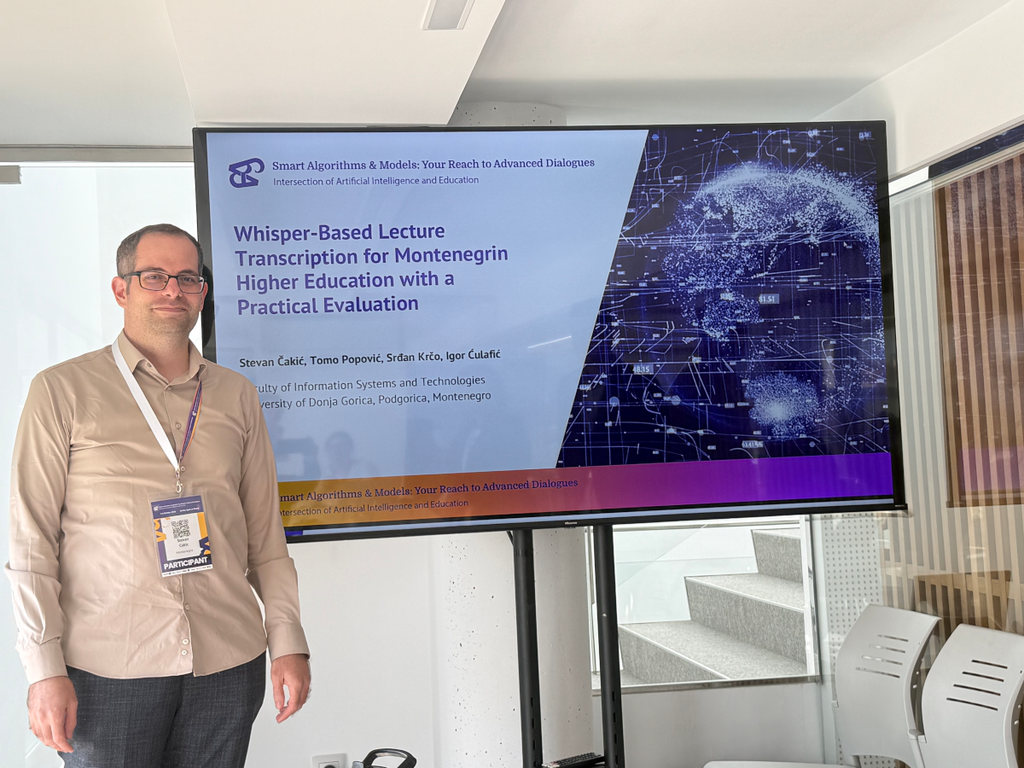
NCC Montenegro continued its outreach activities with a visit to Logate, one of Montenegro’s leading technology companies. With two decades of experience in software solutions for telecommunications, banking, and enterprise clients, Logate manages over 20 million user accounts daily for more than 200 companies across Montenegro and the region. Its strong engineering capacity, industry-focused products, and international presence make it an important partner for discussing advanced digital solutions.
During the meeting, NCC Montenegro presented its service portfolio, support activities EuroHPC access opportunities, AI Factories framework and HPC/AI reference cases in Montenegro. NCC Montenegro also presented the upcoming FFplus Open Calls, which support European SMEs and startups in adopting HPC and generative AI through business experiments and innovation studies.
The visit opened discussion on project ideas, potential HPC/AI use cases, technical requirements, application pathways, and future cooperation. It also represents another step in strengthening the link between EuroHPC opportunities and Montenegro’s ICT companies with strong innovation and international growth potential.
The University of Donja Gorica and NCC Montenegro have established a collaboration with two renowned European scientific institutions – the “Vinča” Institute of Nuclear Sciences (University of Belgrade, Serbia) and the LP2i Bordeaux laboratory (CNRS/University of Bordeaux, France). The partners will cooperate on applying advanced computational simulations and high-performance computing (HPC) in biomedical research, combining the partners’ expertise and computing resources.
The collaboration contributes to strengthening regional research capacities and opens the way for future participation in European scientific initiatives.
On June 29, 2026, an MSc thesis entitled “Quantization of Edge AI Models in IoT Systems” by Mr. Zarko Perunicic was successfully defended within the Artificial Intelligence Master’s programme at the University of Donja Gorica. Through its participation in the programme, mentoring activities, and support for practical research in AI, HPC, and IoT, NCC Montenegro contributes to developing advanced competencies in the efficient deployment of artificial intelligence models on resource-constrained devices. The thesis addresses an important Edge AI challenge by evaluating model quantization strategies for computer vision applications in IoT environments.
Mr. Perunicic after the defence
ABSTRACT – Edge AI systems in Internet of Things (IoT) environments require artificial intelligence models that are sufficiently small, fast, and reliable to operate on resource-constrained devices. This thesis examines how quantization, as a model optimization method, affects the performance of a computer vision model in the task of grape leaf disease classification. MobileNetV2 was used as the reference model, and its optimized variants were then prepared in the TensorFlow Lite environment using FP16 and INT8 quantization modes, including dynamic INT8 quantization, full INT8 quantization based on a representative dataset, and an INT8 variant obtained through quantization-aware training (QAT) on an additional, more challenging dataset. The experiments were conducted on cleaned and restructured subsets, following quality control of publicly available datasets and the removal of redundant and visually equivalent samples. Under controlled conditions, latency, execution stability, peak RAM usage, model size, and accuracy were analyzed.
On the more controlled dataset, full post-training INT8 quantization achieved the most favorable balance among efficiency, stability, and model size while preserving accuracy, whereas dynamic INT8 quantization, despite reducing model size, can measurably slow down model execution. On the more challenging field dataset, this pattern changed partially: although full INT8 quantization remained the fastest variant, the INT8 model obtained through QAT provided the most favorable overall balance between accuracy, model size, and latency. The results show that the effect of quantization depends not only on numerical precision, but also on data characteristics, the calibration procedure, and the compatibility of the model with the execution environment. It is therefore concluded that the choice of quantization strategy should be empirically validated for a specific application scenario rather than assumed in advance.
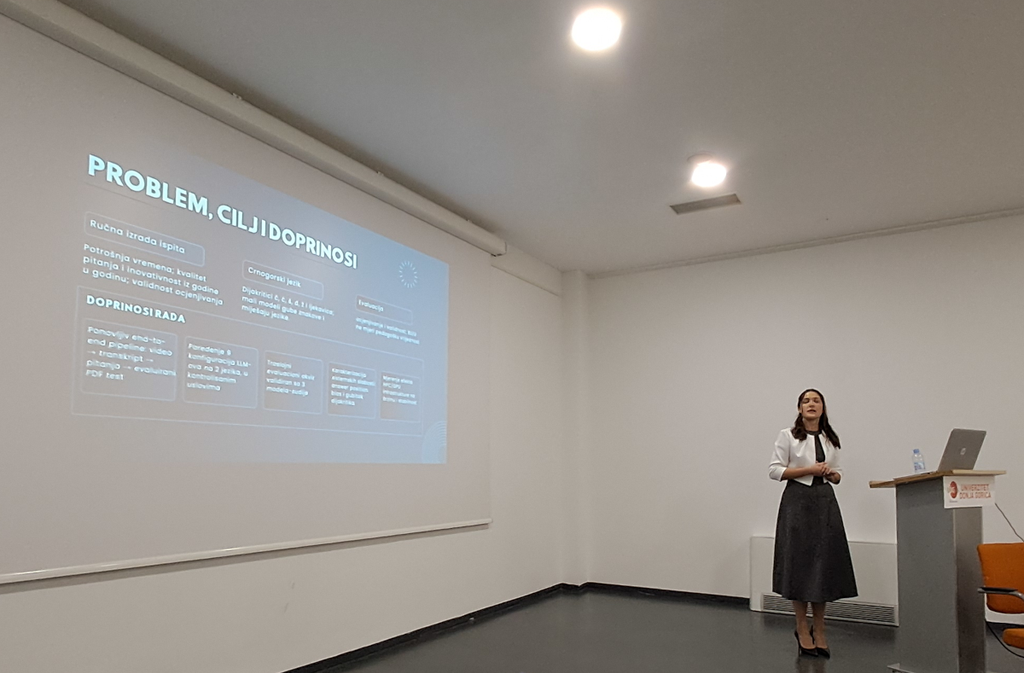
On June 29, 2026, MSc candidate Nikola Kavarić successfully defended his thesis entitled “Synergy of Computer Vision and Natural Language Processing in Tuberculosis Diagnostics and Education” within the Artificial Intelligence Master’s programme at the University of Donja Gorica. Through its support for the programme, mentoring activities, and development of competencies in artificial intelligence and high-performance computing, NCC Montenegro contributes to preparing young researchers to develop interdisciplinary AI solutions for healthcare. The thesis investigates the combination of computer vision and Retrieval-Augmented Generation approaches for detecting signs of tuberculosis and providing educational explanations of medical findings.
Mr. Nikola Kavaric during the defence
ABSTRACT – The aim of this thesis is the development and evaluation of a system that combines computer vision and Retrieval-Augmented Generation (RAG) models for the automatic detection of signs of tuberculosis in chest X-ray images and the educational explanation of findings. The initial hypothesis was that it is possible to develop a functional prototype capable of recognizing pathological changes in X-ray images and generating informative, literature-grounded responses for users. Within this research, a CNN model for binary classification and YOLO models for the localization of pathological changes were developed and evaluated. The CNN model achieved an accuracy of 97% on the test set, representing a solid and measurable contribution. The YOLO models adequately demonstrated the concept of localization, with certain limitations related to dataset size and class imbalance. In addition to the visual module, a RAG prototype was implemented, utilizing a local medical document base to generate responses to user queries. The integration was implemented at the prototype level, without clinical validation. Based on the obtained results, the hypothesis was partially confirmed — to a significant extent for the CNN classification component within the test dataset used, while the YOLO and RAG components, due to dataset limitations and the absence of expert-verified reference answers, should be treated as proof-of-concept components. The thesis demonstrates that a modular combination of these technologies can serve as a useful foundation for the development of educational tools in the field of medical diagnostics.
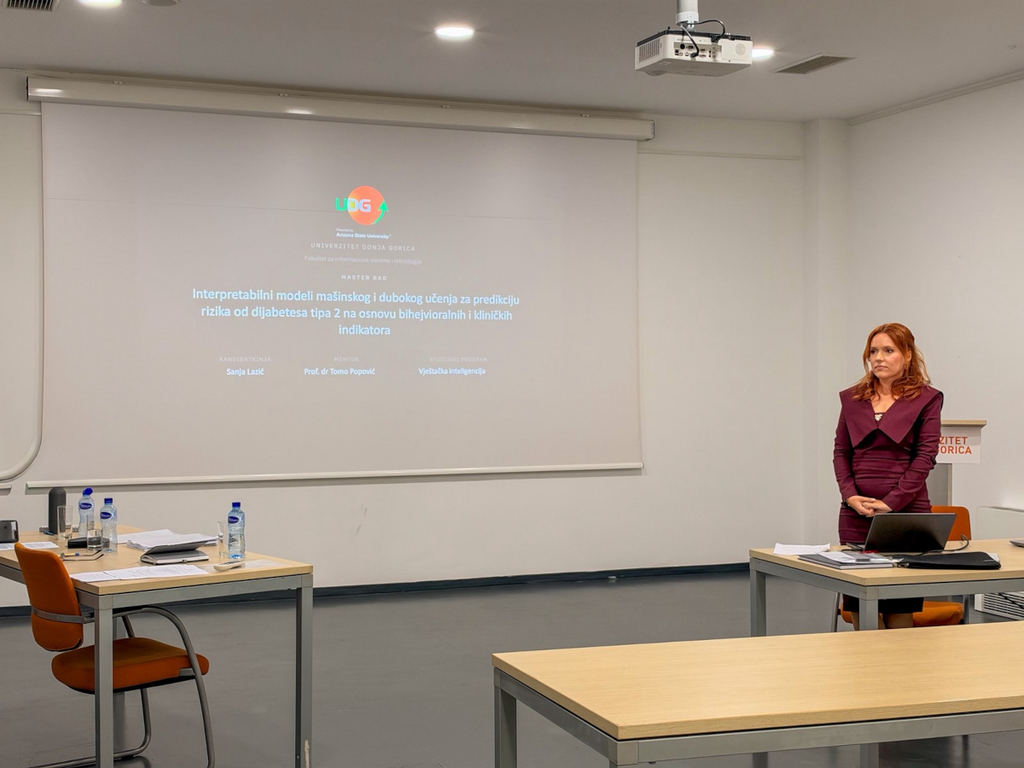
On June 29, 2026, MSc candidate Anesa Abazović successfully defended her thesis entitled “Machine Learning and AI Model Development for Medical Applications” within the Artificial Intelligence Master’s programme at the University of Donja Gorica. Through its support for the programme, mentoring activities, and development of competencies in artificial intelligence and high-performance computing, NCC Montenegro contributes to preparing young researchers to apply advanced AI methods in medicine and other socially relevant domains. The thesis investigates the application of machine learning and deep learning to medical image analysis and clinical data classification, while also considering the technical, ethical, and practical challenges of integrating AI systems into healthcare.
Ms Anesa Abazovic durign the defence
ABSTRACT – This thesis explores the potential of machine learning (ML) and deep learning (DL) models in the detection of ovarian cancer and the prediction of pneumonia. In the first part, a YOLO model was used to identify tumor lesions in medical images, while in the second part, XGBoost, Random Forest, and neural network models were applied for the classification of clinical data. Model performance was evaluated using metrics such as precision, recall, accuracy, specificity, F1-score, ROC-AUC, MCC, mAP50, and mAP50-95. The experimental analysis demonstrated that AI models can achieve promising performance in both clinical scenarios, with certain limitations that require further validation. In addition to technical aspects, ethical considerations were also examined, including model interpretability, data privacy, and the integration of AI systems into healthcare information systems. It is concluded that AI can provide significant support to modern diagnostics, with the need for further improvements and clinical validation.
This episode’s guest is David Sumpter, Professor at Department of Mathematics; Statistics, AI and Data Science at Uppsala University in Sweden. He’s also the co-founder of Twelve Football, a company that helps football clubs understand all metrics better and make smarter decisions. We discuss the relation between math and football, their successes and challenges with working with football clubs and their AI product Earpiece.
Listen to the full episode in your favourite podcast app: