NCC Montenegro at ICMO 2026 and Special Training Session on HPC/AI for Business Community

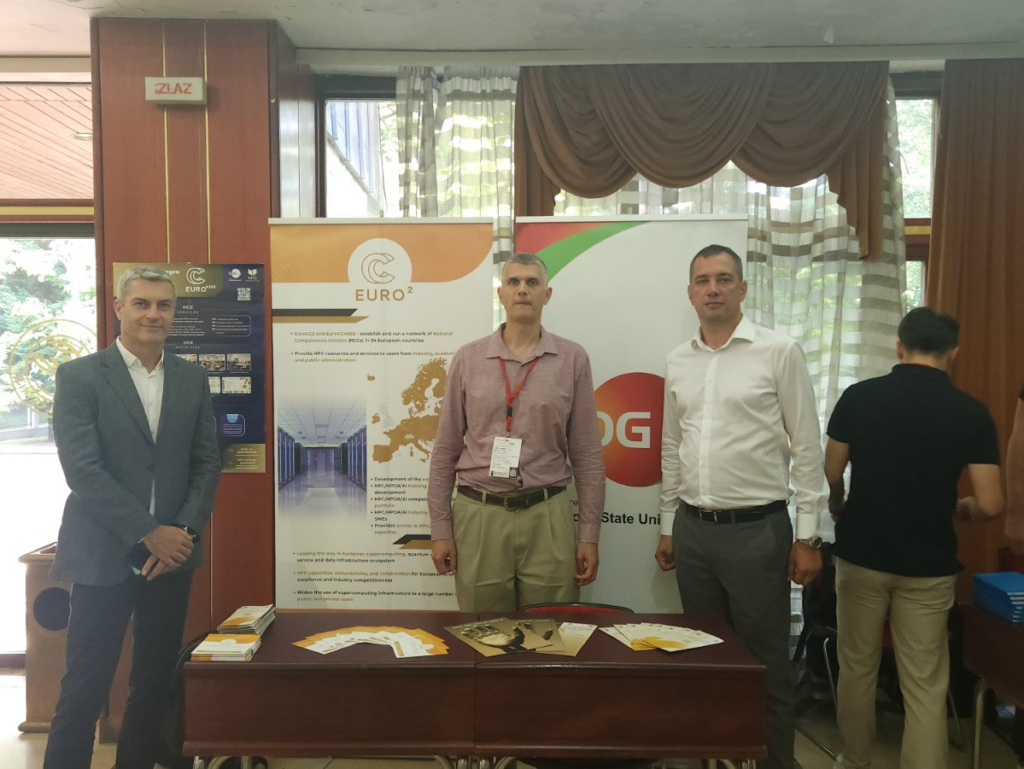
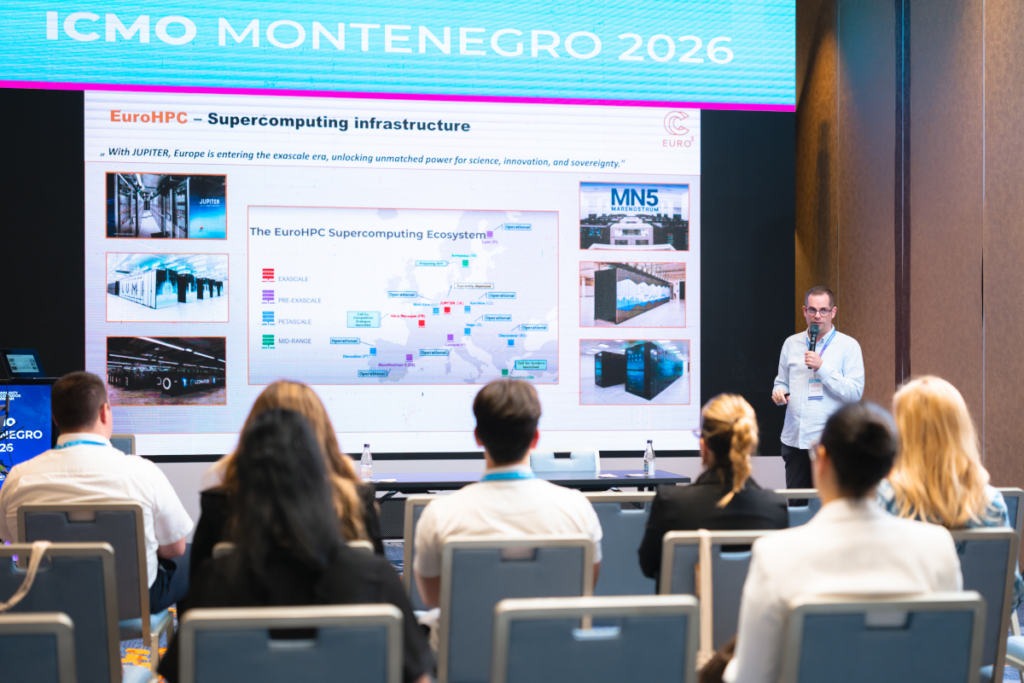
The National Competence Centre Montenegro (NCC Montenegro), operating within the EuroCC3 was presented at the ICMO 2026 International Conference on Management and Organization – “Sustainability by Design: Rethinking Strategy, People & Digital Futures”, held in Przno, Montenegro.

The conference brought together more than 300 participants from over 45 countries, with more than 30 keynote, invited, and editorial speakers, and a Scientific Committee comprising researchers from 46 countries, including representatives of all 27 EU member states. ICMO 2026 served as a high-level platform for the exchange of knowledge and experience between researchers, journal editors, doctoral candidates, institutional leaders, and business community representatives.

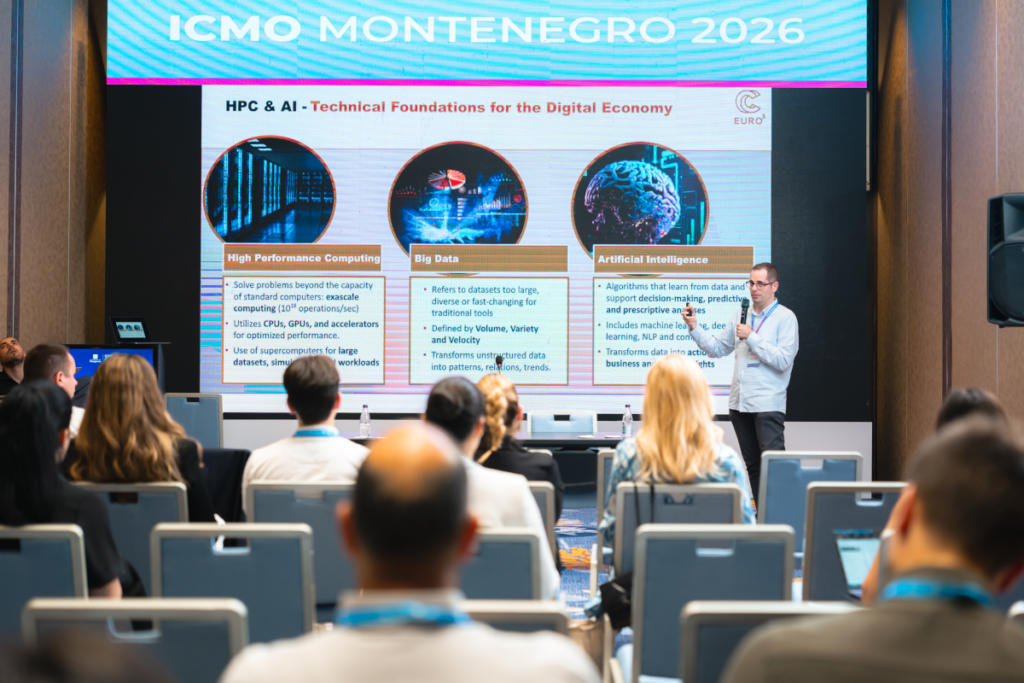
The EuroCC3 project and the activities of NCC Montenegro were presented by Stevan Čakić, member of the EuroCC3 project team, who outlined the role of the National Competence Centre Montenegro in building the national HPC and AI ecosystem, democratizing access to European supercomputing infrastructure, and supporting SMEs, academia, and public administration in adopting advanced digital technologies.

Special Training Session: HPC/AI for Business Competitiveness

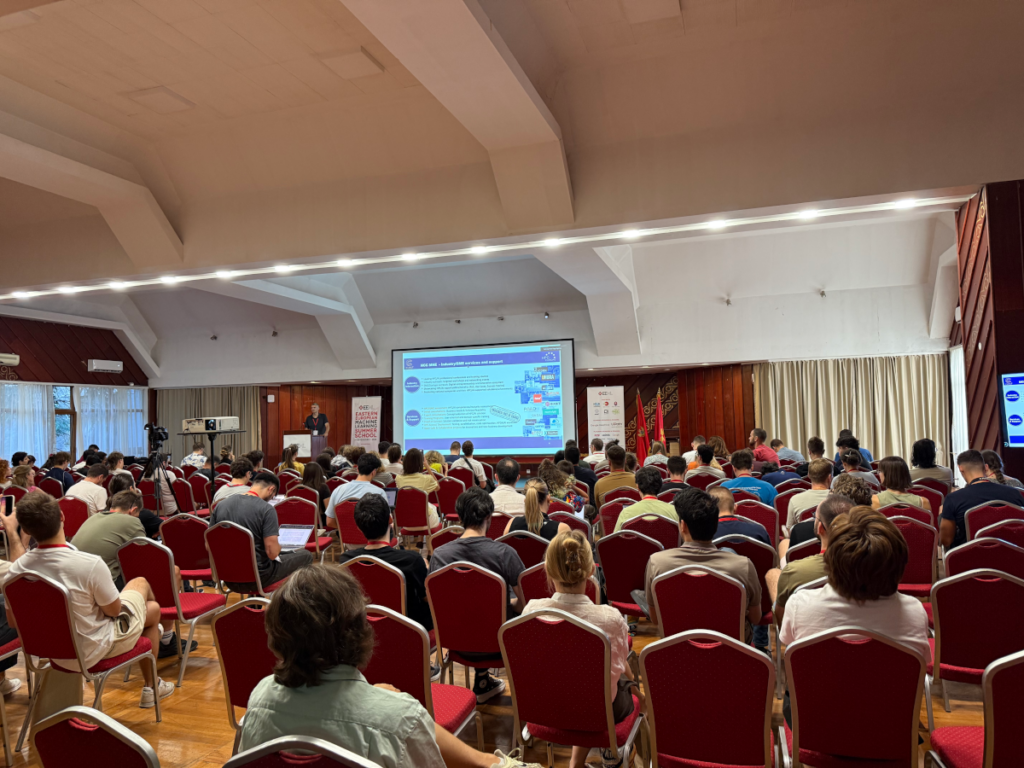
As part of the conference programme, NCC Montenegro organized a dedicated special session and training titled “Exploring HPC/AI and Management: Driving Organizational Competitiveness in the Digital Era”, specifically designed for SMEs and the wider business community.

The training addressed the growing need for small and medium-sized enterprises to leverage advanced digital technologies — including High Performance Computing (HPC), Artificial Intelligence (AI), and Big Data — as strategic tools for enhancing competitiveness, operational efficiency, and data-driven decision-making. Participants were introduced to key concepts and practical applications of HPC and AI in areas such as demand forecasting, financial modelling, predictive analytics, and data-driven business models, as well as the opportunities available through EuroCC3 and the EuroHPC Joint Undertaking, which provides free access to world-class European supercomputing infrastructure and expertise — including to SMEs and startups.

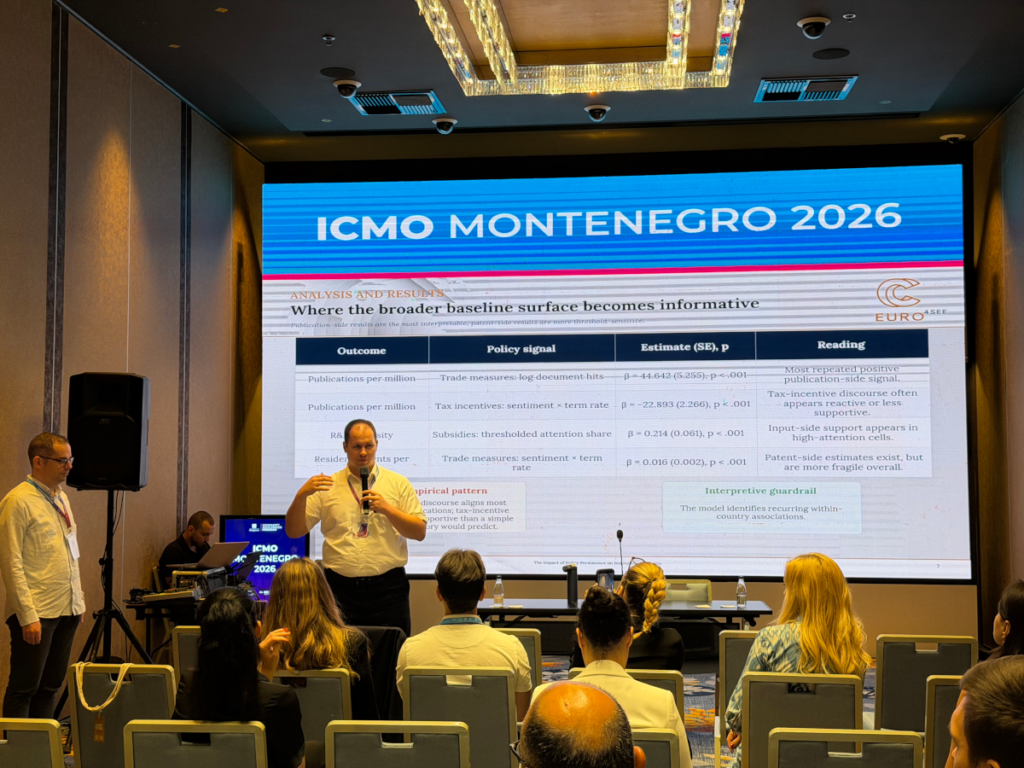
A particular highlight of the training was a real-world research use case titled “How the Institutional HPC Infrastructure Turned 50,647 Policy-Document URLs into a Reproducible Country-Year Research System”, presented by researcher, Bozidar Vlacic, from the and the Católica Porto Business School & CEGE, Universidade Católica Portuguesa and University of Donja Gorica. The use case demonstrated in concrete terms the transformative power of HPC for research and business analytics: using EuroHPC supercomputing infrastructure, the research team processed over 50,000 candidate policy-document URLs, successfully downloading and converting nearly 37,000 PDFs — totalling 92.6 GB of data — into a clean, analysis-ready country-year database spanning 55 countries over the period 2007–2021. A task estimated to take nearly 30 days on a standard laptop was completed in a single overnight cluster run of under 16 hours, compressing time-to-evidence dramatically and making a previously unfeasible large-scale empirical study operationally credible. The resulting research system examined how industrial policy signals in public documents relate to national innovation capability — measured through R&D intensity, scientific publications, and resident patents — delivering directly actionable insights for both policymakers and business analysts.

This use case illustrated to the business community how HPC is not only a tool for science and engineering, but a strategic enabler for data-driven management, policy analysis, and competitive intelligence.

NCC Montenegro at ICMO2026

EuroCC and MonteDiH Support Public Sector Institutions in Montenegro

Through the joint efforts of the EuroCC and MonteDiH projects, successful collaboration has been established with three public administration institutions in Montenegro. Within this collaboration, EuroCC facilitated access to advanced computing resources, while MonteDiH delivered training sessions aimed at strengthening digital competences within the public sector. This partnership demonstrates how synergies between European and national initiatives can deliver concrete results for public institutions, contributing to Montenegro’s broader digital transformation agenda.

EuroCC and MonteDIH

NCC Montenegro at EESTEC GenAI Workshop: Bridging HPC, AI, and Montenegro’s Digital Future

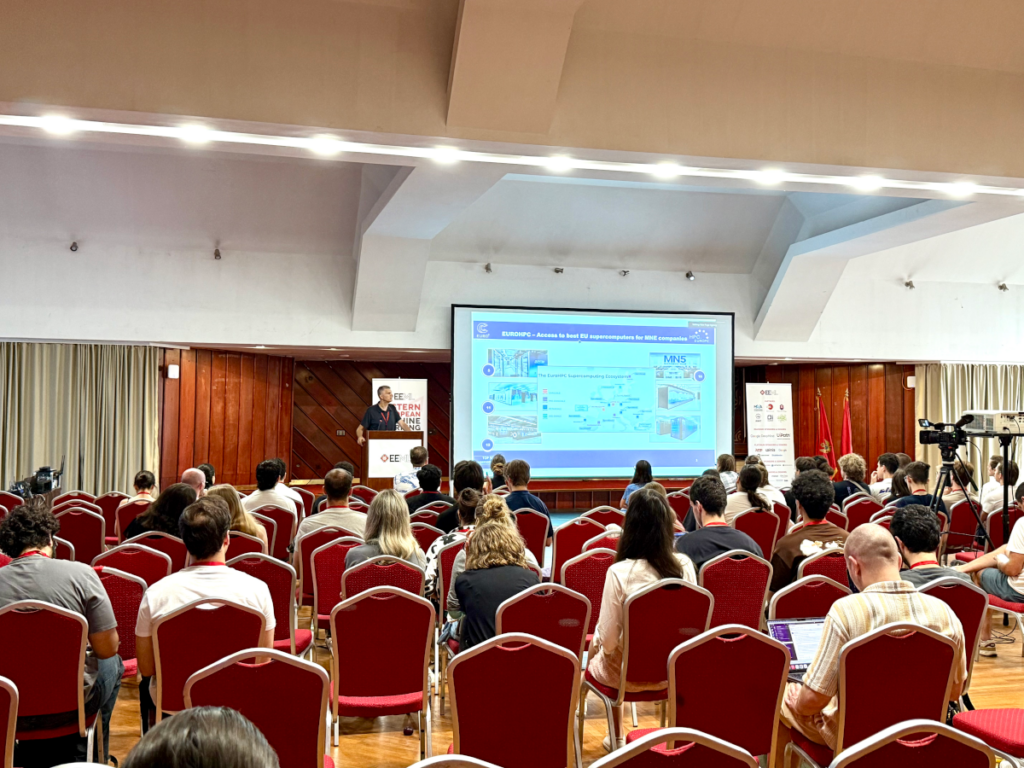
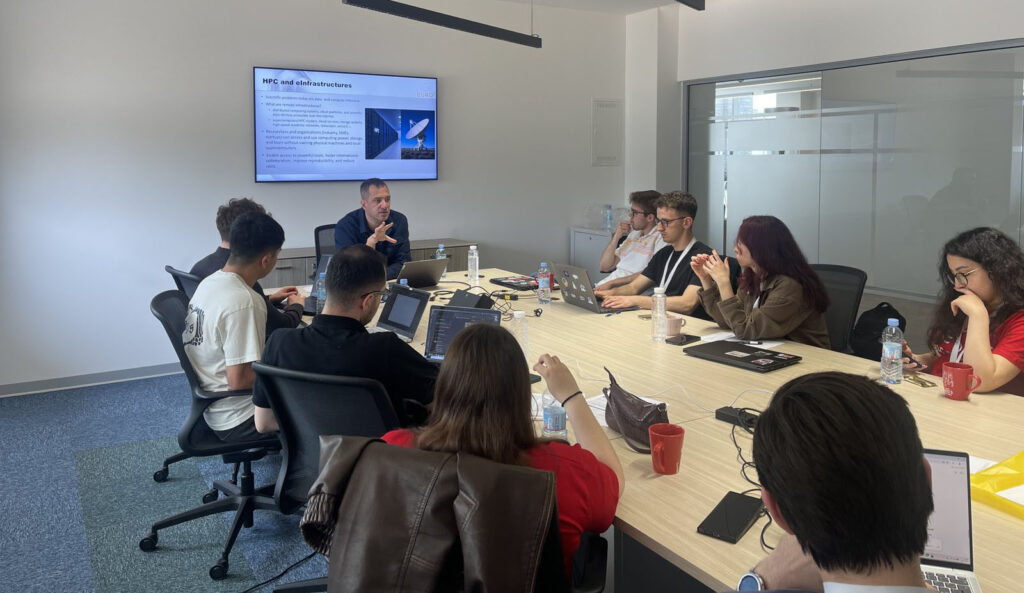
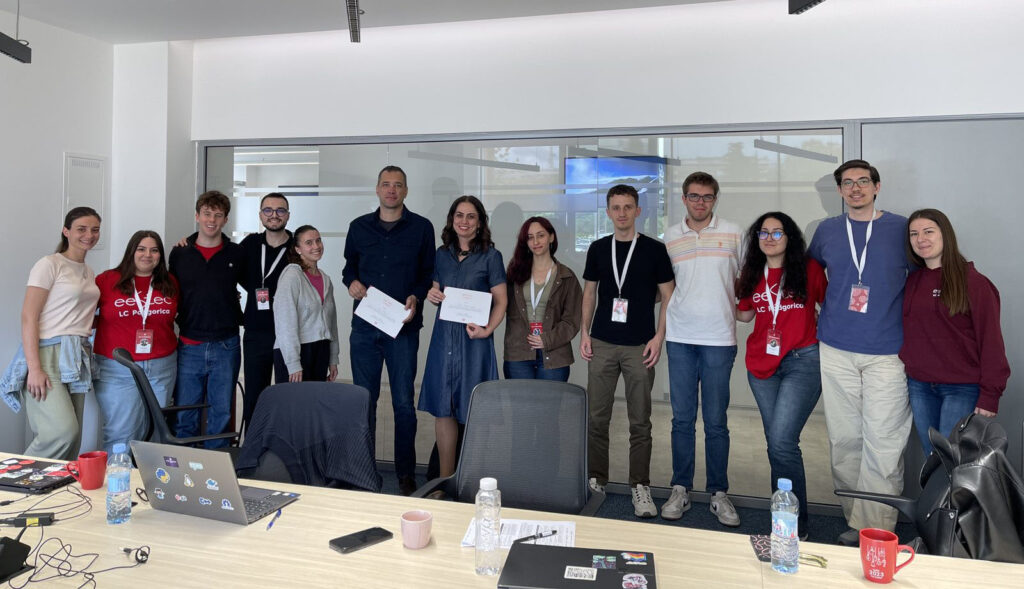
NCC Montenegro delivered an invited lecture titled “HPC & AI: Powering Montenegro’s Digital Development” at the Generative Artificial Intelligence Workshop organized by EESTEC LC Podgorica, held from May 15–20, 2026. The event brought together students from Montenegro and across Europe, reflecting the growing international interest in AI and HPC topics in the region.

The lecture covered the fundamentals of High-Performance Computing and eInfrastructures, as well as Montenegro’s active involvement in the EuroCC network and related national initiatives. A particular focus was placed on real-world applications of HPC and AI relevant to Montenegro’s digital development — including smart agriculture, medical imaging, weather forecasting, financial analytics, and document process automation. Participants were introduced to NCC Montenegro’s portfolio of success stories, showcasing how Montenegrin companies and research institutions are already leveraging advanced computing technologies. The lecture highlighted EuroHPC infrastructure and access opportunities available to students, researchers, and SMEs through NCC Montenegro, reinforcing the Centre’s commitment to building HPC and AI competences across academia, industry, and public administration.

FFplus webinars

High-performance computing is no longer confined to laboratories; it is the new engine of industrial competitiveness.

Join FFplus for our upcoming webinar series, ‘Accelerating SME Business Value with High-Performance Computing’, in which we explore the work of pioneers bridging the gap between advanced computing and real-world business value.

Each session draws on success stories to demonstrate how to maximise the impact of SMEs, bridge the gap between high-performance computing and value creation for SMEs, and boost the competitiveness of SMEs.

Register to the webinars, learn about how strategic HPC integration is redefining industrial competitiveness and get inspired!

Registration :

Gray Scott school 2026

The Gray Scott School is an advanced training program dedicated to High-Performance Computing (HPC), led by experts from IJCLab, CNRS, Inria, LUPM, LPNHE & LISN. This summer school, in a unique format and entirely free of charge, is dedicated to programming and optimization on Heterogeneous Architectures.

The school covers the optimization of computations on different types of hardware (CPU, GPU), presenting their respective characteristics, architectures and bottlenecks. It covers generic optimization methods applicable to all types of hardware, as well as the various libraries, technologies and languages available to achieve the best possible performance. Ideally, the peak performance of the machine.

Gray Scott school 2026

Through hands-on sessions, lectures, and regular technical webinars, the school equips participants with the skills needed to design, optimize, and scale high-performance applications.

All optimization techniques taught during the school are illustrated using a single reference problem: the simulation of a Gray Scott reaction.

Dates: 2 weeks between June 22 and July 3, 2026
Location: Online or onsite, or from Satellite Sites
More info & Registration: https://cc-fr.eu/gray-scott-school-2026/
Price : Free of charge.

Open to students, researchers, and professionals with basic programming experience who wish to develop HPC competencies.

Gray Scott Thursdays

What sets this program apart is its in-depth summer sessions combined with a preparatory series of 18 live webinars, from January to June, known as Gray Scott Thursdays. These webinars, held weekly and presented by the school’s professors, provide an early insight into the key concepts and technologies that will be explored more intensively during the school. More info

Successfully Implemented Training on 3D Printing, Generative AI, and HPC

The training on 3D Printing, Generative AI, and High-Performance Computing (HPC) was successfully implemented as planned, bringing together participants interested in emerging digital technologies and their practical application in design and production. Through the training, attendees had the opportunity to explore the fundamentals of 3D printing, digital modelling, and the growing role of generative AI tools in creating and improving 3D models.

There was around 40 people attending the 2-day course

A key message of the training was that generative AI is becoming an important driver of innovation, enabling faster idea generation, automated design support, and new creative workflows. At the same time, such models often require significant computing power for training, fine-tuning, and large-scale inference. This is where HPC plays a crucial role, providing the infrastructure needed to efficiently run advanced AI models and support more complex, data-intensive tasks. By connecting 3D printing, generative AI, and HPC, the training highlighted how these technologies can work together to accelerate innovation in education, research, and industry.

The attendees were split into teams and competed with their 3D models to be printed out
We stressed the importance of HPC to run GenAI tools for 3D modeling
Winning teams were able to print their models

NCC Montenegro Announces Short Course: 3D Printing, Generative AI & HPC-Enabled Design

The National Competence Center for High Performance Computing (NCC Montenegro) is launching a short course dedicated to the emerging intersection of 3D printing, generative artificial intelligence, and high-performance computing (HPC). The course is designed to provide participants with practical insight into the full digital fabrication pipeline — from concept and model creation to the production of a physical prototype.

During the two-day program, participants will learn the fundamentals of 3D printing technologies, CAD-based modeling, and model preparation for printing, while also exploring how Generative AI tools can automatically generate and enhance 3D models. A special segment of the course will focus on the role of HPC infrastructure in enabling advanced generative design workflows, including the training and deployment of AI models for complex design generation and optimization.

Designed for students, researchers, and professionals

The course combines theoretical lectures with hands-on sessions, allowing participants to experiment with AI-assisted model generation and prepare designs for 3D printing. The program culminates in a final project where participants implement the complete workflow — from AI-generated concept to printed prototype.

The course is intended for students, researchers, engineers, makers, and professionals interested in digital fabrication, AI-assisted design, and advanced computational technologies. The course will take place on March 26th and March 30th.

Link for registration: https://forms.gle/c1vhhJZRcoXe2Br87