HPC Use Case: Large-Scale Text Analysis of Industrial Policy

Within the EuroCC initiative, this project demonstrates how High Performance Computing (HPC) enables a new approach to analysing industrial policy through large-scale text data.

Modern innovation policies are increasingly embedded in strategies, reports, and policy documents. This project treats those documents as data, transforming them into measurable indicators that can be linked to national innovation performance.

From Raw Data to Analytical Insights -The study started with over 50,000 policy documents and processed more than 36,000 clean texts, resulting in a structured dataset of 825 country-year observations across 55 countries (2007–2021).

Overview of data

Using Natural Language Processing (NLP), the project extracts key policy signals, including:

  • policy attention (how much a topic is discussed)
  • policy orientation (whether it is framed positively or negatively)

These signals allow policy discourse to be analyzed quantitatively and linked to innovation outcomes.

HPC infrastructure was essential for executing the full pipeline.

The complete workflow was finished in approximately 16 hours, while the same process on a standard laptop would take several weeks.

This enabled large-scale data processing, rapid iteration of models, and robust cross-country analysis.

Results summary

The results show that industrial policy does not have a uniform effect on innovation. Instead, its impact depends on both the type of policy and how it is communicated.

Key insights include:

  • different policy categories influence innovation outcomes differently
  • scientific publications respond faster than patents or R&D investment
  • text-based policy signals can serve as early indicators of changes in innovation environments

Impact – This project highlights how HPC enables:

  • transformation of unstructured text into analytical datasets
  • integration of policy analysis with economic outcomes
  • development of new tools for monitoring innovation systems

It also demonstrates the value of policy documents as a strategic data source for researchers, firms, and policymakers.

Conference paper at IEEE IT2026 on intepretable ML for diabetes screening

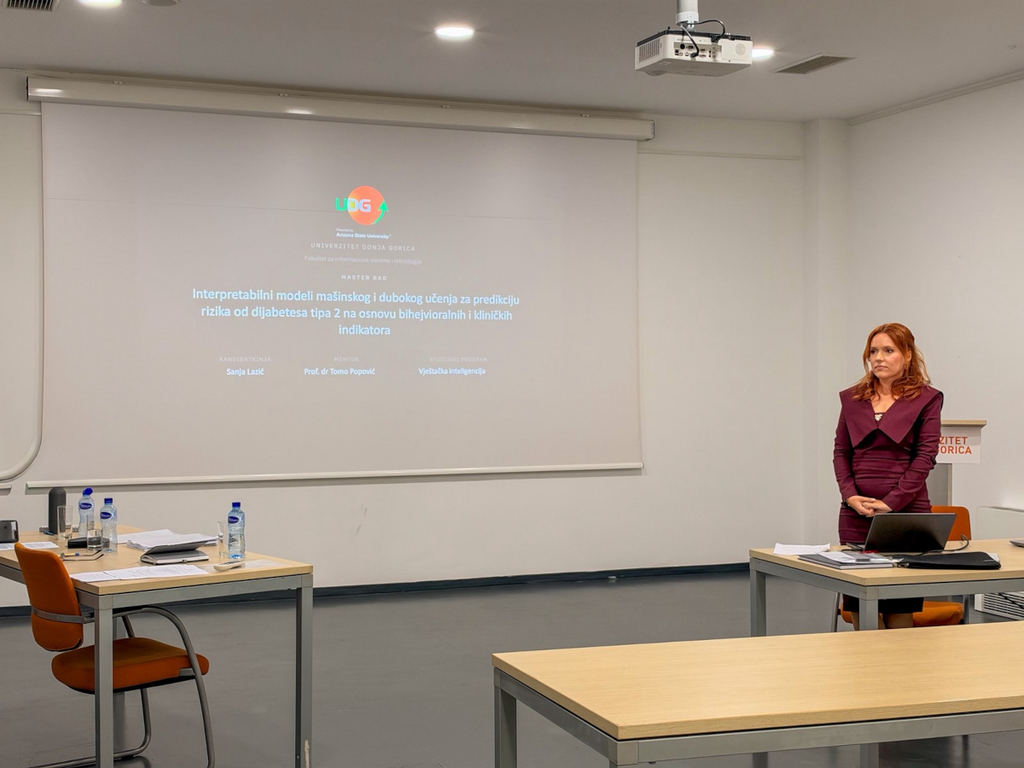
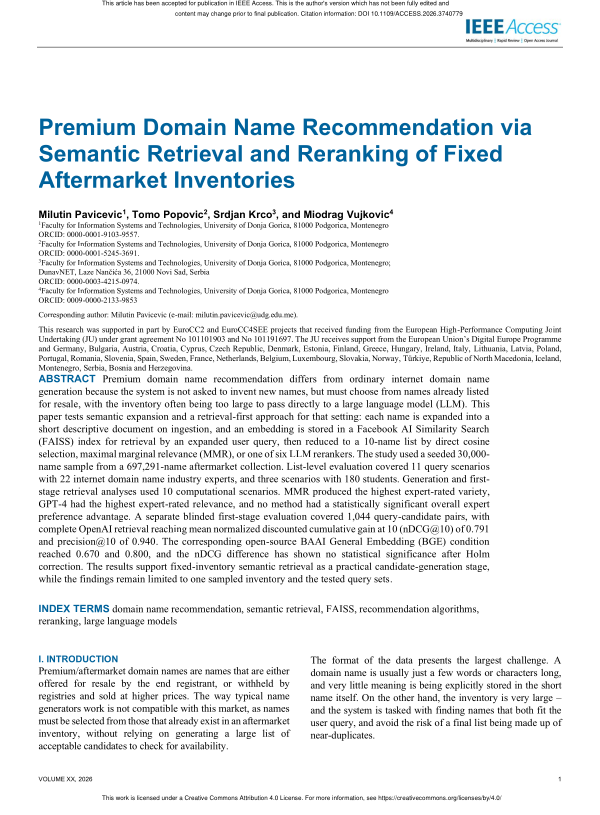
AI-AGE team presented a paper titled “Interpretable ML for Diabetes and Prediabetes Screening Using Self-Reported Health Indicators” by S. Lazic, S. Cakic, I. Rubezic Lukic, N. Popovic, and T. Popovic at the 30. Annual Conferenc on Information Technology IT 2026. This was part of mentoring activities and efforts related to development of young researchers.

Image source AI-AGE

ABSTRACT – Early identification of type 2 diabetes (T2D) and prediabetes enables timely interventions, yet screening often relies on self-reported data rather than laboratory testing. This work compares lightweight Machine Learning (ML) models: Logistic Regression (LR), Random Forest (RF), Extreme Gradient Boosting (XGBoost), Light Gradient Boosting Machine (LightGBM), and Multilayer Perceptron (MLP) trained on 21 self-reported indicators from the 2015 Behavioral Risk Factor Surveillance System (BRFSS) dataset for three-class classification (no diabetes, prediabetes, diabetes). We propose a screening-oriented evaluation where a probability threshold is selected to achieve a target sensitivity (recall) of 0.80. LightGBM achieves balanced accuracy of 0.52 and precision of 0.33 at the target sensitivity, with 38% of cases flagged. Tree SHapley Additive exPlanations (TreeSHAP) highlight general health status, age category, body mass index (BMI), and hypertension as dominant predictors. A FastAPI web application provides individual risk estimates and instance-level explanations. The pipeline demonstrates feasibility of interpretable, calibrated screening from non-laboratory data.

AI and HPC for Honey Authenticity: PollenTrace at IEEE IT2026

At the IEEE IT2026 conference in Žabljak, researchers from the University of Donja Gorica presented PollenTrace, an innovative project combining Artificial Intelligence and High Performance Computing (HPC) to enhance honey authenticity verification. Traditional pollen analysis (melissopalynology), while reliable, is time-consuming and dependent on expert knowledge. PollenTrace addresses this limitation by developing a large-scale microscopy dataset and an AI-driven detection pipeline capable of automatically identifying pollen grains in honey samples.

The project is building a dataset of over 33,000 high-resolution microscopy images derived from more than 1,100 biological samples collected across Montenegro, enabling the development of robust and scalable AI models. As a proof of concept, a deep learning model based on YOLOv11 was trained on annotated microscopy images, achieving 84% precision and 88% recall, demonstrating strong potential for automated pollen detection and future large-scale deployment.

HPC resources played a key role in enabling efficient model training and handling of high-resolution image datasets, highlighting the importance of national HPC infrastructure—such as that provided through NCC Montenegro -in supporting advanced AI applications in agri-food systems. This is also cross-project collaboration.

PollenTrace represents a step forward toward digital, scalable, and reproducible food authenticity verification, with strong potential to support laboratories, regulatory bodies, and industry in ensuring product quality and consumer trust. PollenTrace is supported as a PoC project by the Innovation Fund of Montenegro.

PhD Defence at UDG: Advancing AI and HPC in Precision Agriculture

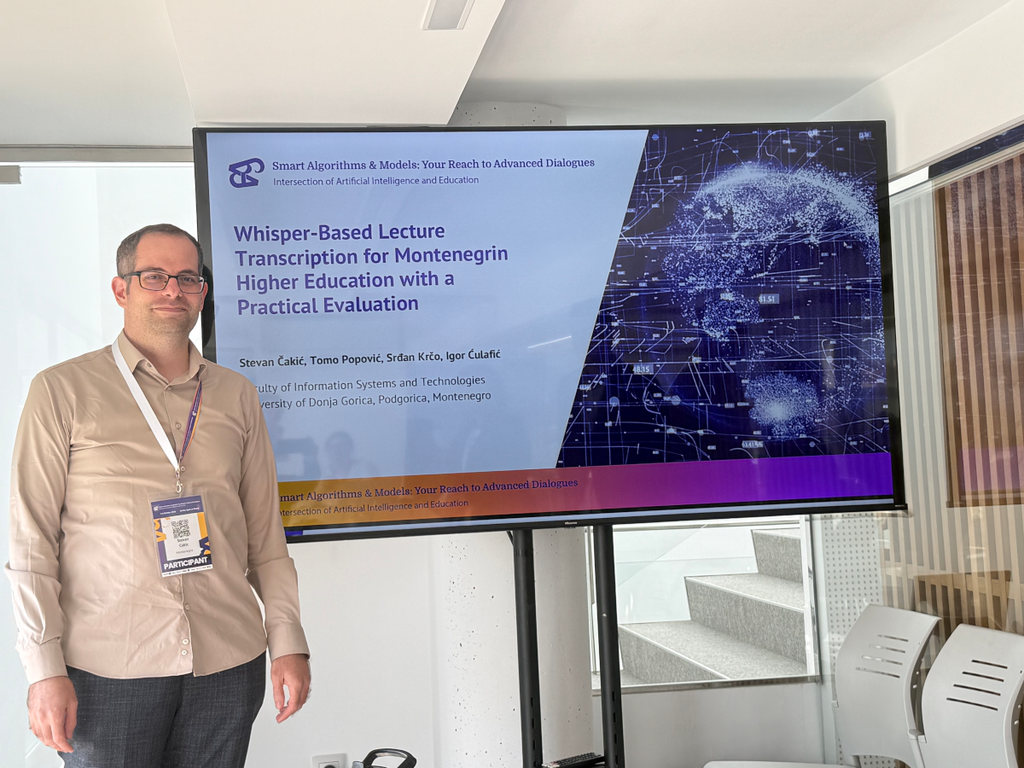
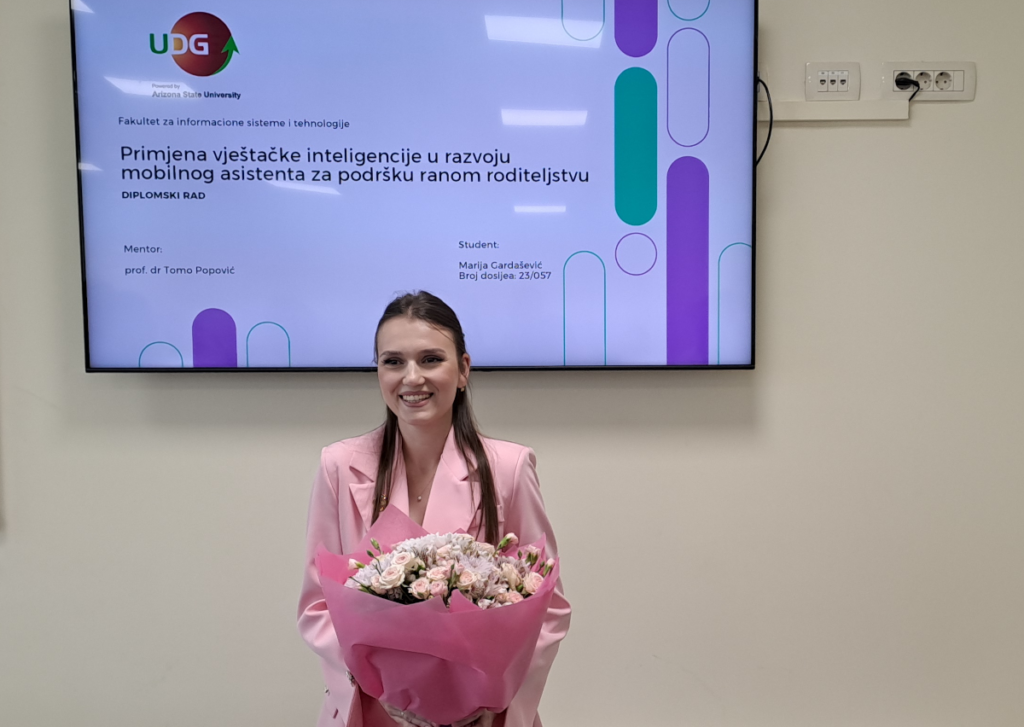
The University of Donja Gorica, through the Faculty for Information Systems and Technologies, proudly announces the successful PhD defence of Mr. Stevan Čakić, focused on the application of Artificial Intelligence and High-Performance Computing in precision agriculture.

The research addresses key challenges in modern agriculture, particularly in poultry farming, by leveraging deep learning and computer vision models for real-time monitoring, early disease detection, and improved farm management. The models were developed and trained using HPC resources, enabling efficient experimentation and achieving high prediction accuracy exceeding 92% . A significant contribution of this work lies in the integration of HPC-based model development with deployment on edge devices in real farm environments, demonstrating a complete AI-to-industry pipeline. The research also explores the use of generative AI and synthetic data to reduce dependency on large annotated datasets, accelerating innovation cycles.

mr Stevan Cakic presenting his PhD Thesis on AI/HPC in precision agriculture

Importantly, part of this research was conducted in synergy with the FFplus experiment and in direct collaboration with industry partners, highlighting the role of HPC in enabling real-world, industry-driven AI applications. This achievement further demonstrates the impact of the NCC Montenegro and EuroCC2 & EuroCC4SEE initiatives in supporting advanced research, fostering academia-industry collaboration, and promoting the adoption of HPC technologies in strategic sectors such as agriculture.

Researchers from the Faculty of Science and Mathematics published a journal paper on models tested on Leonardo HPC

We are pleased to announce that the research team from the Faculty of Science and Mathematics has published a scientific paper titled “Data augmentation for fuselage panel inspection via 3D point cloud segmentation” in the Journal of Electronic Imaging. The paper presents advanced data augmentation methods to improve fuselage panel inspection using 3D point cloud segmentation, contributing to more accurate and reliable AI-based inspection systems. The research was enabled by access to the Leonardo HPC supercomputing resources, granted through the EuroCC2 project, which allowed the team to process large datasets and develop high-performance models efficiently. More info at: https://doi.org/10.1117/1.JEI.35.3.031202

Click on image to open DOI link

HPC and Artificial Intelligence in Healthcare: From Strategy to Clinical Impact

Podgorica, 13 February 2026 – The Faculty of Medicine at the University of Montenegro hosted a regional symposium dedicated to the application of High-Performance Computing (HPC) and Artificial Intelligence (AI) in healthcare and medical research.

The event was organized by NCC Montenegro, in collaboration with the Faculty for Information Systems and Technologies (UDG) and the Faculty of Medicine (UoM), within the framework of the EuroCC2 and EuroCC4SEE projects, with additional support from the AI-AGE research project.

Bringing together approximately 20 participants from healthcare institutions, academia, innovative companies, and regional partners from Bosnia and Herzegovina, the symposium aimed to strengthen collaboration and advance the adoption of AI and HPC technologies in the health sector.

From Vision to Implementation

The programme combined strategic presentations, regional cooperation sessions, and technical demonstrations, creating a comprehensive overview of the current state of HPC and AI in healthcare.

NCC Montenegro presented Montenegro’s role as a national reference point for HPC, High-Performance Data Analytics (HPDA), and AI development. The presentation traced the entire pipeline—from clinical and biomedical data collection to AI model development and HPC-accelerated deployment.

A central message of the event was clear: HPC in healthcare is not merely about computational speed. It enables rigorous validation, reproducibility, and scalable deployment of AI models in real clinical environments.

Use cases discussed during the symposium included radiology, digital pathology, cardiology, genomics, ICU monitoring, and public health forecasting

AI-AGE: Advancing Research on Ageing

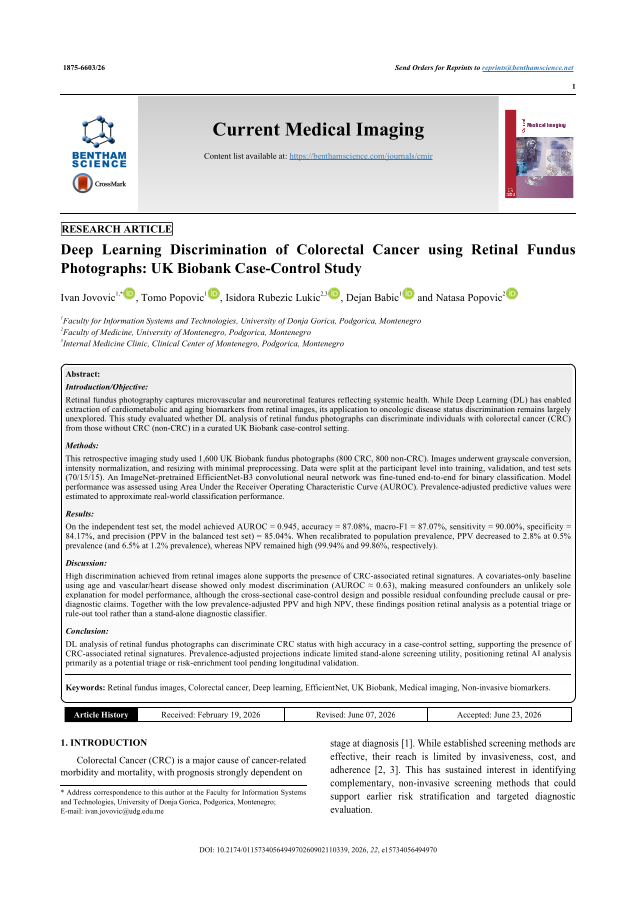
A dedicated session focused on the AI-AGE project, which explores retinal fundus imaging as a potential biomarker for accelerated biological ageing.

The interdisciplinary team presented research results based on UK Biobank data and datasets collected in Montenegro. Findings indicate that the complexity of retinal microvascular networks may decline more rapidly in patients with chronic diseases, highlighting potential applications in early diagnosis and monitoring.

Speakers emphasized the importance of careful model validation, addressing training bias, and ensuring responsible clinical deployment. The discussion also highlighted the potential of EuroHPC resources to further strengthen research capacity and computational scalability

Technical Showcase: AI Solutions Already in Practice

One of the most dynamic parts of the symposium was the Technical Showcase, where companies from Montenegro and Bosnia and Herzegovina presented concrete AI and HPC-enabled healthcare solutions.

Among the showcased innovations were:

  • AI-powered colon cancer detection in digital pathology using deep learning on high-resolution histopathology slides
  • AI-driven IoT platforms supporting clinical decision-making and patient management
  • AI systems for Alzheimer’s disease care, including predictive digital twins and multimodal reasoning tools
  • HPC-supported computational simulations accelerating pharmaceutical drug development

A particularly valuable component of the session was the sharing of experiences from companies that successfully applied for and received EuroHPC computing resources. These examples demonstrated how access to supercomputing infrastructure directly enhances model development, testing, and product readiness.

Strengthening Regional Cooperation

The symposium also included a regional twinning workshop between NCC Montenegro and NCC Bosnia and Herzegovina.

The session focused on joint strategies for stakeholder engagement, cross-border resource sharing, and knowledge transfer. The discussion confirmed that the twinning model is an effective mechanism for strengthening the South-East European HPC ecosystem and facilitating access to European supercomputing infrastructure.

Such cooperation is particularly important as the region prepares for the next phase of European HPC initiatives and increasing alignment with the EU AI Act and broader digital strategies.

Addressing Systemic Challenges

The event concluded with an interactive panel discussion titled “Orchestrating the Ecosystem.” Participants addressed key challenges facing AI adoption in healthcare, including:

  • The healthcare data gap and fragmentation
  • Regulatory complexity, particularly in the context of the EU AI Act
  • The need for stronger partnerships between industry, academia, and healthcare institutions

While AI model architectures continue to mature rapidly, participants agreed that the primary bottlenecks lie in data heterogeneity, evaluation standards, and deployment constraints rather than algorithmic limitations.

Healthcare representatives acknowledged the growing importance of HPC and AI in medical research but emphasized the need to improve institutional readiness for strategic and sustainable adoption.

A Strategic Step Forward

The symposium concluded with a shared commitment to:

  • Position AI and HPC as strategic priorities in healthcare innovation
  • Continue expanding infrastructure and access to HPC resources
  • Invest in skills development and capacity building
  • Strengthen regional collaboration across South-East Europe

The event marked an important step in connecting research excellence, industrial innovation, and clinical practice—demonstrating that HPC-enabled AI in healthcare is no longer a future concept, but an emerging regional reality.

PAID MNE Showcased in the EuroCC2/EuroCC4SEE Success Stories Booklet — Powering Smarter Trading with Supercomputing

We are proud to highlight PAID MNE as a featured success story in the EuroCC2 & EuroCC4SEE Booklet — demonstrating how HPC is transforming financial analytics and algorithmic trading.

EuroCC2 & EuroCC4SEE Booklet

At the heart of PAID MNE innovations lies PAID-T (Price Action Intelligent Detection Trading) — a smart trading platform that leverages advanced algorithms and AI/ML to dynamically adapt to market movements, optimise investment strategies, and manage risk with higher precision. Traditional computing systems quickly reached their limits. To unlock the required performance, the team scaled their solution to the LUMI supercomputer, one of Europe’s most powerful HPC infrastructures. By enabling multinode execution and real-time task distribution, PAID MNE achieved over 1.2 million simulations in under 5 hours — a process that previously would have taken days. This acceleration enables processing billions of historical transactions in hours instead of days, rapid identification of critical market patterns and data-driven optimisation/ increased accuracy of trading strategies.

PAID MNE success story

This achievement, showcased through the EuroCC2/EuroCC4SEE project, demonstrates how supercomputing is becoming a powerful enabler of business innovation. PAID MNE’s journey is a clear example of how HPC and AI together can transform complex, critical data into faster, more profitable decisions.