Quantum computing Access Call

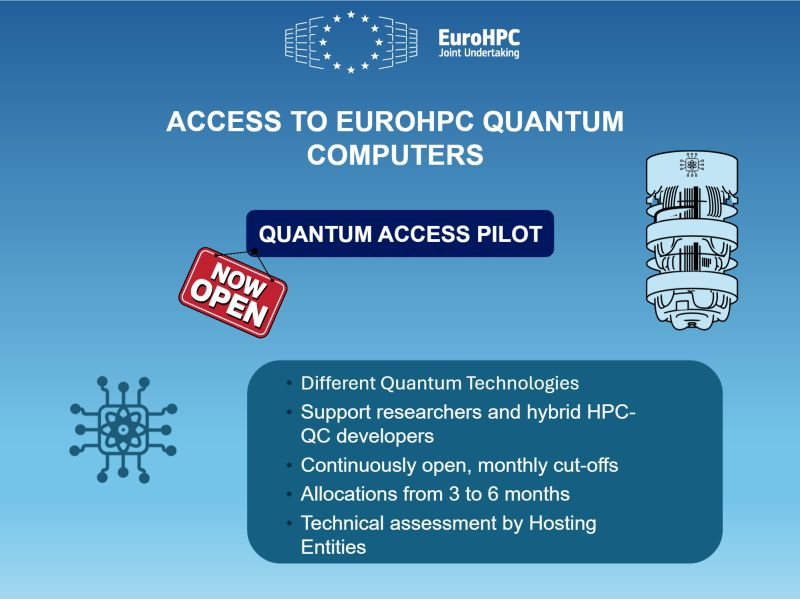
Today, the EuroHPC Joint Undertaking (EuroHPC JU) launched its very first Quantum Access Call !

Researchers, public institutions and companies across Europe can now request free access to the first EuroHPC quantum computers.

This is a unique opportunity to:

  • Experiment with different quantum technologies
  • Advance scientific discovery
  • Develop innovative quantum applications
  • Explore the potential of #quantumcomputing for real-world challenges

The call is continuously open, with the first cut-off date on 1 August 2026.

Ready to enter the quantum era?

Check the call details and apply for access on link https://www.eurohpc-ju.europa.eu/eurohpc-ju-opens-access-its-quantum-computers-2026-06-25_en

New HPC podcast episode: AI for football

This episode’s guest is ⁠David Sumpter⁠, Professor at ⁠Department of Mathematics; Statistics, AI and Data Science⁠ at Uppsala University in Sweden. He’s also the co-founder of Twelve Football, a company that helps football clubs understand all metrics better and make smarter decisions. We discuss the relation between math and football, their successes and challenges with working with football clubs and their AI product Earpiece.

Listen to the full episode in your favourite podcast app:  

🎧 Listen to the full episode in your favorite podcast app: 
 ⚪ HPC in Europe Portal: https://hpc-portal.eu/news/podcast
🟢 Spotify: https://open.spotify.com/episode/5LLxGvTSlp8AwYgH31g7vS?si=e3f01caa3eca4ce8
🟣 Apple Podcasts: https://podcasts.apple.com/gb/podcast/ai-for-football-david-sumpter-twelve-football/id1768782069?i=1000773951352
⚫️ RSS feed: https://anchor.fm/s/f01f82a4/podcast/rss

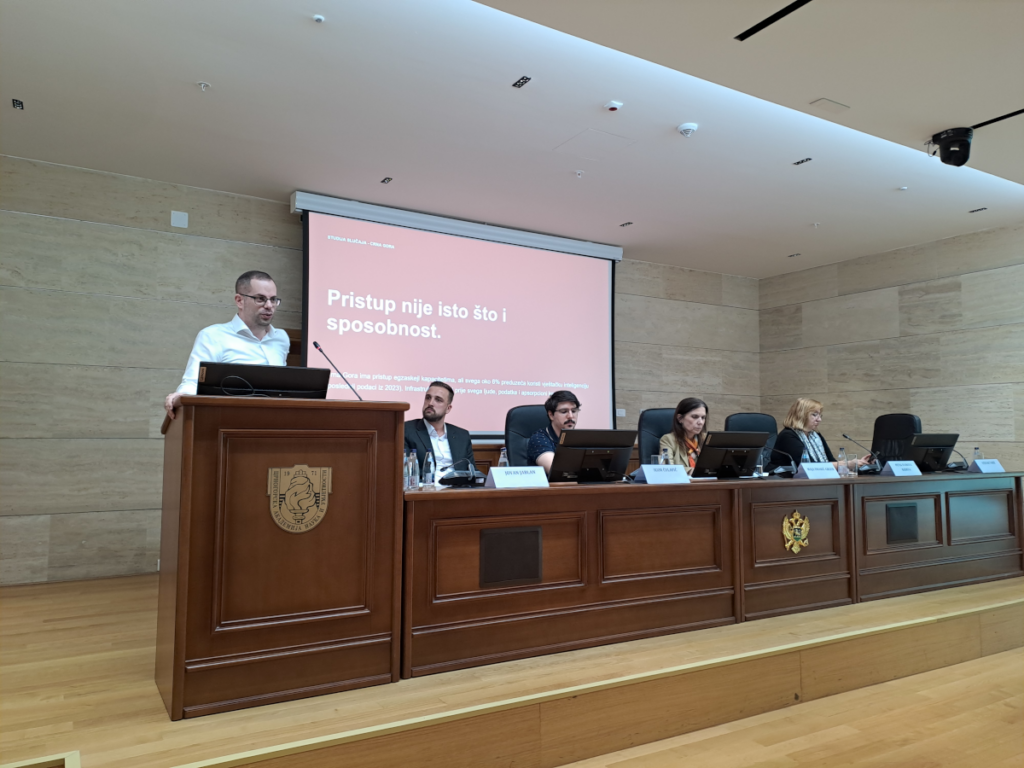
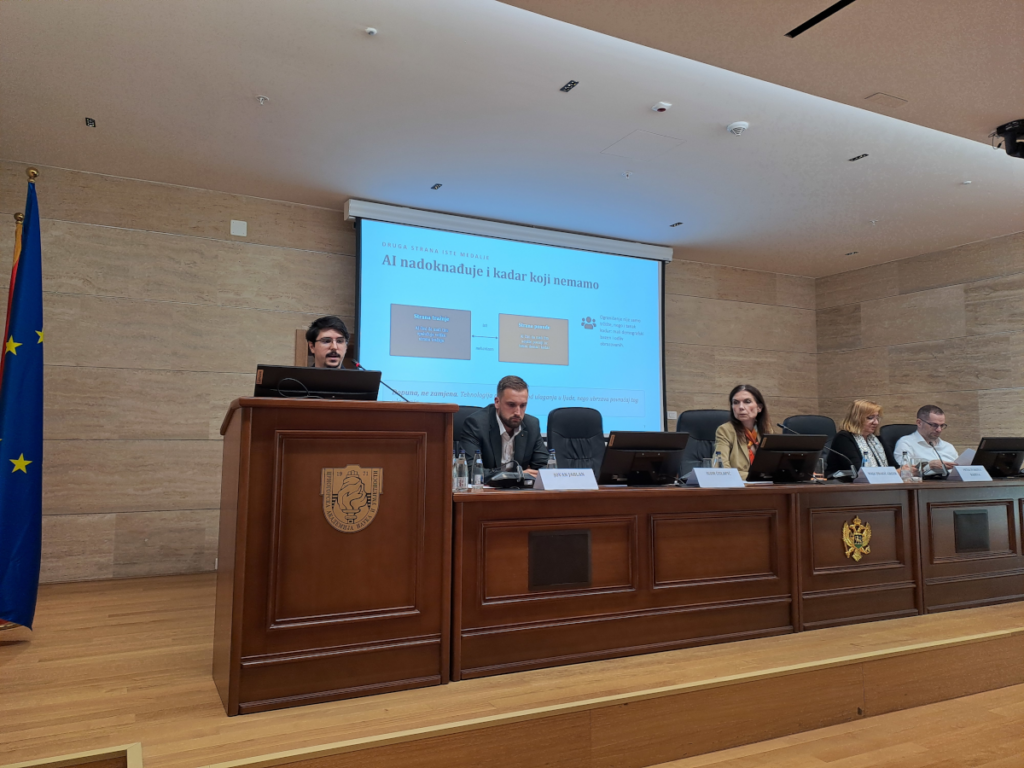
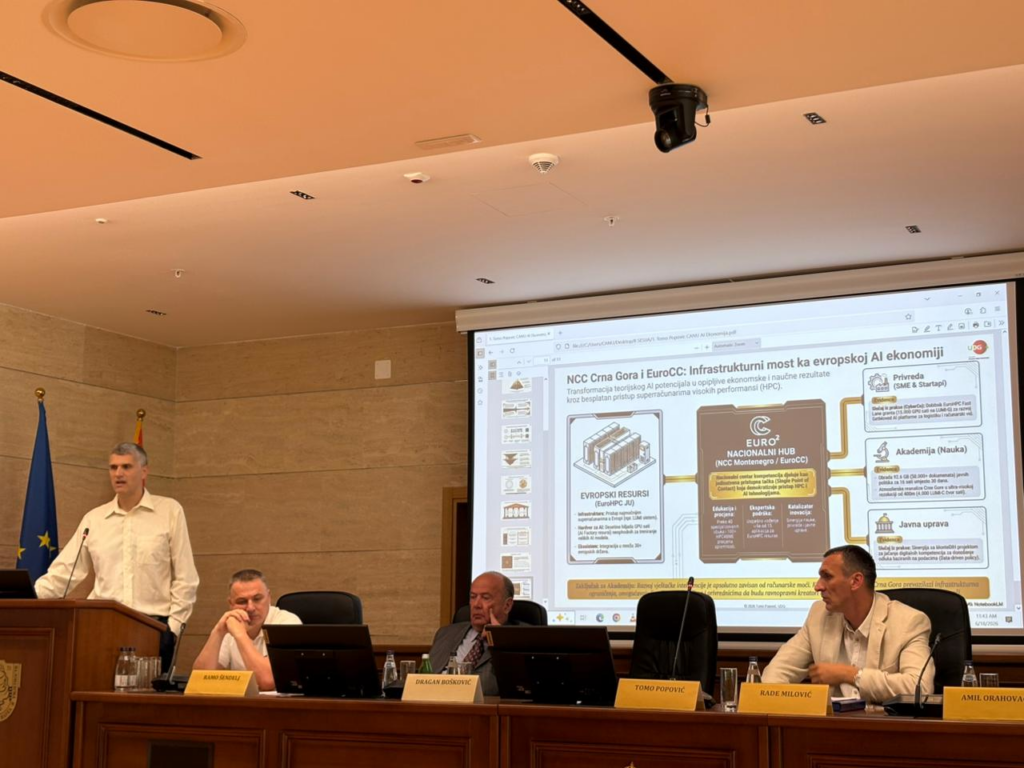
NCC Montenegro Team Participated in the “AI Economy” Scientific Event at MASA

Podgorica, 18 June 2026 – Members of the National Competence Centre for HPC in Montenegro – NCC Montenegro participated in the scientific event “AI Economy”, held at the Montenegrin Academy of Sciences and Arts (MASA) and organized by the Department of Social Sciences, through the Committee for Economic Sciences, Demography and Anthropology.

The event brought together representatives of academia, researchers, experts and stakeholders from different sectors to discuss the impact of artificial intelligence on the economy, education, professions, business models, digital transformation, healthcare, cybersecurity and broader societal change.

The participation of the NCC Montenegro team focused on connecting the topic of the AI economy with the challenges and opportunities of small economies, the development of local digital and AI capacities, and the role of education, communication and interdisciplinary skills in the emerging technological environment. A key message was that small economies should not remain only consumers of ready-made AI solutions, but should develop their own knowledge, infrastructure, research capacity and sector-specific expertise in order to actively participate in the AI economy.

The event was also used as an opportunity to feature the activities of NCC Montenegro, the EuroCC3 project, and the possibilities offered by the European HPC ecosystem to researchers, universities, the public sector and industry in Montenegro. In this context, the importance of HPC access was highlighted for the development and testing of AI models, large-scale data processing, advanced analytics, organizational digital transformation and the development of innovative industry-oriented solutions.

The NCC Montenegro team emphasized that the application of AI in the economy is not only a technological issue, but also a matter of human, institutional and infrastructural capacity building. For this reason, NCC Montenegro activities include support for accessing HPC resources, training, consultancy, academia-industry collaboration and awareness raising on how HPC and AI can contribute to business development, research, innovation and the improvement of education.

Participation in this event represents another step in strengthening cooperation between academia, industry and the public sector, particularly in areas where AI, HPC and data-driven approaches can contribute to competitiveness, efficiency and sustainable development in Montenegro.

NCC Montenegro will continue to promote the use of European HPC resources, strengthen local capacities and support organizations in Montenegro interested in developing advanced digital, AI and data-driven solutions.

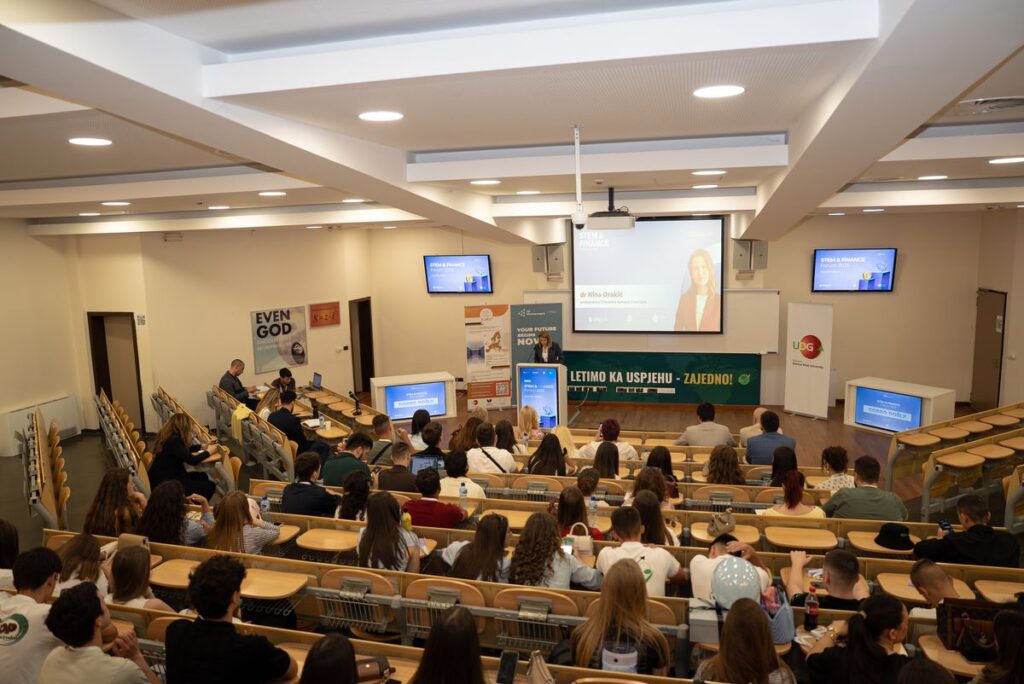
National Competence Centre of Montenegro (NCC Montenegro) and EuroCC3 Project Presented at the Montenegro STEM & Finance Forum 2026

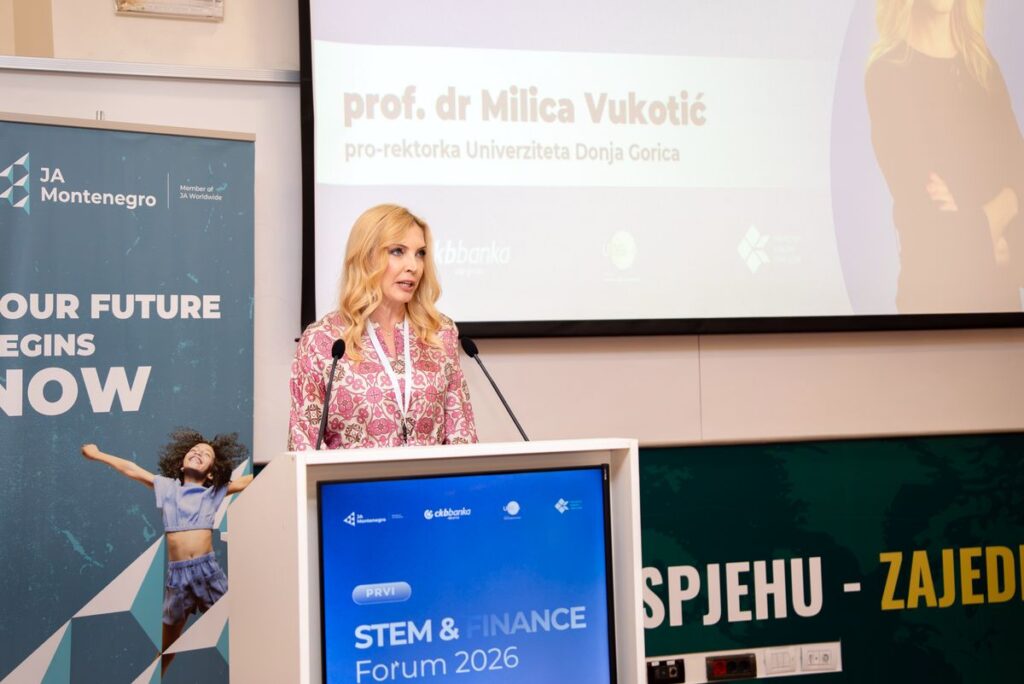
At the Montenegro STEM & Finance Forum 2026, successfully held on June 10th 2026 at the University of Donja Gorica, participants were introduced to the National Competence Centre of Montenegro (NCC Montenegro) within the framework of the international EuroCC3 project. The STEM & Finance Forum 2026 was an event dedicated to young innovators, entrepreneurs, and teams developing solutions in the fields of STEM (science, technology, engineering, mathematics), finance, circular economy, and social innovation.

The presentation of NCC Montenegro and the EuroCC3 project was delivered by Prof. Dr Milica Vukotić, Vice-Rector of the University of Donja Gorica and the NCC Montenegro member, who highlighted the importance of developing advanced computing capacities and artificial intelligence as key drivers of Montenegro’s digital transformation.

NCC Montenegro represents a key infrastructure for the development of advanced computing technologies in Montenegro. Through the EuroCC3 project, the centre supports businesses, research institutions and the public sector in accessing high-performance computing (HPC), artificial intelligence and big data analytics. The establishment of NCC Montenegro opens new opportunities for innovation, digital transformation and increased competitiveness of the Montenegrin economy on the European and global market, while also strengthening the link between science and industry through the joint development of solutions based on the most advanced technologies.

The Forum was organised by Junior Achievement Montenegro in cooperation with Chamber of Economy Montenegro and CKB bank in Montenegro and brought together representatives from academia and the business sector.

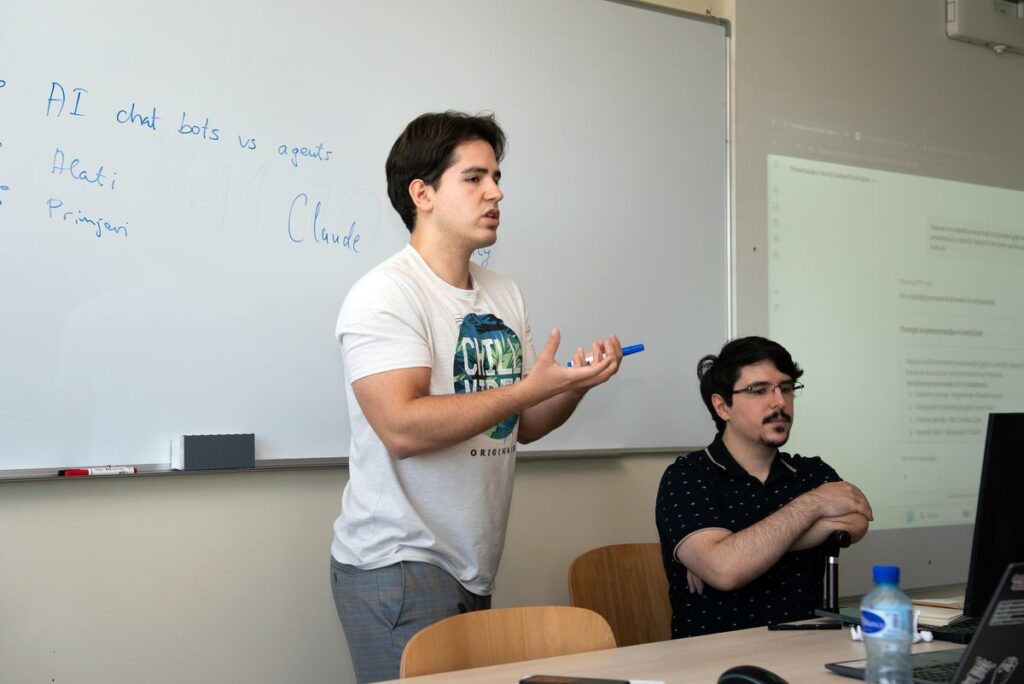
As part of the training programme, NCC Montenegro members, Arnad Lekić, Igor Ćulafić and Dr Stevan Čakić delivered a training session on the topic “The Use of AI Tools in Active Projects”, providing participants with insight into the practical application of artificial intelligence tools in real project scenarios and day-to-day work.

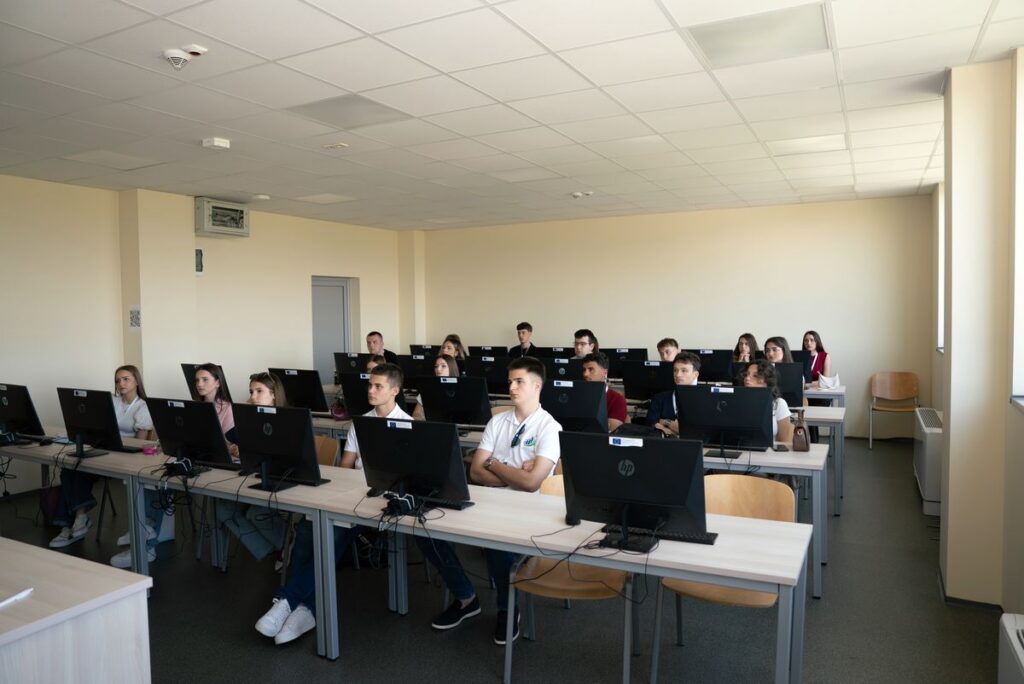
Dr Bojana Mališić delivered a training session on applying for EU projects, equipping participants with practical knowledge and guidance on accessing European funds and international financing programmes.

The presentation of NCC Montenegro at this event for young innovators and entrepreneurs reaffirms the University of Donja Gorica’s commitment to making advanced computing technologies and the outcomes of international projects accessible to the broader academic and business community in Montenegro.

NCC Montenegro at ICMO 2026 and Special Training Session on HPC/AI for Business Community

The National Competence Centre Montenegro (NCC Montenegro), operating within the EuroCC3 was presented at the ICMO 2026 International Conference on Management and Organization – “Sustainability by Design: Rethinking Strategy, People & Digital Futures”, held in Przno, Montenegro.

The conference brought together more than 300 participants from over 45 countries, with more than 30 keynote, invited, and editorial speakers, and a Scientific Committee comprising researchers from 46 countries, including representatives of all 27 EU member states. ICMO 2026 served as a high-level platform for the exchange of knowledge and experience between researchers, journal editors, doctoral candidates, institutional leaders, and business community representatives.

The EuroCC3 project and the activities of NCC Montenegro were presented by Stevan Čakić, member of the EuroCC3 project team, who outlined the role of the National Competence Centre Montenegro in building the national HPC and AI ecosystem, democratizing access to European supercomputing infrastructure, and supporting SMEs, academia, and public administration in adopting advanced digital technologies.

Special Training Session: HPC/AI for Business Competitiveness

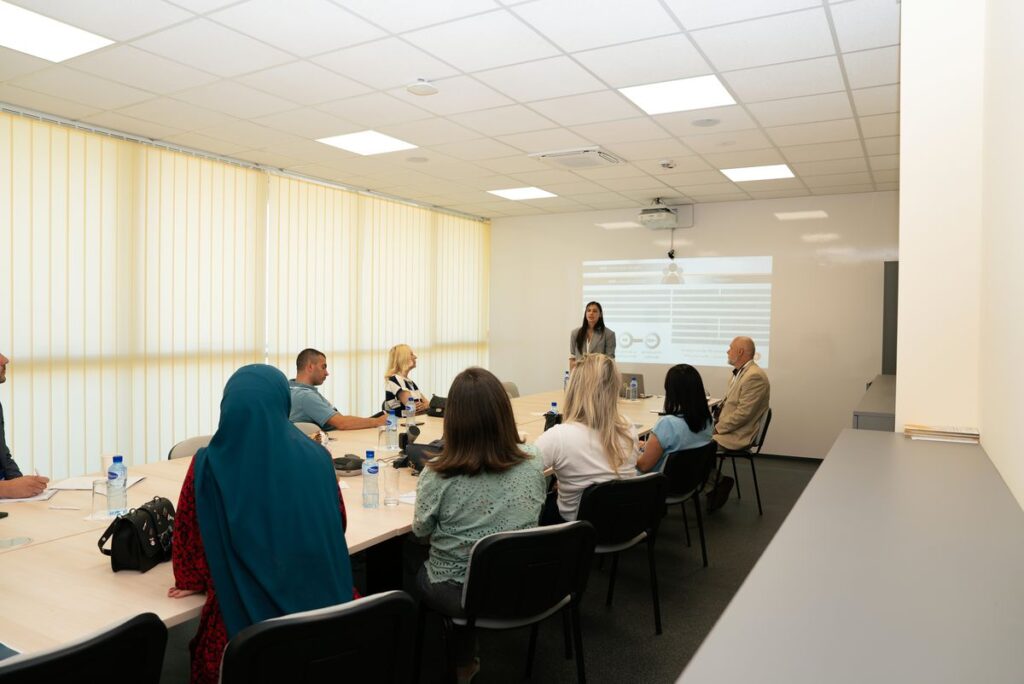
As part of the conference programme, NCC Montenegro organized a dedicated special session and training titled “Exploring HPC/AI and Management: Driving Organizational Competitiveness in the Digital Era”, specifically designed for SMEs and the wider business community.

The training addressed the growing need for small and medium-sized enterprises to leverage advanced digital technologies — including High Performance Computing (HPC), Artificial Intelligence (AI), and Big Data — as strategic tools for enhancing competitiveness, operational efficiency, and data-driven decision-making. Participants were introduced to key concepts and practical applications of HPC and AI in areas such as demand forecasting, financial modelling, predictive analytics, and data-driven business models, as well as the opportunities available through EuroCC3 and the EuroHPC Joint Undertaking, which provides free access to world-class European supercomputing infrastructure and expertise — including to SMEs and startups.

A particular highlight of the training was a real-world research use case titled “How the Institutional HPC Infrastructure Turned 50,647 Policy-Document URLs into a Reproducible Country-Year Research System”, presented by researcher, Bozidar Vlacic, from the and the Católica Porto Business School & CEGE, Universidade Católica Portuguesa and University of Donja Gorica. The use case demonstrated in concrete terms the transformative power of HPC for research and business analytics: using EuroHPC supercomputing infrastructure, the research team processed over 50,000 candidate policy-document URLs, successfully downloading and converting nearly 37,000 PDFs — totalling 92.6 GB of data — into a clean, analysis-ready country-year database spanning 55 countries over the period 2007–2021. A task estimated to take nearly 30 days on a standard laptop was completed in a single overnight cluster run of under 16 hours, compressing time-to-evidence dramatically and making a previously unfeasible large-scale empirical study operationally credible. The resulting research system examined how industrial policy signals in public documents relate to national innovation capability — measured through R&D intensity, scientific publications, and resident patents — delivering directly actionable insights for both policymakers and business analysts.

This use case illustrated to the business community how HPC is not only a tool for science and engineering, but a strategic enabler for data-driven management, policy analysis, and competitive intelligence.

NCC Montenegro at ICMO2026