HPC & AI in Healthcare: From Research to Clinical Practice in Montenegro and SEE

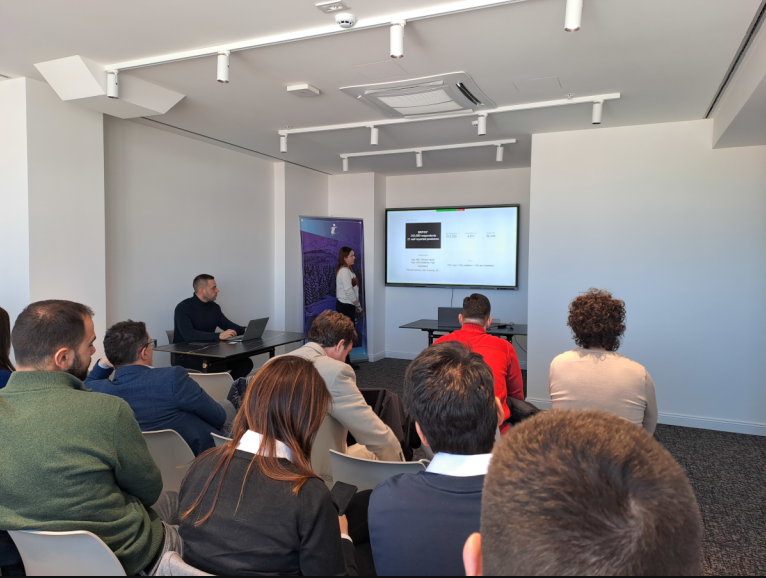
High-Performance Computing (HPC) and Artificial Intelligence (AI) are increasingly moving beyond research laboratories into real clinical environments. Across Montenegro and the SEE region, promising AI solutions have been developed for medical image analysis, biomarker detection, and predictive diagnostics. The critical challenge today is ensuring their structured transition from research prototypes to validated, deployable tools within healthcare systems.

Please contact us for attendance, limited number of seats

This event addresses precisely that transition. It focuses on how HPC infrastructure, interdisciplinary collaboration, and coordinated ecosystem support can accelerate the integration of AI into everyday clinical practice. Particular attention will be given to available computational capacities, real-life use cases, and pathways toward sustainable deployment.

The event is organized as a joint initiative between NCC Montenegro and NCC Bosnia and Herzegovina, within the broader framework of EuroCC 2 and EuroCC4SEE. It also represents a form of cross-project pollination with the AI-AGE project, demonstrating how research-driven innovation can evolve into applied healthcare solutions through regional cooperation.

Collaboration between NCC Monteengro and NCC Bosnia and Herzegovina

Researchers, clinicians, innovators, and industry partners are invited to join the discussion, exchange expertise, and contribute to shaping the next steps for HPC- and AI-driven healthcare across Southeast Europe. The event is scheduled for Friday, 13 Feb 2026. Please contact us for further details.

HPC Development for Very-High-Resolution Atmospheric Reanalysis in Montenegro

The Institute of Hydrometeorology and Seismology of Montenegro successfully secured HPC access from the EuroHPC JU Development Call for their project titled:
“HPC Development for Very-High-Resolution Atmospheric Reanalysis Using a Nonhydrostatic Mesoscale Model over Montenegro (1995–2024)”. The project aims to enhance mesoscale weather modeling capabilities using the WRF-NMM (Nonhydrostatic Mesoscale Model) and to investigate the scalability and performance of nonhydrostatic dynamic cores on state-of-the-art high-performance computing (HPC) architectures.

Through this initiative, the project was granted 4,000 node hours on the LUMI-C partition for a period of six months. The National Competence Centre (NCC) Montenegro provided support throughout the project application process.

MSc Thesis on Cross-Lingual Transfer Learning in Large Language Models

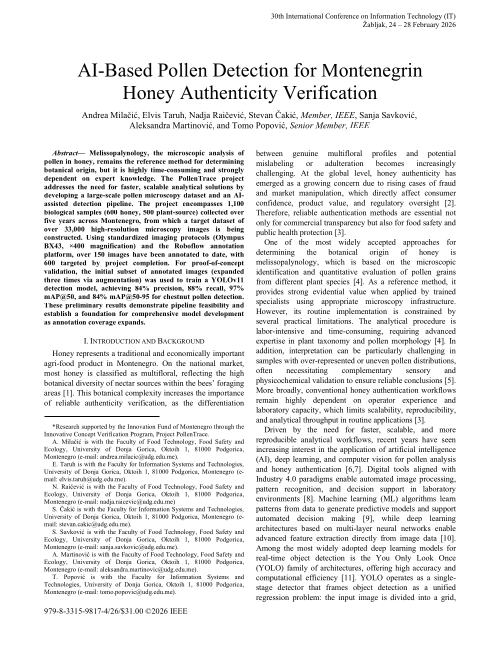
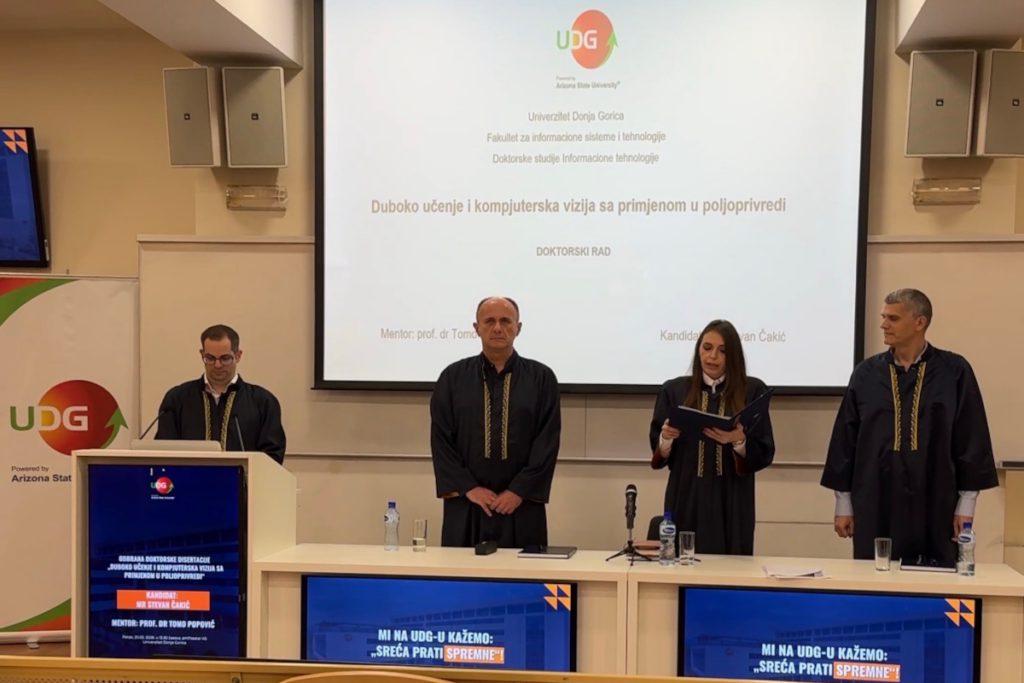
Mr. Igor Ćulafić successfully defended his master’s thesis titled “Cross-lingual Transfer Learning in Large Language Models: Scaling Laws and Parameter-Efficient Fine-Tuning for Multilingual Applications.” His research provides a comprehensive study of cross-lingual transfer for the Montenegrin language, combining a custom V-shaped semi-automated book scanner, a YOLOv11 + Tesseract OCR pipeline, and the creation of 46,661 parallel paragraph pairs. Using LoRA fine-tuning on Qwen2.5-7B and Qwen3-30B—executed on the Leonardo EuroHPC supercomputer—the work demonstrates parameter-efficient adaptation (only 1.05% trainable parameters) and offers insights into model behavior in cultural understanding, script mixing, and analytical reasoning. This research was supported by NCC Montenegro team and made use of the HPC cluster and EuroHPC JU computational resources.

V-shaped book scanner prototype used to create datasets

ABSTRACT – This thesis presents a comprehensive study of Cross-lingual transfer learning in Large Language Models with a focus on parameter-efficient fine-tuning for the Montenegrinlanguage. The research integrates the development of a custom semi-automated book scanner with V-shaped design and a computer vision pipeline using YOLO v11 models and Tesseract OCR to digitize 5000 on Montenegrin and 40000 on English language, from public domain books, resulting in 46661 parallel paragraph pairs. Implementation of LoRA fine-tuning on Qwen2.5-7B and Qwen3-30B models was conducted on Leonardo HPC supercomputer, achieving memory efficiency with only 1.05% trainable parameters. Comparative analysis through a structured benchmark of ten progressively complex questions reveals limited but positive effects of fine-tuning, where larger models show better performance in cultural understanding and analytical tasks, while systematic analysis identifies specific problems such as script mixing and cultural inaccuracies that require specialized approaches.

Master thesis: Application of Explainable Artificial Intelligence in Medicine

Ms. Ivana Lalatović successfully defended her master’s thesis titled “Application of Explainable Artificial Intelligence in Medicine” at the Faculty of Information Systems and Technologies, University of Donja Gorica.

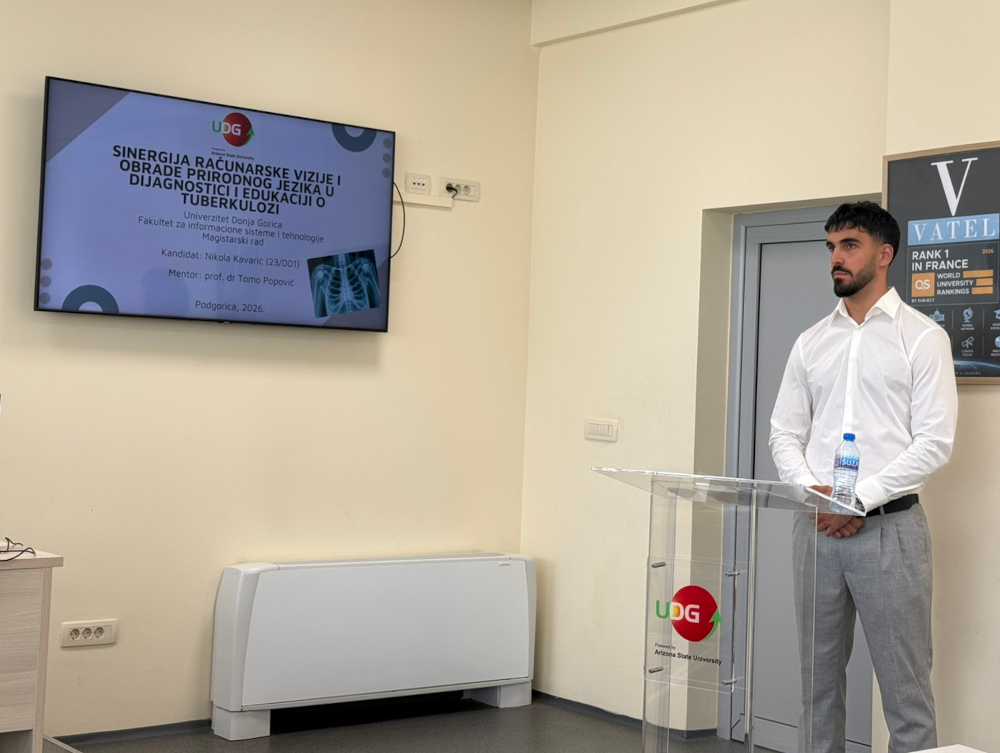
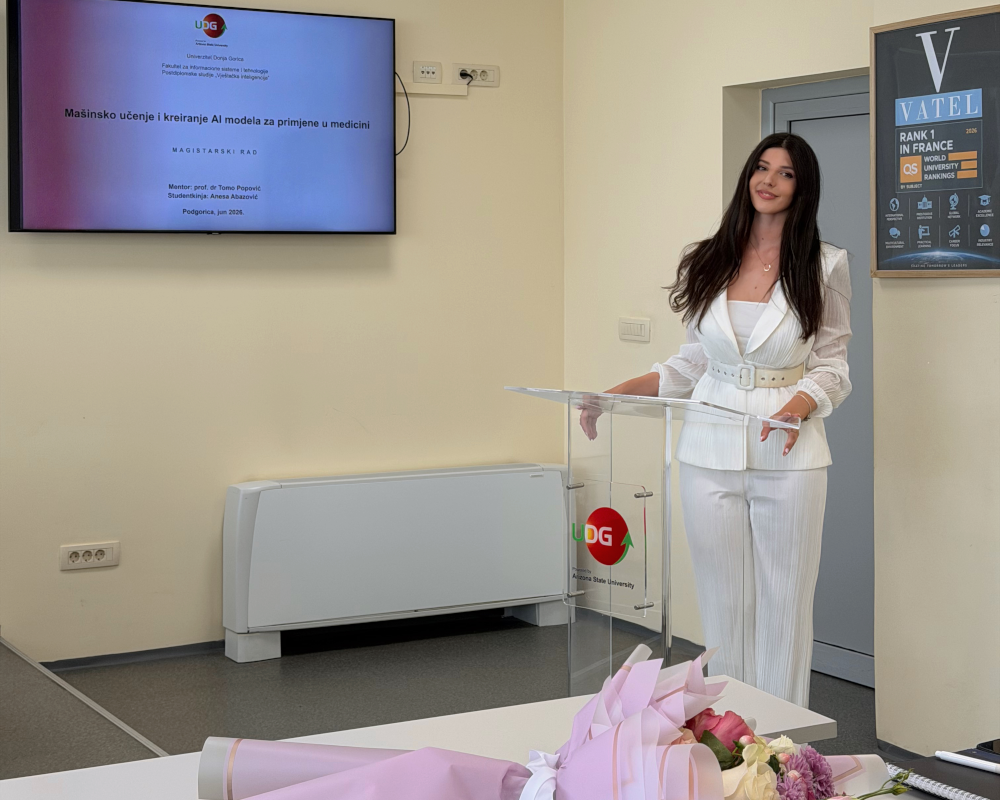
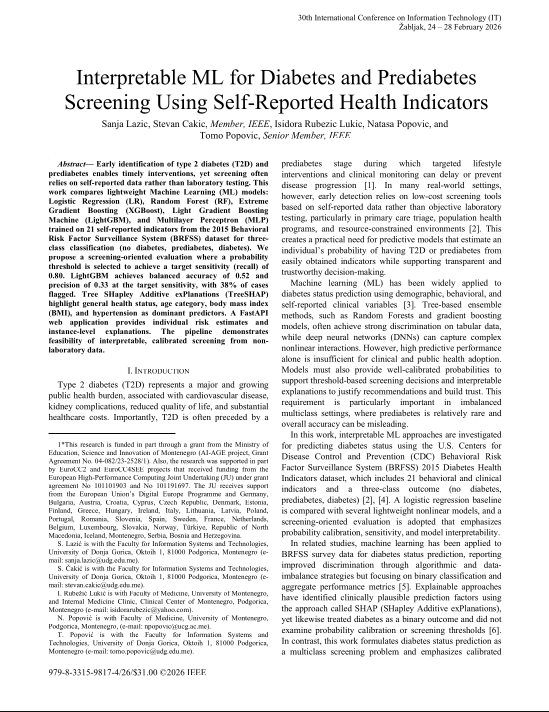
The defence took place in October 2025, and the thesis explored how modern XAI techniques—such as SHAP and LIME—can improve transparency and trust in AI models used for analysing the performance and reliability of medical respirators. The development, training, and testing of the machine learning and XAI workflows were supported by the high-performance computing (HPC) resources provided through the EuroCC initiative in Montenegro, enabling scalable data processing, faster experimentation, and reproducible analysis required for medical AI applications. Her work demonstrates how HPC-enabled explainability can strengthen the safety, reliability, and ethical use of AI in healthcare environments, contributing to the growing ecosystem of advanced AI research supported by NCC Montenegro.

SHAP utilisation

ABSTRACT – The need for explainable intelligent systems is growing along with the increase in artificial intelligence products used in everyday life. Explainable artificial intelligence (XAI) has experienced significant growth in the last few years. The reason for this is the wide application of machine learning, as well as deep learning techniques, which have led to the development of highly accurate models. However, they lack explainability and interpretability. This study explores the application of XAI methods in medical applications, with a particular focus on interpreting model decisions. SHAP and LIME methods were applied to interpret the model’s predictions, enabling the identification of key features that have the greatest influence on the model’s decisions. The results of this research confirm the importance of explainable artificial intelligence in critical domains such as medicine, where trust in AI systems must be based on understanding and verifiability of their decisions.

Conference Paper: Real-time Image Generation on ARM-based Edge Devices

We are pleased to share that researchers from the University of Donja Gorica (UDG) presented their latest work at the 2025 IEEE International Symposium on Applied Sciences (ISAS). The paper, titled “Real-time Image Generation Utilizing ARM SBC Architecture”, is now published by IEEE and available at the following [link].

Click on image to open

The paper, authored by Igor Ćulafić, Tomo Popović, Ivan Jovović, and Stevan Ćakić, explores the deployment of advanced generative AI models on ARM-based edge devices, specifically the NVIDIA Jetson Orin Nano platform. Traditionally, real-time image generation with models such as Stable Diffusion has required powerful desktop GPUs or HPC clusters. This research demonstrates that, through careful CUDA optimization, ARM compatibility adjustments, and dynamic resource management, real-time performance of 2–6 FPS at 512×512 resolution can be achieved directly on low-power edge hardware.

The work addresses thermal management, memory constraints, and software compatibility challenges, proposing a custom ARM-optimized Docker environment and adaptive workload balancing. The results show how decentralized, low-power edge devices can complement high-performance computing ecosystems, opening new opportunities in fields such as healthcare, automotive, and smart city applications.

This publication also reflects the mission of NCC Montenegro to support academia and young researchers in advancing AI and HPC knowledge. By providing expertise, resources, and collaboration opportunities, NCC Montenegro helps integrate cutting-edge research with the broader European HPC ecosystem.

Support to young researchers from the Faculty of Electrical Engineering

The NCC Montenegro team at the University of Montenegro (UoM) regularly meets and collaborates with various research groups within the university. In this way, they stay updated on new research projects, emerging research directions, and especially the topics pursued by young researchers. As a result, the need for high-performance computing (HPC) resources has been identified for the master’s research conducted by two research assistants at the Faculty of Electrical Engineering, UoM, led by Assistant professor Miloš Brajović.

Their research deals with Graph Neural Networks (GNNs), with a particular focus on data representation, interpretability and scalability for complex scientific datasets. GNNs have demonstrated remarkable potential in modeling relational and structured data across various domains, including physics, chemistry, biology and computer vision. However, despite their predictive power, their “black-box” nature poses challenges in terms of explainability and trustworthiness, especially in critical applications such as scientific discovery and engineering.

Successful submission for EuroHPC call

To benchmarking state-of-the-art GNN architectures, evaluate their performance and scalability, and develop and test new GNN models and interpretability techniques for graph-based applications, these two researchers will require access to HPC resources. Therefore, the NCC Montenegro team supported them in preparing and submitting an application for the Development call to gain access to the Leonardo HPC. As a result, they got access to the Leonardo Booster partition, securing 4,500 node hours for their research.

Collaboration with NVIDIA, OpenACC and six NCCs

In collaboration with NVIDIA and the OpenACC organization, a group of National Competence Centers from Austria, Czechia, Germany, Montenegro, Poland, Slovenia, and Sweden organized several Bootcamps for the European HPC and AI user community.

Students, researchers from UDG and UoM, enthusiasts, and industry experts in the fields of high-performance computing and artificial intelligence, together with hundreds of participants from across Europe, attended courses on parallel programming (N-Ways-GPU and Multi-GPU) and AI (AI for Science and AI Profiling). Researchers from Montenegro also contributed as teaching assistants.

As one of the events of this collaboration, we are pleased to announce the OpenAI Hackathon, which will take place from October 14 to 23, 2025. The event is led by NVIDIA and the OpenACC, together with the EuroCC National Competence Centres of Austria, Germany, and Poland.  Open AI Hackathons are multi-day, intensive hands-on events designed to help AI and ML engineers and data scientists accelerate, optimize, and scale their real-world projects leveraging the latest technologies. The event pairs participating teams with dedicated expert mentors to enhance the performance, efficiency, and scalability of their applications using state-of-the-art programming models, libraries, and tools. Whether you’re working on deep learning, data analytics, or model optimization, this hackathon provides a unique opportunity to push the boundaries of innovation using an advanced AI and ML infrastructure.

Important dates

  • 05 August 2025 – Application Deadline
  • Aug/Sep 2025 – Notification about Acceptance
  • 14.–23.10.2025, 09:00 – 17:00 CEST, Hackathon ONLINE (using Zoom)

More info, agenda and registration at LINK.