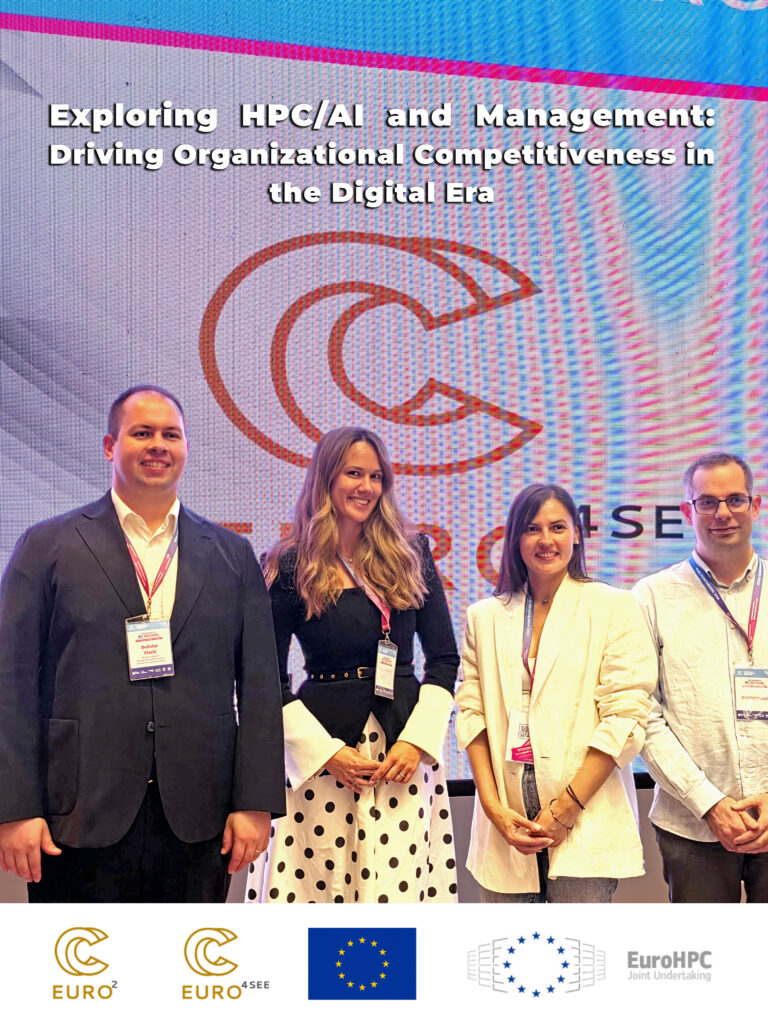
The National Competence Centre Montenegro (NCC Montenegro), operating within the EuroCC3 was presented at the ICMO 2026 International Conference on Management and Organization – “Sustainability by Design: Rethinking Strategy, People & Digital Futures”, held in Przno, Montenegro.
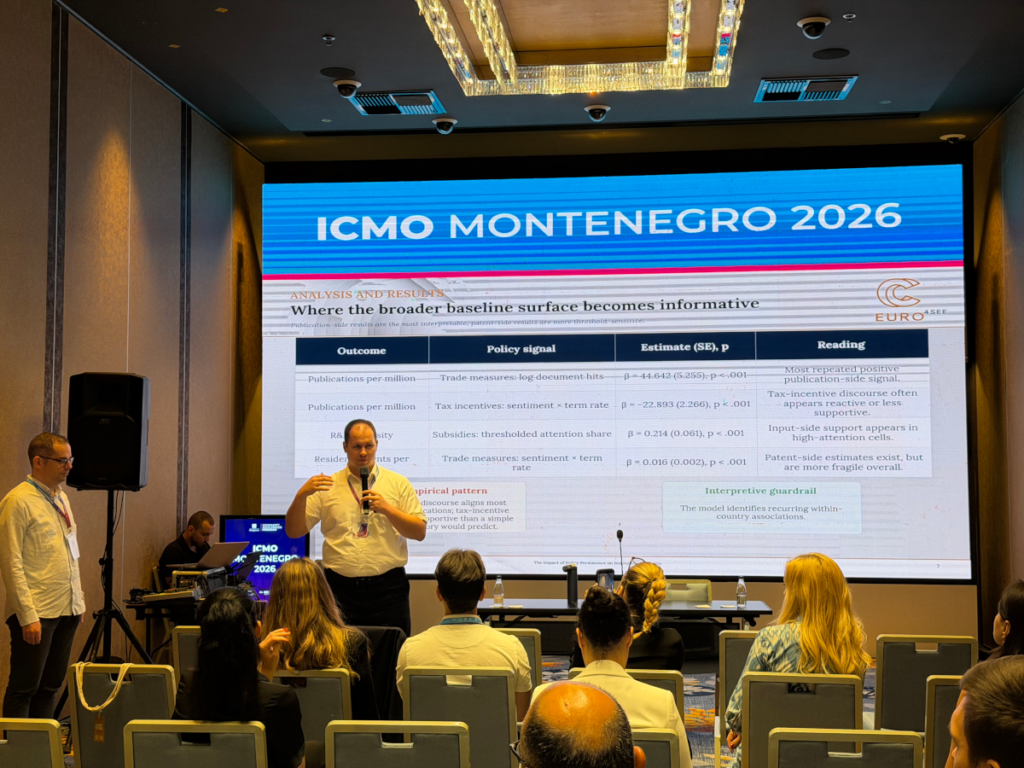
The conference brought together more than 300 participants from over 45 countries, with more than 30 keynote, invited, and editorial speakers, and a Scientific Committee comprising researchers from 46 countries, including representatives of all 27 EU member states. ICMO 2026 served as a high-level platform for the exchange of knowledge and experience between researchers, journal editors, doctoral candidates, institutional leaders, and business community representatives.
The EuroCC3 project and the activities of NCC Montenegro were presented by Stevan Čakić, member of the EuroCC3 project team, who outlined the role of the National Competence Centre Montenegro in building the national HPC and AI ecosystem, democratizing access to European supercomputing infrastructure, and supporting SMEs, academia, and public administration in adopting advanced digital technologies.
Special Training Session: HPC/AI for Business Competitiveness
As part of the conference programme, NCC Montenegro organized a dedicated special session and training titled “Exploring HPC/AI and Management: Driving Organizational Competitiveness in the Digital Era”, specifically designed for SMEs and the wider business community.
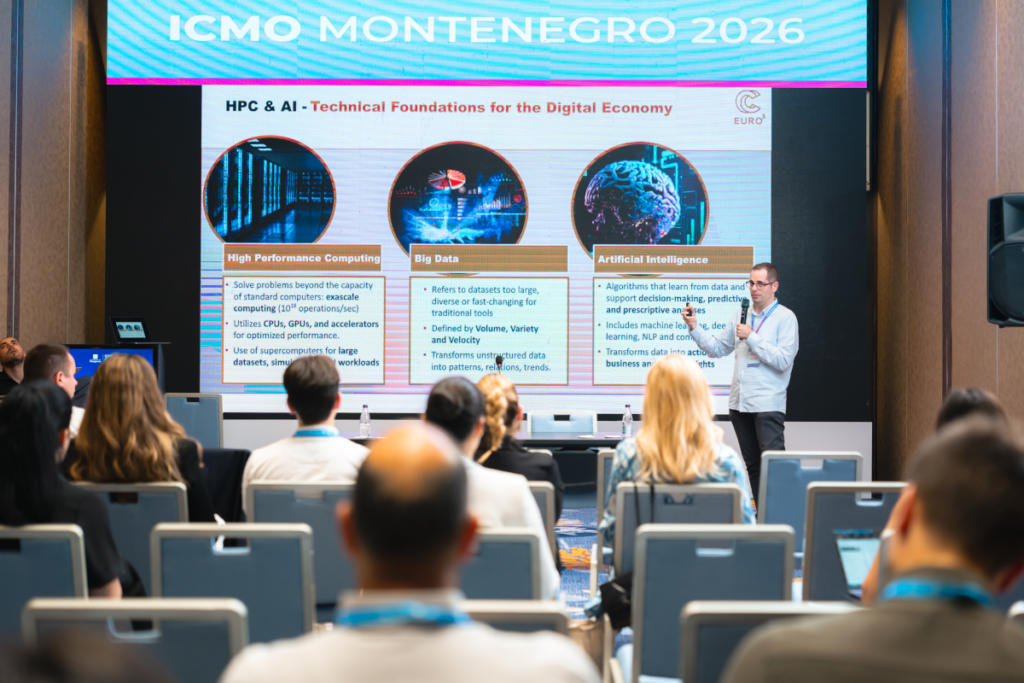
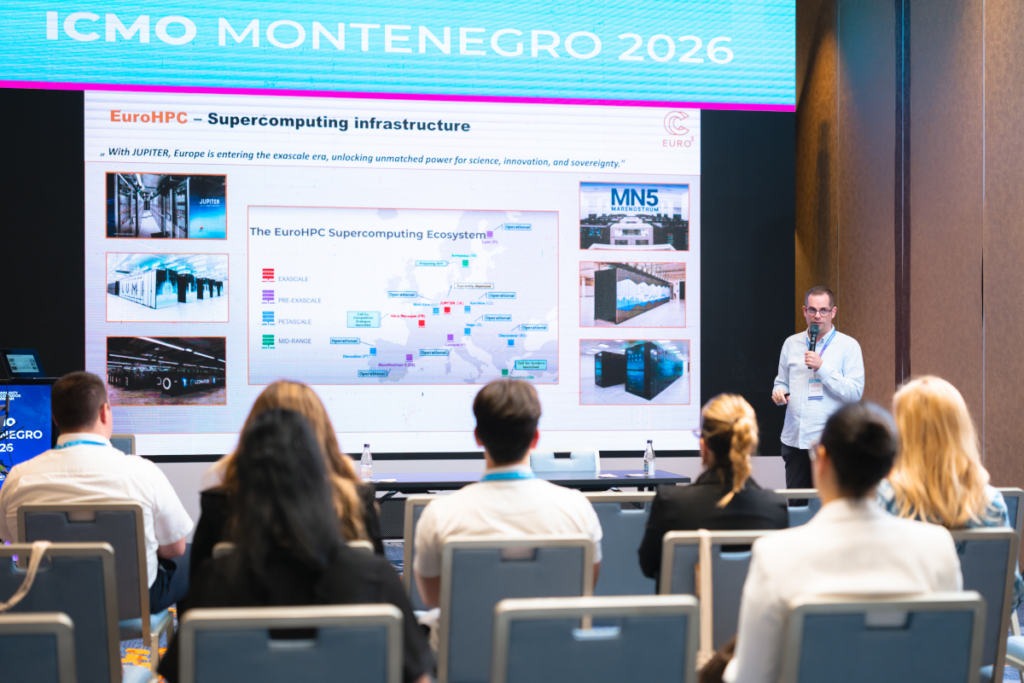
The training addressed the growing need for small and medium-sized enterprises to leverage advanced digital technologies — including High Performance Computing (HPC), Artificial Intelligence (AI), and Big Data — as strategic tools for enhancing competitiveness, operational efficiency, and data-driven decision-making. Participants were introduced to key concepts and practical applications of HPC and AI in areas such as demand forecasting, financial modelling, predictive analytics, and data-driven business models, as well as the opportunities available through EuroCC3 and the EuroHPC Joint Undertaking, which provides free access to world-class European supercomputing infrastructure and expertise — including to SMEs and startups.
A particular highlight of the training was a real-world research use case titled “How the Institutional HPC Infrastructure Turned 50,647 Policy-Document URLs into a Reproducible Country-Year Research System”, presented by researcher, Bozidar Vlacic, from the and the Católica Porto Business School & CEGE, Universidade Católica Portuguesa and University of Donja Gorica. The use case demonstrated in concrete terms the transformative power of HPC for research and business analytics: using EuroHPC supercomputing infrastructure, the research team processed over 50,000 candidate policy-document URLs, successfully downloading and converting nearly 37,000 PDFs — totalling 92.6 GB of data — into a clean, analysis-ready country-year database spanning 55 countries over the period 2007–2021. A task estimated to take nearly 30 days on a standard laptop was completed in a single overnight cluster run of under 16 hours, compressing time-to-evidence dramatically and making a previously unfeasible large-scale empirical study operationally credible. The resulting research system examined how industrial policy signals in public documents relate to national innovation capability — measured through R&D intensity, scientific publications, and resident patents — delivering directly actionable insights for both policymakers and business analysts.
This use case illustrated to the business community how HPC is not only a tool for science and engineering, but a strategic enabler for data-driven management, policy analysis, and competitive intelligence.