

On October 21, 2026, MSc candidate Ida Mušović completed her thesis entitled “Development of Computer Vision-Based Predictive Models for Early Diagnosis of Liver Tumors” within the Artificial Intelligence Master’s programme at the Faculty for Information Systems and Technologies, University of Donja Gorica, under the mentorship of Prof. Dr. Tomo Popović.
The research and experimental work were partially supported by NCC Montenegro through HPC infrastructure and expertise within the EuroCC3 project. Through its support for academic research and the development of AI and HPC competencies, NCC Montenegro contributes to advancing the application of advanced computing technologies in healthcare.
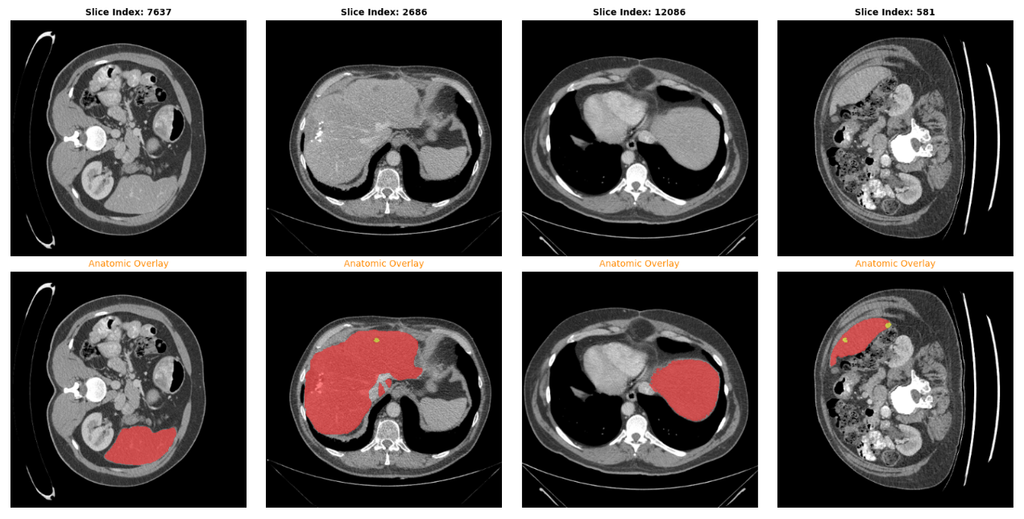
The thesis investigates the application of deep learning and computer vision to automated liver tumor segmentation in CT images, focusing on the comparison of convolutional, hybrid, and transformer-based architectures for computer-aided medical image analysis.
ABSTRACT – This thesis presents the development and comparative evaluation of three deep learning architectures—U-Net, TransUNet, and SegFormer—for automated liver tumor segmentation in CT images. Using the publicly available Liver Tumor Segmentation (LiTS) dataset and a 2.5D image-processing approach, the models were evaluated using Dice similarity and Intersection over Union metrics, with additional analysis of performance across different lesion sizes. SegFormer achieved the highest overall Dice score (82.86%) for tumor segmentation, although differences between the architectures were not statistically significant at the patient level. The study also identified lesion size as an important factor influencing segmentation accuracy, with smaller tumors presenting greater challenges. The findings demonstrate the potential of computer vision to support medical image analysis while emphasizing the need for further validation before clinical application.