
Representatives of the National Competence Centre for High-Performance Computing (HPC Montenegro) participated in the CIGRE Next Generation Network (NGN) 2026 workshop for students and young engineers, held on November 4, 2026, at the Science and Technology Park of Montenegro in Podgorica. The event attracted 74 registrations, including representatives of major energy companies such as EPCG, CEDIS, and CGES, other industry stakeholders, and academia.
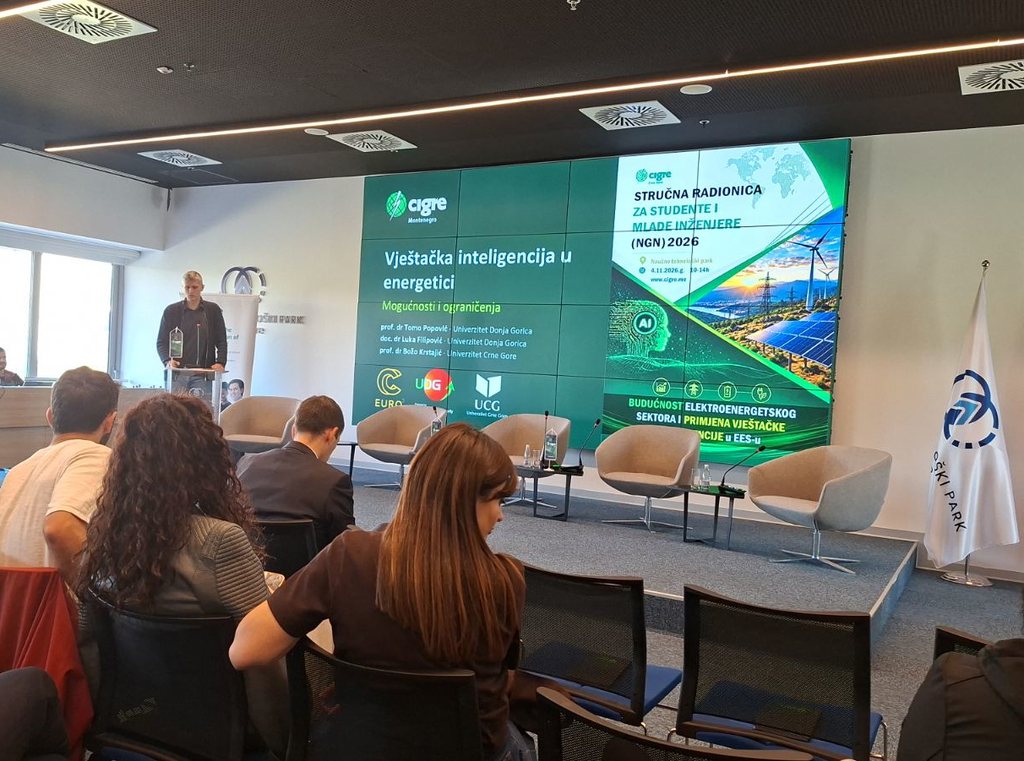
Prof. Tomo Popović (University of Donja Gorica) delivered a lecture titled “Artificial Intelligence in Energy – Opportunities and Limitations”, prepared jointly with Dr. Luka Filipović (UDG) and Prof. Božo Krstajić (University of Montenegro). The presentation explored practical applications of AI and machine learning in electrical power systems, including energy demand and generation forecasting, predictive maintenance, grid management, and energy system optimization.
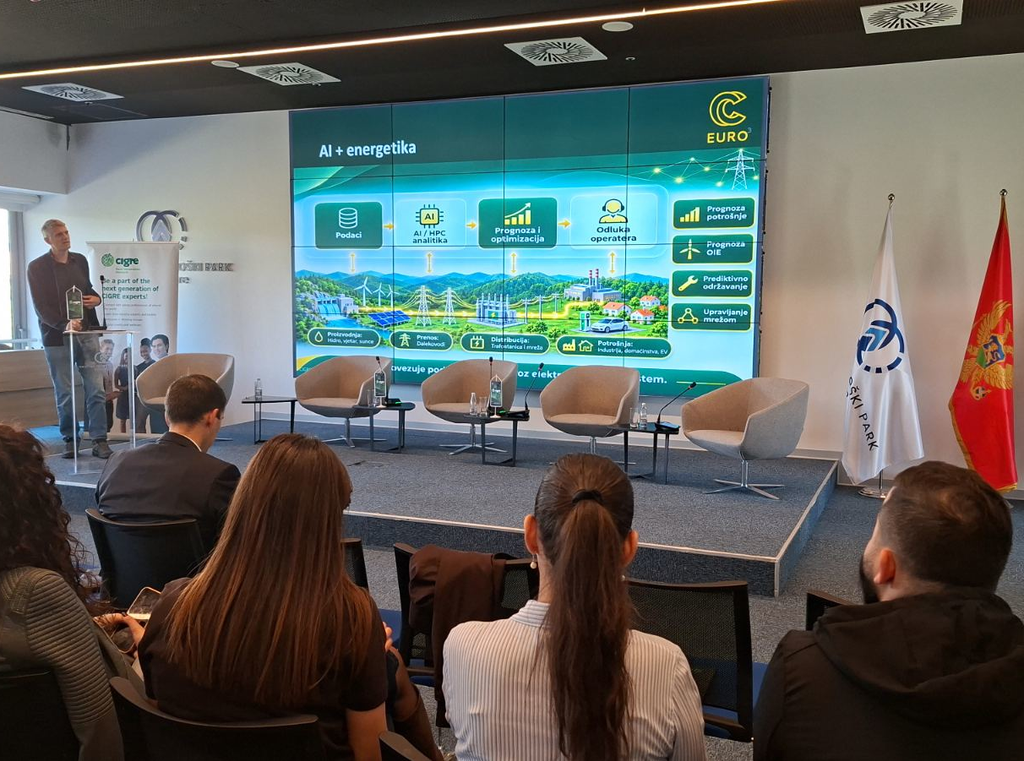
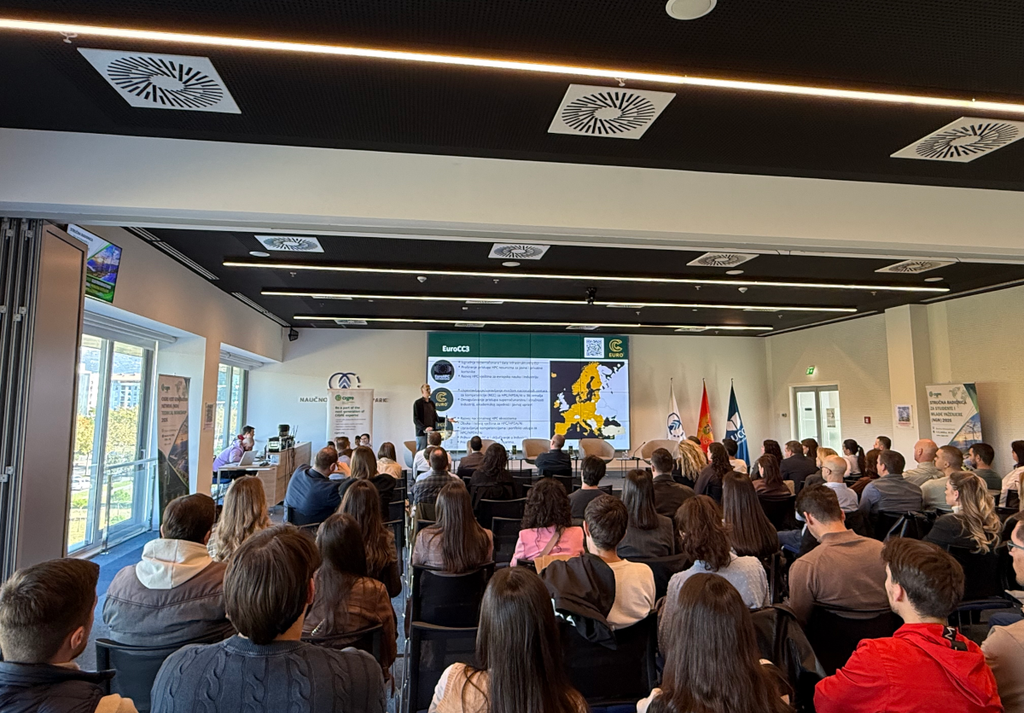
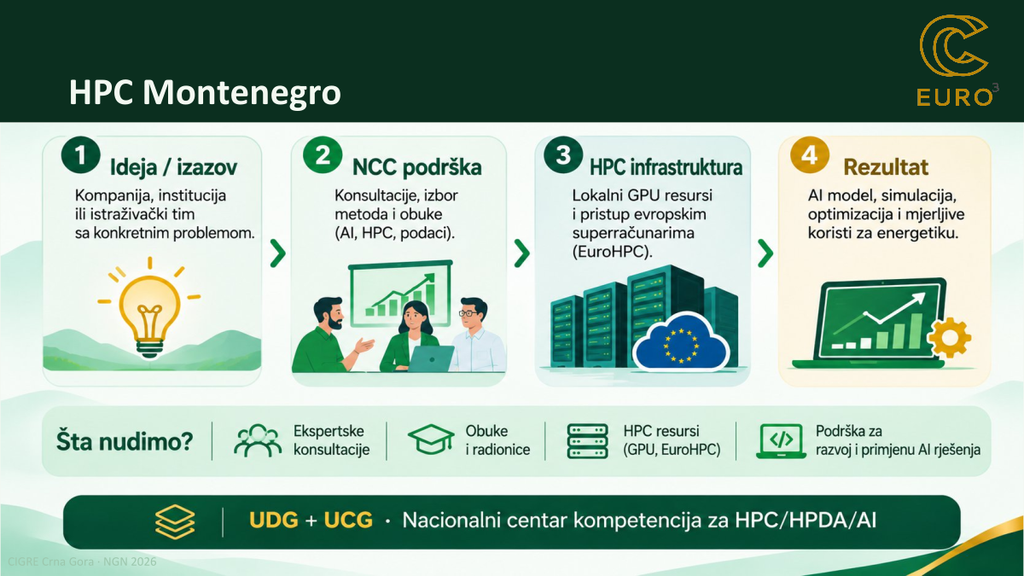
Special attention was given to the role of High-Performance Computing (HPC) in supporting advanced AI models and large-scale simulations. Participants were introduced to the EuroCC3 project, HPC Montenegro’s activities and services, and opportunities for expert consultations, training, and access to European supercomputing infrastructure. The presentation also highlighted selected HPC and AI success stories relevant to the energy sector from Montenegro and across Europe, demonstrating the benefits of collaboration with National Competence Centres.
Following the lecture, Prof. Popović moderated the panel discussion “Opportunities for AI Applications in Electrical Power Systems”, featuring Mihailo Micev (UCG), Krsto Biskupović (CEDIS), Ivan Vujović (TERING), and Stevan Šandi (BIXBIT/INNO4GRID).
Participation in the workshop provided a valuable opportunity for HPC Montenegro to engage directly with energy sector stakeholders and young engineers, exchange experiences, and establish new industry contacts. Such activities strengthen academia–industry collaboration, raise awareness of EuroCC3 opportunities, and help identify potential areas for future cooperation in applying HPC and AI technologies to the energy sector [link].