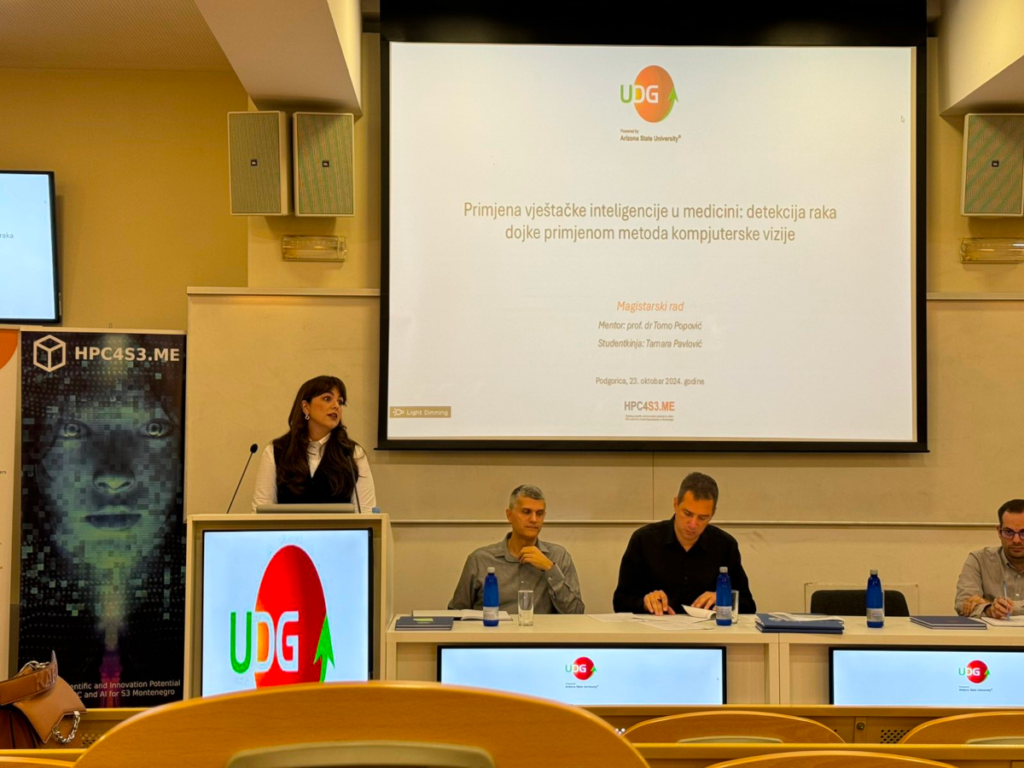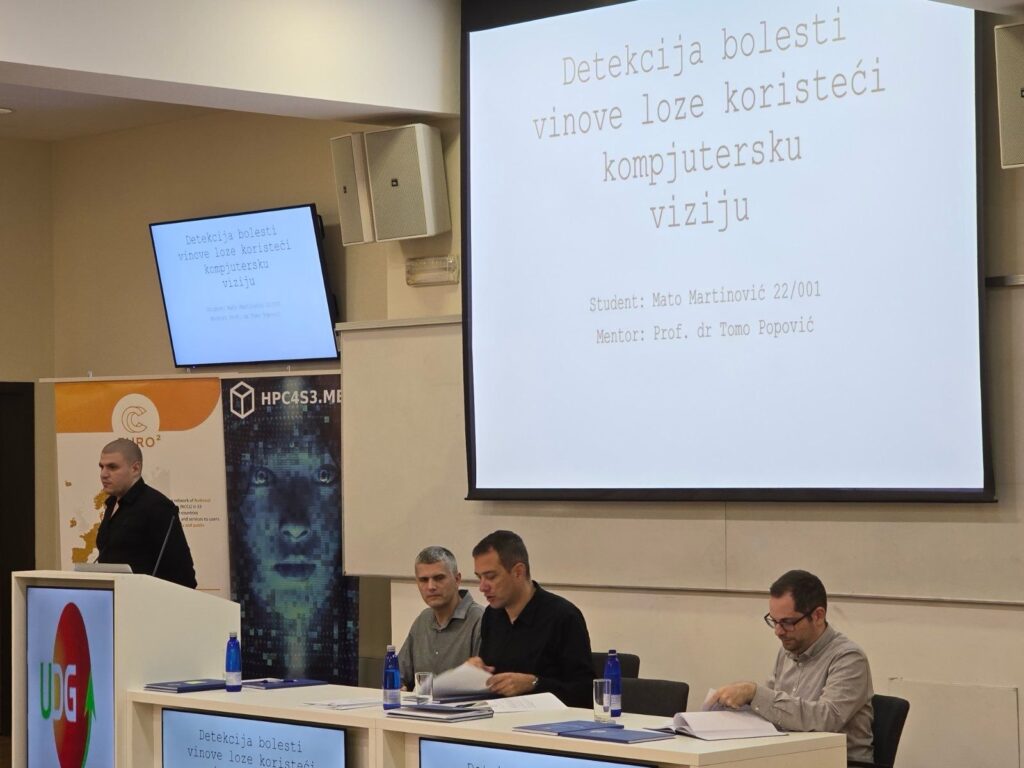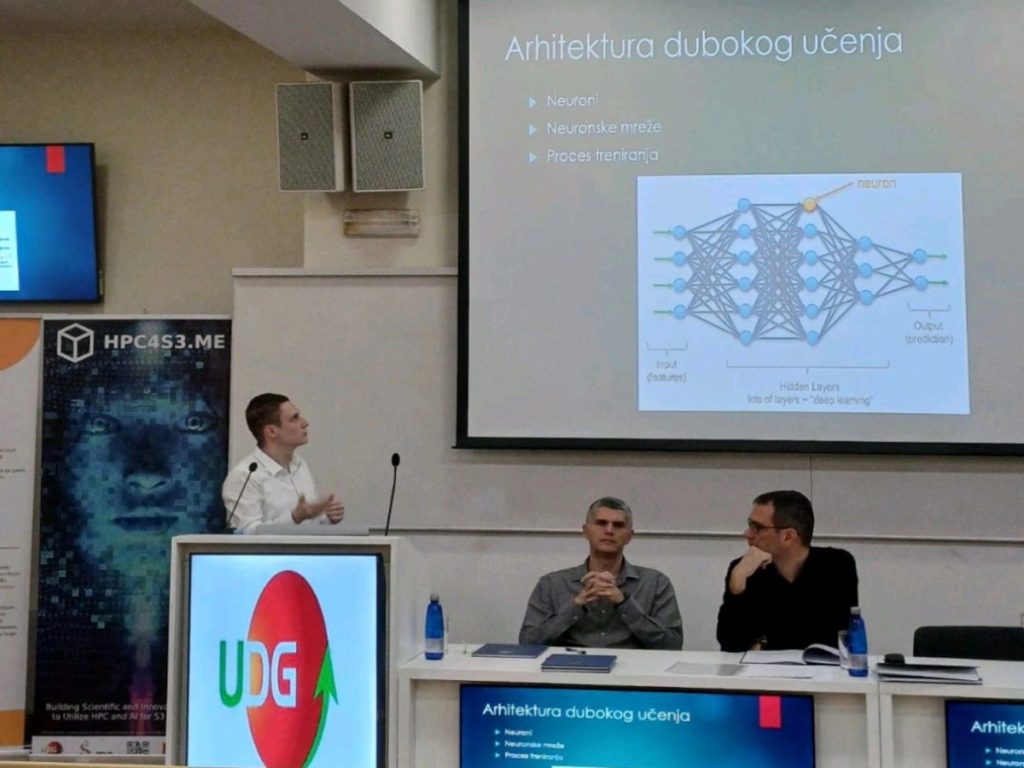
BSc thesis: AI models for real estate pricing based on web scraped data

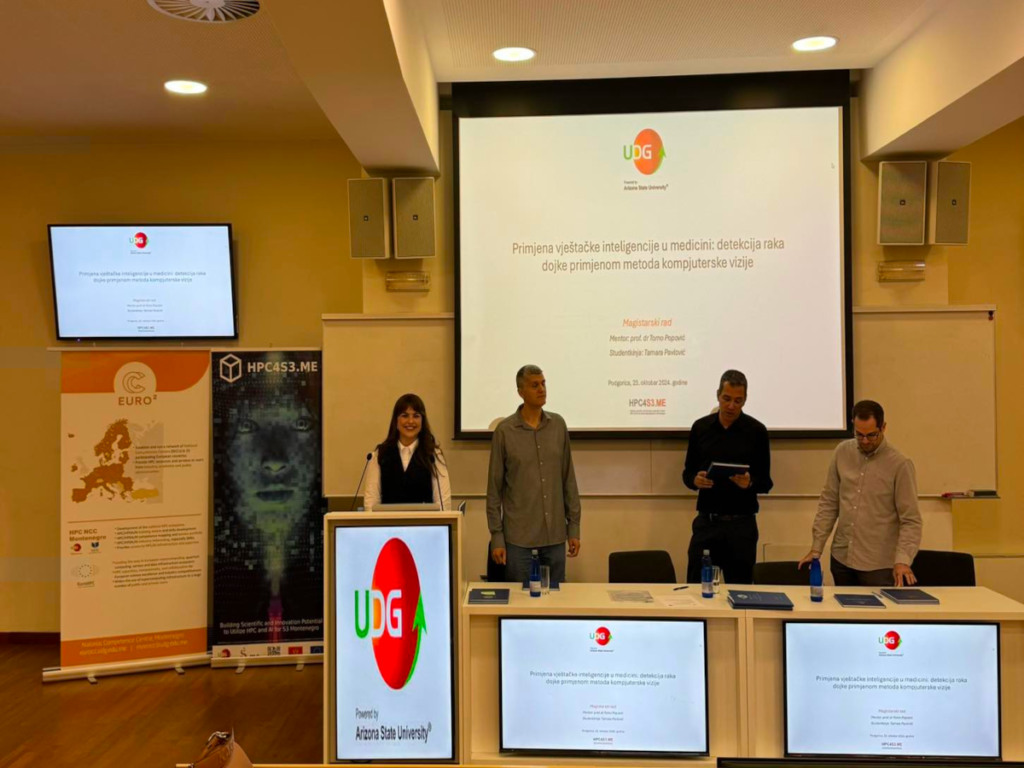
Mr Marko Lasice defended his BSc thesis on AI powered real estate pricing. The future work will include larger datasets and explorig the use of HPC and AI to train more precise price estimation models. The work was supported by the NCC Montenegro and HPC4S3ME team members.

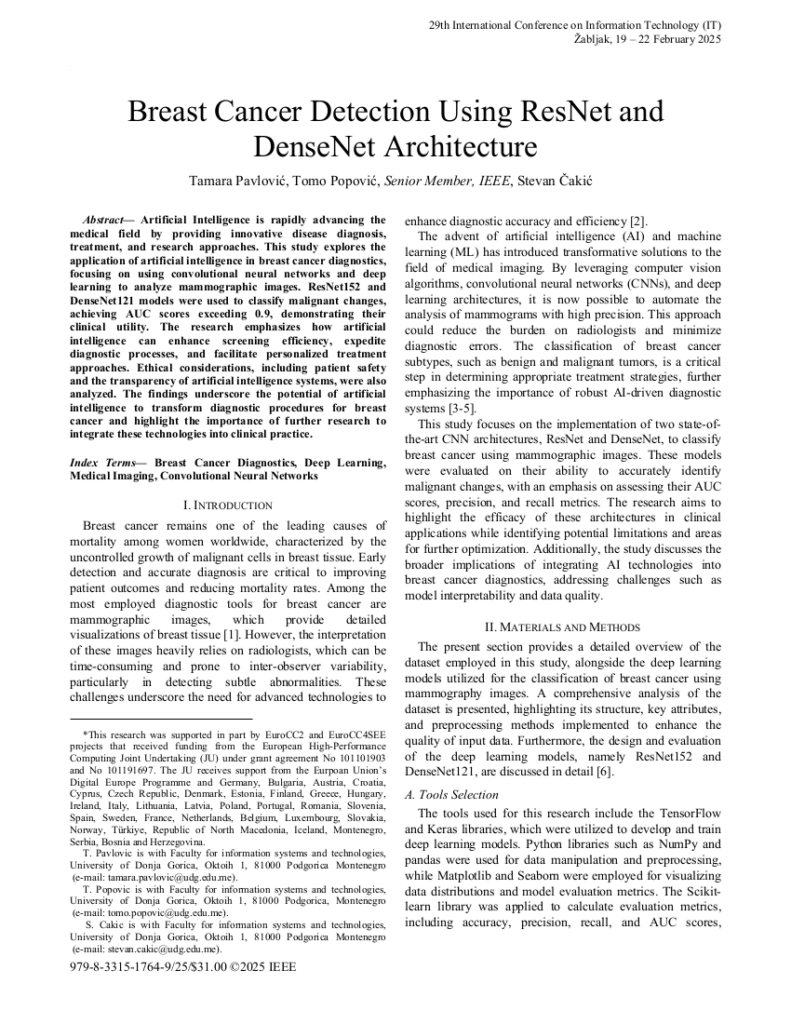
ABSTRACT – The development of generative models and exponential progress in artificial intelligence have opened up new application possibilities in many areas of economic life. One of the possibilities is developing an AI model for predicting market prices based on data extracted from the web. This paper introduces the reader to the technique of automated downloading and grouping of data from the web, known as web scraping, and the development of a predictive model that, based on the collected data, would predict real estate prices. The paper presents the practical part of the work, the implementation of a predictive model developed using the decision tree technique. In conclusion, the work contributes to the understanding of how the combination of these techniques improves decision-making processes in the real estate market.

Mr Marko Lasice defended his BSc thesis on AI powered real estate pricing

BSc thesis on prompt engineering

Mr. Veselin Andric defended his BSc thesis titleld “Prompt endineering for LLMs” at the Faculty for information systems and technologies. The devence took place on 2 Oct 2024 and it was done under mentorship of the EuroCC (NCC Montenegro) and HPC4S3ME teams’ members. This was a part of the effort to promote HPC and AI related technologies in the teaching curricula and research activities at UDG.

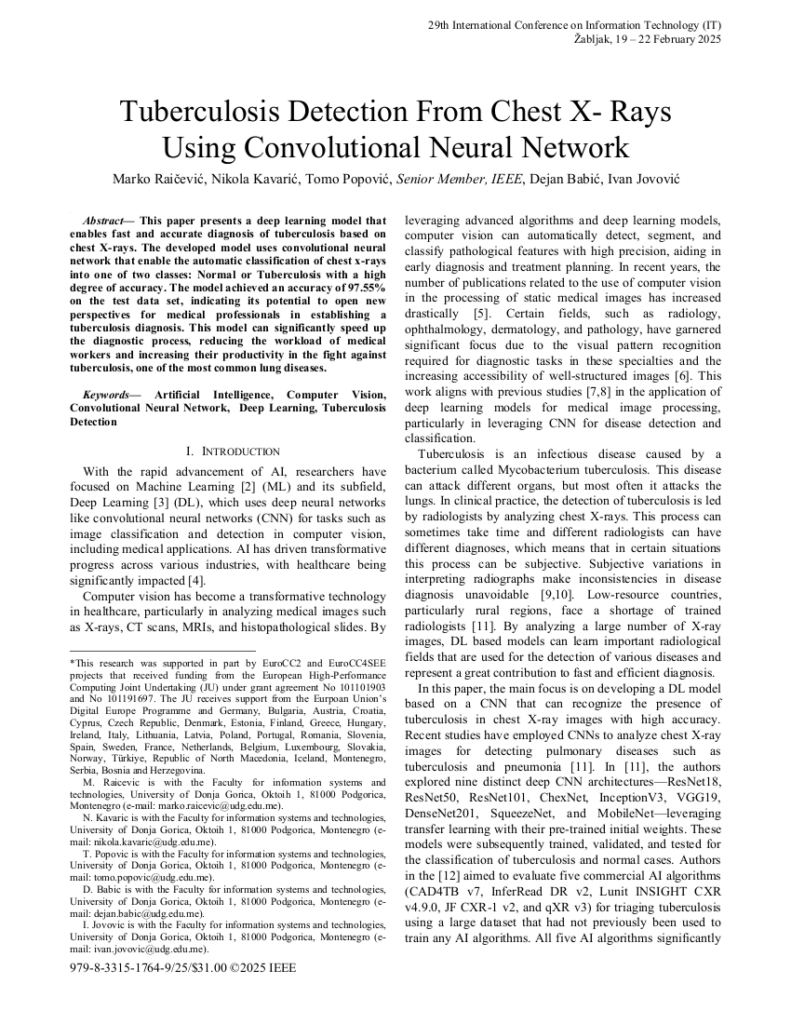
ABSTRACT – Prompt engineering is one of the primary areas of Natural language processing (NLP). It is a process that involves designing and improving inputs that are given to a language model such as ChatGPT, with a goal of getting wanted results. This dissertation investigates details of prompt engineering, it’s theoretical foundation, methodologies and practical uses in different tasks of NLP.

Mr. Veselin Andric defended his BSc thesis on Prompt Engineering
The provided an overview of NLP, LLMs and prompt techniques

EuroCC success story booklet 2024

The new Success Story Booklet for EuroCC 2024, created in collaboration by CASTIEL and the National Competence Centres (NCCs), is now available online!

The success stories in the EuroCC 2024 booklet span a diverse range of sectors, including:

  • IT and Software
  • Natural Sciences and Aeronautics
  • Environment, Energy, and Agriculture
  • Pharmacy and Medicine
  • Manufacturing and Engineering
  • Finance and Mobility
  • Public and Communication

These stories showcase achievements and innovations across multiple industries, highlighting the wide-reaching impact of EuroCC initiatives.

One of the featured success stories highlights the collaboration between NCC Montenegro and the Montenegrin company Fleka, showcased through the project “Personalized Banking Software Solutions.” This partnership shows how local innovation can create custom ML predictions for the banking sector and personalized financial-tech sector.

Discover inspiring success stories that highlight innovative achievements across Europe.

New academic paper on Montenegro’s HPC ecosystem development

A new academic paper ‘Sizing HPC Opportunities in Montenegro: Market Insights, Best Practices and Use Cases’ has been published in the scientific journal “Entrepreneurial Economy“.

The paper highlights the pivotal role of HPC in addressing critical societal, scientific, and industrial challenges, and explores its growing impact on businesses through data-driven decision-making, workflow optimization or innovative product design. The study underscores the importance of HPC infrastructure, Cloud services, and AI applications in driving digital transformation and enhancing the industry competitiveness of SMEs.
The research also identifies key challenges in Montenegro including a shortage of HPC expertise, low demand for critical HPC performance, and certain concerns related to data security and IPR. Despite these challenges, market research revealed HPC opportunities related to high Cloud adoption, innovative product development and favourable business prospects. The paper also describe activities of the HPC National Competence Centre Montenegro, established through the EuroCC project, related to established HPC and AI related academic programs and training portfolio, and productive industry collaborations, demonstrated through successful use cases in smart agriculture, precise weather forecasting, and FinTech.

By harnessing both national expertise and international supercomputing resources, the NCC Montenegro has effectively integrated HPC technologies into research and business practices, driving technology innovations and smart growth.

Two NCC-supported and AI-related research papers @SymOrg 2024 conference

Representatives from NCC Montenegro in joint efforts with young researchers from UDG, published two scientific papers at the SymOrg 2024 conference, organized by the Faculty of Organizational Science, University of Belgrade, at Zlatibor, Serbia on June 12-14, 2024. The conference, traditionally envisioned as a platform for knowledge innovation and empirical research, bringing together representatives from the scientific and professional community, was themed: ”Unlocking The Hidden Potential Of Organization Through Merging Of Humans And Digitals”, aiming to address the newfound need for balance in the era of AI.

Image source: SymOrg 2024 website

The scientific paper “Detection of Scoliosis” by Elvis Taruh, Enisa Trubljanin, and Dejan Babić explores the application of a deep learning model integrated with a web application to detect scoliosis using x-ray images. Utilizing a dataset of 198 x-ray images from Roboflow, the initial model performance was unsatisfactory, prompting manual annotation of 245 images, which significantly improved the model’s accuracy. YOLOv8, a state-of-the-art object detection algorithm, was used to train two models, demonstrating improved performance with manual annotations. The web application, built with Flask, HTML, CSS, and JavaScript, provides a user-friendly interface for analyzing scoliosis detection results. The backend uses MySQL for data storage and management, facilitating efficient image processing, result display, and feedback from doctors. Evaluation metrics indicate that the second model, which underwent refined annotation and augmentation, performed better, avoiding overfitting and demonstrating higher precision. This approach enhances early scoliosis diagnosis and offers a scalable solution for other medical detection challenges, supporting healthcare providers with more accurate diagnostic tools and improving patient care.

Click on image to open SymOrg 2024 proceedings

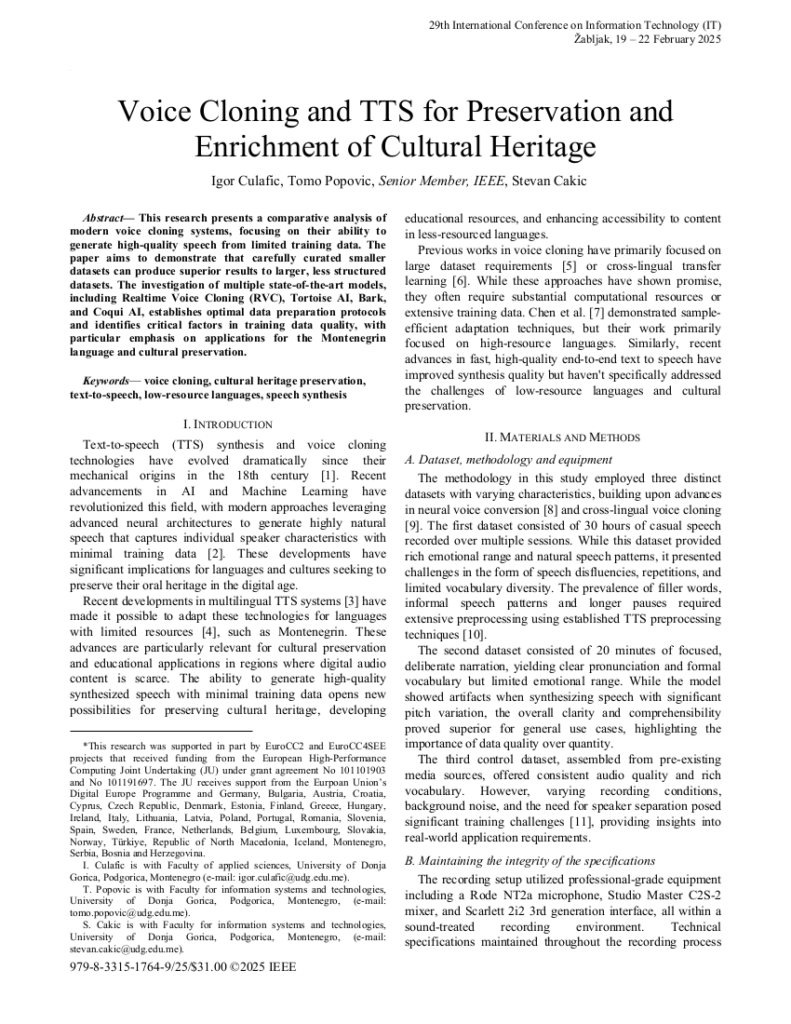
In the paper “LLM Consistent Character Bias”, the authors Igor Culafic and Tomo Popovic investigate the potential of Large Language Models (LLMs) for character imitation in media, education, and entertainment. Traditionally, LLMs have been used for tasks like web search and programming, but this study focuses on their application in mimicking specific characters from books. Using a dataset created from the Ciaphas Cain anthology of Warhammer 40k, the authors trained models using Low-Rank Adaptation (LoRA) methods. Three models of varying sizes (1.1B, 7B, and 10.7B parameters) were tested, with training conducted on a NVIDIA RTX 4090 GPU. The study found that the larger models (7B and 10.7B) performed well in maintaining character consistency, though they occasionally struggled with specific details and displayed unexpected behaviors like excessive emoji usage. The smallest model (1.1B), despite higher LoRA Rank parameters, was less effective and prone to errors such as repetitive responses and long rants. The authors conclude that LLMs can successfully imitate fictional characters given adequate data and training, suggesting future improvements could make them useful in various fields, including education and therapy. These models have the potential to enhance interactive experiences in theme parks, video games, and educational tools by providing authentic character interactions. However, they caution against using these models as replacements for human therapists due to their limitations and tendency for inaccuracies.

Click on image to open SymOrg 2024 proceedings

Both research papers were partly supported by the EuroCC2 project that is funded by the European High-Performance Computing Joint Undertaking (JU) under Grant Agreement No 101101903.

International Conference: Global commodity chains from a risk assessment perspective, BfR, May 2024

FoodHub and NCC Montenegro team attended the “International Conference: Global Commodity Chains from a Risk Assessment Perspective” in Berlin, hosted by German federal institute for Risk Assessment BfR. This conference brought together national and international experts in feed and food chains, digitalization, and consumer health protection. It was a fantastic platform to exchange knowledge on innovative techniques and digital solutions for evaluating risks in global commodity chains. The focus was on integrating data and insights about hazards, exposure, and technologies to enhance risk assessment along feed and food chains.

We proudly presented two abstracts in the poster/software session, as part of FoodDecide project:

  • Andrea Milacic, Amil Orahovac, Luka Filipovic, “Optimizing the Montenegrin Milk Supply Chain: A Data Visualization Approach”
  • Luka Filipovic, Andrea Milacic, Amil Orahovac, Aleksandra Martinovic, “HoneyChain: Enhancing Honey Production Monitoring System”

Scientific paper at the 23rd INFOTEH-JAHORINA conference

A scientific paper “Output Manipulation via LoRA for Generative AI” by I. Culafic et al., was presented at the 23rd International Symposium INFOTEH-JAHORINA, 20-22 March 2024. The training for the prediction models was takin around six hours on an NVIDIA RTX 4090 24GB VRAM GPU. This research will serve as a basis for a future experiments on HPC resources. The paper is published at IEEE Xplore at: https://ieeexplore.ieee.org/document/10495995

ABSTRACT – Generative Artificial Intelligence has witnessed a surge in popularity in recent years, characterized by the emergence of groundbreaking models like DALL-E 2,
Midjourney, and Stable Diffusion, which have spearheaded advancements in this technological domain. This research aims to harness the potential of Stable Diffusion and its extensions for the purpose of training a LoRA (Low-Rank Adaptation) model to
generate images that closely resemble the original subject matter, utilizing a predetermined amount of example data. The primary objective of this research is to demonstrate the prowess of Stable Diffusion and generative AI in a broader context, delving into the possibilities offered by open-source frameworks, highlighting the
challenges associated with poorly organized training data and the advantages of properly organized and edited datasets, conducting a comparative analysis of diverse diffusion models and examining various LoRA strength examples. This research also aims to
compare the results from larger training parameters on both small and relatively large training models for the purpose of determining if overfitting, over training on one specific subject, is more prevalent with smaller or larger datasets.