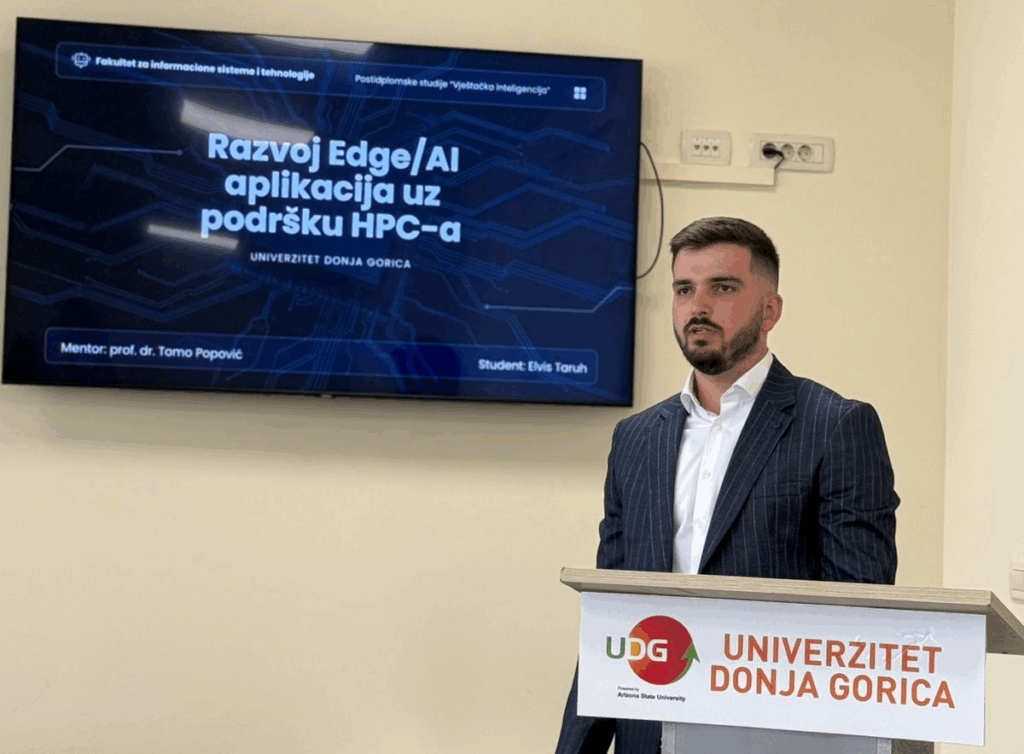
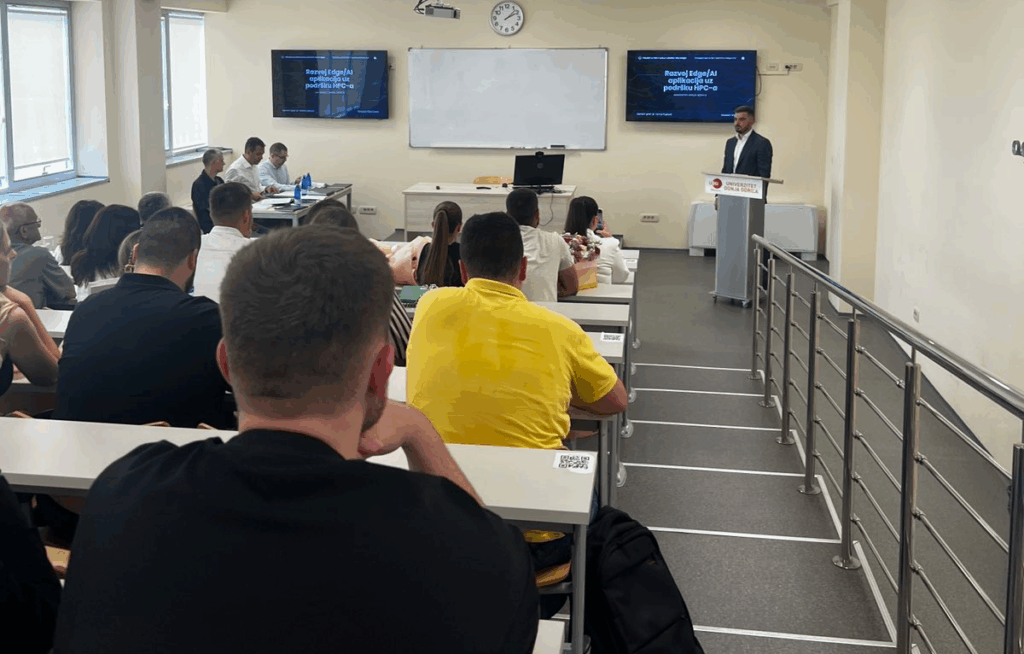
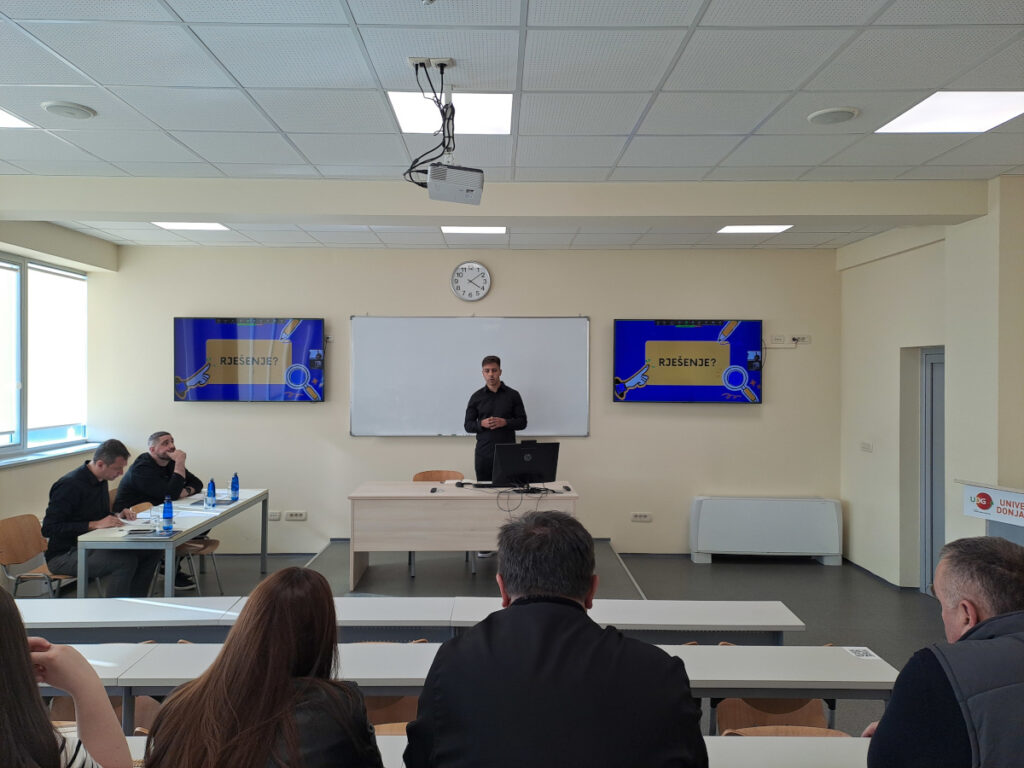
Mr. Elvis Taruh successfully defended his master’s thesis titled “Development of Edge/AI Applications with HPC” at the Faculty of Information Systems and Technologies, University of Donja Gorica.
Mr Elvis Taruh
ABSTRACT – The efficiency of training artificial intelligence (AI) models has become a crucial factor in modern research, especially when dealing with complex systems that require substanial computational power. This study explores how the application of high-performance computing (HPC) and Edge devices can optimize the AI model training process, reducing processing time and improving efficiency. Through an experimental approach, AI model training was analyzed across three different platforms. Local computer, Google Colab and the HPC cluster at the University of Donja Gorica. As a practical example, livestock detection was used. By comparing the training time, memory consumption, and model accuracy, the research demonstrates that HPC clusters significantly accelerate the training process compared to traditional methods, while Edge devices enable faster real-time data analysis.
There was around 30 people attending. This was a small celebration for EuroCC2 and EuroCC4SEE projects
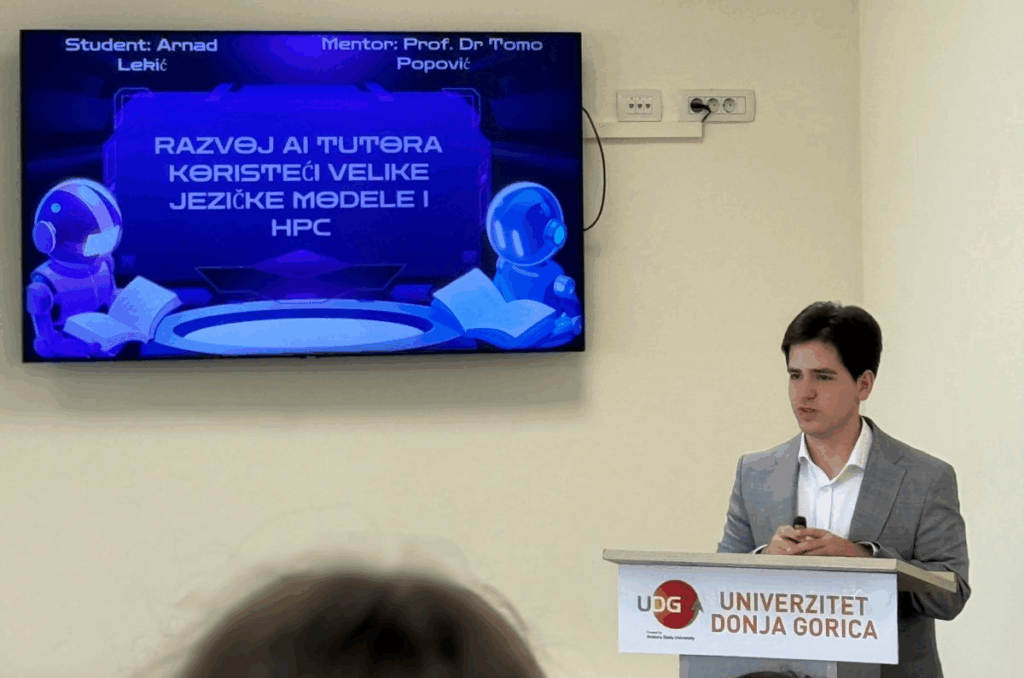
Mr. Arnad Lekić successfully defended his master’s thesis titled “Development of an AI Tutor Using Large Language Models and HPC” at the Faculty of Information Systems and Technologies, University of Donja Gorica.
Mr Arnad Lekic
ABSTRACT – This thesis explores the development of a personalized AI tutor using large language models (LLMs), with a specific focus on the LLaMA architecture and the application of High-Performance Computing (HPC) resources. The research involves the acquisition, setup, and evaluation of an open-source LLaMA model, with the goal of building a system capable of automated test grading. Special emphasis is placed on the training efficiency and feasibility of running the model locally using the available computing nodes, compared to cloud-based solutions like Google Colab. Beyond the technical implementation, the study also addresses the ethical challenges of using generative AI in education. Through experimental analysis, the research demonstrates that open models can be effectively adapted for educational purposes, with the potential to expand to grading diverse exam formats and generating educational content. The work provides directions for future development of systems leveraging advanced multimodal models for more complex tasks.
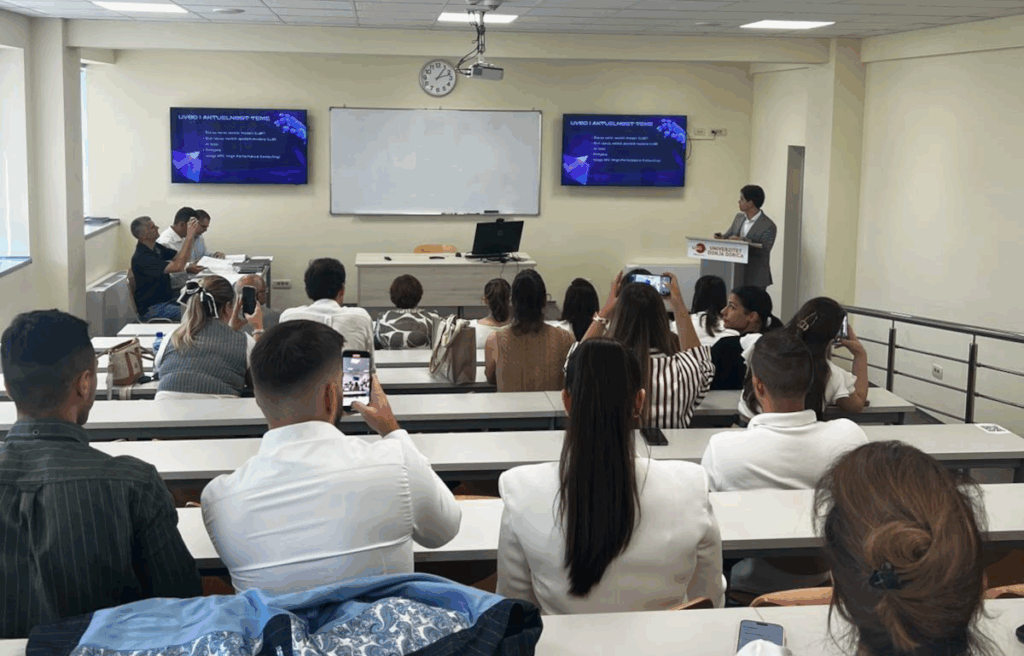
The defence was attended by over 30 people. We had three candidates that day, all in the context of EuroCC2 and EuroCC4SEE
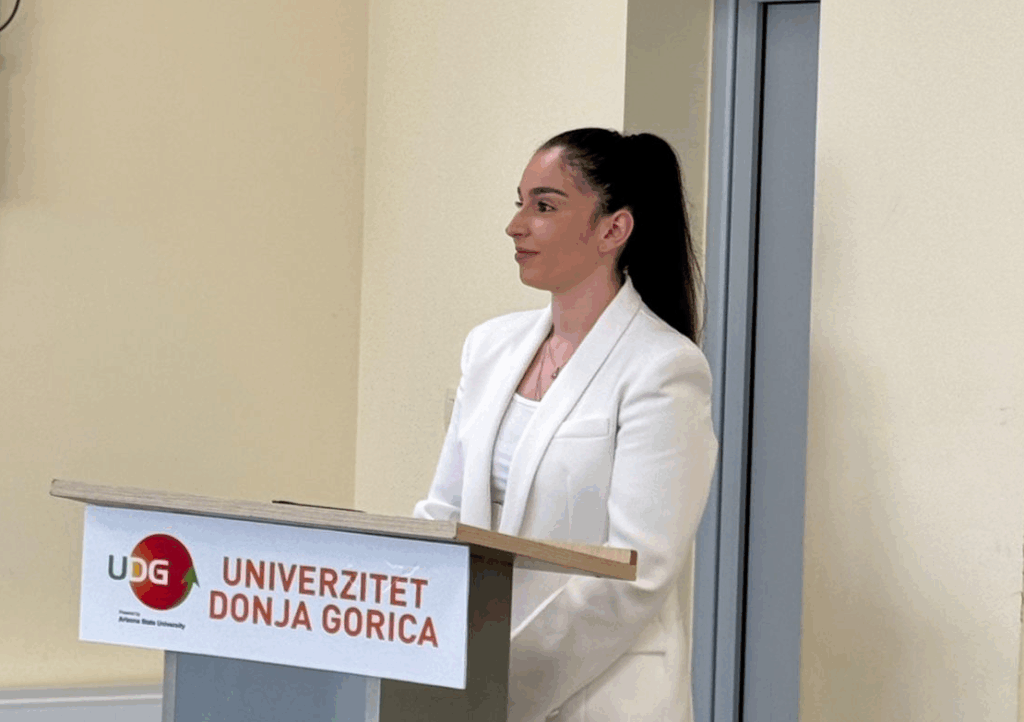
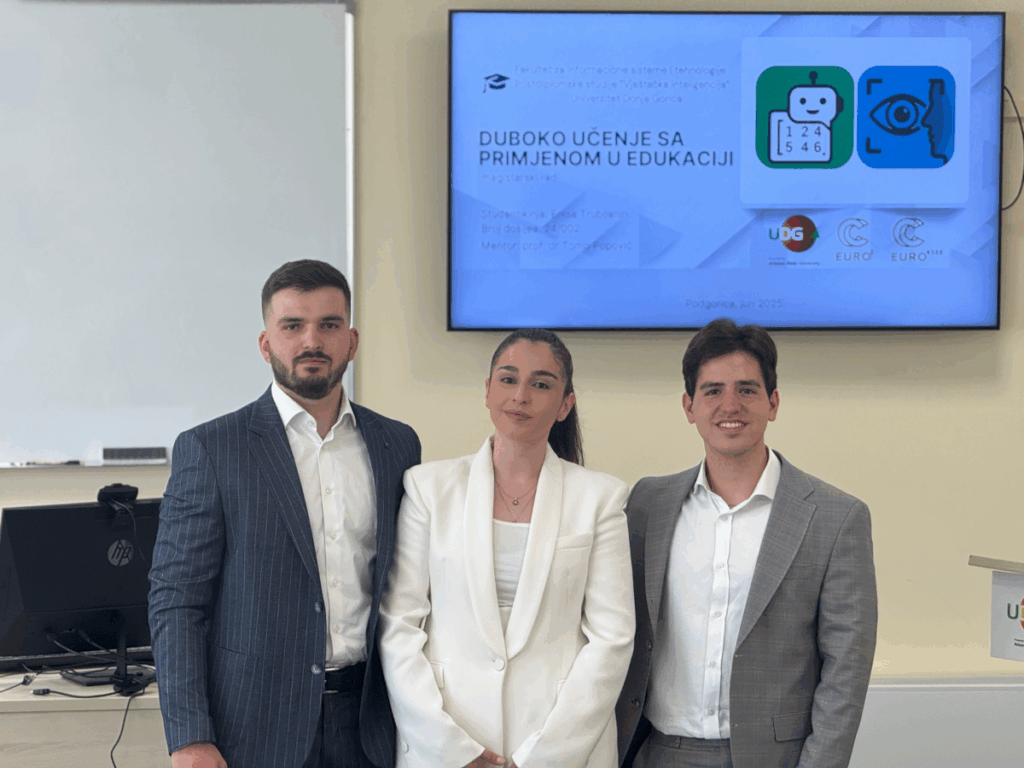
Ms. Enisa Trubljanin successfully defended her master’s thesis titled “Deep Learning with Application in Education” at the Faculty of Information Systems and Technologies, University of Donja Gorica. The development and testing of these solutions were supported by high-performance computing (HPC) resources provided through the EuroCC initiative in Montenegro.
Ms. Enisa Trubljanin
ABSTRACT – This master’s thesis explores the potential application of deep learning in education through the development and evaluation of two concrete solutions: an intelligent chatbot for solving matrix problems and a model for detecting cheating during online exams by analyzing eye movement. The first part of the thesis provides a theoretical foundation of deep learning, with a focus on neural networks, their architectures, transfer learning, and evaluation metrics. The practical part presents the development of a chatbot based on advanced language and mathematical models, implemented using high-performance computing cluster resources, enabling students to engage in interactive mathematics learning. Additionally, a model for detecting cheating through gaze analysis was developed, trained on the Columbia Gaze Dataset, and integrated into an online exam proctoring system. Evaluation results demonstrate a high level of accuracy and user satisfaction for both solutions. Beyond the technical aspects, the thesis also addresses ethical issues and privacy concerns related to the use of artificial intelligence in educational settings. Based on the findings, the study highlights the broad range of potential applications of deep learning in modern educational systems.
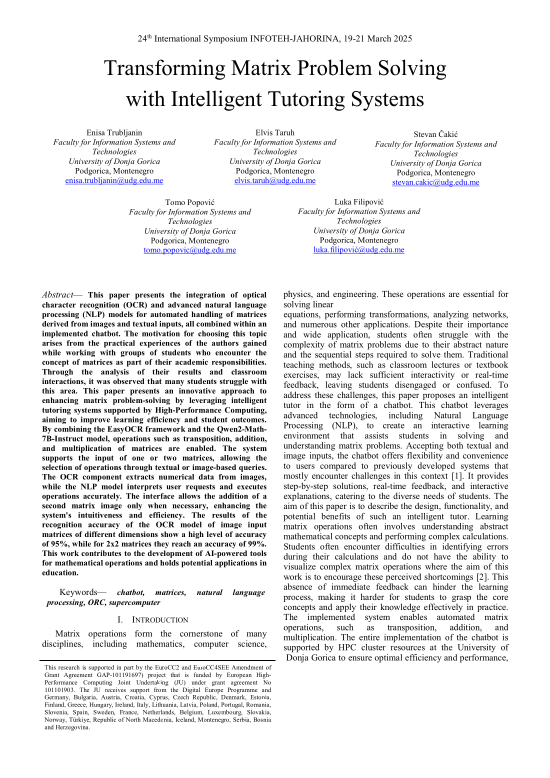
The paper “Transforming Matrix Problem Solving with Intelligent Tutoring Systems” by E. Trubljanin, E. Taruh, S. Cakic, T. Popovic and L. Filipovic was presented at INFOTEH conference an is published by IEEE Xplore. Researchers from the UDG with support from HPC NCC Montenegro have developed an innovative intelligent tutoring system that leverages artificial intelligence (AI) and high-performance computing (HPC) to revolutionize how students learn matrix operations. This chatbot-based solution combines Optical Character Recognition (EasyOCR) with an advanced natural language processing model (Qwen2-Math-7B-Instruct) to interpret both text and image inputs, enabling it to perform matrix operations such as transposition, addition, and multiplication while providing clear, step-by-step explanations. Supported by the university’s HPC infrastructure, the system ensures high-speed processing and real-time feedback, achieving up to 99% accuracy in matrix recognition from high-quality images. Designed with education in mind, this AI-powered tutor enhances interactivity, understanding, and learning outcomes for students tackling complex linear algebra concepts, and sets the stage for future enhancements like handwritten input recognition and support for more advanced operations.
ABSTRACT – This paper presents the integration of optical character recognition (OCR) and advanced natural language processing (NLP) models for automated handling of matrices derived from images and textual inputs, all combined within an implemented chatbot. The motivation for choosing this topic arises from the practical experiences of the authors gained while working with groups of students who encounter the concept of matrices as part of their academic responsibilities. Through the analysis of their results and classroom interactions, it was observed that many students struggle with this area. This paper presents an innovative approach to enhancing matrix problem-solving by leveraging intelligent tutoring systems supported by High-Performance Computing, aiming to improve learning efficiency and student outcomes. By combining the EasyOCR framework and the Qwen2-Math-7B-Instruct model, operations such as transposition, addition, and multiplication of matrices are enabled. The system supports the input of one or two matrices, allowing the selection of operations through textual or image-based queries. The OCR component extracts numerical data from images, while the NLP model interprets user requests and executes operations accurately. The interface allows the addition of a second matrix image only when necessary, enhancing the system’s intuitiveness and efficiency. The results of the recognition accuracy of the OCR model of image input matrices of different dimensions show a high level of accuracy of 95%, while for 2×2 matrices they reach an accuracy of 99%. This work contributes to the development of AI-powered tools for mathematical operations and holds potential applications in education.
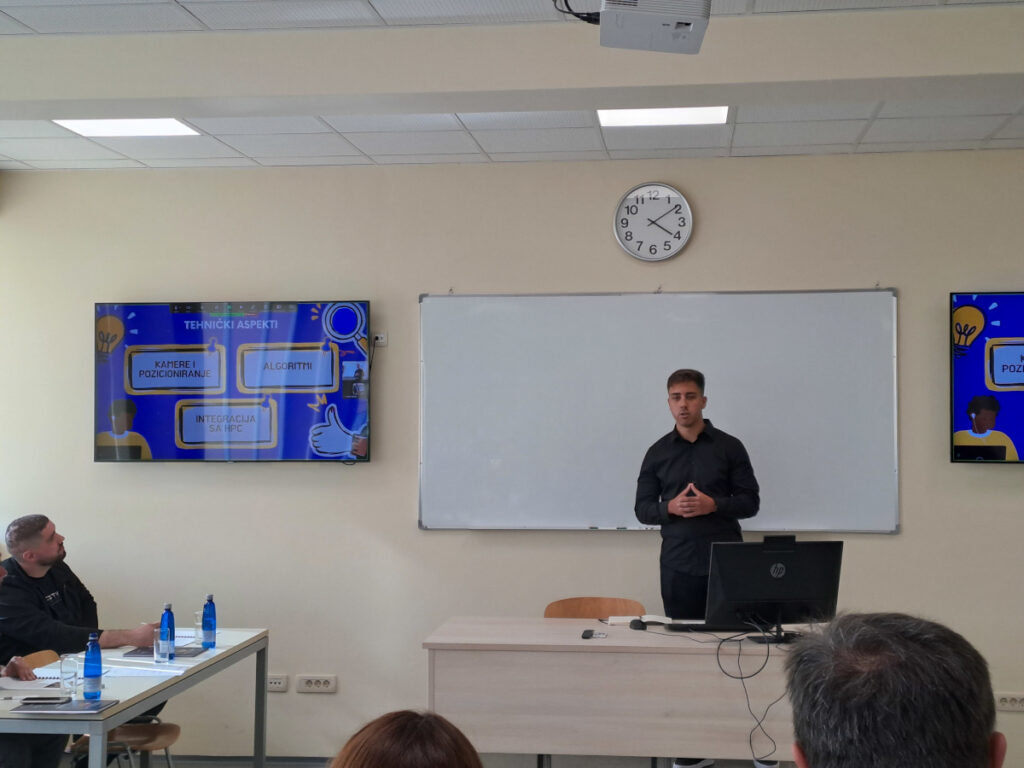
Mr Aleksandar Vesovic defended his BSc thesis on the use of AI and HPC to develop a solution for attendance records in schools or universities. His mentors were Stevan Cakic and Tomo Popovic. He defended his theses on Friday, 28 March.
The theses and presentation discussed the integration of AI models into a web application and HPC integration
ABSTRACT – This thesis addresses the challenge of tracking student attendance in lectures through facial recognition. The aim of the research is to develop and implement a system that allows for automatic and accurate attendance tracking, thereby eliminating traditional methods that are often prone to errors and manipulation. The study analyzes the latest technologies in artificial intelligence, machine learning, and high- performance computing ( HPC) to achieve optimal accuracy and system efficiency. The implementation was tested on a sample of students and demonstrated high accuracy in facial recognition and attendance recording. This work also considers ethical aspects and p r ivacy concerns, given the sensitivity of the data collected and processed. The results suggest that applying facial recognition technology in an educational setting can significantly improve administrative processes while maintaining student security and privacy. Finally, possible future applications and recommendations for further system discussed.
HPC4S3ME and EUROCC2/EUROCC4SEE team members mentored and supported this research
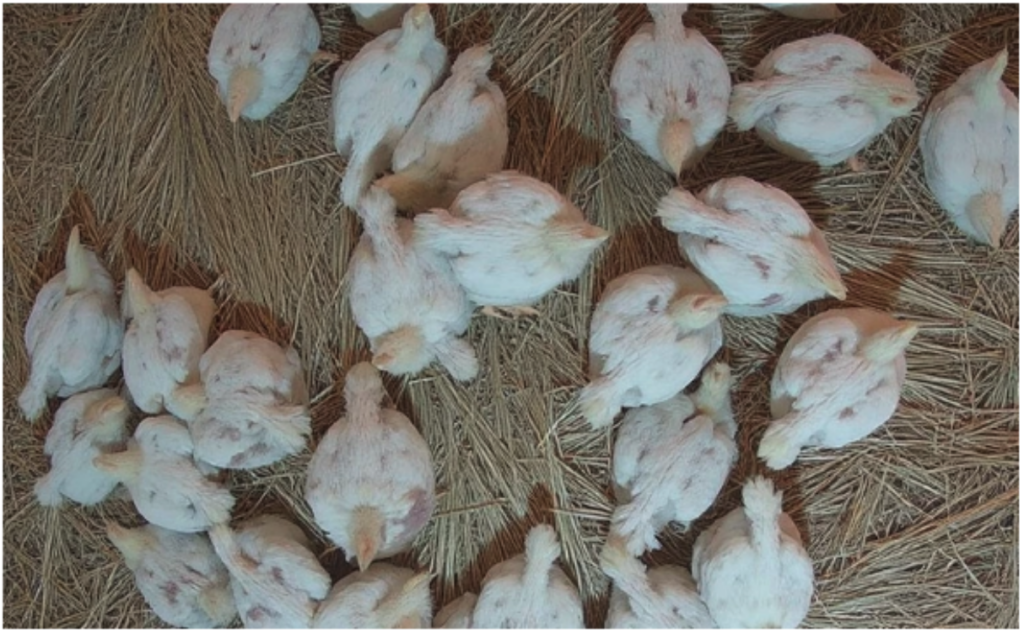
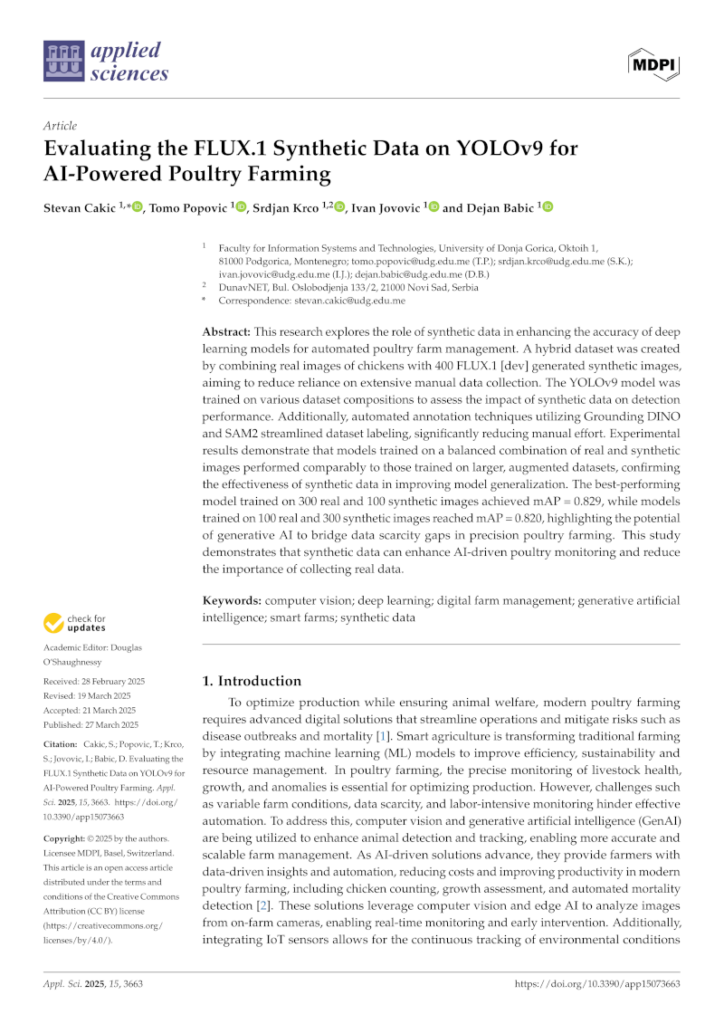
A new scientific publication by researchers from the University of Donja Gorica and DunavNET explores the innovative use of generative AI in digital agriculture. Titled “Evaluating the FLUX.1 Synthetic Data on YOLOv9 for AI-Powered Poultry Farming”, the study demonstrates how synthetic data, generated using FLUX.1, can effectively enhance deep learning models for chicken detection in smart farms. The paper was published in the Journal of Applied Sciences, a special issue dedicated to the application of computer vision in industry and agriculture [link].
Using generative AI to create sytnhetic data used to train computer vision models for agriculture sector
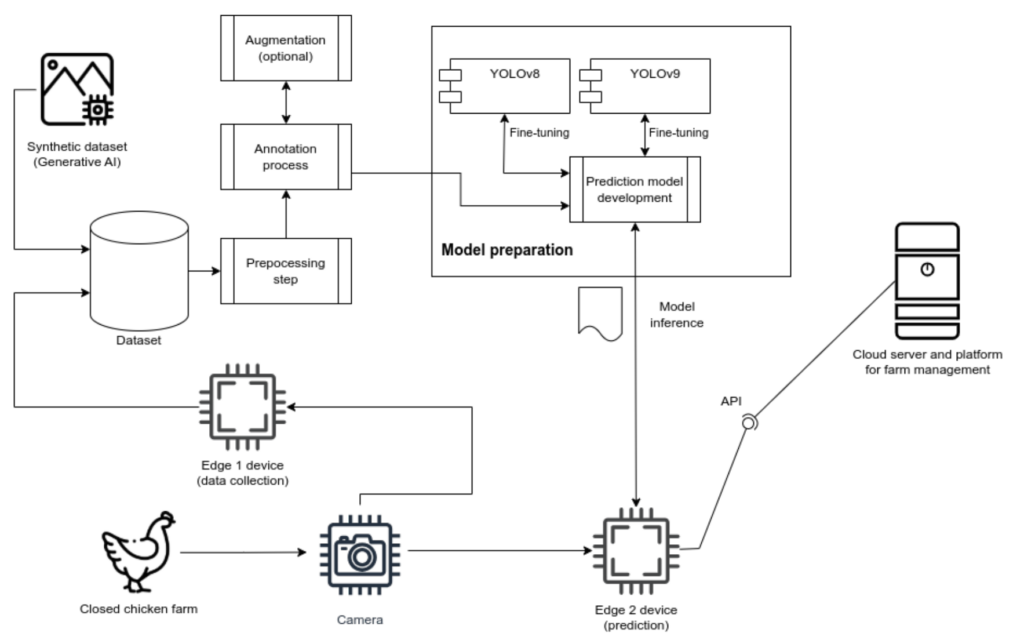
By combining real and AI-generated images and streamlining annotation with Grounding DINO and SAM2 models, the team achieved impressive detection accuracy—proving that generative AI can bridge the data gap in precision farming. This research is a part of broader efforts including PhD research of mr. Stevan Cakic, as well as collaboration with company that produces smart agriculture platform. The research was done in the context of HPC4S3ME project. This was also supported through EuroCC Montenegro initiatives, showcasing how high-performance computing and AI can drive sustainable innovation in agriculture.
High-level architecture used for experiment execution
ABSTRACT – This research explores the role of synthetic data in enhancing the accuracy of deep learning models for automated poultry farm management. A hybrid dataset was created by combining real images of chickens with 400 FLUX.1 [dev] generated synthetic images, aiming to reduce reliance on extensive manual data collection. The YOLOv9 model was trained on various dataset compositions to assess the impact of synthetic data on detection performance. Additionally, automated annotation techniques utilizing Grounding DINO and SAM2 streamlined dataset labeling, significantly reducing manual effort. Experimental results demonstrate that models trained on a balanced combination of real and synthetic images performed comparably to those trained on larger, augmented datasets, confirming the effectiveness of synthetic data in improving model generalization. The best-performing model trained on 300 real and 100 synthetic images achieved mAP = 0.829, while models trained on 100 real and 300 synthetic images reached mAP = 0.820, highlighting the potential of generative AI to bridge data scarcity gaps in precision poultry farming. This study demonstrates that synthetic data can enhance AI-driven poultry monitoring and reduce the importance of collecting real data.
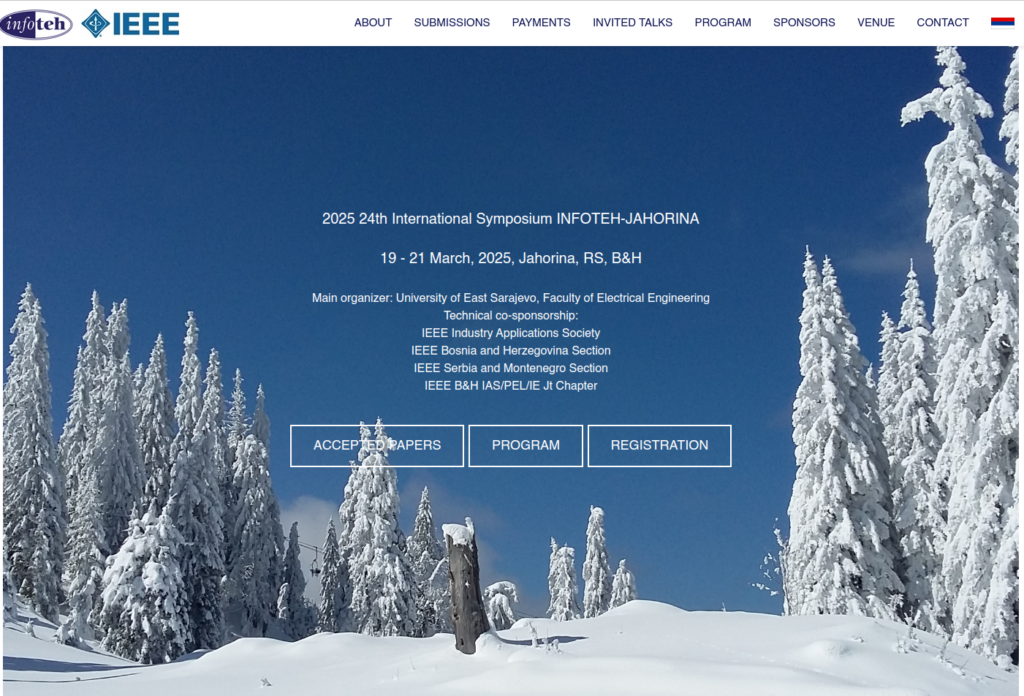
At the 24th International Symposium INFOTEH-JAHORINA (March 19-21, 2025), the paper “Transforming Matrix Problem Solving with Intelligent Tutoring Systems” will be presented. It explores the use of OCR and NLP technologies for automated matrix processing through an intelligent tutoring chatbot.
This effort was supported by the NCC Montenegro and resulted in a system that utilizes EasyOCR and the Qwen2-Math-7B-Instruct model for matrix operations with 95% accuracy. Implemented on our HPC cluster, it enables fast and precise processing of user queries, enhancing learning through AI-powered tools. The paper will be presented by Ms. Enisa Trubljanin and Mr Elvis Taruh, students at the Master AI program at UDG.
Click on image for sessions schedule for accepted papers.