UDG and EuroCC Montenegro at the upcoming IEEE IT 2023 Conference

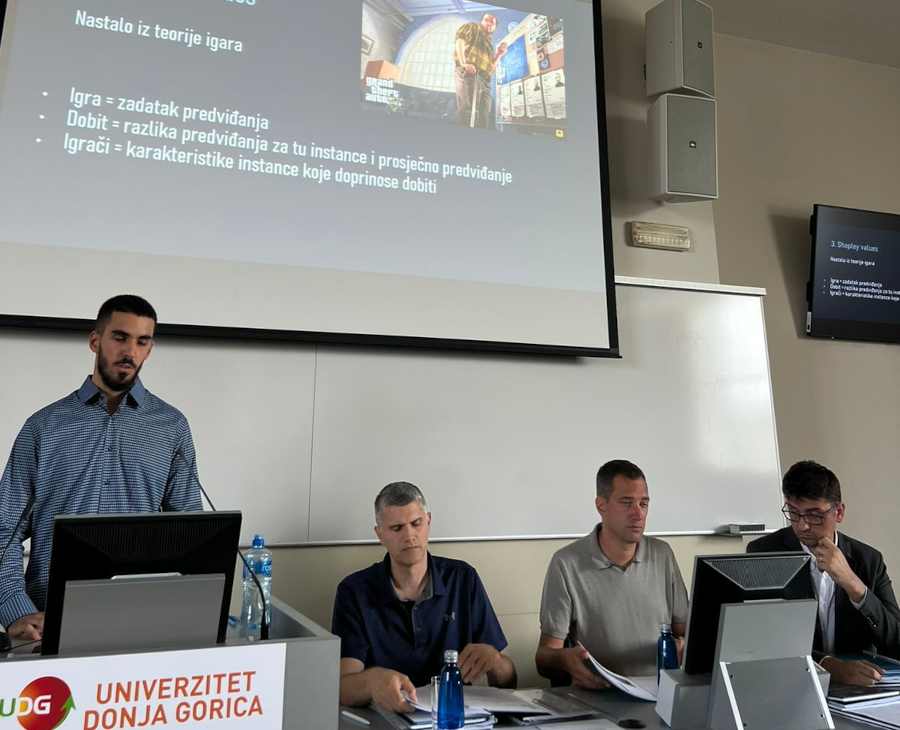
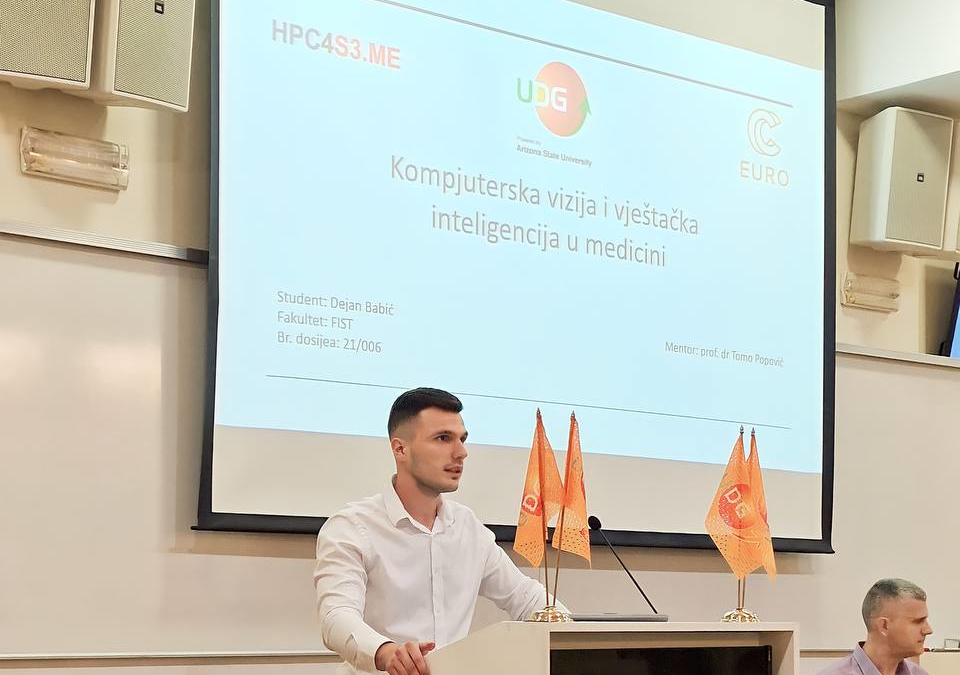
In the period from 15th – 18th of February the 27th international scientific and professional conference “INFORMATION TECHNOLOGIES 2023” (IEEE IT 2023) will traditionally be hosted in Zabljak. The conference will be held in the organization of: University of Montenegro – Faculty of Electrical Engineering, University of Donja Gorica – Faculty of Information Systems and Technologies, IT Society Montenegro, University of Belgrade – Faculty of Organizational Sciences, IEEE Association and IEEE Section for Serbia and Montenegro, with full support of the company Cikom from Podgorica. The chairman of the conference is prof. dr Bozo Krstajic from the Faculty of Electrical Engineering, University of Montenegro.

IT2023 – click on image to open website

Lectures and round table discussions will be organized at the Conference on trends in the development of information and communication technologies in the world, as well as current events in this field in Montenegro. Special session dedicated to project presentations will include EuroCC2 project – National Competence Centres for HPC, two H2020-MSCA projects TRACEWINDU and ODDEA, H2020 projects NI4OS-Europe and DEMETER, Eureka TRADE, Erasmus DigNest, and others.

The conference will include: a short course for Edge AI in IoT solutions (organzed by ANSO and EuroCC Montenegro), an HPC/AI workshop with applications, a presentation of the European cloud of open science and the results of successful international projects. This year, a student workshop will also be held as part of the DigNEST project, which will focus on IT innovations in the field of health and agriculture. In addition to the above mentioned, the papers that have arrived and refer to topics from these areas will also be presented at the Conference.

Click to watch

All those interested can follow the activities at the Conference online as well, through the video conference access links available on the official website of the Conference (link).

HPC4S3ME IPA Project

The full title of this new project is “Building scientific and innovation potential to utilize HPC and AI for S3 Smart Specialisation in Montenegro – HPC4S3ME” and it is funded by the IPA II program, call reference EuropeAid/172-351/ID/ACT/ME.

The overall objective of HPC4S3ME project is to contribute to straightening research excellence by building scientific and innovation potential based on the use of high performance computing and artificial intelligence (AI) for applications in industrial domains proposed by the Smart Specialisation Strategy (2019-2024) for Montenegro. The implementation of this project will provide a state-of-the-art environment for young researchers to gain experience in research and development in computer science, more specifically to apply machine learning and deep learning algorithms supported by HPC in order to create innovative information-communication technology solutions for applications in agriculture and food value chain, health and tourism, energy and sustainable environment, namely the priority domains identified by the smart specialisation strategy. This is a two-year project and it starts in Jan 2023.

Click on image to open HPC4S3ME website

MAIA – Montenegrin AI Association

MAIA – Montenegrin AI Association is a Non-Governmental organization, founded in September 2022 with an ambition to bring together the Montenegrin AI community. Our goal is to popularize Artificial Intelligence related research and spread awareness of its importance in our country, but also encourage our society to join the fast wave of AI innovation in the World. Several NCC Montenegro team members are taking part in this initiative. Check MAIA website for more details at the following link.

Click on image for more info on MAIA

Participation of NCC Montenegro @ 3rd EUROCC/CASTIEL global conference

Sanja Nikolic, representative of HPC NCC Montenegro participated at 3rdEUROCC/CASTIEL global conference, organized with an aim of presenting of main results, key achievements and NCCs successful deliverables within EuroCC1 project phase.

EUROCC/CASTIEL representatives presented key highlights of EUROCC 1 project management with regard to Competence Map building; Training/Mentoring /Twinning activities; Industrial interaction support and Awareness Creation events and actions.

In the second part of the conference NCCs Finland, Luxembourg, Montenegro, Slovenia, Sweden and Turkey presented key achievements and EUROCC1 contributions in their respective working packages and selected project activities. NCC Montenegro presented multiple activities and overall results in the project segment related to HPC/HPDA/AI Trainings and Skills development.

World-renowned professors and researchers gathered around “Deep Learning and HPC” training

University of Donja Gorica, EuroCC Montenegro (national competence center for supercomputers) and in cooperation with the National Center of Spain (NCC Spain) organize the course “Deep Learning and HPC”. Guest lecturers from renowned institutions such as the University of Cambridge, Universidad de Cantabria and Barcelona Supercomputing Centre, GraphCoreAI and Imperial College London, AI Clearing and Shanghai Jiao Tong University, China, DeepMind, Montreal Institute for Learning Algorithms, Max Planck Institute will be involved in the implementation of the training.

During this course students will learn how to implement deep learning models for real situations on their local machines, key mathematical concepts of deep learning, some key concepts about computer vision and natural language processing.

In the second part of the training, students will learn about high-performance computing in the development of deep learning applications, parallel computing using the Python language on multiple CPUs or GPUs, and the pyTorch library for developing deep learning models. The course starts with guest lectures at the end of November so you need to express your interest as soon as possible. The course is followed by students of the Master AI program at UDG, but also by students of other programs who express an interest in it. Lectures are open to academia, industry and the public sector.

Recommended prerequisites for successfully attending lectures are: good knowledge of algorithms and mathematics, knowledge of at least one programming language (Python is preferred), basic knowledge of high-performance computing (HPC), basic knowledge and interest in artificial intelligence, knowledge of the English language.

Media about us:

https://www.portalanalitika.me/clanak/svjetski-priznati-profesori-i-istrazivaci-okupljeni-oko-teme-duboko-ucenje-i-hpc-u-okviru-ncc-na-udg

https://www.cdm.me/drustvo/svjetski-priznati-profesori-i-istrazivaci-okupljeni-oko-teme-duboko-ucenje-i-hpc-u-okviru-ncc-na-udg/

Meeting with NCC Luxembourg

HPC NCC Montenegro representatives Sanja Nikolic and Luka Filipovic organized initial meeting with colleagues from NCC Luxembourg (representatives of Luxinnovation – National Innovation Agency; LuxProvide – in charge of long-term operations of national supercomputer – MeluXina, and University of Luxembourg – providing HPC educational programs and training courses) and discussed cooperation possibilities and best practices sharing in the areas of industry engagement, MeluXina features/access opportunities and training programs.

NCC Luxembourg – NCC Montenegro meeting

With regard to industry cooperation, colleagues from NCC Luxemburg shared their experience and expertise related to business users engagement and MeluXina onboarding process, focusing on HPC needs and benefits, compute-intensive workloads, industry-centric use cases and business cases, supported by dedicated sales & engineering teams. Petascale supercomputer, MeluXina is enabling leading research (non-commercial access through Euro HPC Access Calls) and industrial applications (65% of dedicated resources), with very high security and data protection standards highly appreciated by their commercial users. University of Luxemburg is organizing HPC School and HPC-related Master and Doctoral programs, covering various training needs from beginners access to advanced lectures, on its own and MeluXina supercomputing infrastructure. They also successfully manage HPC community of around 1000 users/ 200 newcomers per year.

NCC Montenegro representatives provided short introduction on main activities and achievements. Based on productive meeting, industry potential discussion and elaborated skills development programs, NCC teams agree on further alignment on HPC+ Topics & Trainings of joint interest, in the context of EuroCC2 plans and 2023 roadmap.

The way is open to building a EuroHPC world-class supercomputer in Greece

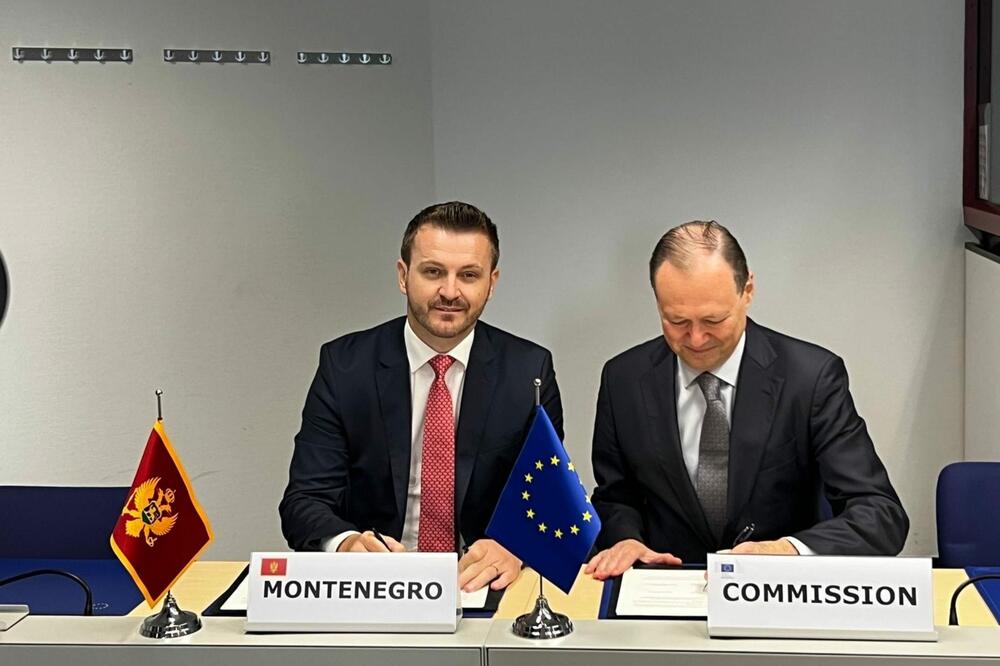
A hosting agreement has been signed between the EuroHPC Joint Undertaking and the National Infrastructures for Research and Technology (GRNET) in Greece where DAEDALUS, a new EuroHPC supercomputer will be located. University of Donja Gorica is one of the partners in the implementation of the project.

Once procured, DAEDALUS will be a mid-range supercomputer, able to perform more than 30 petaflops or 30 million billion calculations per second. This new supercomputer will be managed and operated by GRNET, the National Infrastructures for Research and Technology in Greece. DAEDALUS will be installed in the historical 19th century Electric Power Station building in Lavrion Technological and Cultural Park and is expected to have an overall surface area of 1500 m2.

The supercomputer will power new applications in a wide range of areas, such as engineering, chemistry, health sciences and will be used to visualise and solve scientific problems. It will advance science and boost the innovation potential of enterprises while improving the European citizens’ quality of life.

DAEDALUS, at a total acquisition cost of EUR 33 million, will be co-funded with a maximum total budget of up to EUR 10 million by the EuroHPC JU (35%) and Greece (65% of national funds). Cyprus, Montenegro and North Macedonia are also involved in the project as members of the DAEDALUS consortium. This partnership is strategic for the European Union as it will support science and technology in the wider area of South-East Europe.

DAEDALUS Partners:

  • GRNET – National Infrastructures for Research and Technology, Greece Owner, operator, manager, coordinator
  • The Cyprus Institute, Cyprus: Participation in high-level support team
  • University of Donja Gorica, Montenegro: Participation in high-level support team
  • Faculty of Computer Science and Engineering, Ss. Cyril and Methodius University in Skopje Participation in high-level support team

Links for more details: