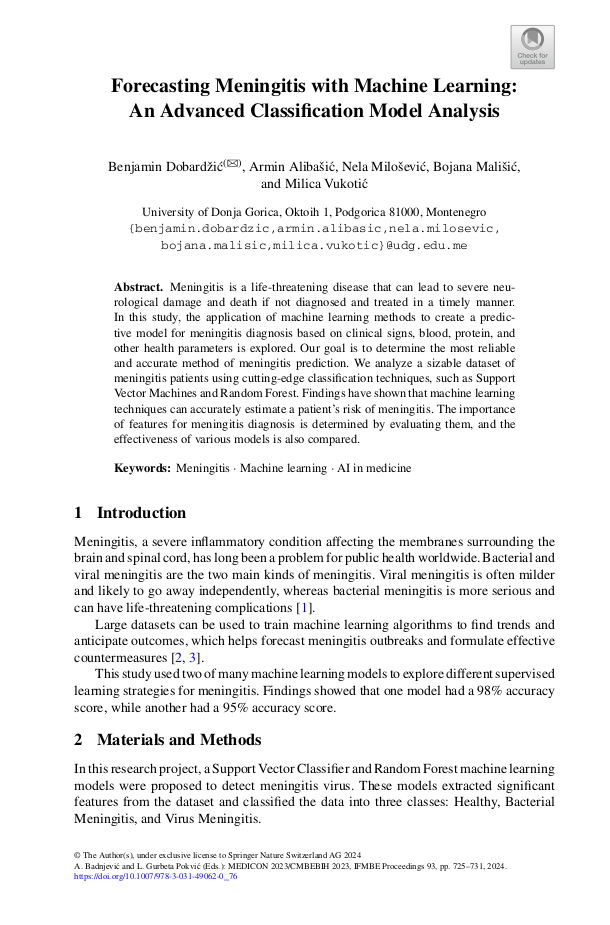
We are happy to report that 4 BSc theses were defended on 18.07.2023. that were relevant to AI applications. These theses were done under mentorship of HPC4S3ME and EUROCC team. This is all part of building scientific and innovation potential to utilize HPC and AI in different domains of S3 Smart Specialisation Strategy in Montenegro. This is a great exampe of NCC support and cross-project collaboration. More about HPC4S3ME project can be found at: link.
Ms Tamara Lasica: “Development of Generative AI (GenAI)” (link)
Ms Elda Kalac: “Artificial intelligence and big data analytics” (link)
Mr Nikola Kavaric: “Explainable Artificial Intelligence” (link)
Mr Elvis Taruh: “Artificial intelligence and video games” (link)
The Innovation Fund of Montenegro (the Fund) publishes the list of projects approved for financing within the framework of the Public Call for encouraging the development of innovation culture and the organization of education in the areas of smart specialization. The fund allocated funds in the total amount of 130,000 euros for financing projects within two program lines according to this Public Call. The public call for the mentioned program lines was open from May 8 to June 15, 2023.
The Faculty of Information Systems and Technologies, University of Donja Gorica, proposed the educational project “Application of computer vision and deep learning in agriculture and food production, medicine and energy (AI4S3)” which was highly evaluated and approved for funding. This project focuses on training participants for the application of AI in the priority domains of the Smart Specialization Strategy of Montenegro (S3 Montenegro). This project is continuation of UDG and NCC Montenegro efforts to offer best education and training for HPC, AI and IT in general to Montenegrin stakeholders. The training will take place from October to December 2023.
Education in domains of S3 Montengro by the Innovation Fund of Montenegro
24 projects were submitted to the public call for the program line to encourage the development of innovative culture, of which 21 projects were sent for evaluation, while 35 projects were registered for the program line for the organization of education in the areas of smart specialization in Montenegro, of which 32 projects were sent for evaluation conducted by the Fund’s expert committee, in accordance with the Rulebook on the evaluation process. More info available at the following link.
Today, the Commission signed association agreements for the Digital Europe Programme with Montenegro, North Macedonia, Albania and Serbia, on the margins of the Regulatory Dialogue with the Western Balkans. Following the signatures, and upon the completion of the related ratification processes, the association agreements will enter into force. Businesses, public administrations and other eligible organisations in these neighbouring countries will be able to access the calls of the Digital Europe Programme, which has an overall budget of €7.5 billion in the 2021-2027 period.
Montenegro signing the DEP
In particular, participants from these four countries will be able to take part in projects that deploy digital technologies across the EU in specific areas such as artificial intelligence, and advanced digital skills. They will also be able to set up Digital Innovation Hubs in their own regions. This will bring them closer to the EU economy and society, benefit their technology capabilities and support digitalisation overall, notably of small and medium-sized businesses. (Source: European Commission – link)
Digital Europe Programme opens to Montenegro and EuroCC2
Mr Dejan Babic, a young researcher from UDG, just defended his Master thesis on the use of computer vision and artificial intelligence in medicine. This is a great example of using ICT for vertical priority domains of Monteengrin S3. This research was supported in part by HPC4S3ME project and EUROCC. Mr Babic intends to continue his research in this domain and to enroll PhD program at the UDG. Mr Babic explored the use of different tools for ML and he also experimened with the use of HPC for training prediction models that can be used in medicine. He was one of the first MSc theses defended from the Artificial Intelligence Master program created under the EuroCC project.
ABSTRACT – Artificial Intelligence is transforming the way we live, work, and communicate with the world. The proliferation of data has been the biggest driver of AI in recent years. AI in medicine is rapidly developing and holds great potential in revolutionizing healthcare systems. Its application is already producing promising results in disease detection, diagnosis and drug discovery. AI is widely used in medical facilities worldwide as a decision support tool for patient diagnosis. It is expected to bring significant benefits to healthcare sector. In this thesis, the focus is on the application of artificial intelligence and computer vision in solving real medical problems. The research is both theoretical and empirical and focuses on the application of artificial intelligence and computer vision in the detection of pneumonia, segmentation of blood vessels in the retina, and estimation of cardiovascular risk. The main goal of the research is to achieve the highest possible accuracy in specific cases and approaches, in order for these approaches to be considered applicable in medicine. Throughout the study, some of the ethical issues related to the use of this technology were also raised. At the end of the study, the results, potential challenges, and future directions of this research were discussed.
Computer vision and artificial intelligence in medicineSegmentation of blood vessels in images of retina
Mr Ivan Jovovic, a young researcher from UDG, just defended his Master thesis on the use of artificial intelligence and machine learining on edge devices. This research was supported in part by HPC4S3ME project and EUROCC. Mr Jovovic intends to continue his research in this domain and to enroll PhD program at the UDG. Mr Jovovic explored the use of different tools for ML and he also experimened with the use of HPC for training prediction models that can be ported onto edge devices. He was one of the first MSc theses defended from the Artificial Intelligence Master program created under EuroCC project.
ABSTRACT – This thesis explores the combination of artificial intelligence, machine learning, deep learning, and edge computing in modern applications, with a special focus on medicine and agriculture. The paper first introduces the reader to the basic terms and definitions of machine learning, deep learning, computer vision, the Internet of Things and Edge computing. After the theoretical basis, the work provides an insight into the practical applications of these technologies in medicine and agriculture, highlighting the benefits and drawbacks of their applications. In the following, the paper offers a detailed study of practical examples of edge artificial intelligence in agriculture and healthcare, as well as artificial intelligence in the field of medicine, with focus on disease classification. Through the realization and implementation of these projects, the interpretation of the results and the discussion, the paper emphasizes the importance of the integration of artificial intelligence and edge computing in various industries.
Master thesis: The use of Artificial Intelligence on Edge (Edge AI)
Thanks to EuroCC2 team from Montenegro, EuroCC and 27th International Scientific and Professional Conference – Information technology IT2023 were featured in the June issue of IEEE Region 8 News magazine (Vol 4 No 2). You can access the full issue at the following link. The News bulletin is published quartterly and distributed to over 80000 IEEE members in Region 8.
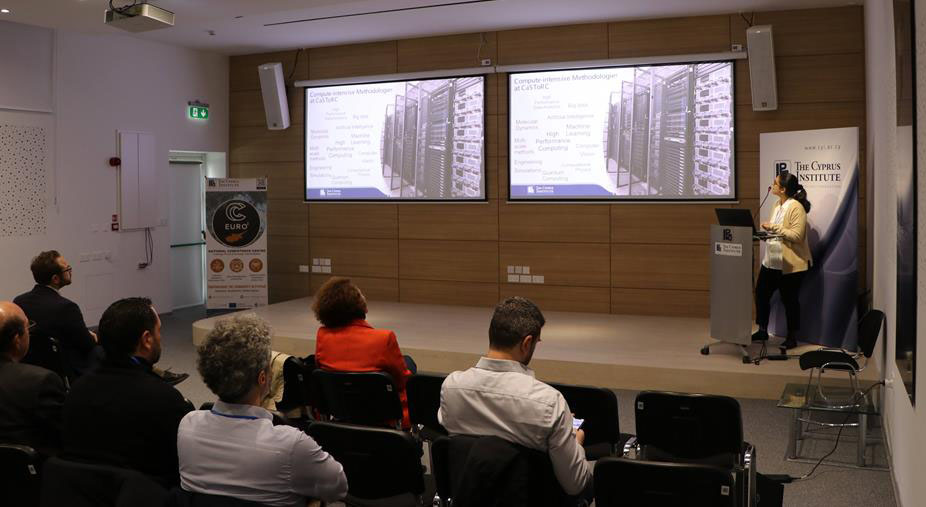
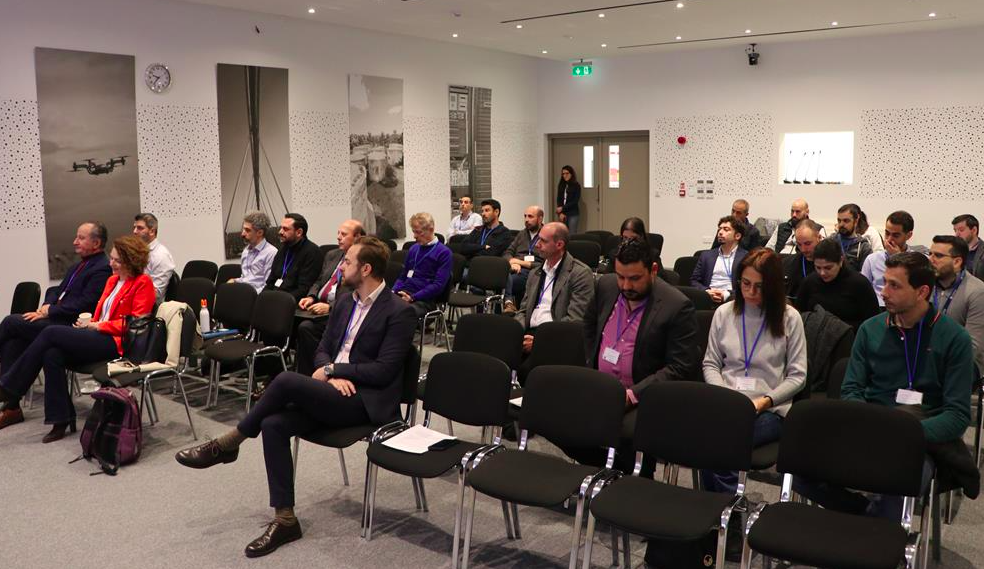
Representatives from the NCCs of Montenegro and Cyprus (CaSToRC), held an initial meeting on June 6, 2023, with the primary purpose to explore potential cooperation, knowledge sharing opportunities and best practice exchange through effective peer’s cooperation and Twinning activities.
During the meeting, the NCCs’ teams expressed mutual interest in exchanging experiences and learning opportunities, particularly in the areas of productive industrial cooperation and HPC/AI related training activities. Additionally, they discussed the exchange of operational practices and proven initiatives related to NCC management, cooperation and communication activities.
The next steps involve organizing administrative, logistic and operational support to facilitate team visits and work program with shared topics’ interest. By leveraging NCCs’ respective expertise and synergizing their efforts, both NCCs aim to strengthen their capacities and effectively address HPC+ needs/potential in their national ecosystems.