PAID Montenegro has achieved success in the EuroHPC Joint Undertaking Development Call, marking a significant milestone in its efforts to strengthen its capacities in high-performance computing (HPC).
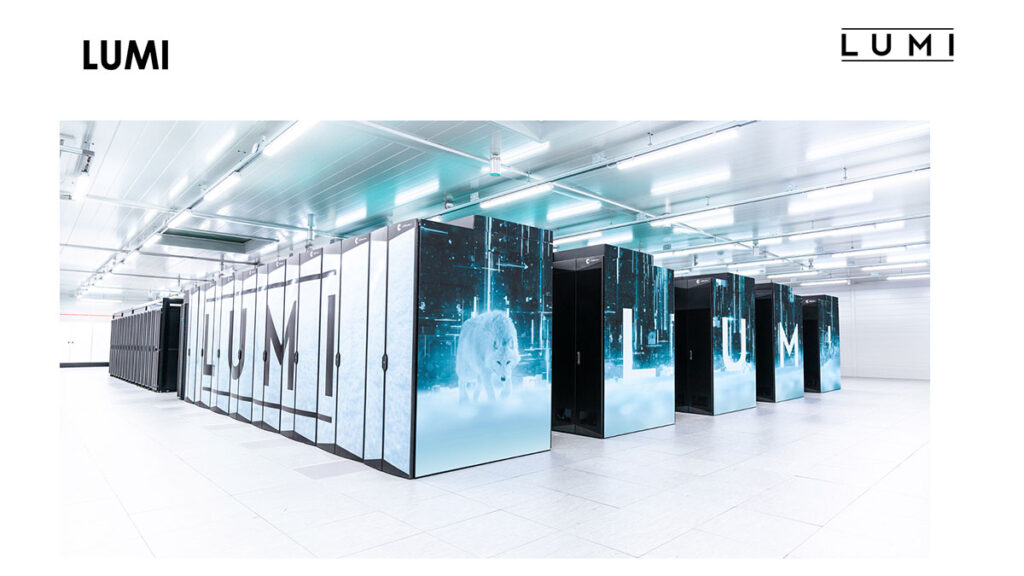
The initiative successfully completed the first round of the development call, demonstrating strong technical potential and relevance to the EuroHPC objectives. Following this achievement, PAID Montenegro submitted a second application, which was once again approved. As a result, the team has secured access to one of Europe’s most powerful supercomputing infrastructures — LUMI, the pan-European pre-exascale supercomputer. PAID Montenegro was granted 4,000 node hours on LUMI-C (CPU partition) and 4,500 node hours on LUMI-G (GPU partition), providing substantial computational power for advanced simulations, data processing, and AI research.
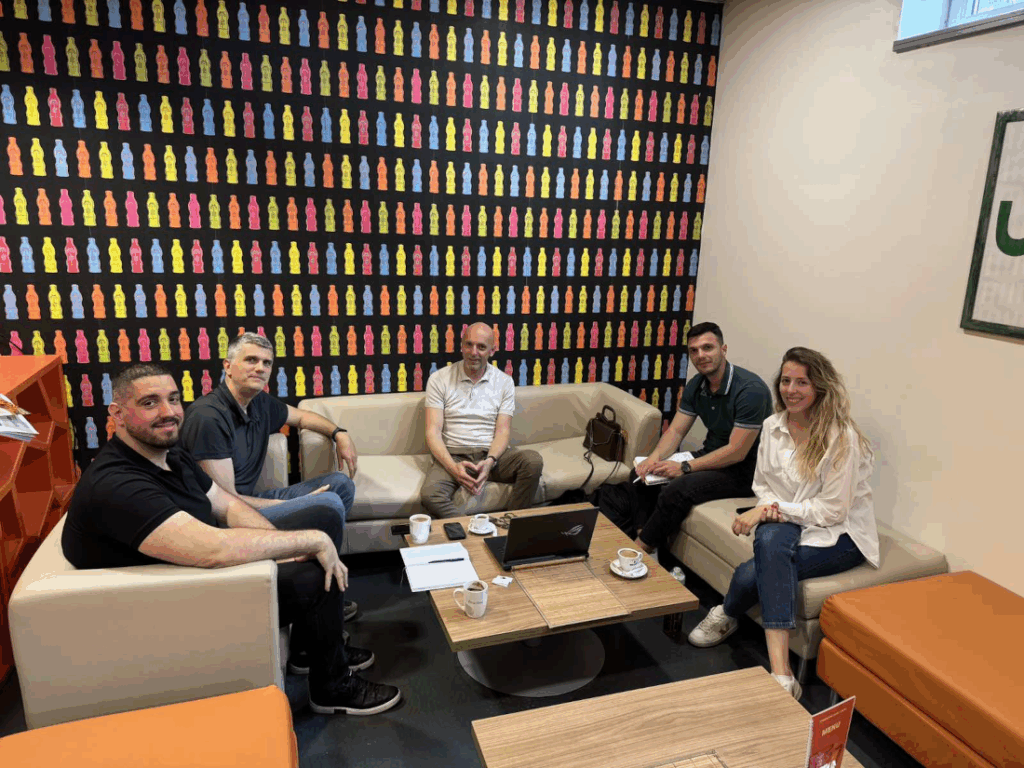
On May 2025, NCC Montenegro and the University of Donja Gorica welcomed Igor Mitrić, founder and CEO of the Montenegrin startup HRUPTY, for an initial consultation on potential collaborations in the field of high-performance computing (HPC). HRUPTY is recognized as an innovation-driven company registered under the Ministry of Science and Innovation and is focused on developing cutting-edge AR/VR tools for a wide range of industries including real estate, tourism, art, education, and industrial training.
Innovative Startup Hrupty visited NCC Montenegro for initial consultations
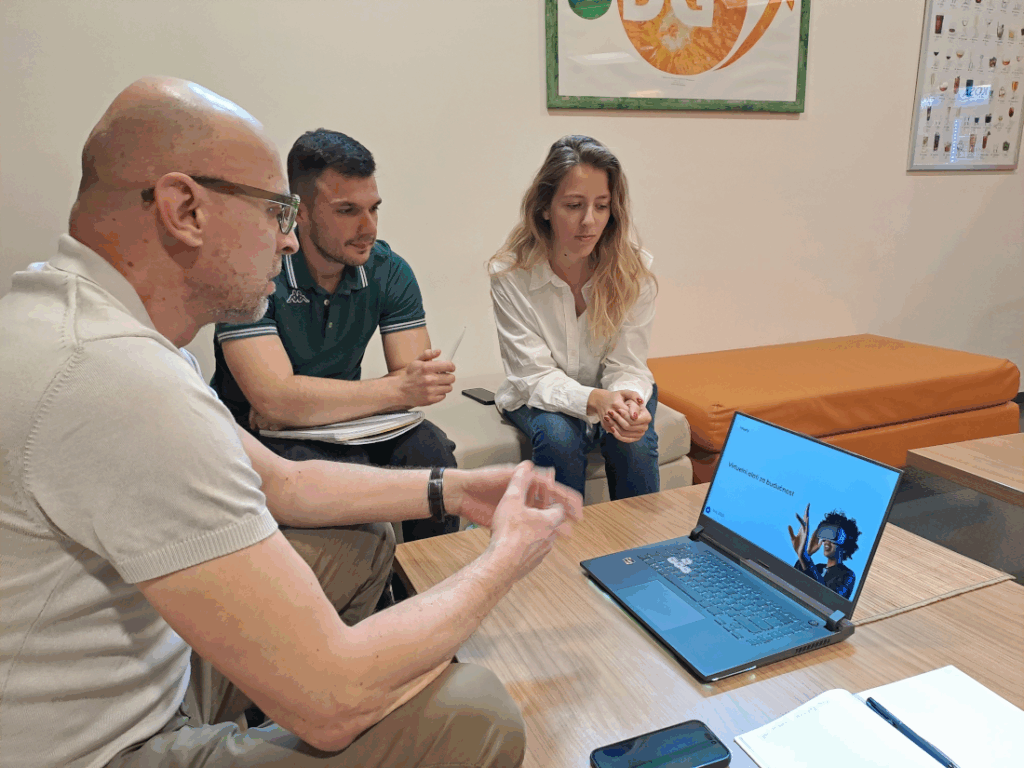
During the meeting, Mr. Mitrić presented the company’s suite of digital 3D products—such as VirtuSale, VirtuTrainPro, and VirtuEdu—that are already being deployed in global projects with partners from Europe, North America, and Asia. These platforms combine immersive virtual experiences with artificial intelligence to revolutionize how users interact with real-world scenarios in virtual environments.
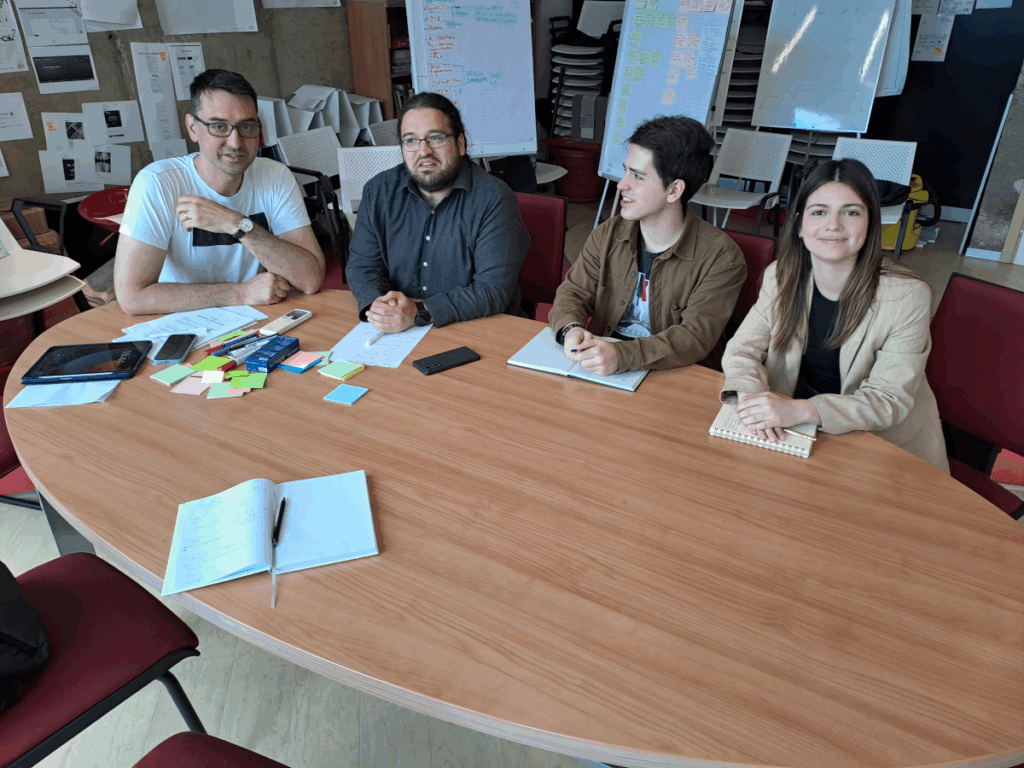
We went over the Hrupty roadmap and also provided support for the HPC4SME self assessment process
The discussion with NCC Montenegro representatives—Dejan Babić, Ivan Jovović, and Tomo Popović—focused on identifying where HPC resources could support HRUPTY’s innovation roadmap, especially in areas requiring large-scale rendering, simulation, and AI model training. As part of the session, HRUPTY also completed the HPC4SME self-assessment to better understand its HPC readiness and potential for adopting advanced computing technologies. This visit marks the beginning of what we hope will become a fruitful collaboration between the startup and the national HPC competence center.
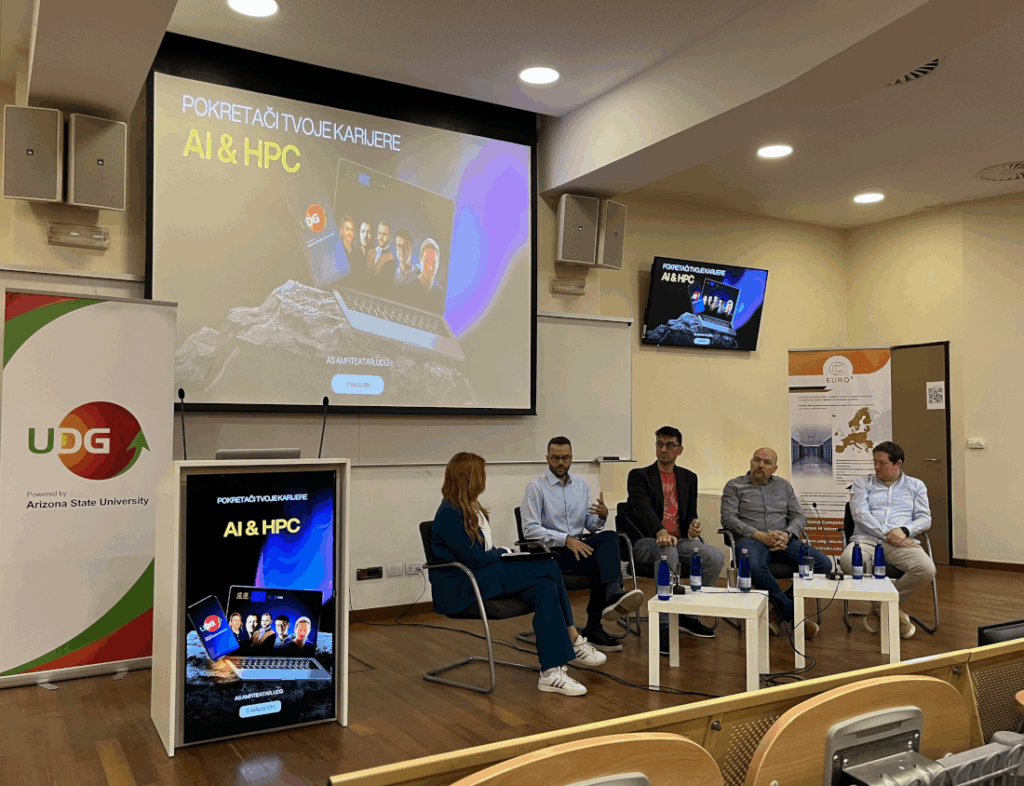
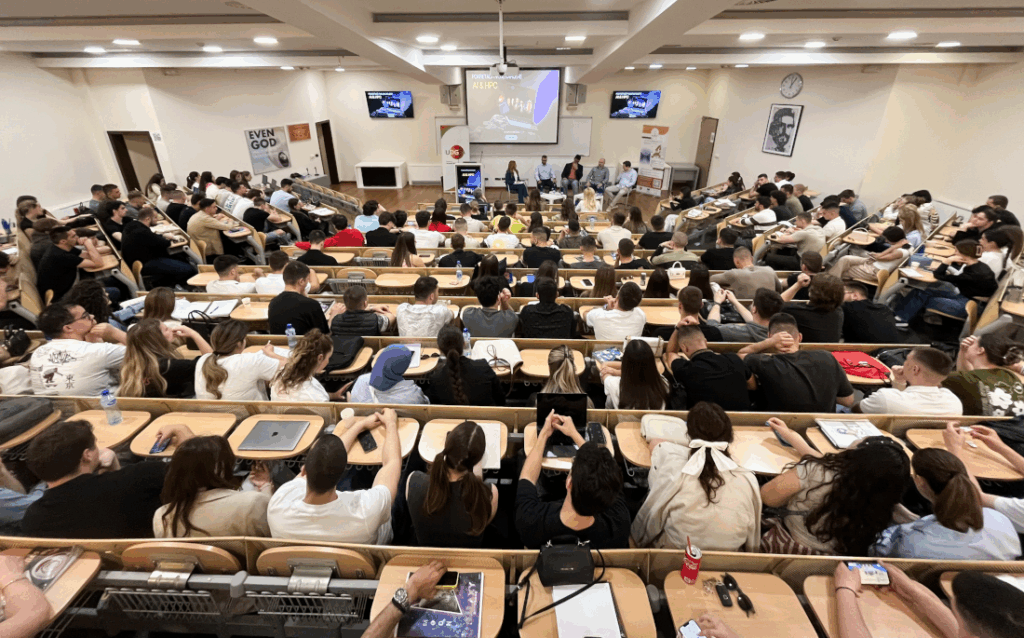
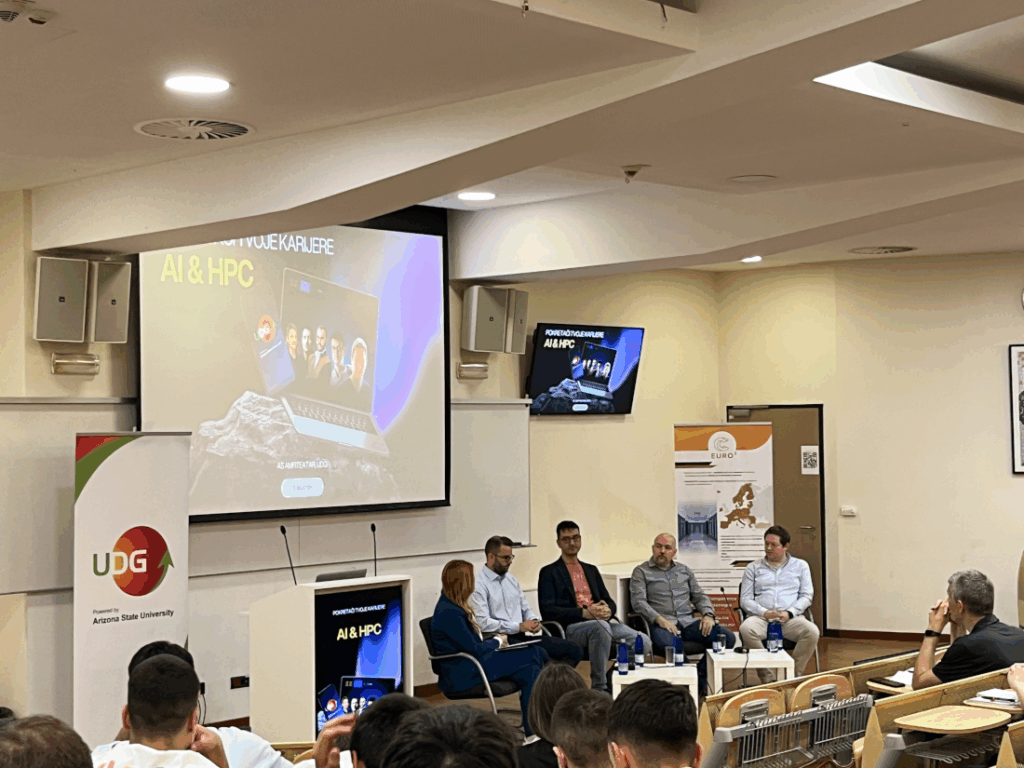
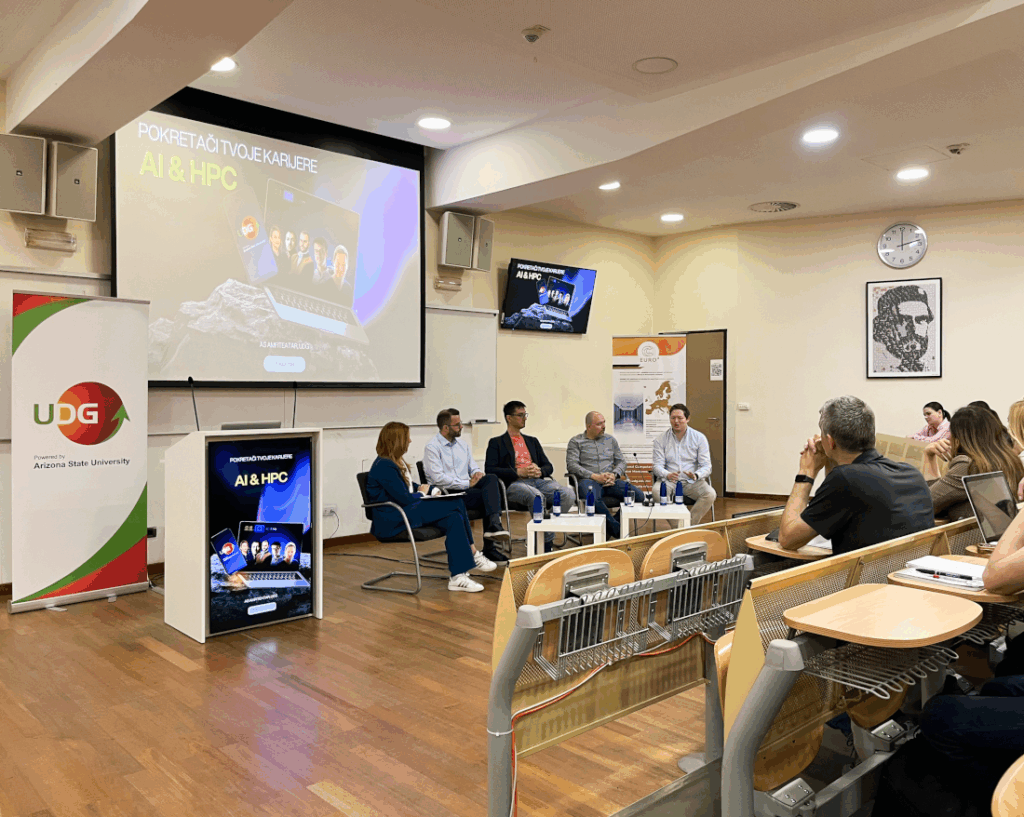
During the panel “AI and HPC: drivers of your career” held at the University of Donja Gorica as part of the EuroCC project, our alumni sent clear messages that changes do not come by themselves, but are driven by people ready to learn, take responsibility and act. At a time when the borders between the real and digital world are being erased faster than ever before, Montenegro is increasingly positioning itself as a place where ideas with global potential are born.
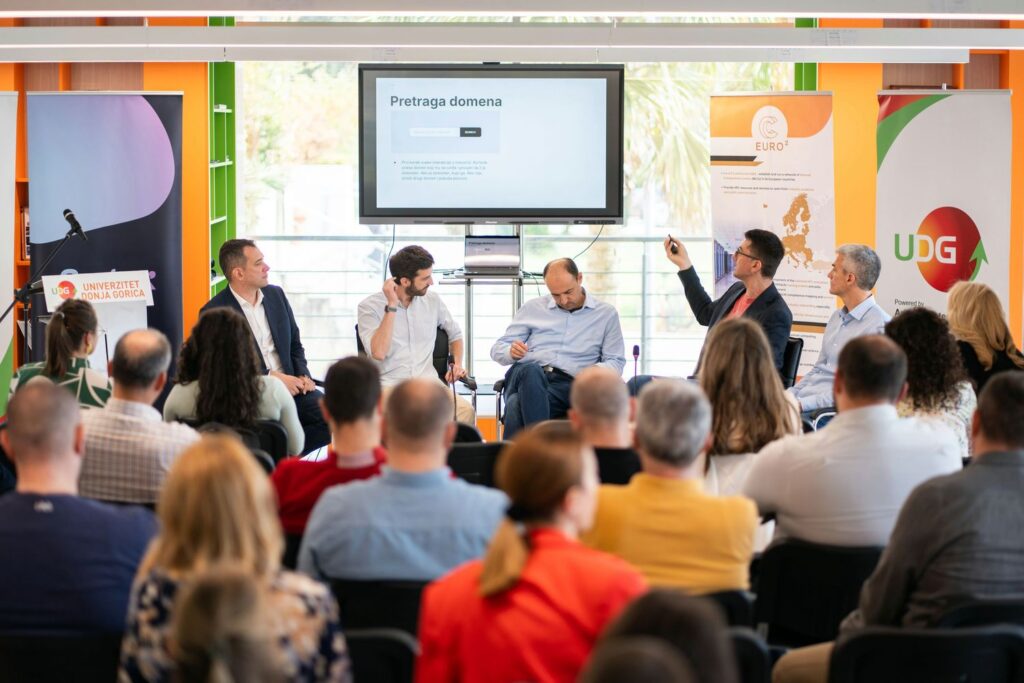
Panel je uključio 4 eksperta i osnivača uspješnih firmi u Crnoj Gori
In the opening address, it was pointed out that AI and HPC are not just abstract technological terms, but concrete tools that change the way we live, work, educate and communicate. Today, more than ever, the question is not whether AI will change our daily lives, but how we, as individuals and as a community, will respond to those changes. In that spirit, the panelists shared their experiences, dilemmas and visions, but also sent strong messages to students who will be the bearers of that transformation.
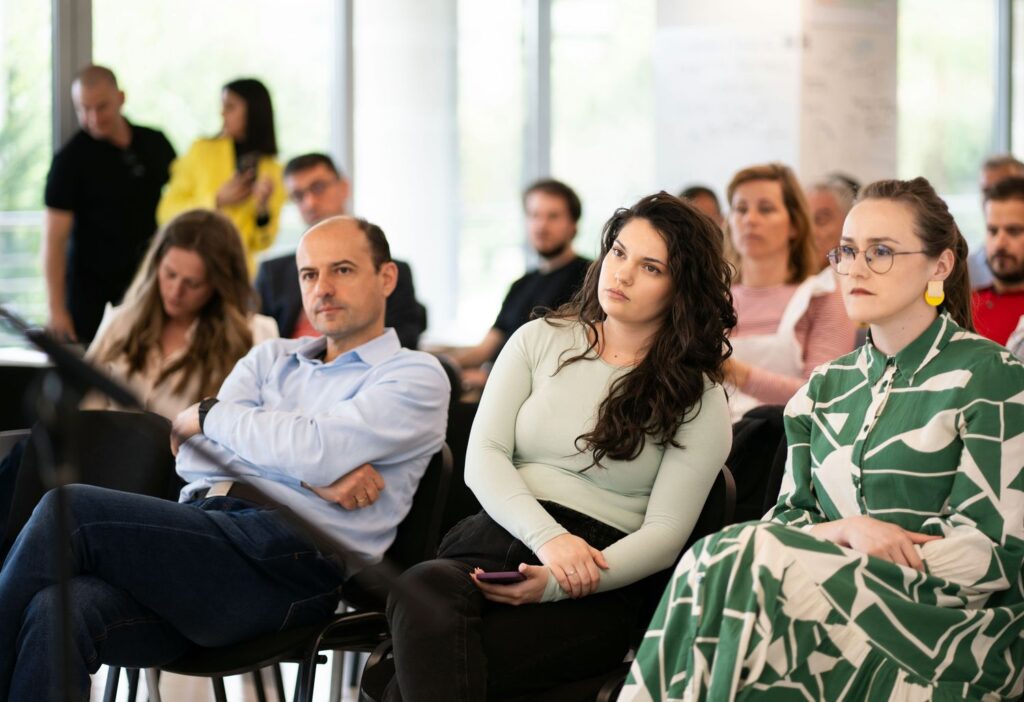
Veliko interesovanje kod studenata
Anton Jurovicki, CEO of Coinis, spoke about the necessity for the education system in Montenegro to make a step towards a more practical and flexible approach to learning. As he says, technologies change almost on a daily basis, and that is why it is crucial that young people do not wait for the system to prepare them, but actively search for knowledge themselves, through projects, practices and direct cooperation with industry. He especially emphasized that today’s students are the ones who already have the opportunity to shape the local technological ecosystem and make Montenegro the digital center of the region. He encouraged male and female students not to hesitate to step into these fields, because their very presence can bring a key change in the way technology shapes our society.
Preko 100 posjetilaca je ispratilo diskusiju
Milutin Pavićević, commercial director of Alicorn, with extensive experience in the video game industry, spoke about the role of artificial intelligence in creative processes. He pointed out that AI is not the enemy of creativity, but a tool that can expand the boundaries of imagination and accelerate the development of games, narratives and digital worlds. However, as he says, it is crucial that people remain at the center of that process, because AI does not understand context, emotion and purpose, and that these are values that only human consciousness can bring. Milutin pointed out the challenges faced by male and female students when entering the industry, from lack of practical experience to lack of understanding of business processes. He emphasized that employers are not only looking for technical knowledge, but the ability to learn quickly, communicate clearly and think critically. In this sense, he called on young people to develop soft skills, but also to take responsibility for personal improvement, because the industry is no longer waiting but looking for those who are ready today.
Svi učesnici panela su već ostvarili saradnju sa NCC Montenegro i UDG
Miodrag Vujković, founder of Inovative, spoke about how to overcome the fear of technology. He said resistance often comes from a lack of understanding rather than an actual inability to apply the technologies. His message was clear: “Technology should be an ally, not a threat.” Through specific examples, he explained how AI and HPC can help in market analysis, resource optimization and making better business decisions. He particularly referred to the future of business in which, as he believes, AI will play a key role, but with the active participation of people who understand the wider context. The entrepreneurs of the future, according to him, will be those who know how to combine analytics, intuition and ethics.
Stevan Šandi, the founder of BixBit, shared his experience on the development of AI products from the perspective of a domestic company. A successful AI product, in his opinion, depends not only on code but on clear purpose, understanding of users and continuous optimization. He also warned that technologies like AI and HPC require responsible behavior, especially when it comes to data security and privacy. Stevan underlined that individuals, not systems, bear the greatest responsibility for the protection of their data, as well as the data of other people. In a world where everything is connected, the boundaries of privacy are getting thinner, and trust is becoming the most valuable currency.
In the end, all the speakers agreed that the key is in education, critical thinking, openness to collaboration and willingness to constantly learn. AI and HPC are not replacing humans but opening the door to completely new ways of working and thinking. But only those who are ready to recognize these changes, adapt and take responsibility will be the leaders of the future.
As part of the EuroCC4SEE project, the participating countries — Türkiye, Serbia, Montenegro, North Macedonia, and Bosnia and Herzegovina — are collaboratively designing an SME-focused HPC training.
🎯 To ensure that the program is relevant and targeted, we are conducting a needs assessment survey with input from all partner countries.
The University of Donja Gorica and NCC Montenegro are organizing a panel discussion within the hashtag#EuroCC project, a European initiative dedicated to the development of national competence centers in the field of high-performance computing, artificial intelligence and big data analysis.
The event brings together successful UDG alumni and researchers, who today lead innovative companies and projects in Montenegro and beyond. Through personal stories and practical insights, speakers will show how knowledge from AI and HPC can become key levers for career development.
Panelists:
Anton Jurovicki – CEO & Co-Founder, Coinis | The founder of the zaposli.ME platform
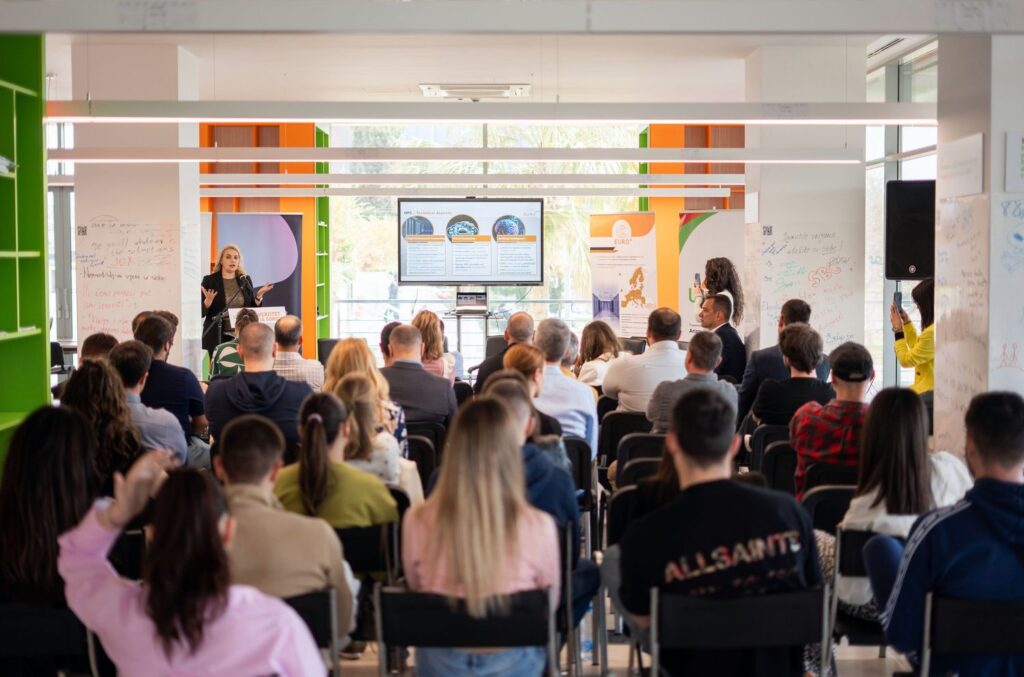
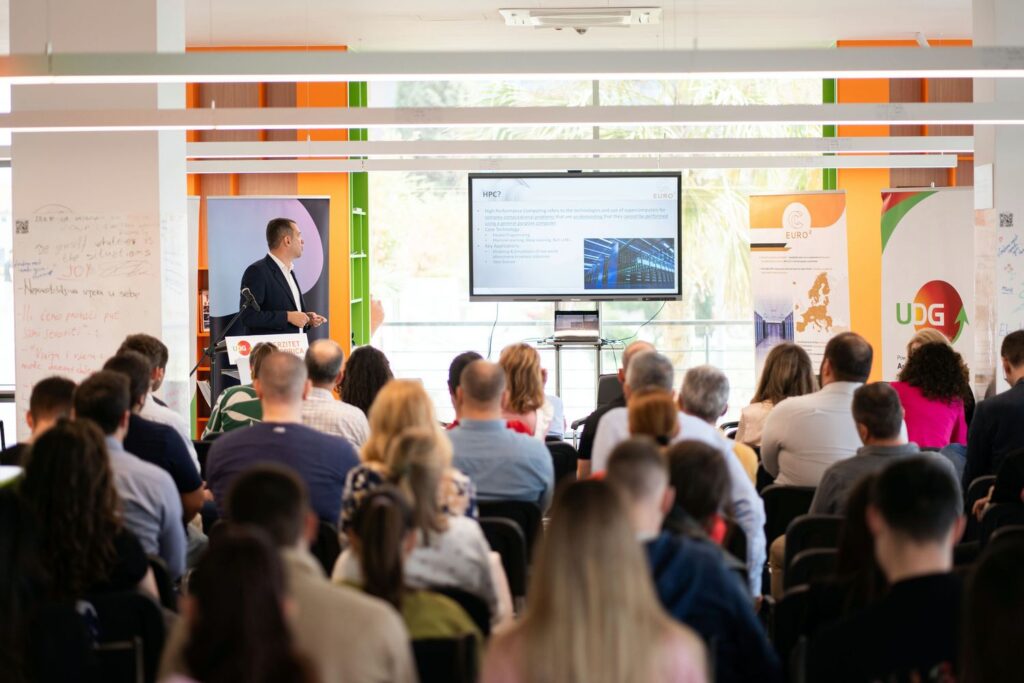
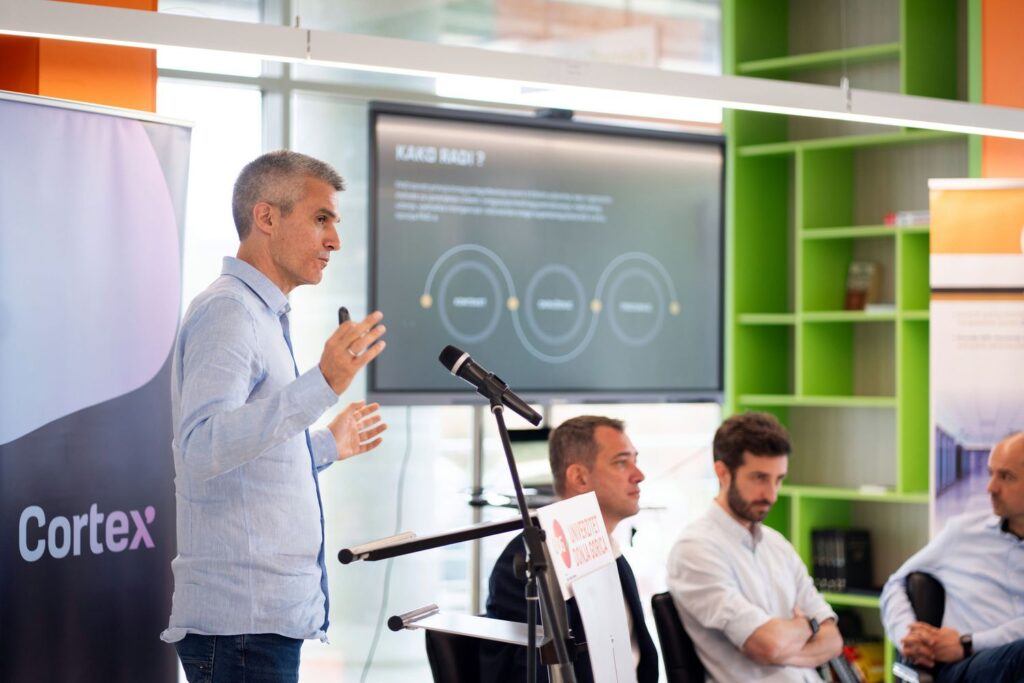
NCC Montenegro and ICT Cortex hosted Supercomputing Opportunities for Industry Leaders—a dynamic industry event showcasing how HPC and AI are reshaping the innovation landscape for businesses in Montenegro.
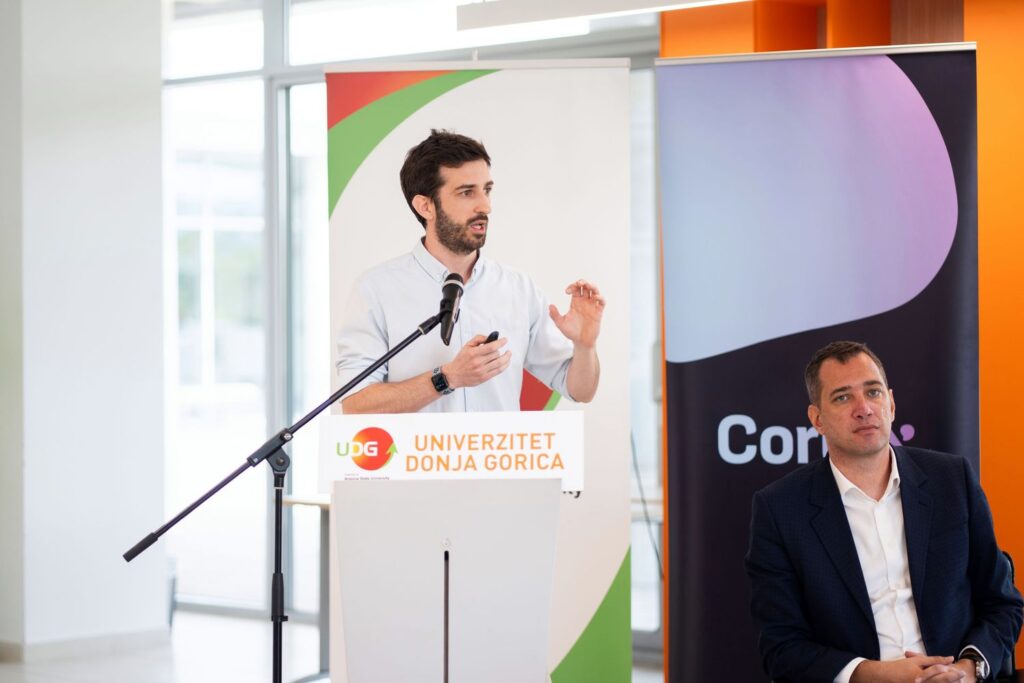
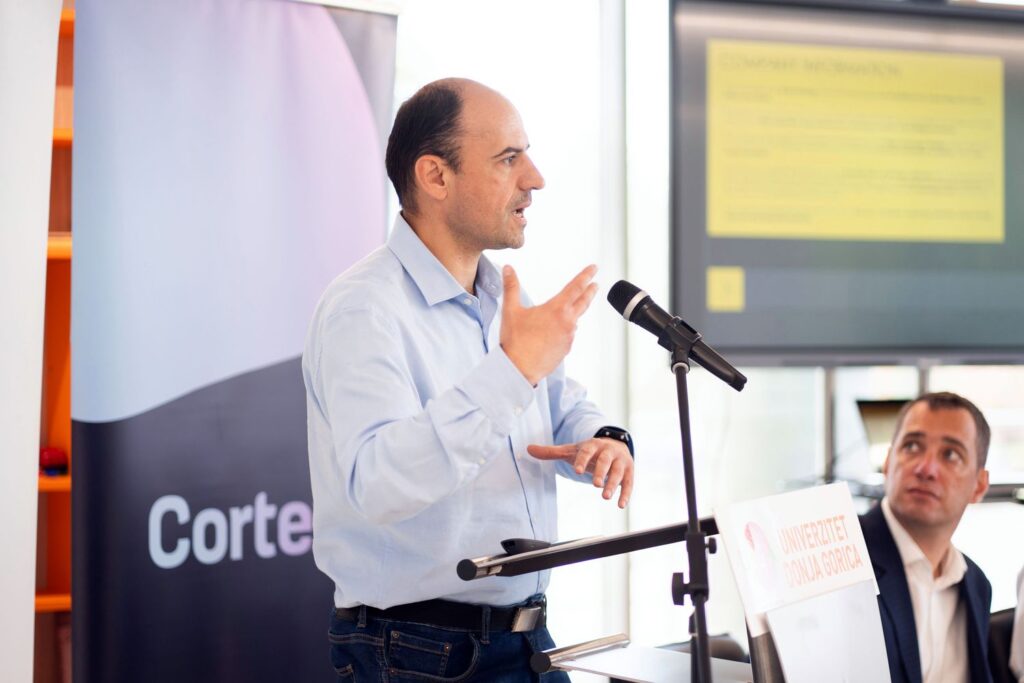
The event was opened by Sanja Nikolić, who presented NCC Montenegro as a national hub dedicated to fostering driving innovation, digitalization and competitiveness through Cloud HPC and AI technologies.
Following the introductory part, Luka Filipović emphasized NCC Montenegro’s role as a national gateway to the EuroHPC supercomputing infrastructure. His presentation offered a practical roadmap and expert insights into the Open Access Calls, providing businesses with clear guidance on how to leverage some of the most powerful supercomputers in Europe—and globally—for research, development, and innovation.
The second part of the event featured a panel discussion with representatives from innovative companies in the Montenegrin IT sector—technology visionaries who are actively applying HPC and AI in real-world projects. The panel highlighted successful collaborations with NCC Montenegro and included:
Milutin Pavićević, Chief Creative Director at Alicorn, presented NameSentinel—an AI-powered service that enables smart search and generation of memorable domain names by processing user preferences and startup descriptions. The platform leverages HPC to process tens of millions of domain records daily, enabling real-time, ultra-fast domain availability checks.
Marko Lekić, CTO of Fleka, shared insights into the company’s work in the FinTech industry, highlighting the development of ML-based, HPC-empowered SaaS solutions aimed at enhancing personalized banking experiences. Their approach leverages intelligent algorithms for transaction and spending classification, enabling smarter, more tailored financial services.
Đuro Stojanović, CEO of UHURA Solutions, an AI startup specializing in automating document-driven processes, emphasized the benefits of leveraging EuroHPC resources, specifically the Leonardo supercomputer. He discussed how it can be used to train and fine-tune LLMswith up to 70 billion parametersondomain-specific datasets, enhancing the efficiency and accuracy of AI-driven financial solutions.
Nebojša Jovanović, Co-Founder and Product Owner of PAID, presented the development of a B2B software solutionforquantitative tradingon stock exchanges. The solution requires training sophisticated AI/ML models and running up to 1.2 million simulations per financial instrument—a process that, thanks to access to the LUMI supercomputer, was completed in just 4.7 hours, compared to the estimated 10 months.
This event not only showcased the industry potential of HPC and AI—particularly within the IT sector—but also emphasized NCC Montenegro’s supportive role in making these advanced technologies both accessible and actionable for the local and regional business ecosystem.
As part of our ongoing efforts to foster industry collaboration, the National Competence Centre (NCC) Montenegro recently conducted a follow-up consultation with representatives from Alicorn, Mr. Milutin Pavićević and Mr. Andrija Vučković. The meeting focused on exploring how High-Performance Computing (HPC) can be integrated into Alicorn’s development workflows, particularly in areas requiring substantial computational resources. Discussions also covered opportunities for accessing EuroHPC resources through open calls, as well as potential collaboration on Proof-of-Concept initiatives and joint project applications. We will also explore future options for open calls by Fortissimo and Innovation fund od Montenegro.
This was a follow up visit to Alicorn, an innovative technology company from Podgorica
Alicorn shared several promising use cases where HPC could significantly enhance their operations, including advanced data analytics and AI model training. This aligns with NCC Montenegro’s mission to support SMEs in leveraging HPC and AI technologies for innovation and competitiveness. We look forward to continuing our collaboration with Alicorn and assisting them in navigating EuroHPC application processes, thereby contributing to the digital transformation of Montenegro’s tech industry.