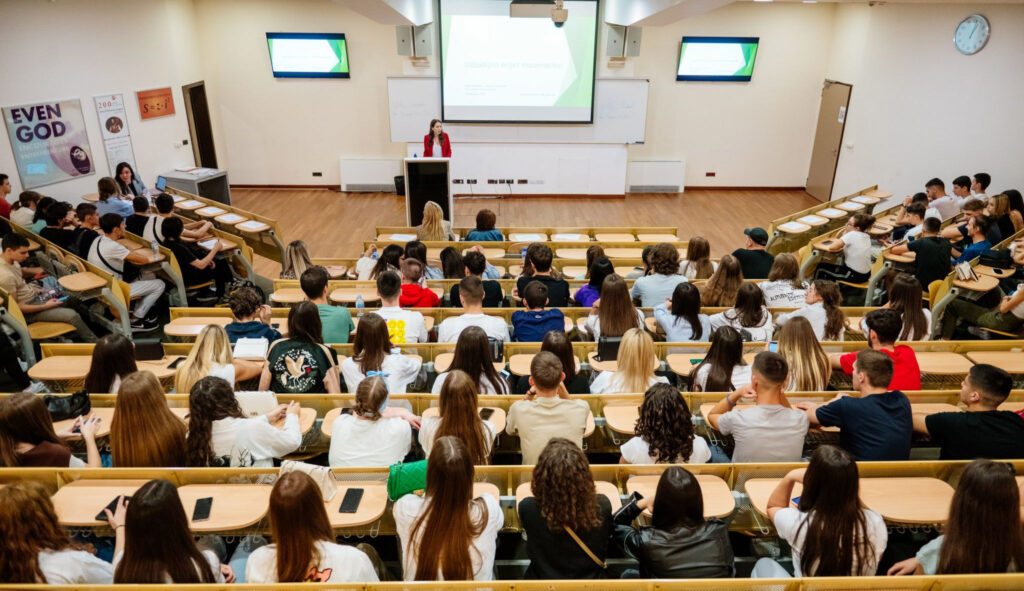
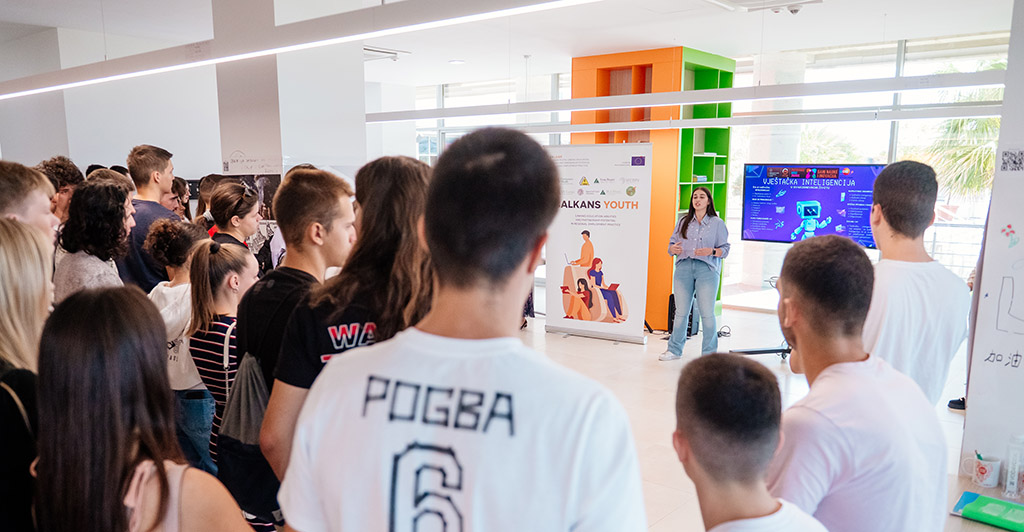
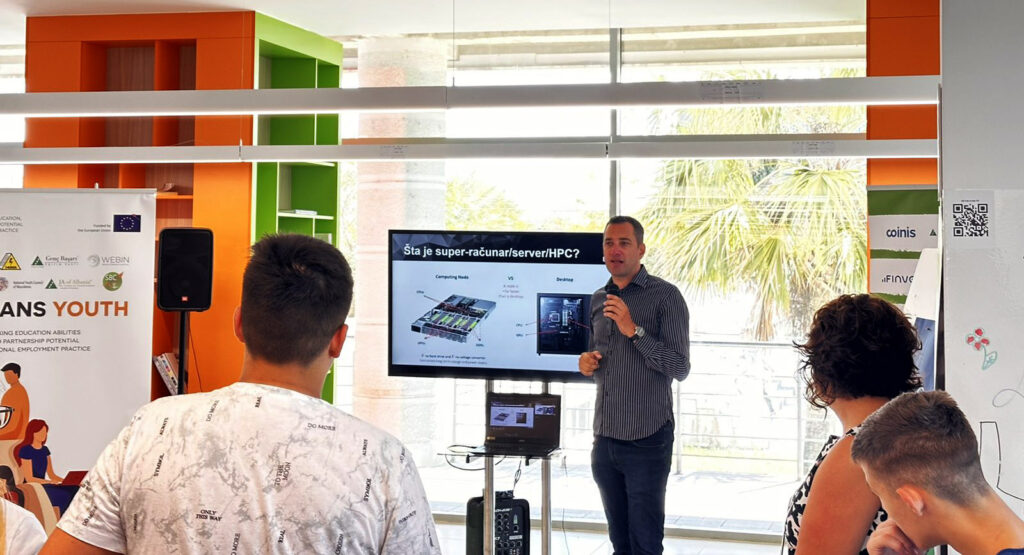
An event “STEMpower” was held at the University of Donja Gorica (UDG) as part of the “Days of Science and Innovation” Festival. Students from high schools from Podgorica, Bar and Pljevlja had the opportunity to listen to interesting lectures about supercomputers, artificial intelligence and machine learning and to visit the laboratories of the UDG.
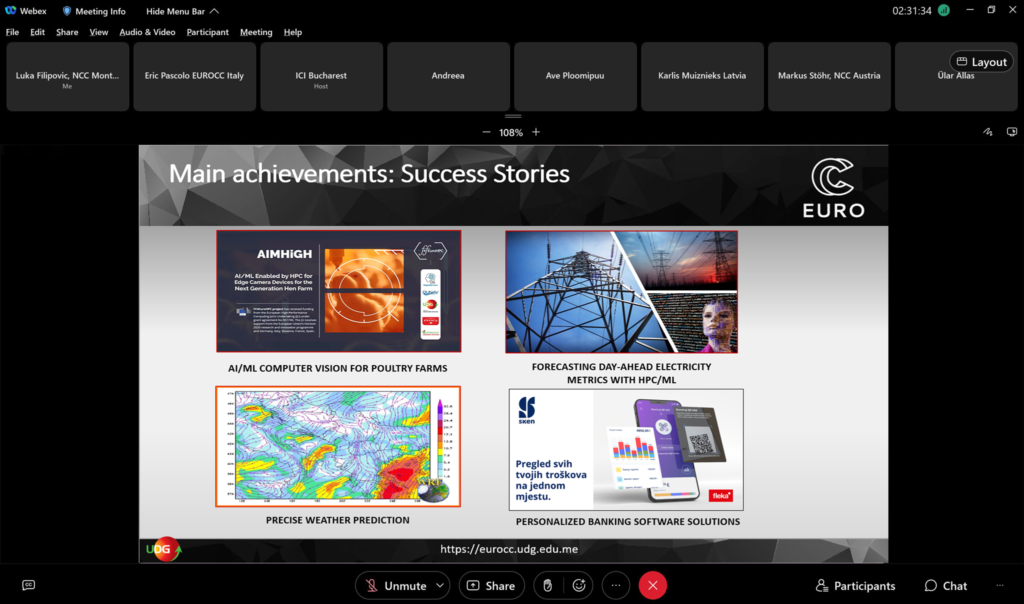
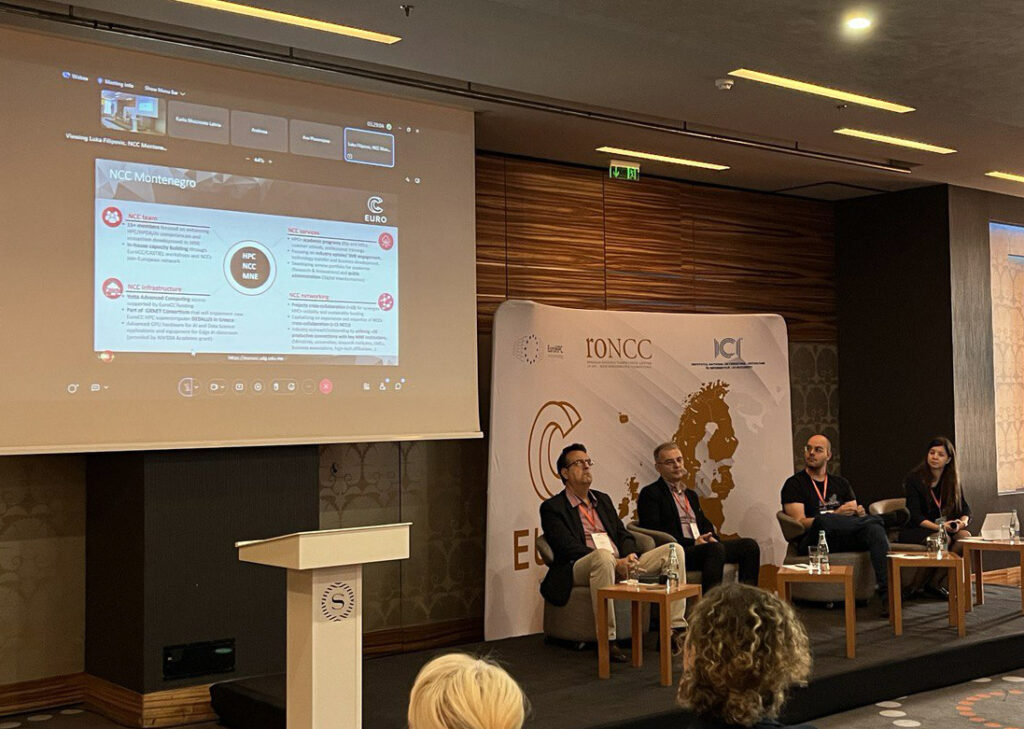
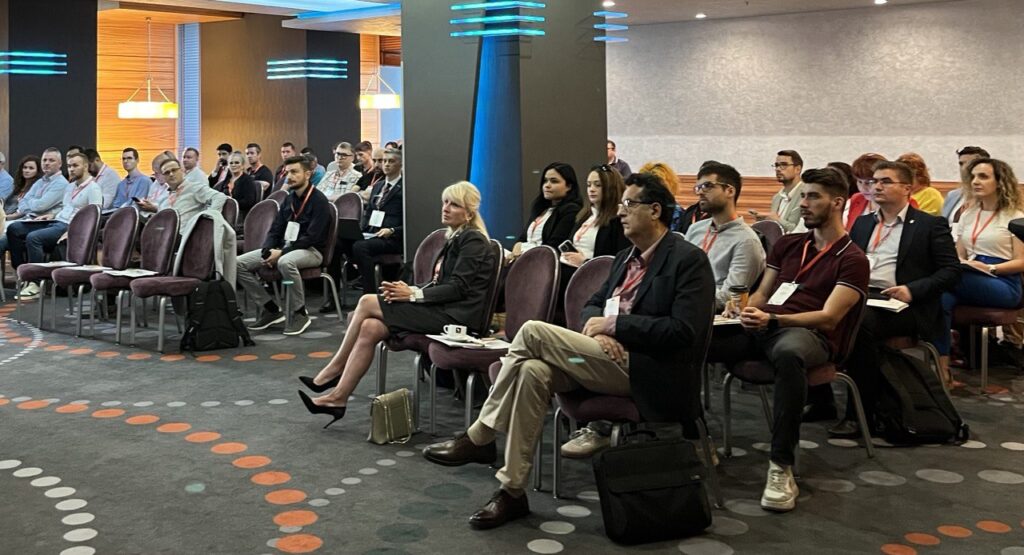
NCC Montenegro representative Luka Filipovic gave a presentation on Romanian HPC event “HPC and Al Technologies: Accelerating Innovation through collaboration”. Luka spoke on “Empowering Breakthroughs through HPC Collaboration” panel and gave presentation about NCC activities and Montenegrin success stories.
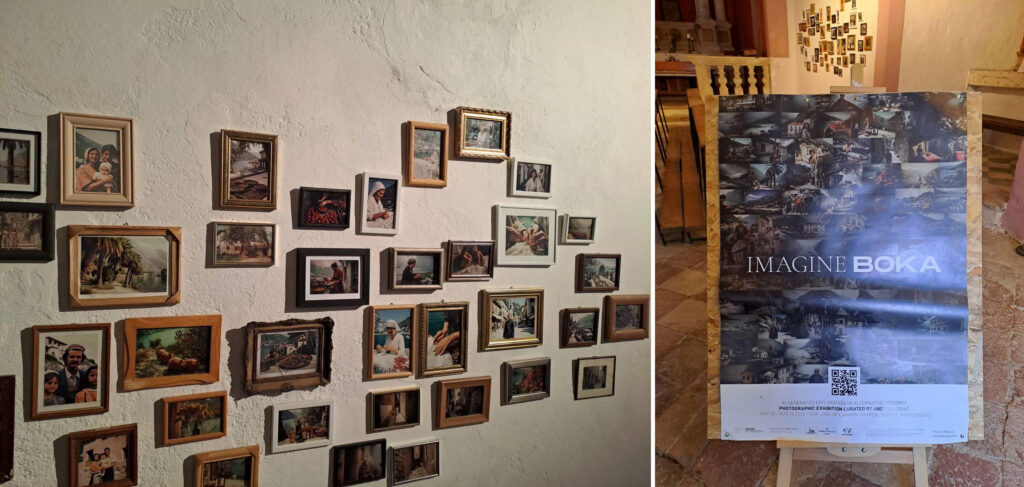
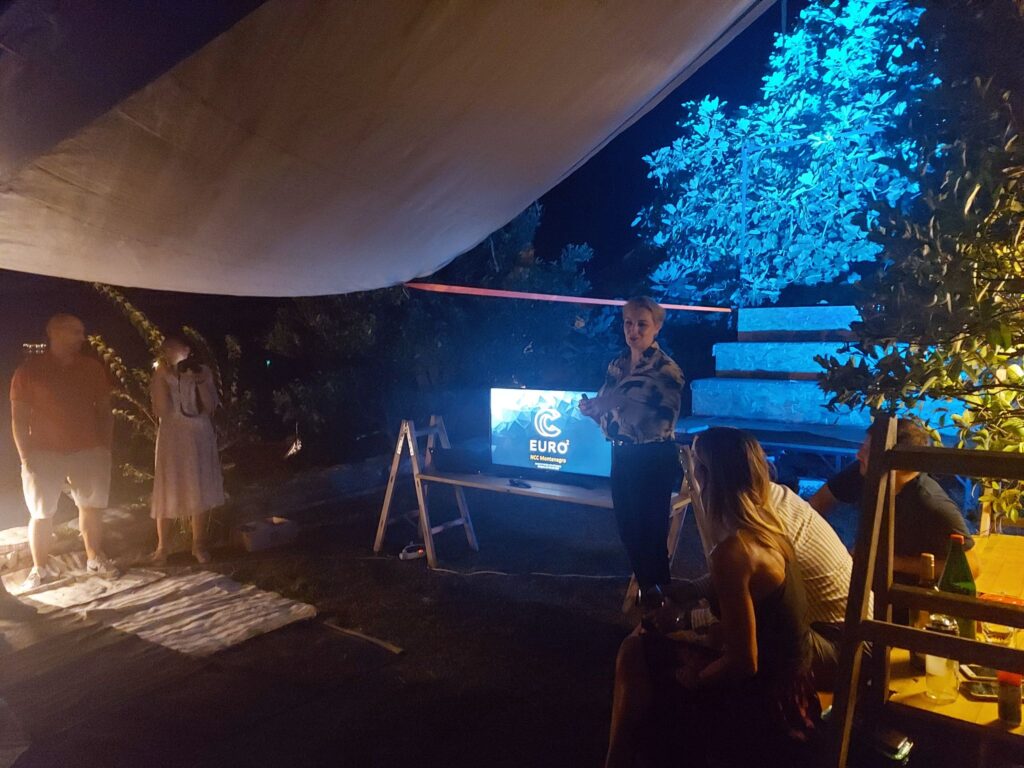
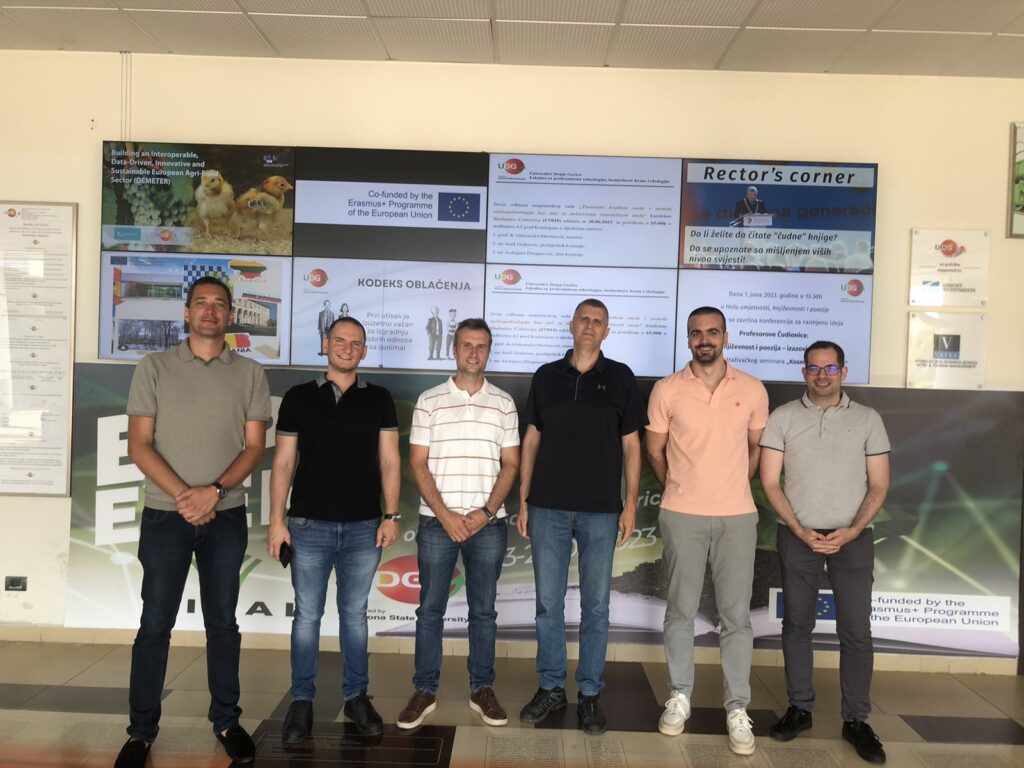
Researchers from University of Donja Gorica (UDG) and NCC Montenegro visited partners from Faculty of organizational sciences University of Belgrade (FON UoB) during their summer school at Perast. Colleagues from FON presented their exhibition of AI generated images titled “Imagine Boka” and their activities about startups and marketing.
We presented the most interesting activities on UDG along with activities on NCC Montenegro and the EuroCC project. We spoke about possibilities of future collaboration on educational programs, training courses, digital transformation topics, AI and similar subjects.
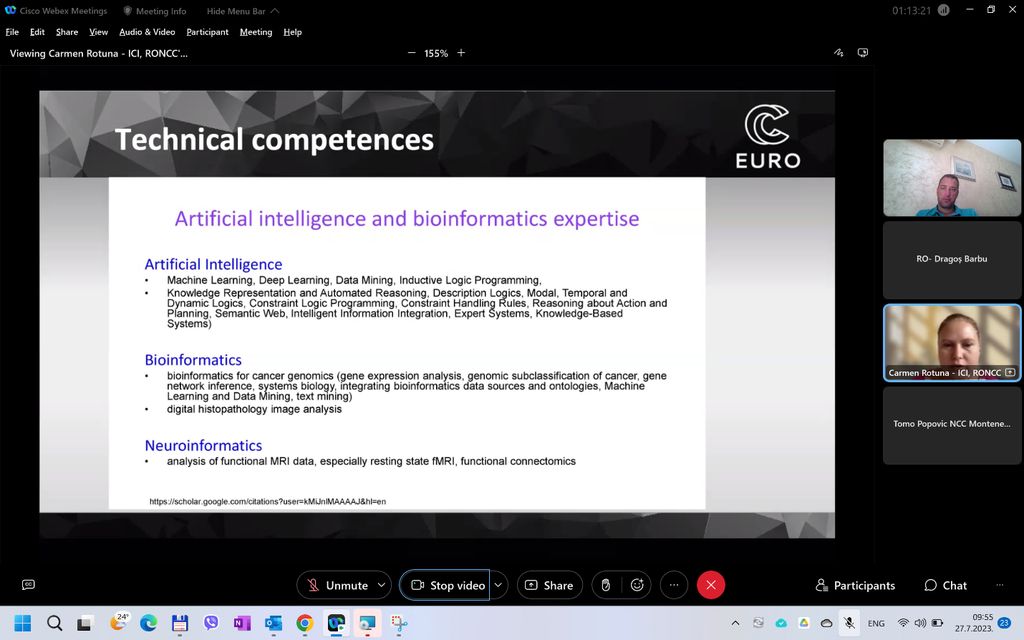
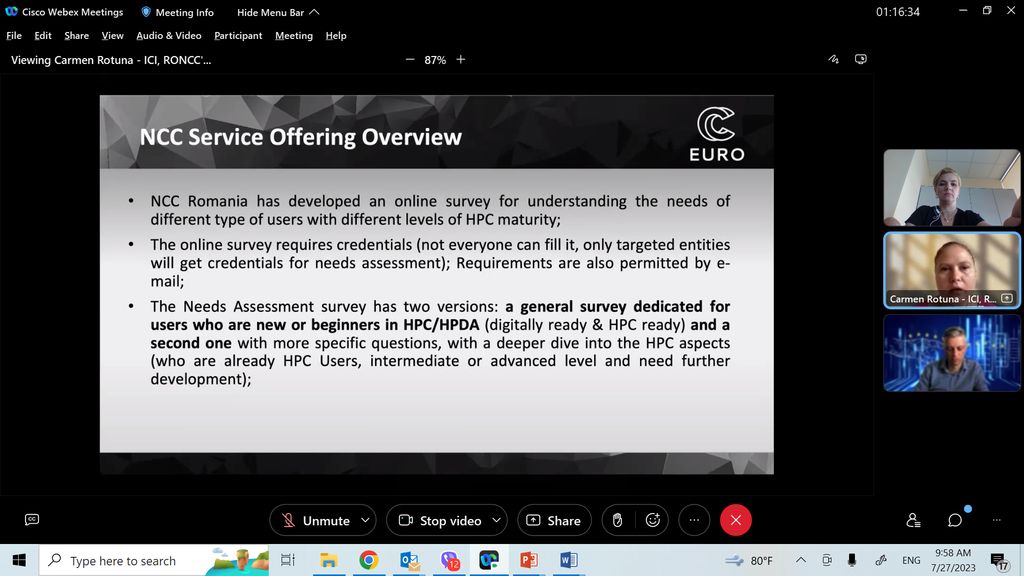
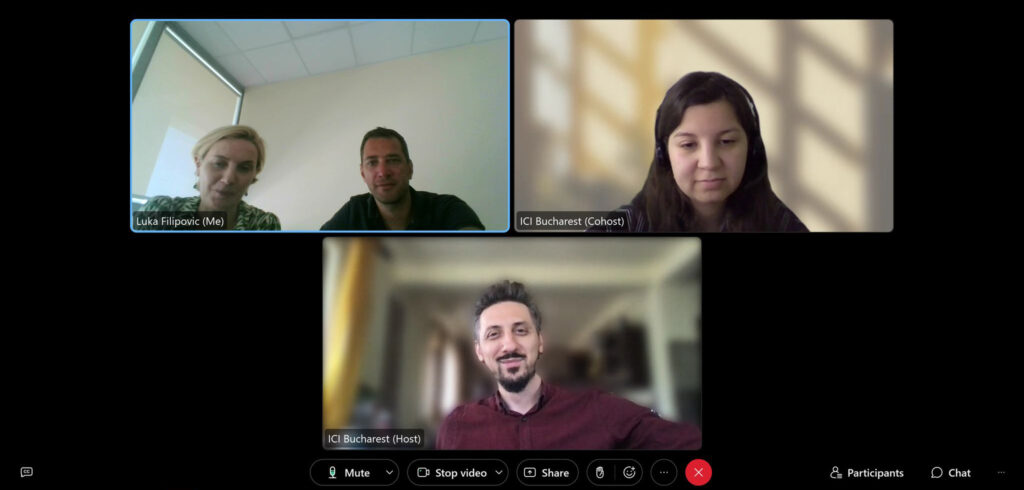
Representatives from NCC Montenegro and NCC Romania organized a productive one-day online workshop aimed at sharing knowledge and complementary experiences related to academic collaboration, training activities, industry interaction processes, communication tools and success stories/use cases. The agenda for the meeting is available at this link.
During the workshop, participants contributed with valuable insights and engaged in constructive discussions around common challenges including: training portfolio development, open source code repositories, cross-NCCs Open Call for innovative SMEs, technical expertise /HPC infrastructure access, methodologies for competence mapping, needs assessment end-user engagement, service offerings, communication channels exploitation etc.
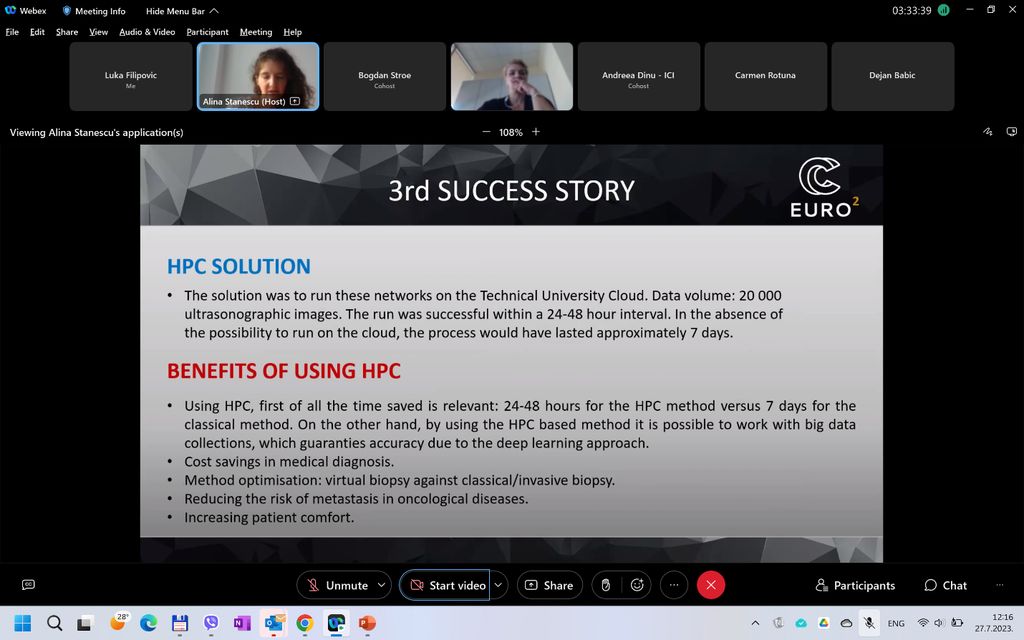
A dedicated session was also conducted, with a focus on HPC/HPDA/AI success stories and use cases, primarily in smart agriculture, precise meteorology, and medical AI/ML based applications. This session generated discussions on benefits provided by AI/ML models and underlying HPC technologies, including increased productivity, enhanced model performance, improved accuracy and time-saving solutions.
The collaboration between both teams proved successful start, setting a solid foundation for future joint activities. Initial timing and resource planning were discussed for upcoming joint training sessions tailored for academia, researchers and students, as well as an opportunity for co-organized workshops designed for industry managers.
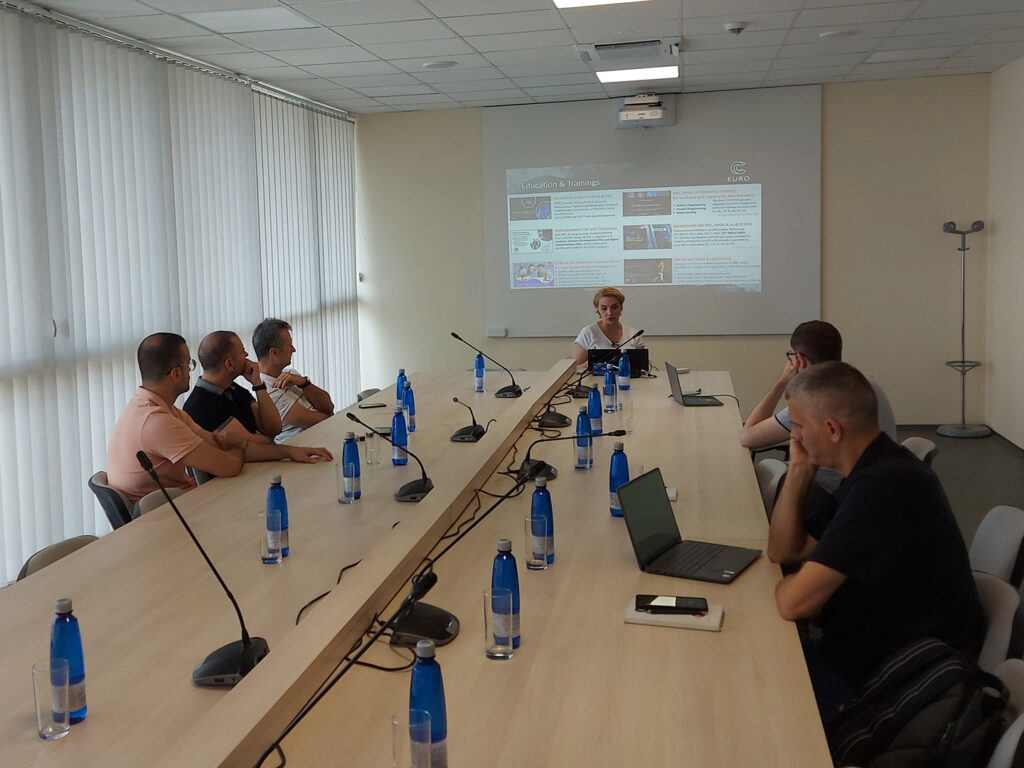
The representatives of Faculty of Natural Sciences and Mathematics from University of Montenegro were welcomed by the experts and researchers at HPC NCC Montenegro, who presented EuroCC2 project, NCC Montenegro activities and available supercomputing infrastructure and services. The HPC NCC team highlighted the NCC’s commitment to facilitating collaborations between academia and industry, through shared HPC resources, expertise and experience.
The representatives of Faculty of Natural Sciences and Mathematics were particularly interested in understanding how the supercomputing resources at HPC NCC could be leveraged for ML models and public sector applications, as well as to address complex research challenges and interdisciplinary collaboration. The NCC team also emphasized HPC/AI workshops and cross-NCCs trainings sessions to enhance the computational capabilities of researchers and familiarize them with HPC infrastructure and software tools and techniques.
The collaboration between these institutions has the potential to improve scientific research and accelerate advancements in various public fields.
Representatives of NCC Romania and NCC Montenegro organized an initial meeting to discuss future collaboration activities based on mutual interest in improving HPC NCCs’ best practices, training capacities, and industry/public outreach.
The initially discussed plans include the organization of joint training courses for academia professors and students to exchange and enhance HPC/AI study programs, the preparation of a joint training event for industry representatives covering HPC+ industry and commercial benefits and technical upskilling, as well as the facilitation of twinning activities to strengthen NCCs’ expertise and capacities in facing EuroCC2 project activities and challenges.
Both NCCs demonstrate enthusiasm and commitment to foster fruitful cooperation and knowledge/experience sharing in the field of HPC/HPDA/AI technologies related to academic excellence and industry digitalization.
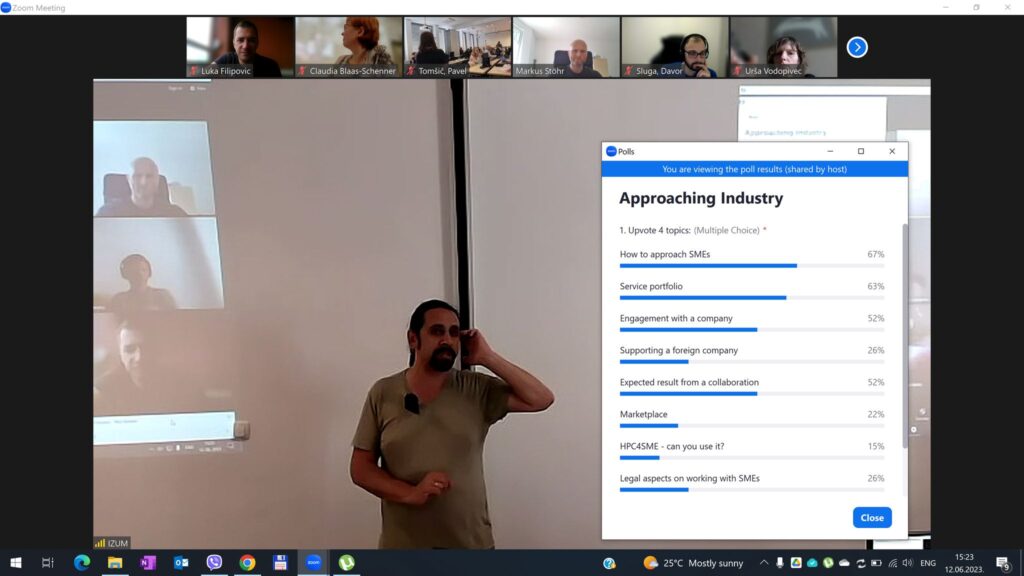
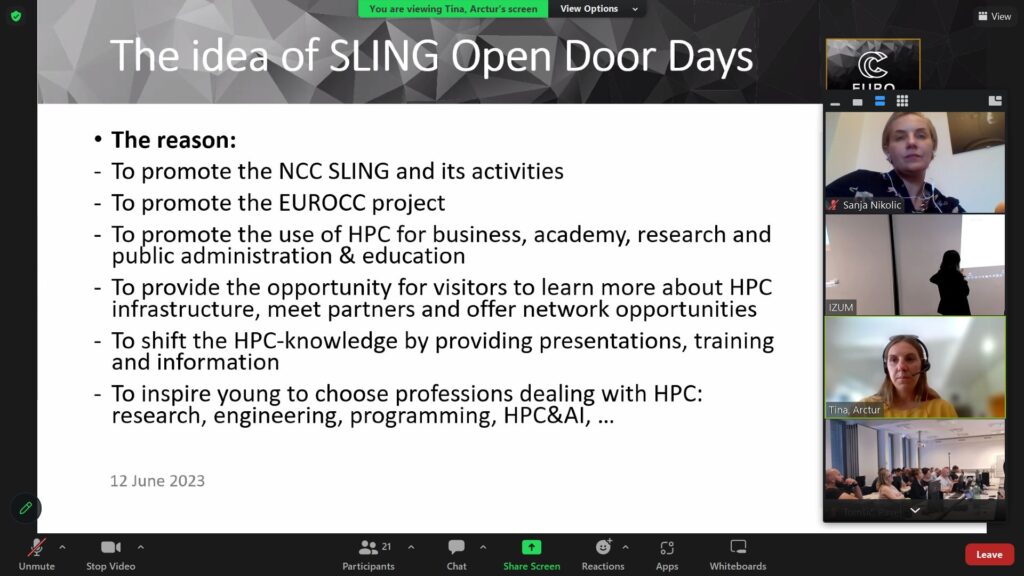
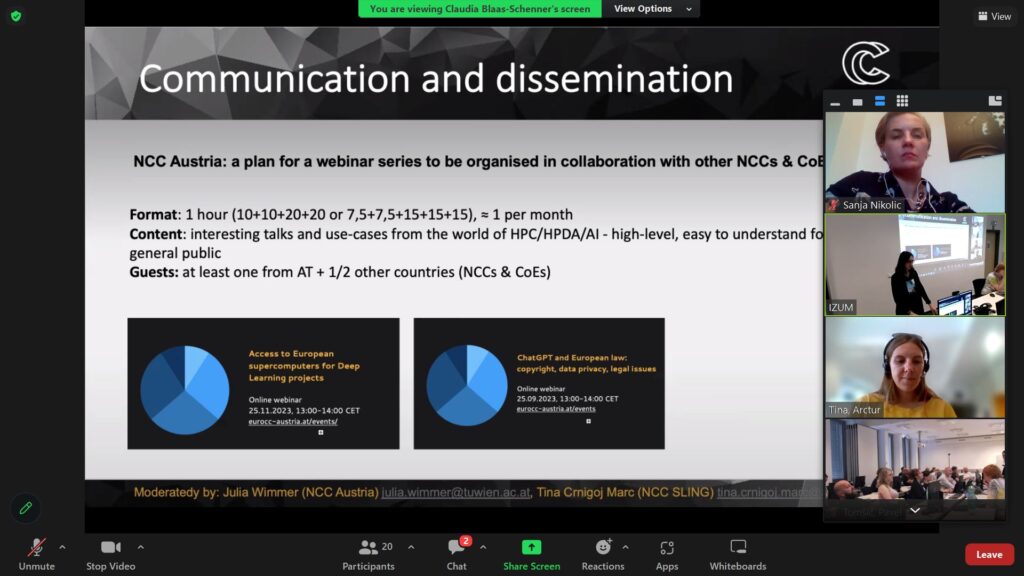
Representatives of NCC Montenegro participated (online) in the “Central European NCCs Workgroup Meeting” organized within the scope of ASHPC23 – Austrian-Slovenian HPC Meeting 2023 (June 13–15, 2023) at the Institute of Information Science in Maribor (IZUM), to actively discuss, exchange experiences and follow up-to-date EuroCC2 and NCCs’ initiatives. Agenda of the NCCs’ meeting covered topics:
EuroCC2 training activities (training formats, joint training events, regional collaboration, collaboration with CoEs and EDIHs, targeting SME audience etc.)
NCCs communication and disseminations tools (networking events organization, effective communication channels, choosing subjects & speakers, attracting industry stakeholders etc.)
NCC Austria presented their SMEs/Start-ups boosting initiative “EuroCC Supercomputing accelerator” and training initiative on webinar series assuming NCCs and CoEs shared contribution and collaboration. NCC Slovenia presented “SLING Open Doors Days”, their success story on successfully organized community and networking event.