Master Thesis Defense: HPC and AI for Education Enhancement

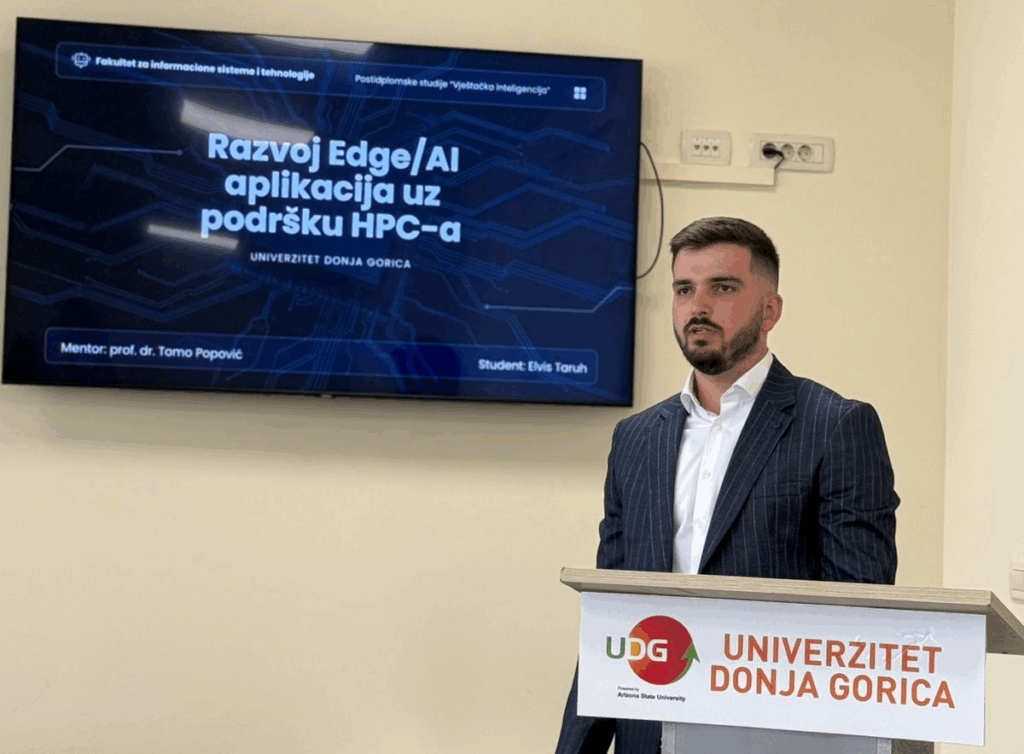
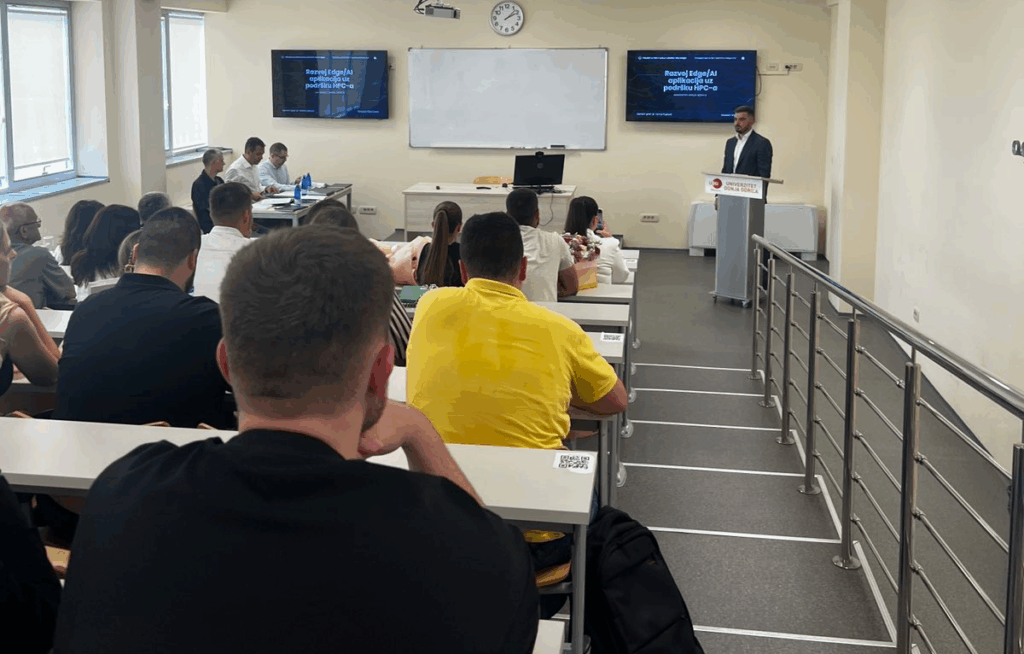
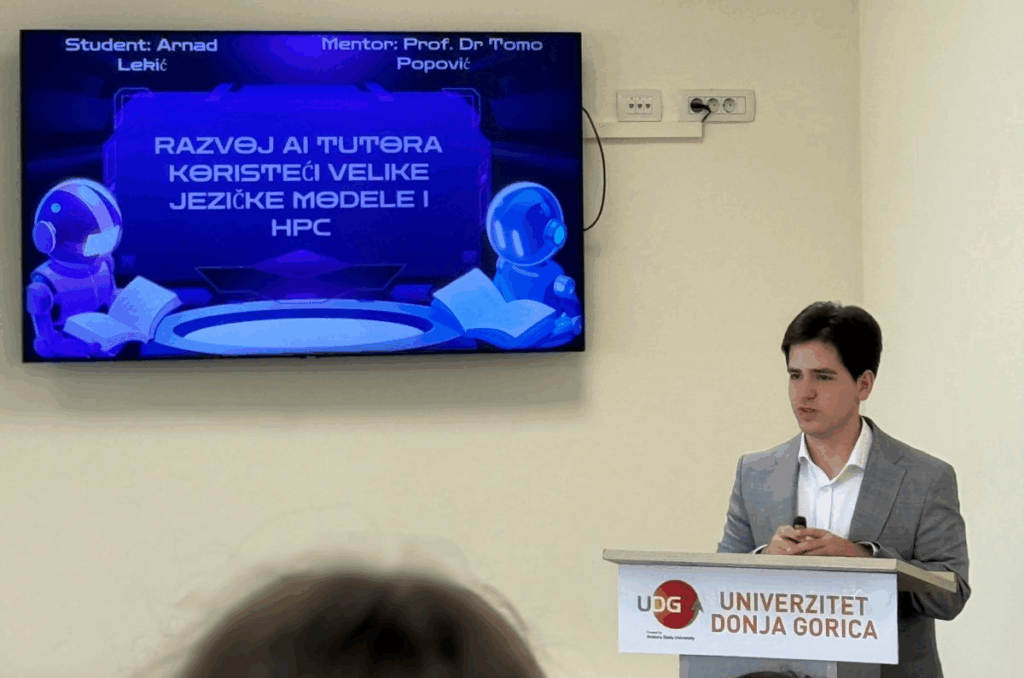
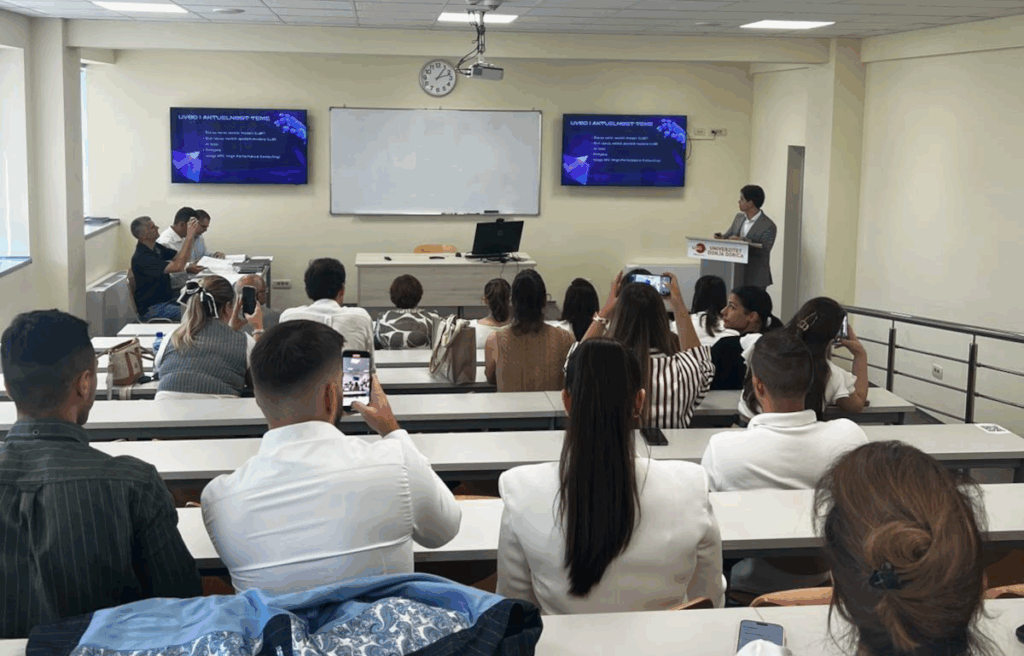
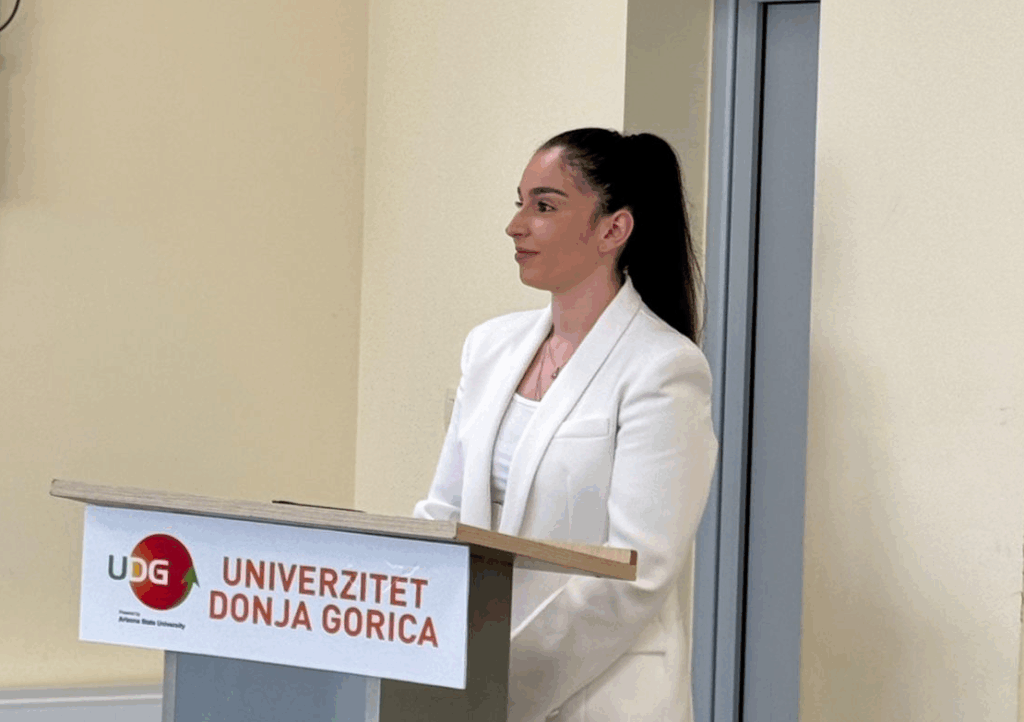
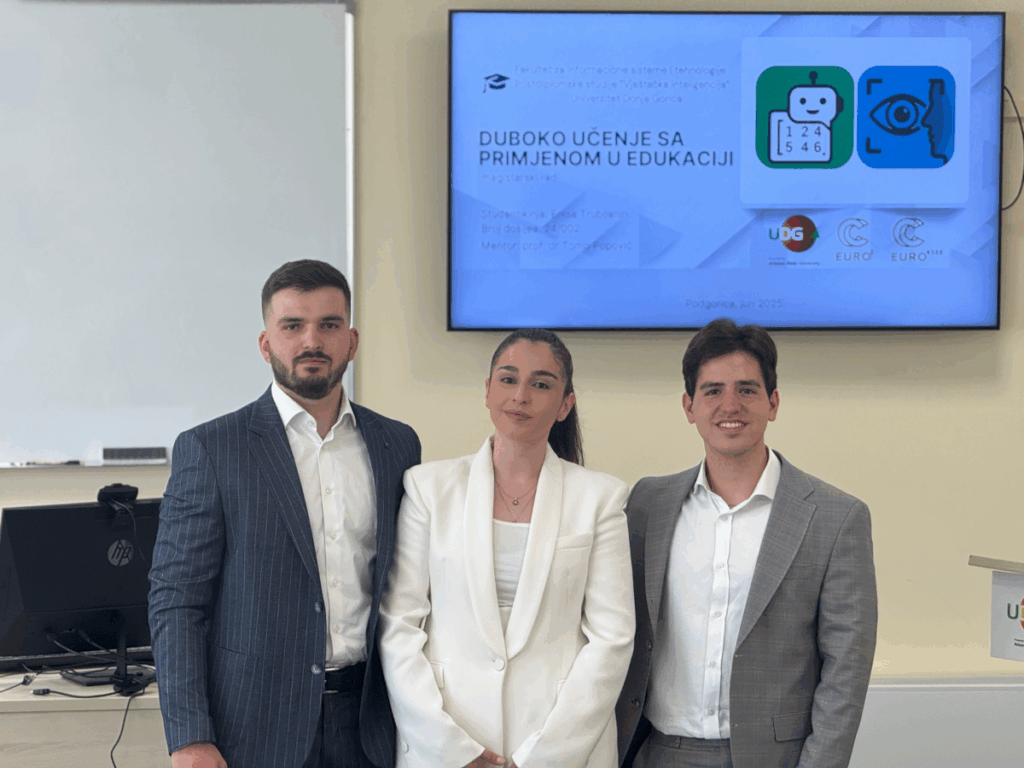
Ms. Enisa Trubljanin successfully defended her master’s thesis titled “Deep Learning with Application in Education” at the Faculty of Information Systems and Technologies, University of Donja Gorica. The development and testing of these solutions were supported by high-performance computing (HPC) resources provided through the EuroCC initiative in Montenegro.

Ms. Enisa Trubljanin

ABSTRACT – This master’s thesis explores the potential application of deep learning in education through the development and evaluation of two concrete solutions: an intelligent chatbot for solving matrix problems and a model for detecting cheating during online exams by analyzing eye movement. The first part of the thesis provides a theoretical foundation of deep learning, with a focus on neural networks, their architectures, transfer learning, and evaluation metrics. The practical part presents the development of a chatbot based on advanced language and mathematical models, implemented using high-performance computing cluster resources, enabling students to engage in interactive mathematics learning. Additionally, a model for detecting cheating through gaze analysis was developed, trained on the Columbia Gaze Dataset, and integrated into an online exam proctoring system. Evaluation results demonstrate a high level of accuracy and user satisfaction for both solutions. Beyond the technical aspects, the thesis also addresses ethical issues and privacy concerns related to the use of artificial intelligence in educational settings. Based on the findings, the study highlights the broad range of potential applications of deep learning in modern educational systems.

There was three great candidates on the same day!

Two Montenegrin SMEs Secure EuroHPC Access for AI-Powered HR

We are pleased to announce that two Montenegrin SMEs, Recrewty and DigitalSmart, have been awarded access to the Leonardo Booster at CINECA, one of Europe’s most powerful high-performance computing (HPC) systems. The access is granted under the EuroHPC JU Development Call, providing 12 months of HPC resources to support advanced AI development and innovation.

The awarded project, HPC4HR – High-Performance Computing for Human Resources, aims to revolutionize recruitment processes in the Western Balkans through the integration of generative AI (GenAI) and HPC technologies. The project focuses on analyzing multimodal data—text, audio, and video—from candidate applications to enable efficient, unbiased, and culturally sensitive hiring processes. The HPC resources will be used in support to their joint FFPlus project GenAI-HPC4WB (link).

The GenAI-HPC4WB project combines GenAI, ML, and HPC to optimize hiring processes and enhance business culture in the Balkan region

To achieve this, the project will leverage cutting-edge AI models such as LLaMA 3.x, Mistral, Wav2Vec 2.x, Whisper, FaceNet, and DeepFace, all fine-tuned using HPC resources at CINECA. These models will be developed to evaluate resumes, analyze psychometric traits from audio recordings, and interpret emotional and behavioral cues from HR data. By utilizing HPC, the project ensures scalability and processing speed, enabling large datasets to be handled efficiently, significantly shortening recruitment cycles and improving candidate matching. In addition to enhancing operational efficiency, HPC4HR emphasizes ethical AI development, aiming to reduce biases in recruitment and promote diversity and inclusion. The expected outcomes include a set of adaptable, high-performance AI tools that set new standards for digital transformation in human resources, applicable across industries and geographies.

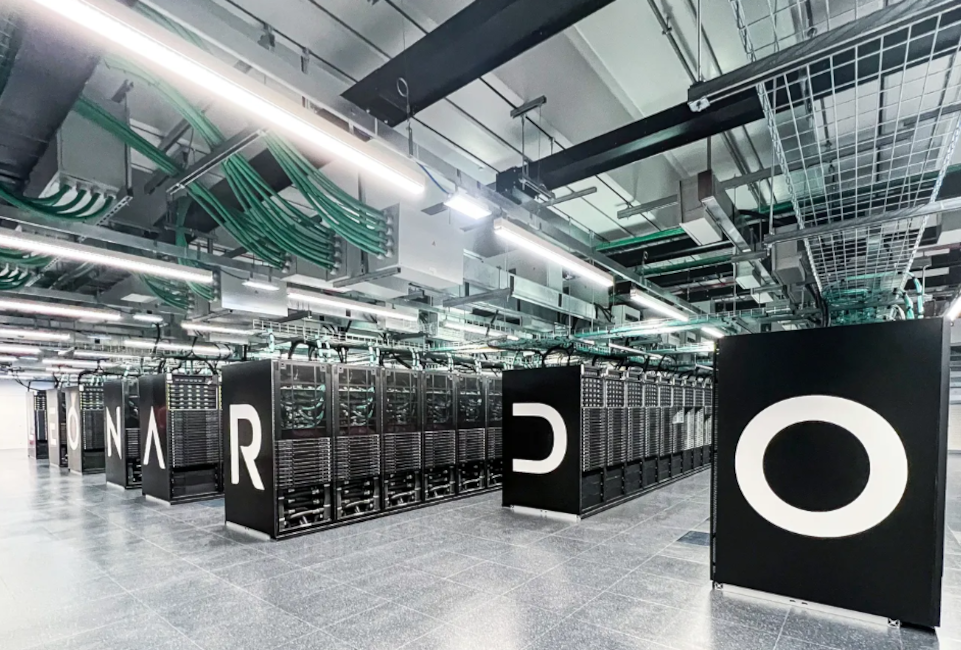
Leonardo Booster partition will be used in this project

The success of Recrewty and DigitalSmart reflects the growing impact of NCC Montenegro in strengthening the national HPC and AI ecosystem. By supporting companies in accessing leading European HPC infrastructure, NCC Montenegro continues to drive digital innovation, competitiveness, and technological excellence in the region.

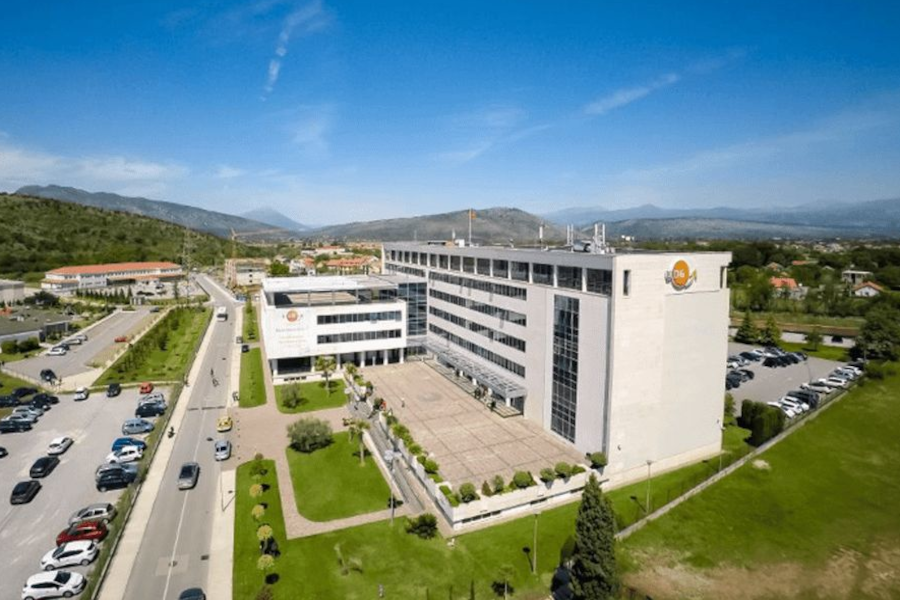
FIST at UDG Wins EuroHPC JU Grant for HPC-Powered Research Development

The Faculty for Information Systems and Technologies (FIST) at the University of Donja Gorica (UDG) has been awarded a prestigious grant through the EuroHPC Joint Undertaking Open Call, marking a significant milestone for Montenegrin academic engagement with cutting-edge high-performance computing (HPC) resources.

As part of this grant, FIST has secured access to the Leonardo Booster partition at CINECA, one of the most powerful supercomputers in Europe. This will enable FIST researchers to perform large-scale experiments that are otherwise infeasible with standard computing infrastructure.

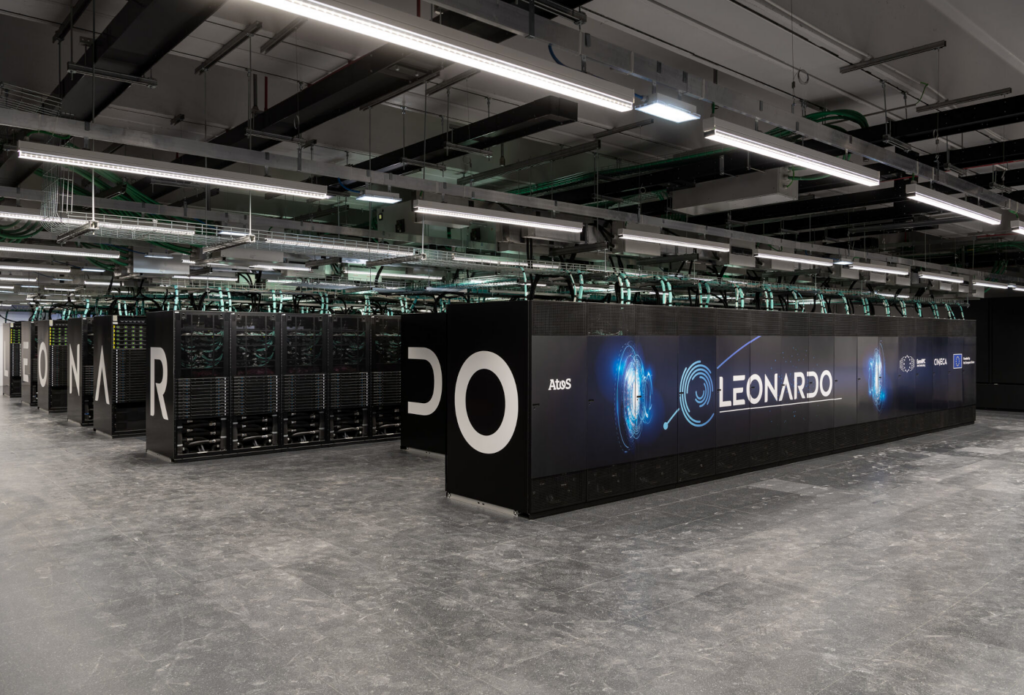
FIST at UDG gained access to Leonardo BOOSTER via EuroHPC JU open calls

The awarded project focuses on cross-lingual transfer learning in large language models (LLMs), aiming to systematically evaluate how model architecture and scale influence multilingual performance. By fine-tuning major LLM families (LLaMA, Mistral, DeepSeek) across model sizes from 1B to 70B parameters, the research will generate insights into optimal model selection under real-world resource constraints—critical for European institutions working with diverse languages and limited compute budgets. This is a development project with HPC resources available for 12 months.

The research focuses on cross-lingual transfer learning in large language models (LLMs)

This achievement underscores the growing capacity of UDG and FIST to contribute to frontier AI research, while reinforcing the mission of the National Competence Center in HPC (NCC Montenegro) to support HPC adoption across academia and industry in the region.

We congratulate the FIST team on this major success and look forward to sharing results from their HPC-powered investigations.

Follow up Technical Consultation and Support for Exploring SME

As part of a broader effort to analyze operational patterns in Montenegro’s healthcare sector, a predictive model was developed to estimate indicators related to the quality of healthcare services provided to citizens at the secondary and tertiary levels. The model was initially trained on a sample of 10,000 records and later expanded to over 40,000 records using the HPC cluster at UDG, which enabled the training process to complete in under one minute. All records were fully anonymized in accordance with ethical standards, and the dataset incorporated a wide range of temporal, demographic, and institutional variables relevant to healthcare access and service delivery patterns.

Using AI and HPC to analyze operational patterns in Montenegro’s healthcare sector

The model was implemented using the Random Forest Regressor algorithm, and additional experiments were conducted with alternative modeling techniques and target transformations. The baseline configuration achieved strong predictive performance (MAE ≈ 95 hours, R² = 0.87). While log-transformation and alternative algorithms such as XGBoost were evaluated, they did not yield improvements over the initial approach. Feature importance analysis revealed that factors such as month, weekday, and clinical unit had the highest impact on model outputs. Access to dedicated computing resources has been granted for further development, enabling continued model training and experimentation with advanced algorithms and optimization methods.

Click on image to learn more about Exploring – an innovative software development SME from Montenegro

Conference Paper: AI and HPC Transform Matrix Learning with an Intelligent Tutoring Chatbot

The paper “Transforming Matrix Problem Solving with Intelligent Tutoring Systems” by E. Trubljanin, E. Taruh, S. Cakic, T. Popovic and L. Filipovic was presented at INFOTEH conference an is published by IEEE Xplore. Researchers from the UDG with support from HPC NCC Montenegro have developed an innovative intelligent tutoring system that leverages artificial intelligence (AI) and high-performance computing (HPC) to revolutionize how students learn matrix operations. This chatbot-based solution combines Optical Character Recognition (EasyOCR) with an advanced natural language processing model (Qwen2-Math-7B-Instruct) to interpret both text and image inputs, enabling it to perform matrix operations such as transposition, addition, and multiplication while providing clear, step-by-step explanations. Supported by the university’s HPC infrastructure, the system ensures high-speed processing and real-time feedback, achieving up to 99% accuracy in matrix recognition from high-quality images. Designed with education in mind, this AI-powered tutor enhances interactivity, understanding, and learning outcomes for students tackling complex linear algebra concepts, and sets the stage for future enhancements like handwritten input recognition and support for more advanced operations.

ABSTRACT – This paper presents the integration of optical character recognition (OCR) and advanced natural language processing (NLP) models for automated handling of matrices derived from images and textual inputs, all combined within an implemented chatbot. The motivation for choosing this topic arises from the practical experiences of the authors gained while working with groups of students who encounter the concept of matrices as part of their academic responsibilities. Through the analysis of their results and classroom interactions, it was observed that many students struggle with this area. This paper presents an innovative approach to enhancing matrix problem-solving by leveraging intelligent tutoring systems supported by High-Performance Computing, aiming to improve learning efficiency and student outcomes. By combining the EasyOCR framework and the Qwen2-Math-7B-Instruct model, operations such as transposition, addition, and multiplication of matrices are enabled. The system supports the input of one or two matrices, allowing the selection of operations through textual or image-based queries. The OCR component extracts numerical data from images, while the NLP model interprets user requests and executes operations accurately. The interface allows the addition of a second matrix image only when necessary, enhancing the system’s intuitiveness and efficiency. The results of the recognition accuracy of the OCR model of image input matrices of different dimensions show a high level of accuracy of 95%, while for 2×2 matrices they reach an accuracy of 99%. This work contributes to the development of AI-powered tools for mathematical operations and holds potential applications in education.

Click on image to open

Empowering the Future with AI: Workshop on Chatbots and LLMs at NCC Montenegro

As part of the ongoing H2020-MSCA TRACEWINDU initiative to foster digital innovation and transparency across value chains, a hands-on workshop on chatbot development using Large Language Models (LLMs) and the Azure platform was held at the National Competence Center for High-Performance Computing (NCC Montenegro), hosted by the University of Donja Gorica (UDG).

This workshop was implemented as a cross-collaboration of TRACEWINDU and EUROCC2/EUROCC4SEE ptojects

The workshop brought together a vibrant group of PhD, Master’s, and Bachelor students, alongside AI and HPC researchers and mentors from UDG—key TRACEWINDU and EUROCC4SEE project partners—highlighting the growing interest and expertise in cutting-edge AI technologies across disciplines.

Leading the session were Ms. Daliborka Nedić and Ms. Senka Gajinov from DunavNET, an innovation-driven technology company and core partner in the TRACEWINDU consortium. Their expert lecture provided attendees with valuable insights into the rapidly evolving world of generative AI and practical guidance on building intelligent chatbot solutions using Microsoft’s Azure OpenAI services.

Around 20 people attended, mostly PhD, MSc and BSc researchers interested in AI and HPC

The workshop covered key concepts such as:

  • The fundamentals of Large Language Models (LLMs) and their applications in chatbot development
  • Integration of LLMs within the Azure AI ecosystem
  • Best practices in prompt engineering and knowledge grounding
  • Real-life use cases aligned with transparency, automation, and user engagement in value chains

Beyond chatbot development, the discussion extended to the integration of computer vision models—particularly those aimed at automating data collection in value chains—and the use of HPC resources to support their deployment. Participants explored ideas for combining conversational AI interfaces with real-time computer vision capabilities, opening up possibilities for smarter, more interactive systems across agri-food and other sectors.

This collaborative brainstorming set the stage for future joint initiatives, where chatbots could serve as intuitive front-ends to complex AI models running on high-performance computing infrastructures—bridging accessibility and computational power for impactful solutions. This workshop is part of a broader capacity-building effort within TRACEWINDU and EUROCC4SEE, designed to empower young researchers and professionals with the tools and knowledge needed to innovate responsibly in the age of AI TRACEWINDU continues to bridge digital technologies and real-world value chain transformation.

Ms Daliborka Nedic and Ms Senka Gajinov from DNET at UDG

Montenegro Project Among Winners of FFplus HPC Innovation Call (Stats)

The Fortissimo Plus (FFplus) project recently concluded its first Open Call for Business Experiments, aimed at encouraging small and medium-sized enterprises (SMEs) to adopt High-Performance Computing (HPC) technologies. Launched on June 21, 2024, and closed on September 4, 2024, the call attracted 126 proposals from 220 organizations across 30 European countries. After a rigorous evaluation process, 19 sub-projects were selected for funding, involving 43 organizations, including 34 SMEs, demonstrating the initiative’s success in promoting HPC adoption among SMEs.

Summary of FFPlus Open Call 1 results (image: FFPlus)

Among the selected sub-projects is “Transforming Business Culture and Hiring Through High-Performance Computing GenAI-HPC4WB,” a notable initiative from Montenegro by a startup company called Recrewty. This project aims to revolutionize recruitment processes in the Balkan region by integrating generative artificial intelligence (AI), machine learning, and HPC. By analyzing psychometric data, CVs, and interviews using AI models tailored to regional languages—Montenegrin, Serbian, Bosnian, and Croatian—the project seeks to enhance hiring accuracy and efficiency. Utilizing HPC resources enables the processing of large datasets, improving the scalability and precision of these AI-driven assessments.

It is great to see Montenegro on this map (image: FFPlus)

The success of the GenAI-HPC4WB project underscores the growing competence and innovation capacity within Montenegro’s tech community. The HPC Montenegro team played a pivotal role in supporting the proposal’s development, reflecting the country’s commitment to advancing HPC applications and fostering collaboration between academia and industry. This achievement not only highlights Montenegro’s active participation in European HPC initiatives but also sets a precedent for future projects aiming to leverage advanced computing technologies to address regional challenges.

More information on FFPlus website at [link].