

The Montenegrin company ONEAI has successfully carried out a project on the EuroHPC infrastructure, utilizing the LUMI-G supercomputer to develop advanced AI models in the field of ECG signal analysis. Following the successful completion of the previous cycle, the AIHeal project has been granted renewed access to computational resources for the upcoming period.
During the previous project, the team developed a dynamic HPC pipeline that enables training personalized models for each individual patient, with the capability for continuous retraining based on new data. The key innovation lies in establishing an integrated system that connects the existing infrastructure with the supercomputer:
- data is automatically collected from the AIHeal system,
- sent to the LUMI supercomputer for training,
- after processing, the models are returned to the production environment and registered in the MLflow system.
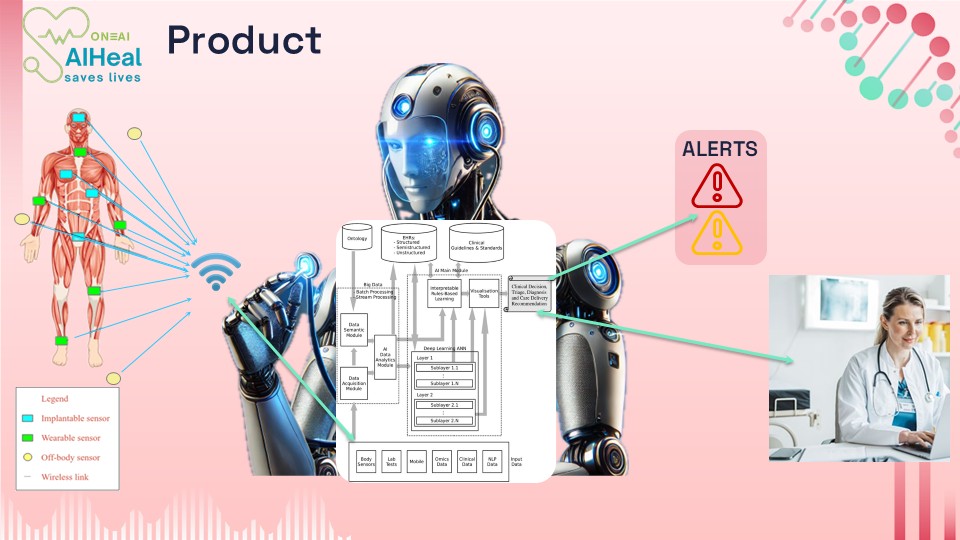
This approach enables the creation of “digital twin” patient models, where each model is tailored to the specific characteristics of the individual, significantly improving anomaly detection accuracy compared to generic models.
By leveraging the LUMI infrastructure, the AIHeal team achieved significant acceleration in the model training process, particularly through parallelization across multiple GPU units and the execution of a large number of experiments simultaneously. This enabled faster identification of optimal models and improved the overall quality of the solution.
The project results confirm that HPC resources play a crucial role in the development of scalable and personalized AI systems in healthcare, especially in the context of real-time biomedical data analysis.
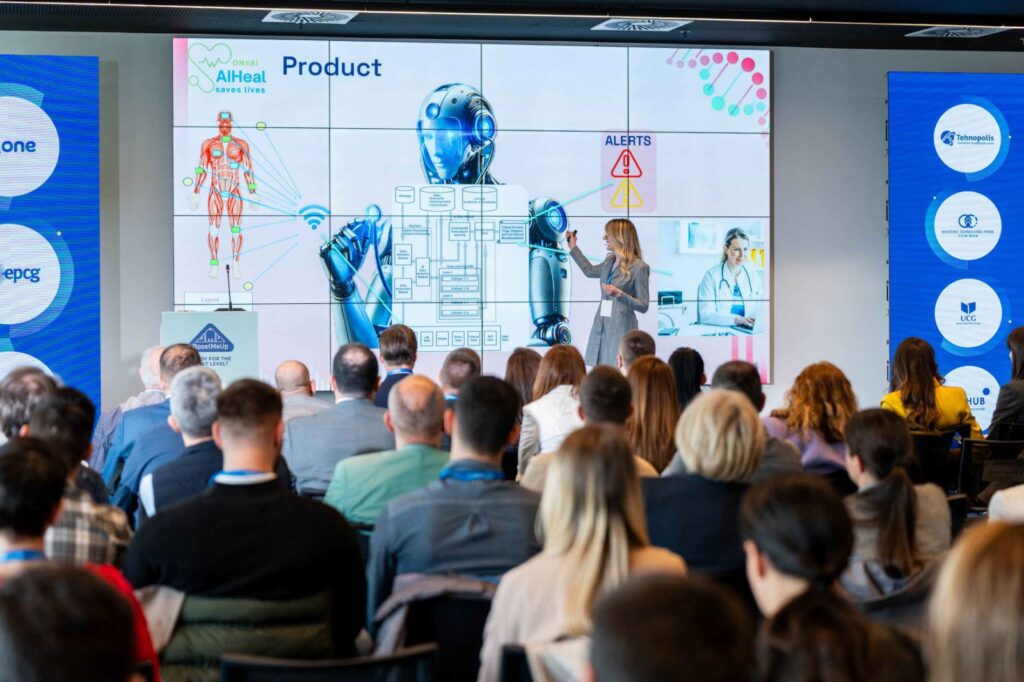
The newly approved access to EuroHPC resources will be used for further model improvement, performance optimization, and expansion of the system to cover a broader range of cardiovascular and other health-related indications.