EuroHPC Joint Undertaking has announced an upcoming online event, the EuroHPC Access Calls Webinar – Evaluation Process, Technical Assessment and Best Practices, scheduled for 13 May 2026 from 10:00 to 12:30 (CEST).
The webinar is aimed at researchers and users from both the public and private sectors who are interested in applying for access to EuroHPC supercomputing resources. It will cover key topics such as proposal preparation, evaluation procedures, benchmarking, and successful project implementation. Sessions will be delivered by experts from leading European HPC organizations, offering practical guidance and insights based on real application experiences.
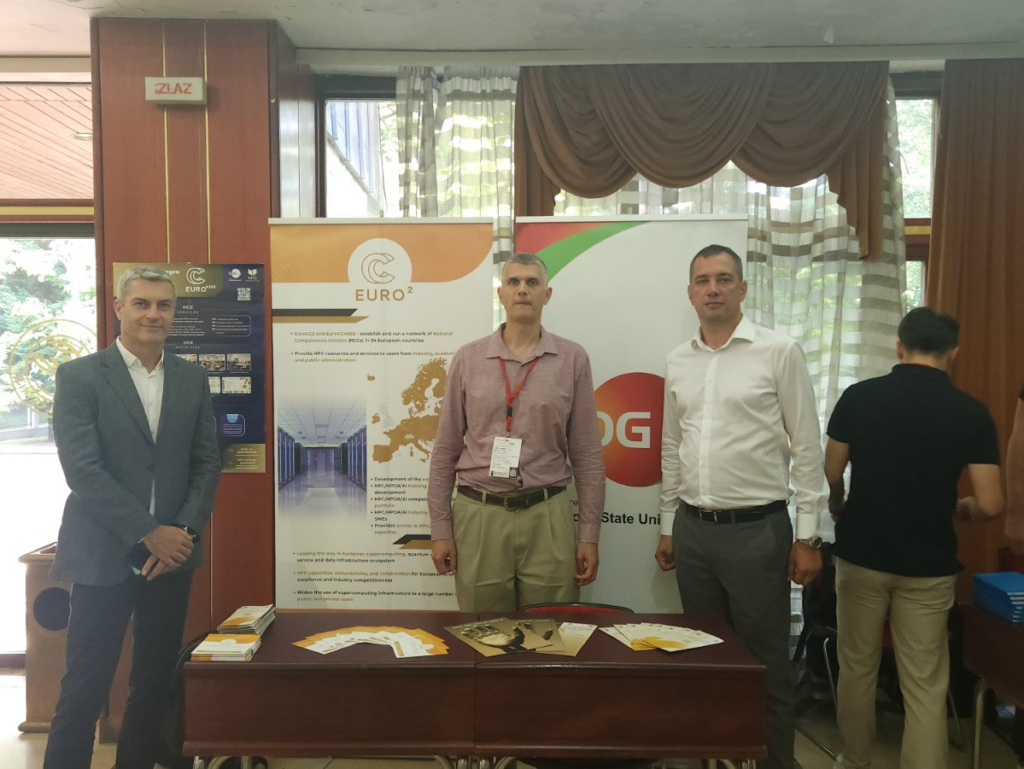
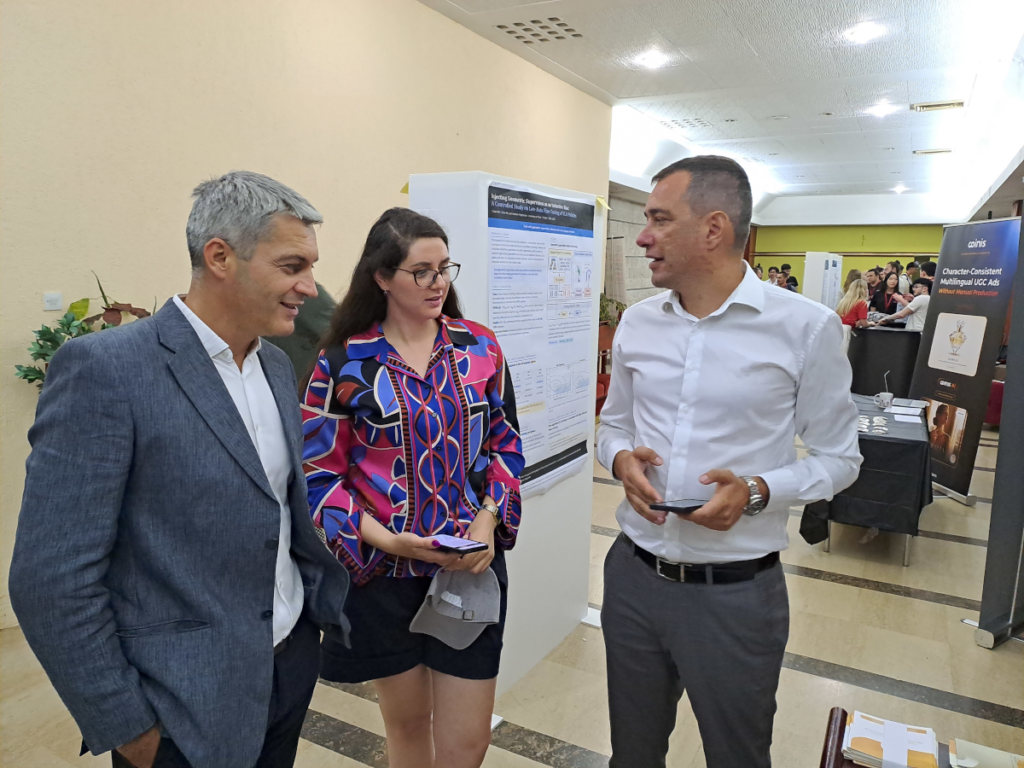
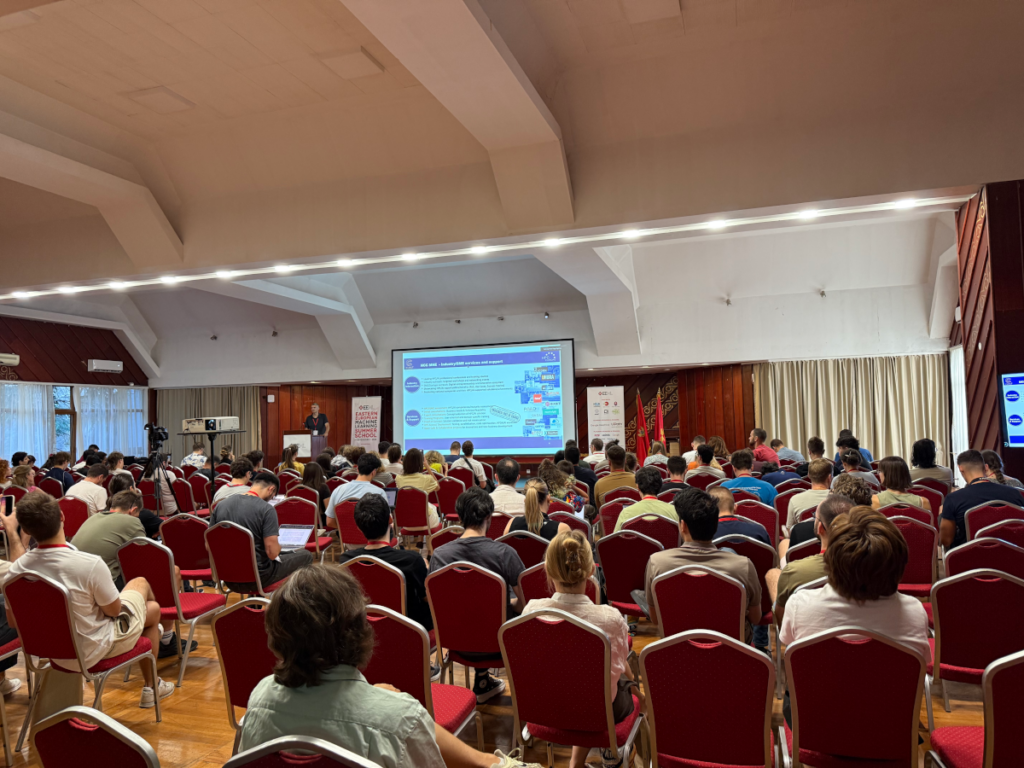
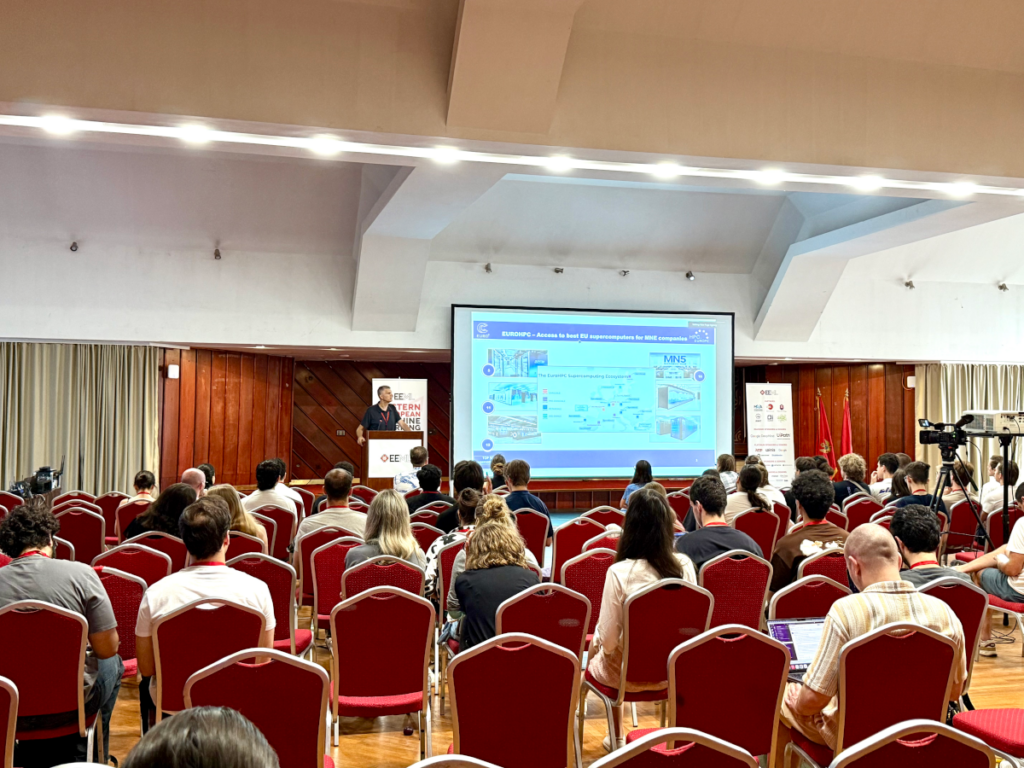
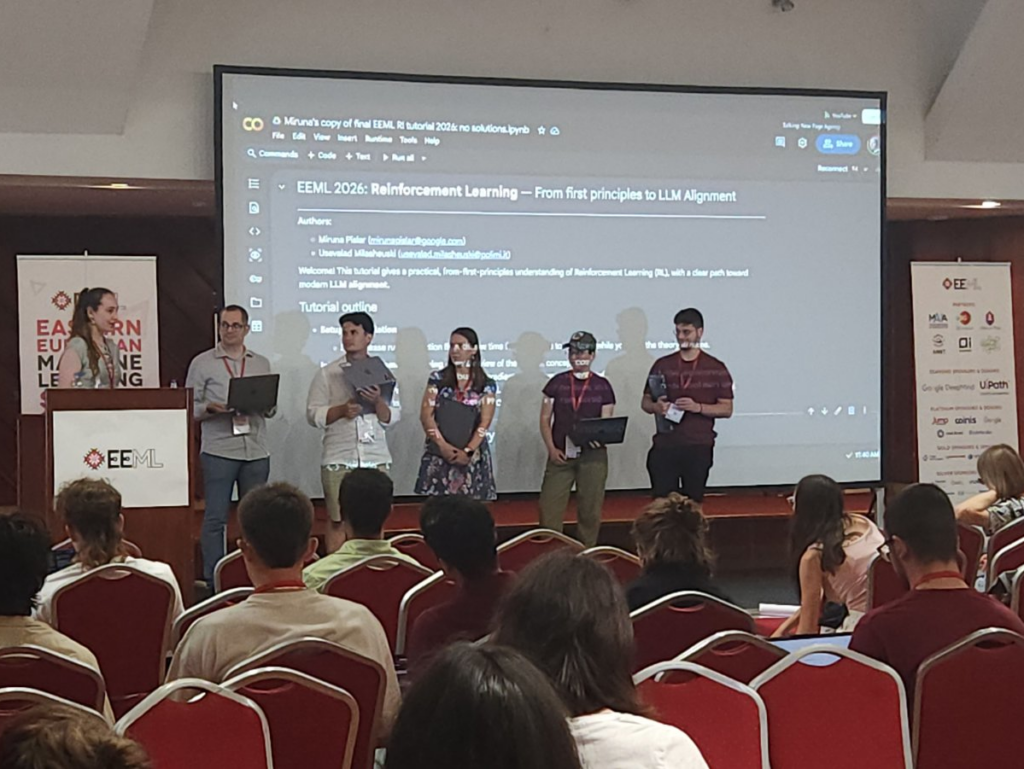
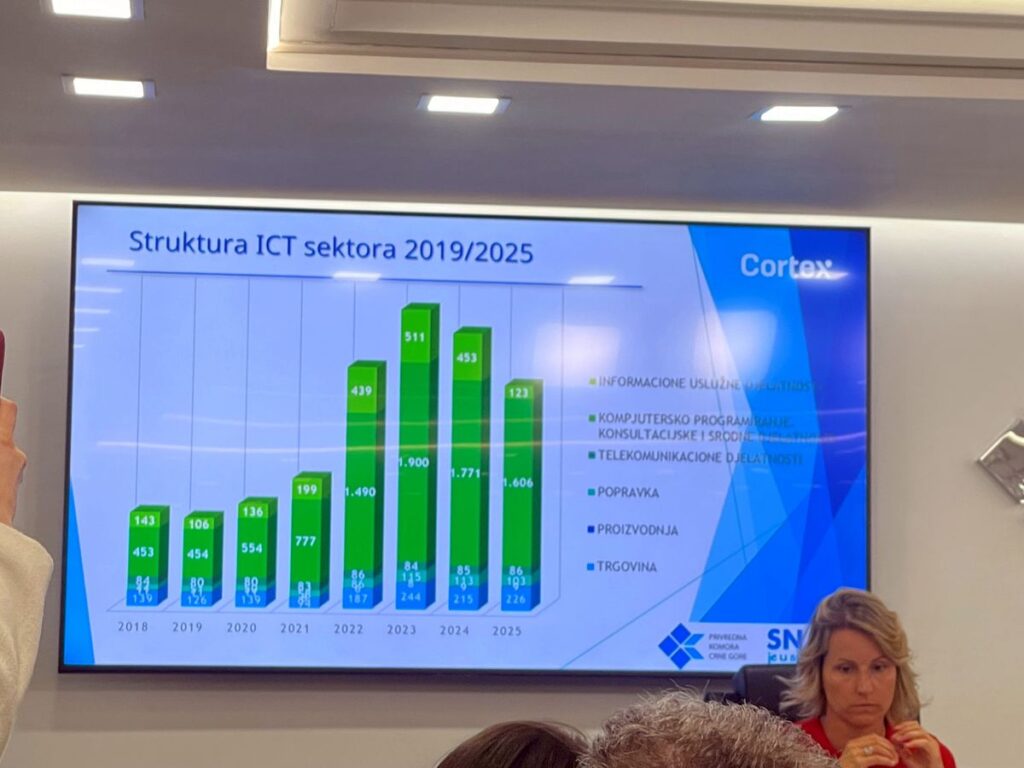
The AI-AGE project was presented at the round table “Artificial Intelligence in Healthcare – Challenges and Opportunities”, held on 24 April 2026 at the Montenegrin Academy of Sciences and Arts (CANU) in Podgorica. The event gathered experts from Montenegro and Bosnia and Herzegovina to discuss the role of AI in healthcare, including clinical applications, digital transformation, ethics, medical imaging, NLP, and AI assistants. We used this opportunity to promote the EuroCC4SEE and NCC Monteengro activity.
The round table was an opportunity to promote EuroCC 2 & EuroCC4SEE and NCC Montenegro support
AI-AGE was presented by Prof. Dr Nataša Popović, Faculty of Medicine, University of Montenegro, in the session dedicated to AI in clinical practice. The presentation highlighted key findings of the project and demonstrated how AI can support early detection and screening of chronic diseases, including examples related to colorectal cancer detection and the use of biomarkers.
The main presentation was focused on AI-AGE goals and results (cross-project collaboration)
The event was also an opportunity to promote EuroCC activities and the role of NCC Montenegro in strengthening national capacities in HPC, HPDA, and AI. Participation in this round table further positioned AI-AGE within the broader regional discussion on responsible and clinically relevant use of artificial intelligence in medicine.
On the occasion of IoT Day 2026, an online seminar titled “IoT, AI, HPC: Shaping the Future” will bring together technologies that are redefining modern digital infrastructure. The event will focus on the practical application of Internet of Things (IoT), Artificial Intelligence (AI) and High-Performance Computing (HPC) in the development of modern digital systems.
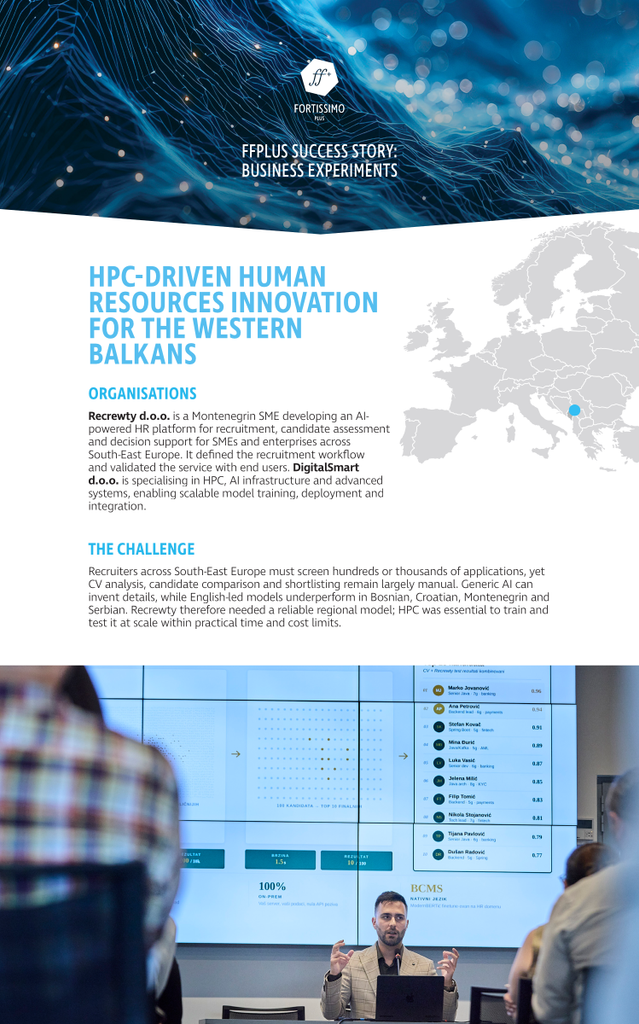
During the seminar, experts from DunavNET, DigitalSmart Montenegro, the University of Donja Gorica, and Recrewty will present the projects and solutions they are currently working on, with a special emphasis on real-world applications of these technologies and their importance for digital transformation.
The speakers include: Nebojša Stojanović, Petar Knežević, Dejan Drajić, Anja Jakovljević, Stevan Čakić, Igor Ćulafić, and Mitar Perović.
📅 April 24, 2026 🕙 10:00–11:30 AM 📍 Online seminar Organized by: EuroCC 2 & EuroCC4SEE, University of Donja Gorica, and DunavNET
The event is open to researchers, engineers, developers, and everyone interested in current trends and practical applications of IoT, AI, and HPC.
Within the EuroCC initiative, this project demonstrates how High Performance Computing (HPC) enables a new approach to analysing industrial policy through large-scale text data.
Modern innovation policies are increasingly embedded in strategies, reports, and policy documents. This project treats those documents as data, transforming them into measurable indicators that can be linked to national innovation performance.
From Raw Data to Analytical Insights -The study started with over 50,000 policy documents and processed more than 36,000 clean texts, resulting in a structured dataset of 825 country-year observations across 55 countries (2007–2021).
Overview of data
Using Natural Language Processing (NLP), the project extracts key policy signals, including:
policy attention (how much a topic is discussed)
policy orientation (whether it is framed positively or negatively)
These signals allow policy discourse to be analyzed quantitatively and linked to innovation outcomes.
HPC infrastructure was essential for executing the full pipeline.
The complete workflow was finished in approximately 16 hours, while the same process on a standard laptop would take several weeks.
This enabled large-scale data processing, rapid iteration of models, and robust cross-country analysis.
Results summary
The results show that industrial policy does not have a uniform effect on innovation. Instead, its impact depends on both the type of policy and how it is communicated.
Key insights include:
different policy categories influence innovation outcomes differently
scientific publications respond faster than patents or R&D investment
text-based policy signals can serve as early indicators of changes in innovation environments
Impact – This project highlights how HPC enables:
transformation of unstructured text into analytical datasets
integration of policy analysis with economic outcomes
development of new tools for monitoring innovation systems
It also demonstrates the value of policy documents as a strategic data source for researchers, firms, and policymakers.
The training on 3D Printing, Generative AI, and High-Performance Computing (HPC) was successfully implemented as planned, bringing together participants interested in emerging digital technologies and their practical application in design and production. Through the training, attendees had the opportunity to explore the fundamentals of 3D printing, digital modelling, and the growing role of generative AI tools in creating and improving 3D models.
There was around 40 people attending the 2-day course
A key message of the training was that generative AI is becoming an important driver of innovation, enabling faster idea generation, automated design support, and new creative workflows. At the same time, such models often require significant computing power for training, fine-tuning, and large-scale inference. This is where HPC plays a crucial role, providing the infrastructure needed to efficiently run advanced AI models and support more complex, data-intensive tasks. By connecting 3D printing, generative AI, and HPC, the training highlighted how these technologies can work together to accelerate innovation in education, research, and industry.
The attendees were split into teams and competed with their 3D models to be printed outWe stressed the importance of HPC to run GenAI tools for 3D modelingWinning teams were able to print their models
Representatives of NCC Montenegro are actively contributing to the development of the National AI Strategy of Montenegro 2026–2030 as members of the national Working Group coordinated by the Ministry of Public Administration of Montenegro, with support from UNDP Montenegro. The overarching goal of the Strategy is to enable Montenegro to respond to global AI challenges while leveraging its potential for smart, sustainable, and inclusive development, in alignment with European and international standards.
Ministry of Public Administration, regional expert, and UNDP Montenegro coordinating AI Strategy development.
Key milestones in Working Group engagements for AI Strategy development:
Constitutive Session (17 October 2025) – Established the foundation for the Strategy by defining key strategic directions for AI development, including governance and ethical frameworks, education and digital skills, and sectoral applications.
Second Session (19 January 2026) – Advanced the process through discussions on the methodological framework, key development phases, and alignment with international best practices/ European standards, with particular emphasis on digital infrastructure and data ecosystem challenges in Montenegro.
Strategic Workshop (13–14 February 2026, Budva) – Engaged in interactive sessions with national and regional experts, contributing to the identification of strategic directions, core pillars, priority application areas, key challenges and opportunities, and the mapping of the national AI ecosystem.
Third Session (27 March 2026) – Focused on defining the work plan until September 2026, including the organization of thematic stakeholder workshops, expert consultations, to ensure comprehensive insights, refining strategic objectives/measures, and support the drafting of the Strategy document.
The emerging strategic framework is built around several core pillars: digital infrastructure and data ecosystems, AI adoption across sectors, skills and capacity development, and regulatory and ethical AI frameworks, supported by appropriate governance mechanisms.
Participation of representatives from public, academic, industry, and civil sectors.
As a member of the Working Group, NCC Montenegro plays a key role in integrating high-performance computing (HPC) and advanced digital technologies into the national AI strategic framework by promoting HPC as a foundational enabler of AI development, supporting data-intensive AI innovations and applications, and aligning national priorities with European HPC and AI initiatives.
The development of the AI Strategy 2026–2030 represents a significant opportunity for Montenegro to strengthen its digital economy, foster innovation and competitiveness, enhance public services, and position itself within the broader European AI landscape. Through its active participation in this process, NCC Montenegro contributes to shaping a resilient, inclusive, and future-oriented AI ecosystem, grounded in robust infrastructure, accessible advanced technologies, skilled human capital, and strong collaborative governance.
The National Competence Center for High Performance Computing (NCC Montenegro) is launching a short course dedicated to the emerging intersection of 3D printing, generative artificial intelligence, and high-performance computing (HPC). The course is designed to provide participants with practical insight into the full digital fabrication pipeline — from concept and model creation to the production of a physical prototype.
During the two-day program, participants will learn the fundamentals of 3D printing technologies, CAD-based modeling, and model preparation for printing, while also exploring how Generative AI tools can automatically generate and enhance 3D models. A special segment of the course will focus on the role of HPC infrastructure in enabling advanced generative design workflows, including the training and deployment of AI models for complex design generation and optimization.
Designed for students, researchers, and professionals
The course combines theoretical lectures with hands-on sessions, allowing participants to experiment with AI-assisted model generation and prepare designs for 3D printing. The program culminates in a final project where participants implement the complete workflow — from AI-generated concept to printed prototype.
The course is intended for students, researchers, engineers, makers, and professionals interested in digital fabrication, AI-assisted design, and advanced computational technologies. The course will take place on March 26th and March 30th.