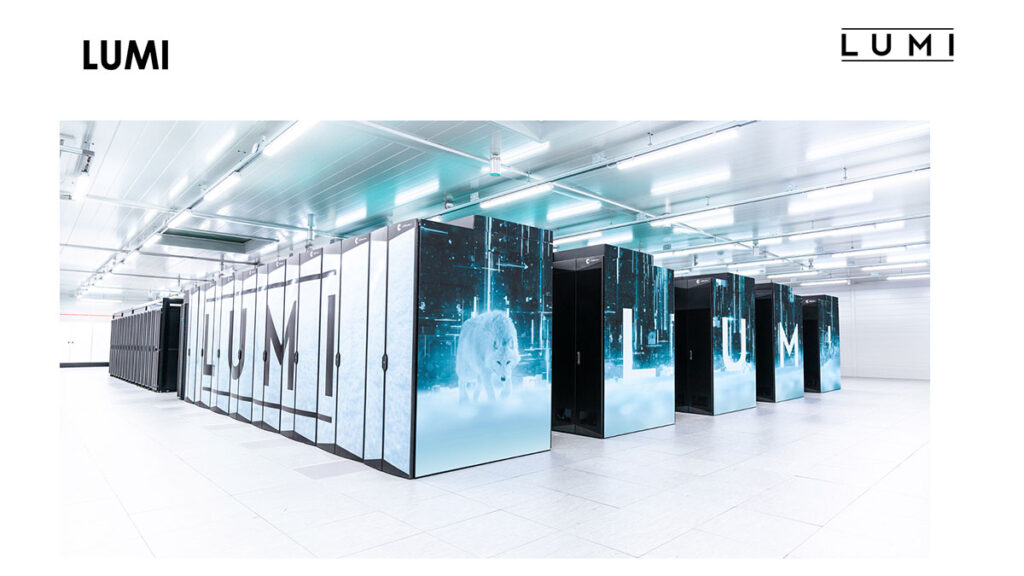
The Institute of Hydrometeorology and Seismology of Montenegro successfully secured HPC access from the EuroHPC JU Development Call for their project titled: “HPC Development for Very-High-Resolution Atmospheric Reanalysis Using a Nonhydrostatic Mesoscale Model over Montenegro (1995–2024)”. The project aims to enhance mesoscale weather modeling capabilities using the WRF-NMM (Nonhydrostatic Mesoscale Model) and to investigate the scalability and performance of nonhydrostatic dynamic cores on state-of-the-art high-performance computing (HPC) architectures.
Through this initiative, the project was granted 4,000 node hours on the LUMI-C partition for a period of six months. The National Competence Centre (NCC) Montenegro provided support throughout the project application process.
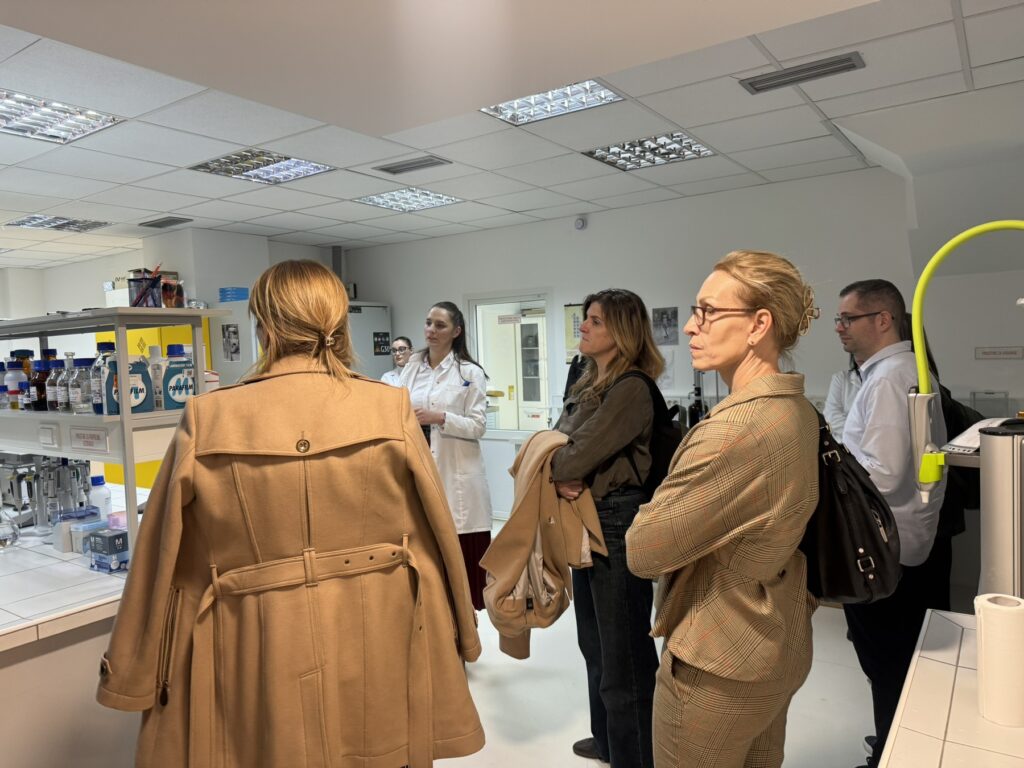
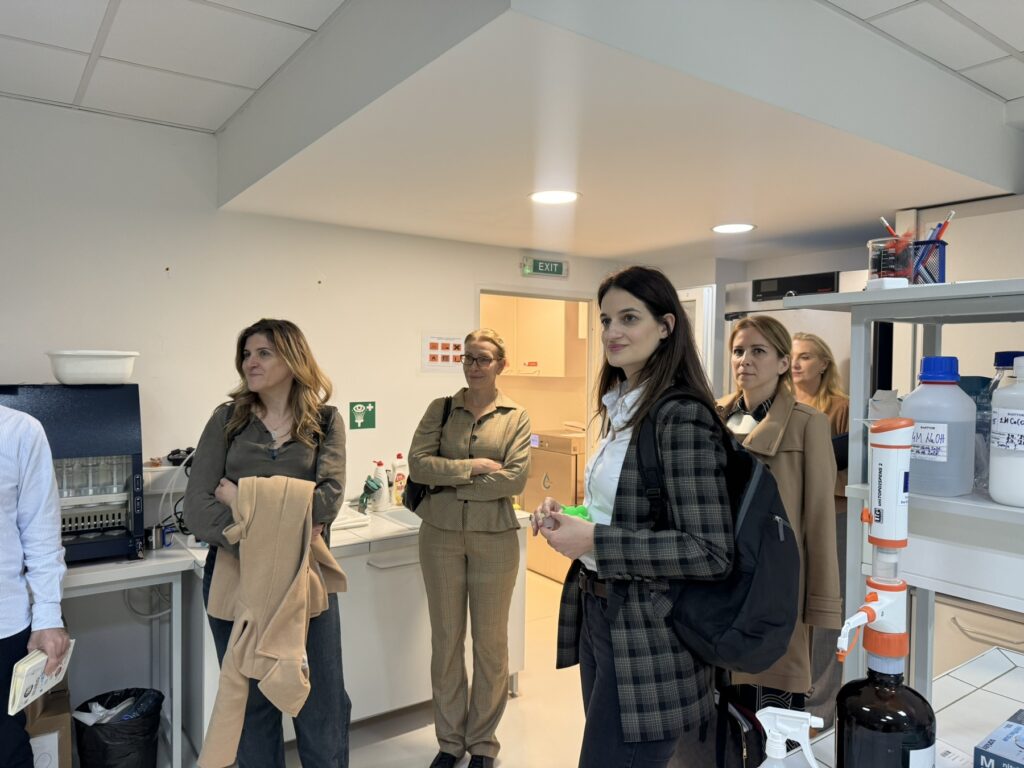
Representatives of NALED and Philip Morris International visited UDG, NCC Montenegro, and CoE FoodHub
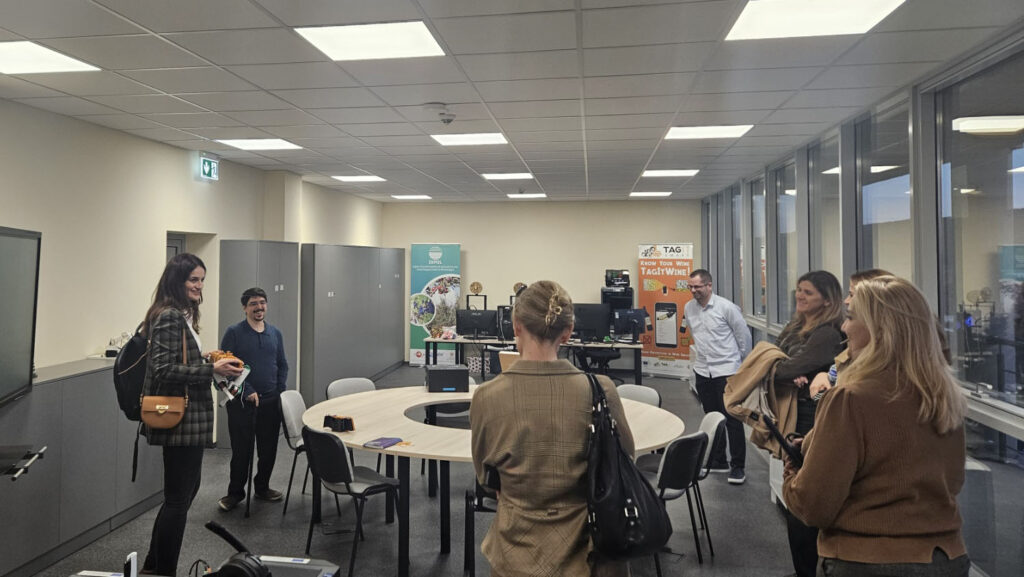
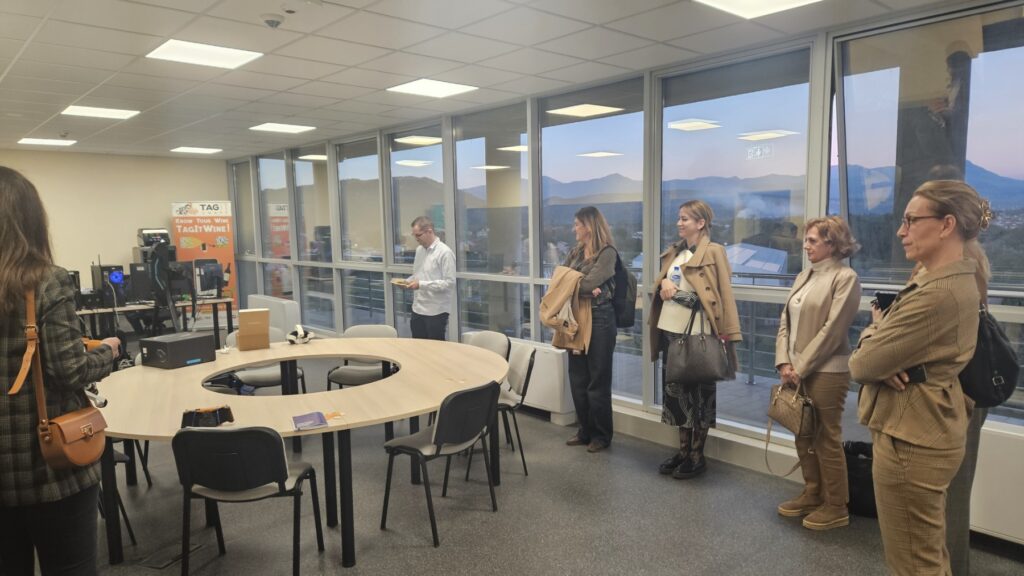
Representatives of NALED (National Alliance for Local Economic Development), Serbia, and Philip Morris International visited the University of Donja Gorica, where they presented their leading projects — StarTech, Empower Innovation, and particularly PMInnovia — aimed at connecting science and industry, promoting the concept of open innovation, and supporting researchers and innovators in developing ideas to improve products, processes, and the competitiveness of the economy.
During the visit, the representatives of NALED and PMI were introduced to the research and project activities of UDG, the National Competence Center for Supercomputing (NCC Montenegro), and the Center of Excellence for Digitalization of Food Safety Risk Assessment and Precision Certification of Food Product Authenticity (CoE FoodHub), particularly in the areas of HPC and AI technology applications and support for digital innovations in smart agriculture, personalized medicine, monitoring the authenticity of Montenegrin food products, and bioinformatics for genomic profiling.
The delegation also toured the Virtual Reality (VR) and 3D Printing Laboratory, where student projects showcasing the connection between technology, robotics, research creativity, and industrial relevance were presented. They also visited the Food Safety and Quality Laboratory, where modern methods and equipment for physico-chemical and microbiological analyses were demonstrated, as well as the Entrepreneurial Nest, where they learned about business initiatives supporting innovation and students, such as UDG’s StartUp program and the Entrepreneurial Ideas Exchange.
The professional discussion focused on mapping regional expertise, biotechnological innovations, and exploring potential collaboration within interdisciplinary teams sharing a common vision of advancing the innovation ecosystem and the economic development of the region.
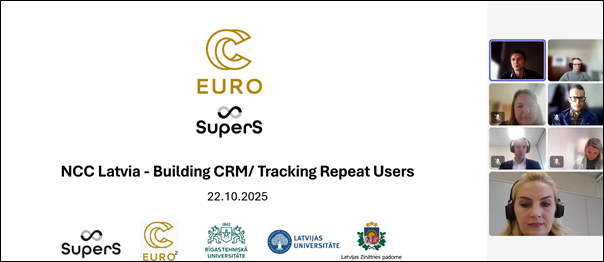
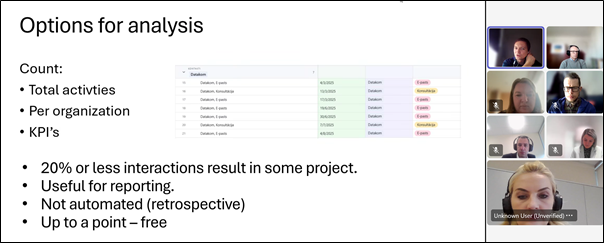
As part of ongoing EuroCC2 collaboration, NCC Montenegro participated in two mentoring/twinning online sessions with partner NCCs to exchange knowledge and share best practices and improve internal processes for seamless interaction and integration within the HPC/AI national ecosystem.
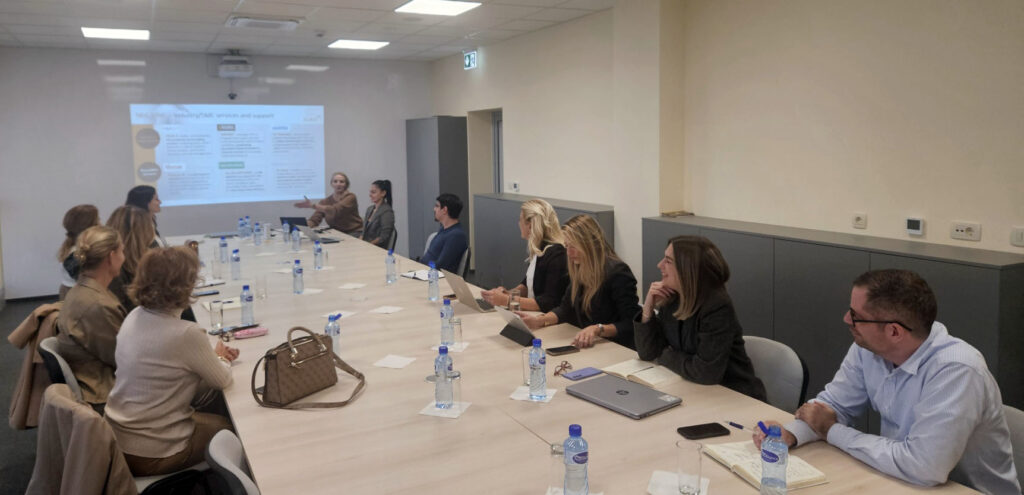
The first session, held with NCC Latvia on 22 October 2025, focused on Customer Relationship Management (CRM) tools and effective practices for managing project communications, coordinating client interactions, and tracking HPC/AI user data. NCC Latvia representatives provided a live demonstration of CRM workflows, offering practical insights and best approaches to streamline internal processes and monitor engagement with NCC services.
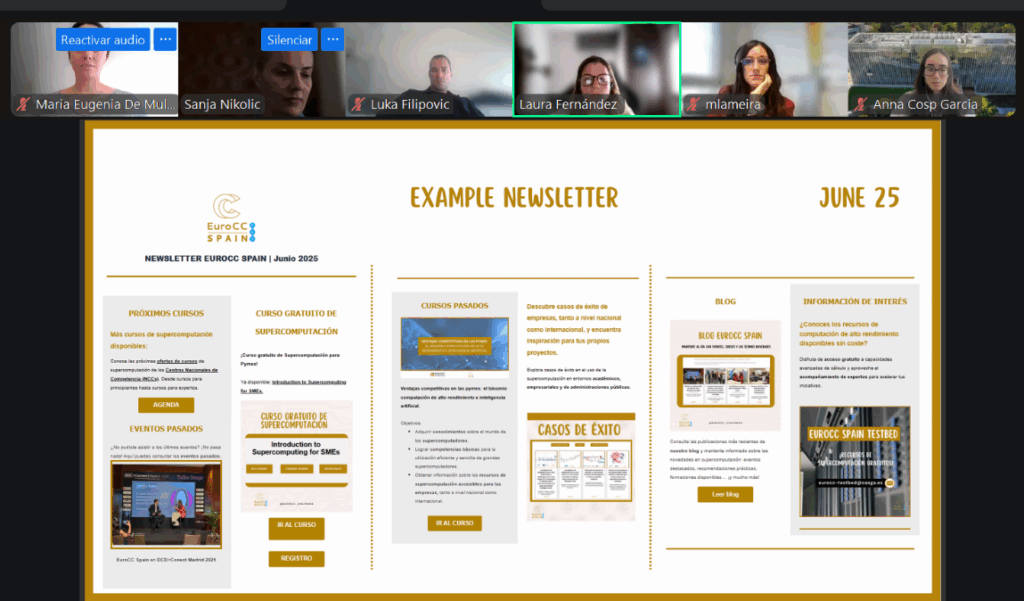
The second session, organized with NCC Spain on 31 October 2025, addressed Newsletter strategies for improving service visibility and customer outreach. Discussions included digital communication/ marketing tools, techniques for crafting engaging content, balancing updates on upcoming activities with past achievements, segmenting audiences effectively, and leveraging analytics to measure impact.
These mentoring sessions contribute to NCC Montenegro’s continuous efforts to enhance internal efficiency, optimize service delivery, expand outreach capacity, and strengthen stakeholder engagement.
This focused short course explores how artificial intelligence (AI) can be embedded into Internet of Things (IoT) systems, with a special emphasis on edge AI – running ML models directly on devices, close to where data is generated. Participants will learn how to design AIoT pipelines, when to process data on the edge vs. in the cloud, and how to deploy lightweight ML models on resource-constrained hardware. The course is intended for students, researchers, and professionals who want to move from “connected devices” to intelligent devices.
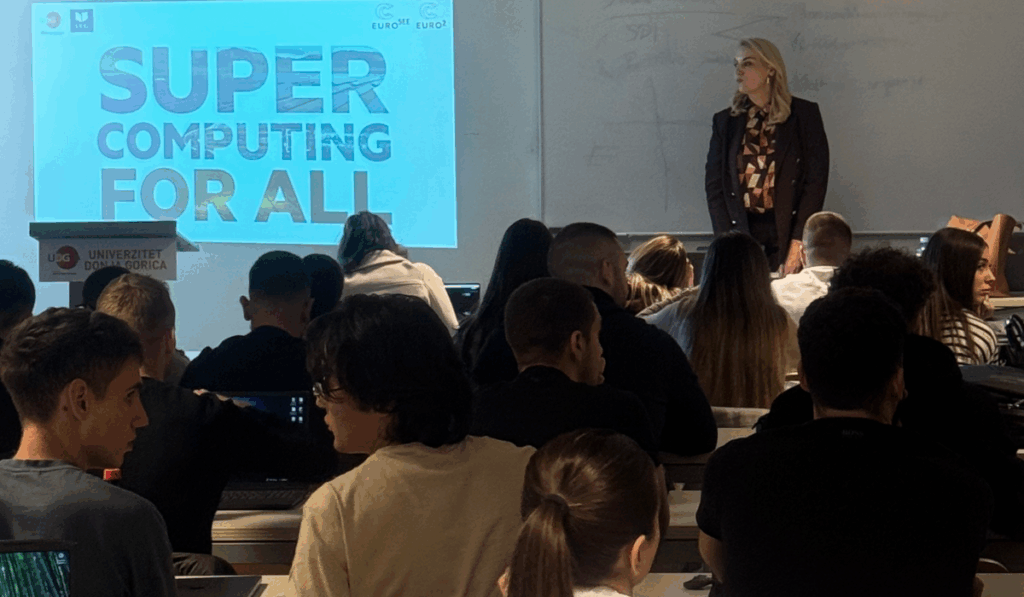
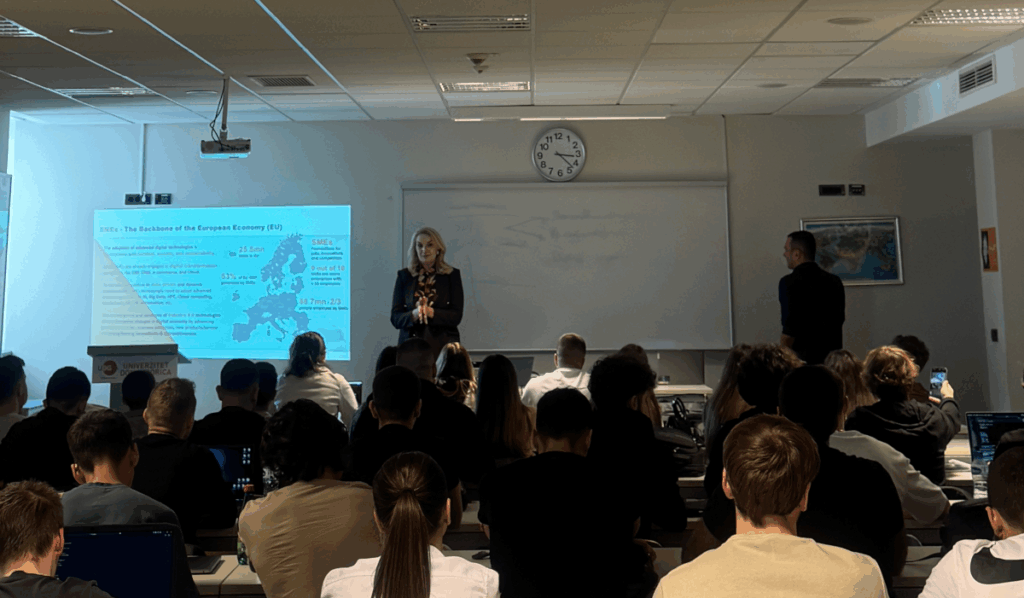
As part of the Digital Transformation course, representatives of the National Competence Centre for High-Performance Computing – NCC Montenegro, Ms. Sanja Nikolić and Dr Luka Filipović, delivered a guest lecture to final-year BSc students of the Faculty for Information Systems and Technologies (FIST) and the Faculty of Applied Sciences at the University of Donja Gorica. The session highlighted the growing strategic importance of High-Performance Computing (HPC) in research, innovation and business competitiveness.
HPC and Bussiness Opportunities for Digitial Transformation
Students were introduced to how HPC powers today’s AI systems, large-scale simulations, and data-intensive applications, and how this technological convergence opens new career and entrepreneurial opportunities. The lecture also showcased how HPC and AI are becoming critical enablers for SMEs and start-ups, transforming traditional industries and supporting advanced digital solutions in agriculture, energy, finance, and healthcare.
Ms Sanja Nikolic and Dr Luka Filipovic gave a lecture to final year students
The presenters also provided an overview of NCC Montenegro’s activities under the EuroCC/EuroCC4SEE initiative – including training opportunities, access to European supercomputers, SME onboarding support, and student involvement through research, master’s projects, and innovation-oriented proof-of-concepts. The lecture concluded with an open invitation for students to engage in upcoming NCC HPC/AI programs, internships, and applied research initiatives.
The Deep Learning with High Performance Computing (HPC) course provides a comprehensive introduction to both the fundamental and advanced concepts of Deep Learning, with a special focus on applications in High Performance Computing environments.
Participants will explore neural networks, loss optimization, convolutional and transformer architectures, as well as unsupervised and generative models. Through a combination of lectures and practical sessions, attendees will gain both theoretical understanding and hands-on experience in efficiently training and deploying deep learning models on HPC systems.
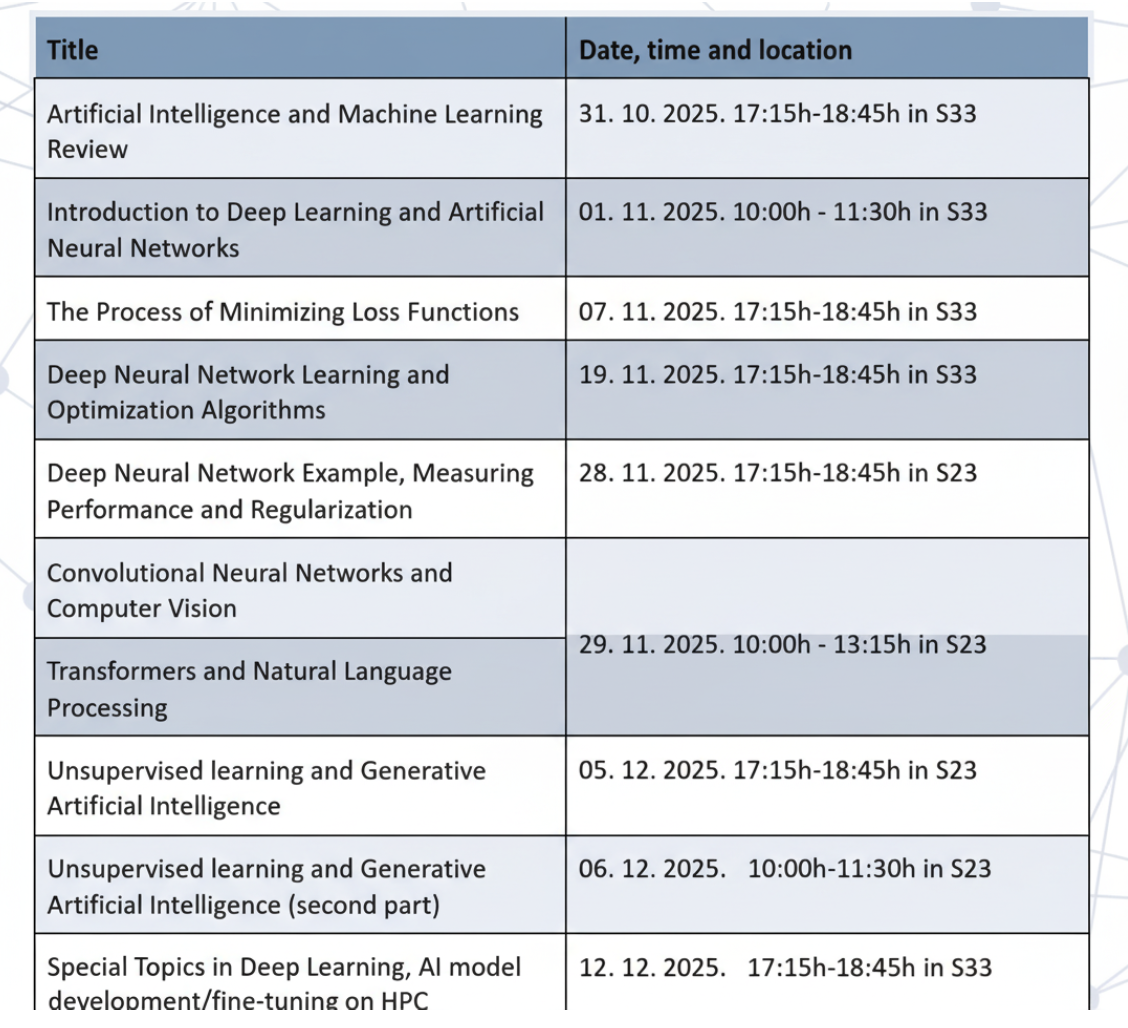
The course is intended for students and researchers with prior knowledge of machine learning concepts, programming in any language, and a basic understanding of mathematics (functions, derivatives, linear algebra, and statistics). The course is organized within the EuroCC project at the University of Donja Gorica, in collaboration with the Center for High Performance Computing and the Artificial Intelligence research team. All classes will be organized at the University of Donja Gorica, starting from 31st October, 2025, from 17:15h, in classroom S33 or S23 (3 floor).
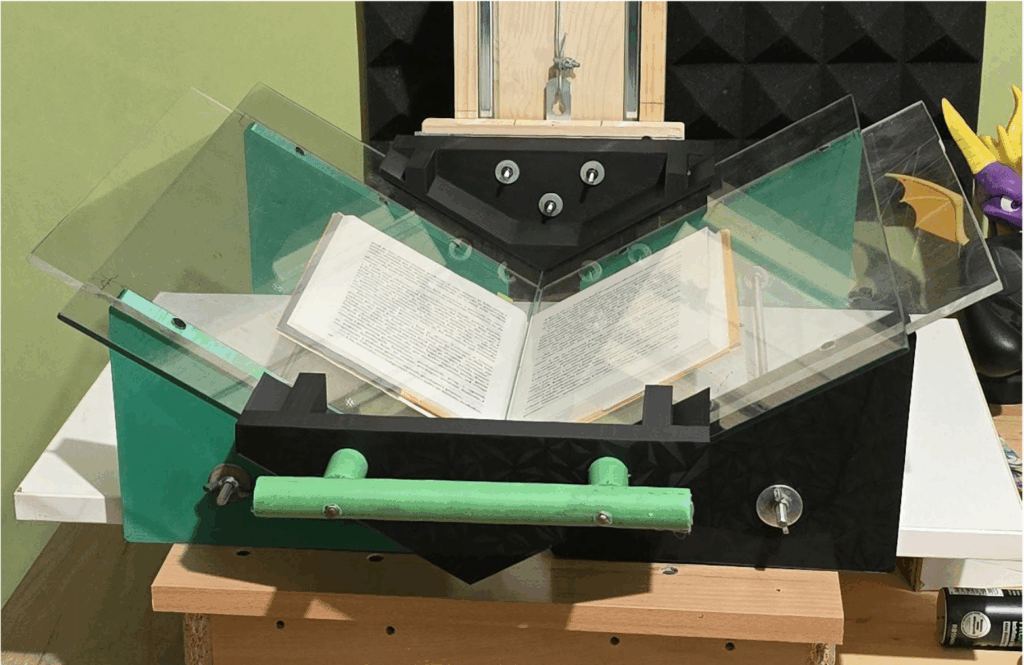
Mr. Igor Ćulafić successfully defended his master’s thesis titled “Cross-lingual Transfer Learning in Large Language Models: Scaling Laws and Parameter-Efficient Fine-Tuning for Multilingual Applications.” His research provides a comprehensive study of cross-lingual transfer for the Montenegrin language, combining a custom V-shaped semi-automated book scanner, a YOLOv11 + Tesseract OCR pipeline, and the creation of 46,661 parallel paragraph pairs. Using LoRA fine-tuning on Qwen2.5-7B and Qwen3-30B—executed on the Leonardo EuroHPC supercomputer—the work demonstrates parameter-efficient adaptation (only 1.05% trainable parameters) and offers insights into model behavior in cultural understanding, script mixing, and analytical reasoning. This research was supported by NCC Montenegro team and made use of the HPC cluster and EuroHPC JU computational resources.
V-shaped book scanner prototype used to create datasets
ABSTRACT – This thesis presents a comprehensive study of Cross-lingual transfer learning in Large Language Models with a focus on parameter-efficient fine-tuning for the Montenegrinlanguage. The research integrates the development of a custom semi-automated book scanner with V-shaped design and a computer vision pipeline using YOLO v11 models and Tesseract OCR to digitize 5000 on Montenegrin and 40000 on English language, from public domain books, resulting in 46661 parallel paragraph pairs. Implementation of LoRA fine-tuning on Qwen2.5-7B and Qwen3-30B models was conducted on Leonardo HPC supercomputer, achieving memory efficiency with only 1.05% trainable parameters. Comparative analysis through a structured benchmark of ten progressively complex questions reveals limited but positive effects of fine-tuning, where larger models show better performance in cultural understanding and analytical tasks, while systematic analysis identifies specific problems such as script mixing and cultural inaccuracies that require specialized approaches.