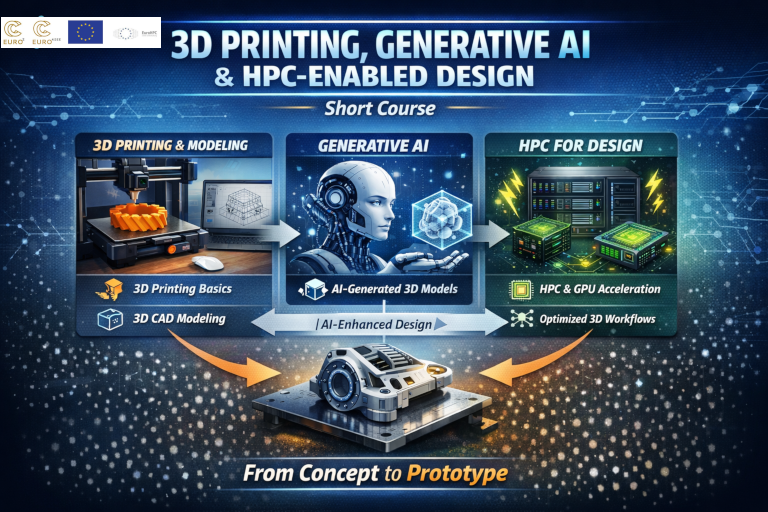
The National Competence Center for High Performance Computing (NCC Montenegro) is launching a short course dedicated to the emerging intersection of 3D printing, generative artificial intelligence, and high-performance computing (HPC). The course is designed to provide participants with practical insight into the full digital fabrication pipeline — from concept and model creation to the production of a physical prototype.
During the two-day program, participants will learn the fundamentals of 3D printing technologies, CAD-based modeling, and model preparation for printing, while also exploring how Generative AI tools can automatically generate and enhance 3D models. A special segment of the course will focus on the role of HPC infrastructure in enabling advanced generative design workflows, including the training and deployment of AI models for complex design generation and optimization.
Designed for students, researchers, and professionals
The course combines theoretical lectures with hands-on sessions, allowing participants to experiment with AI-assisted model generation and prepare designs for 3D printing. The program culminates in a final project where participants implement the complete workflow — from AI-generated concept to printed prototype.
The course is intended for students, researchers, engineers, makers, and professionals interested in digital fabrication, AI-assisted design, and advanced computational technologies. The course will take place on March 26th and March 30th.
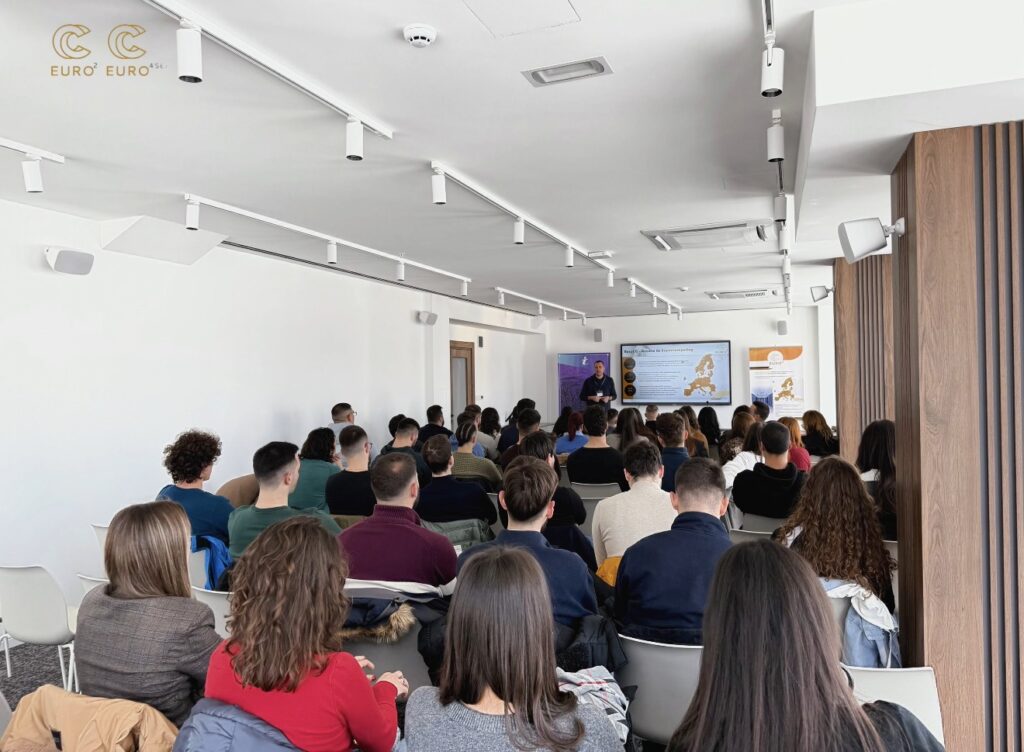
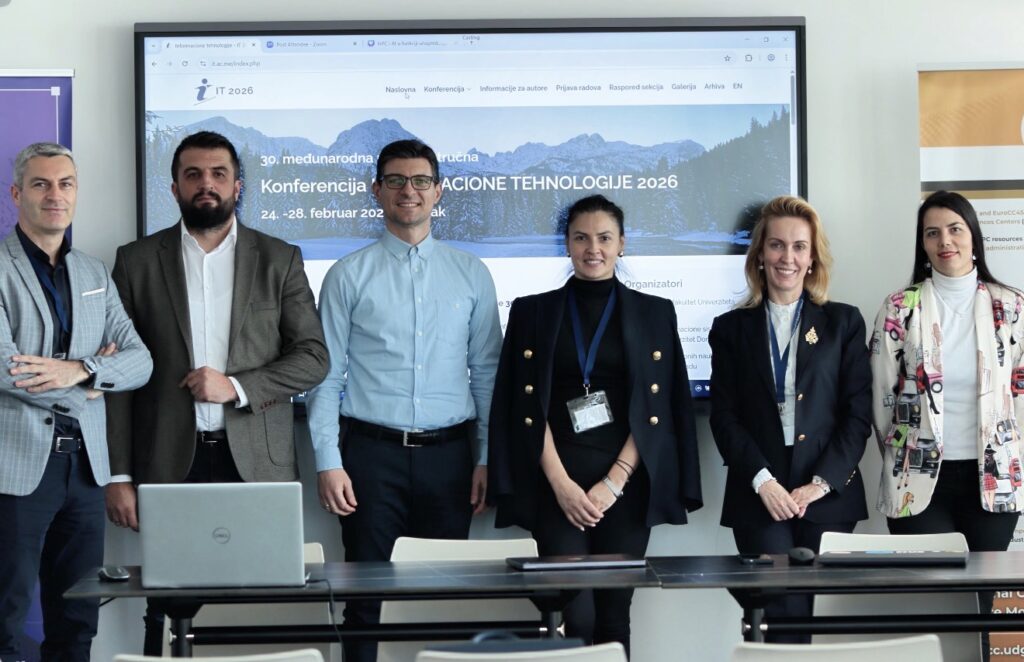
As part of the 30th anniversary of the International Conference on Information Technology – IT 2026, held in Žabljak, a three-day programme of activities dedicated to the application of high-performance computing (HPC) and artificial intelligence (AI) in science, industry, and digital transformation was organized. The event brought together researchers, representatives of National Competence Centres, IT companies, and international partners with the aim of exchanging knowledge, presenting project results, and strengthening collaboration between academia and industry.
EuroCC2 and EuroCC4SEE at the 30th anniversary edition og the IEEE Information Technology Conference – IT Zabljak 2026
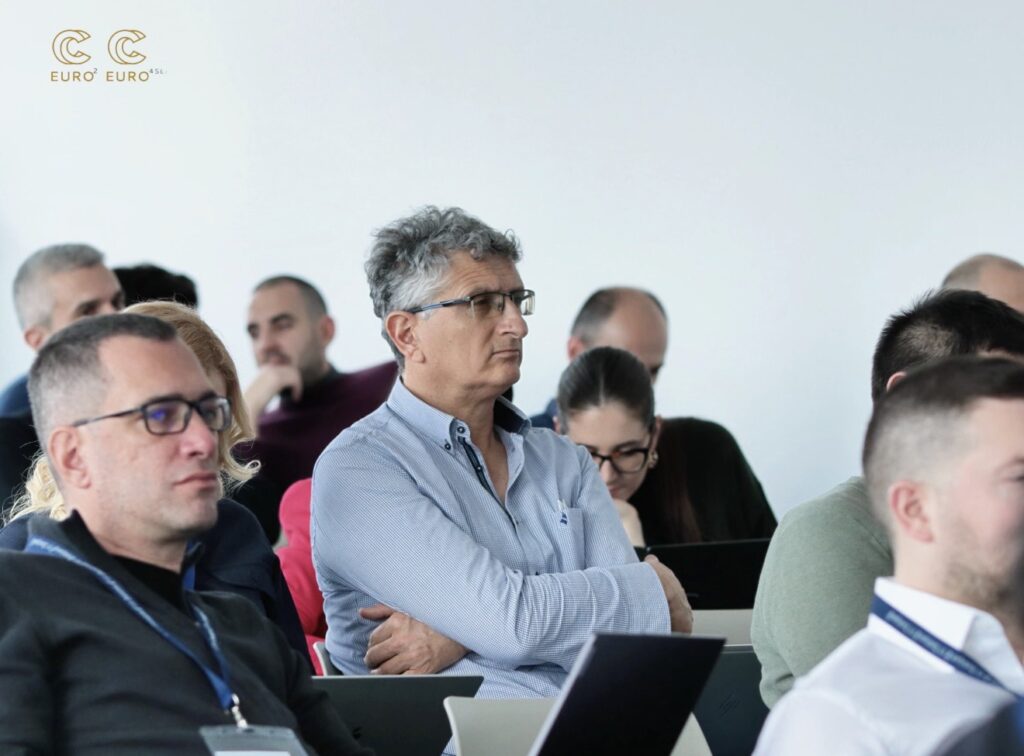
During all three days of the conference, morning sessions were dedicated to presentations of scientific papers, where researchers presented the results of their work in the fields of artificial intelligence, high-performance computing, data science, and digital technologies. These sessions enabled discussions on current scientific trends and the exchange of ideas between authors and conference participants.
Day one – scientific sessions, workshop, and project presentations
The programme of the first day began with a morning block of four parallel sessions, two held in conference halls and two organized in a virtual format. Within these sessions, scientific papers covering contemporary topics in AI, HPC, data analytics, digital transformation, and software engineering were presented, followed by active discussions between authors and participants.
Introduction to NCC Montenegro activities and preparation for the workshop
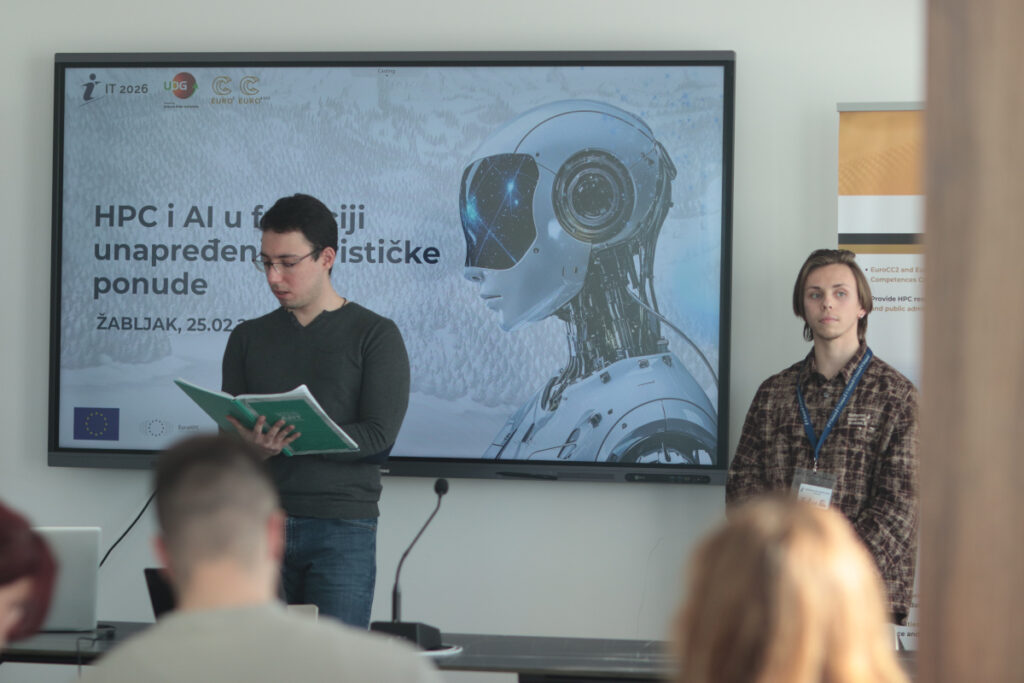
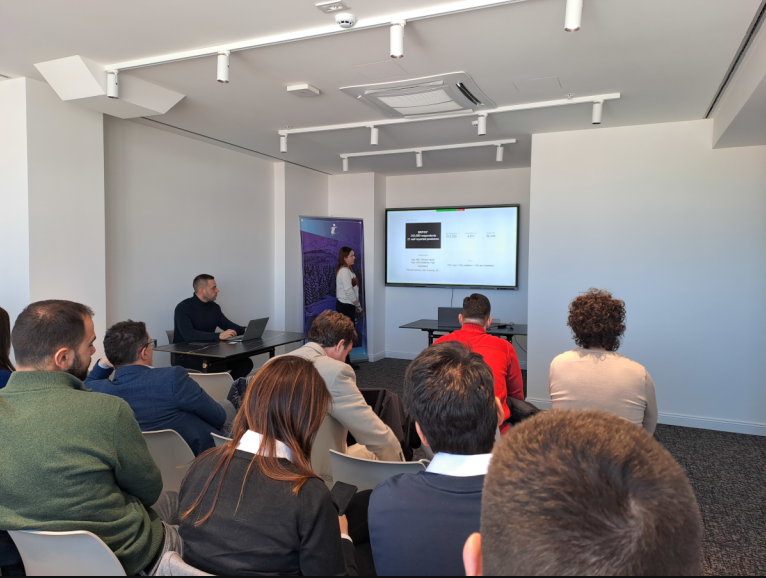
Later in the day, the workshop “Application of HPC and AI to Enhance the Tourism Offer” was held, focusing on the development of proof-of-concept solutions and the practical application of supercomputing and artificial intelligence to enhance the tourism offer.
Particular emphasis was placed on solutions integrating HPC infrastructure, demonstrating how advanced computing resources can support data analysis, personalization of tourism services, and optimization of tourism processes.
Wotkshop on HPC and AI applications aimed at tourism sector
Outside the scientific sessions, Wednesday was also marked by the event “Project trade fair & dissemination of results”, where projects and innovative solutions in the fields of AI and HPC were presented. Solutions such as GetMoved, PAID-T, Wasco AI, Generative AI Intelligent Process Automation Platform, DeepMark, and AI Heal were showcased, further strengthening the connection between the research and business communities and enabling the exchange of experiences between researchers and companies.
Day two – panel on the application of HPC technologies in science and industry
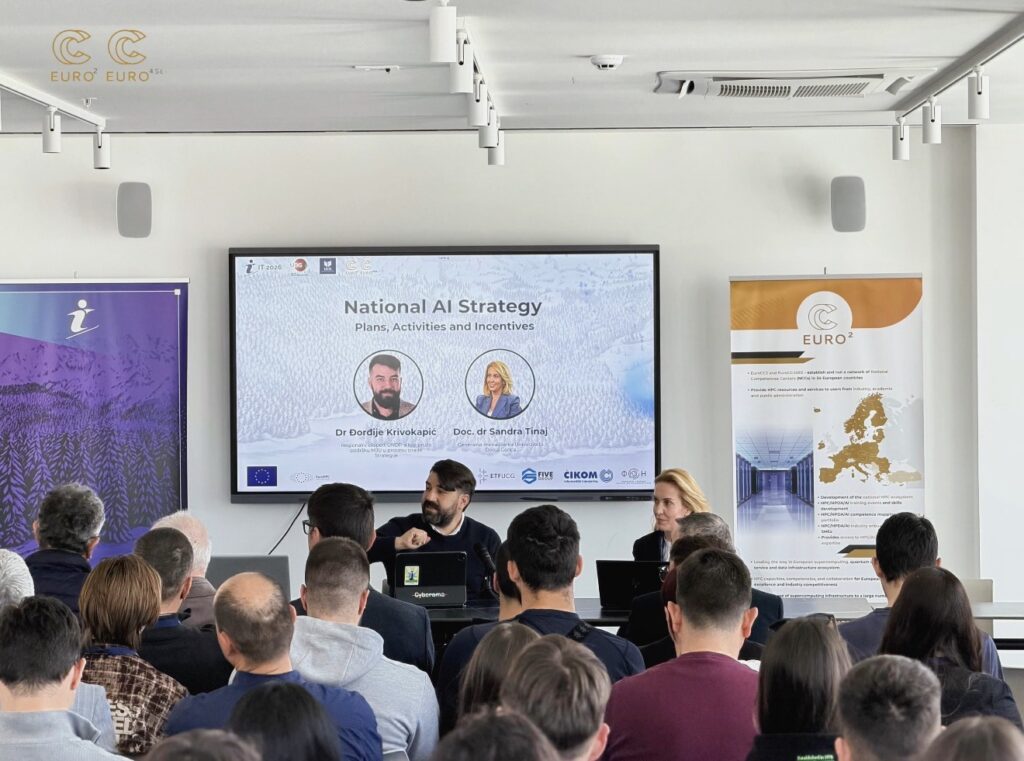
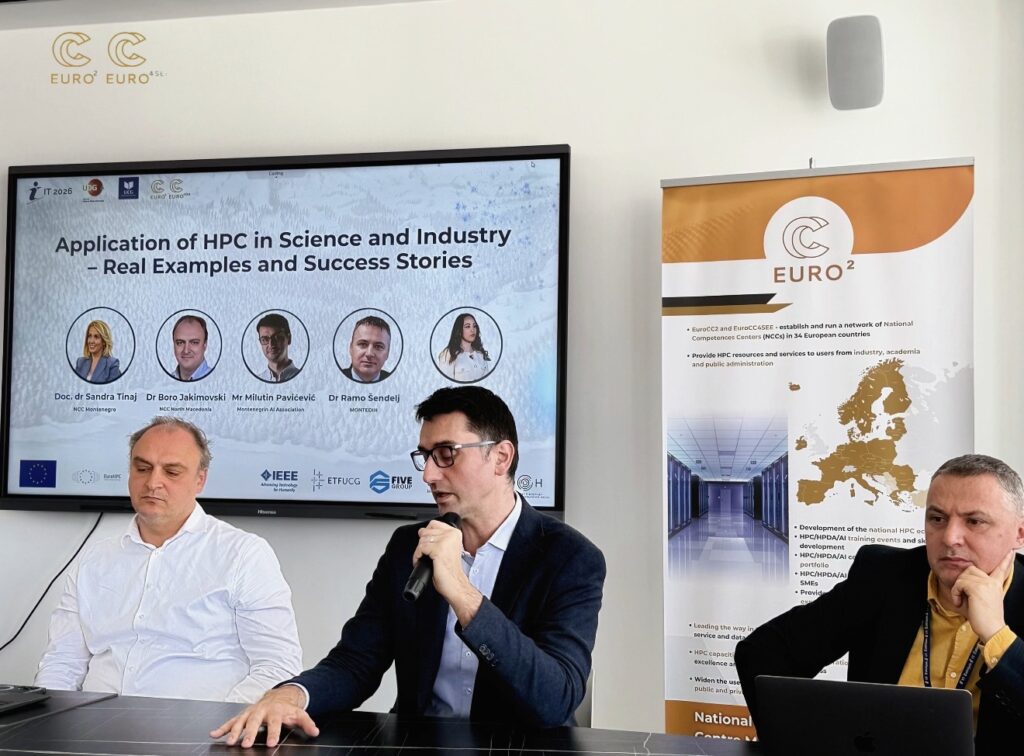
On the second day of the conference, the panel “Application of HPC in Science and Industry – Real Examples and Success Stories” was held and moderated by Sandra Tinaj (NCC Montenegro). The panel was organized in two parts.
The first part focused on a discussion about the institutional framework and the strategic development of the AI and HPC ecosystem in Montenegro. The discussion involved Đorđe Krivokapić and Sandra Tinaj.
Discussing strategic development of the AI and HPC ecosystem in Montentegro
Đorđe Krivokapić presented the key elements of the National Strategy for Artificial Intelligence, including planned activities, infrastructure development, and support mechanisms for research and innovation. Special emphasis was placed on strengthening the institutional framework that enables the integration of HPC and AI technologies into various sectors of society, as well as creating an environment that fosters cooperation between government institutions, academia, and industry.
Sandra Tinaj presented the activities of the National Competence Centre for HPC in Montenegro (NCC Montenegro) within the EuroCC and EuroCC4SEE projects, including the organization of training activities, support for researchers and companies, and assistance in accessing European supercomputing resources through the EuroHPC initiative.
HPC applications through the work of NCCs and industry in SEE
The second part of the panel focused on presenting concrete examples of HPC applications through the work of National Competence Centres and industry.
Ana Lalović (Verlab) presented the activities of NCC Bosnia and Herzegovina, focusing on the use of HPC technologies in medical and biomedical research, including the analysis of medical data and the development of advanced diagnostic models. Boro Jakimovski presented the activities of NCC North Macedonia, with a particular focus on industrial applications of HPC technologies and cooperation with companies developing solutions based on AI and advanced analytics.
Sandra Tinaj presented the activities of NCC Montenegro through Proof of Concept projects, which enable companies and researchers to test and develop innovative solutions using HPC infrastructure and expert support.
Milutin Pavićević (Montenegrin AI Association) discussed the perspective of industry and the importance of cooperation between academia and companies. He particularly emphasized the competencies needed by young IT engineers in the context of HPC technologies, including knowledge of parallel programming, large-scale data processing, and the development of scalable AI solutions.
prof Ramo Sendelj from MontEDIH at the panel
Ramo Šendelj (MONTEDIH) also participated in the panel, speaking about the importance of cooperation between the MONTEDIH and EuroCC4SEE projects in supporting the digital transformation of companies and developing an innovation ecosystem based on HPC and AI technologies.
In addition, B2B meetings were held between NCCs, as well as between NCCs, companies, and researchers.
Day three – EuroCC4SEE session and experiences of National Competence Centres
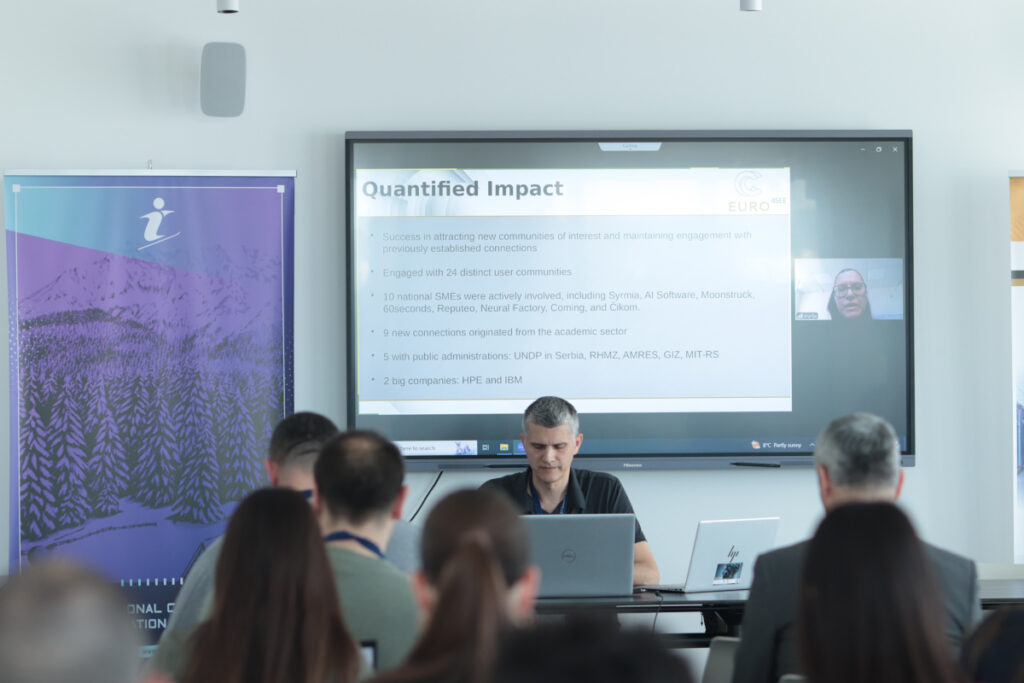
On the third day of the conference, the session “EuroCC4SEE – What Have We Learned and Where Do We Go Next?” was held, dedicated to the results and experiences of National Competence Centres in the field of HPC.
The session was opened by Tomo Popović from NCC Montenegro, who presented the activities implemented within the EuroCC and EuroCC4SEE projects, including training activities, cooperation with companies, and support for accessing European supercomputers. NCC Montenegro has organized more than 30 training events attended by around 500 participants, collaborated with more than 15 companies, and provided support for more than 10 applications to the EuroHPC initiative, including practical work on European supercomputing clusters.
During the session, the activities of National Competence Centres from the region were also presented.
Session dedicated to EuroCC4SEE Lessons Learned with participation of industry representatives
Marija Mitrović Dankulov presented the activities of NCC Serbia, including the development of HPC infrastructure such as the Paradox cluster, the AI cluster, and the national data center in Kragujevac, which will support the EuroCC3 and AI Factory satellite projects. She also presented the results of the NCC’s work, successful HPC use cases, and experiences in cooperation with academia and industry.
Ozlem Sari from NCC Turkey presented the results achieved over the past three years, including numerous training activities, info days, proof-of-concept projects, and success stories developed in cooperation with academia and industry, as well as the HPC infrastructure and regional initiatives that contributed to spreading knowledge about HPC technologies.
Sarah Spahić presented the activities of NCC Bosnia and Herzegovina and the Verlab Institute, including training and workshops for academia and the public sector, consultations and support for research projects, and cooperation with companies such as Arti Analytics, Plastoflex, and Bosnalijek.
Gjorgji Madjarov presented the activities of NCC North Macedonia and an overview of activities implemented through the EuroCC and EuroCC4SEE projects, with a particular focus on cooperation with IT companies and organizations with domain expertise relevant for the development of AI and HPC solutions.
Several representatives presented their solutions and experiences with HPC and NCC support
In the second part of the session, projects of Montenegrin companies using HPC and AI technologies were presented. Companies showcased innovative solutions such as the AI doctor developed by OneAI, the Wasco AI assistant by Five G, the DeepMark platform for audio watermarking, as well as solutions from ITAS, Trid Tech, Uhura, and Paid MNE that use HPC infrastructure for simulations, AI model development, and optimization of complex processes.
At the end of the session, Ramo Šendelj emphasized the importance of cooperation between the EuroCC and MONTEDIH projects, highlighting opportunities for joint activities and support for Montenegrin companies in various areas of digital transformation.
Strengthening the HPC ecosystem through collaboration between science and industry
The three-day programme within the IT Žabljak 2026 conference highlighted the importance of collaboration between the research community, industry, and European initiatives in the development of HPC and AI technologies. Through scientific sessions, workshops, panel discussions, and project presentations, participants had the opportunity to exchange experiences, present innovative solutions, and identify new opportunities for cooperation.
There was over 20 representatives from comapnies that utilized EuroHPC HPC access
Activities implemented within the EuroCC4SEE project have further contributed to strengthening the regional HPC ecosystem and promoting the application of supercomputing and artificial intelligence in science, industry, and the public sector.
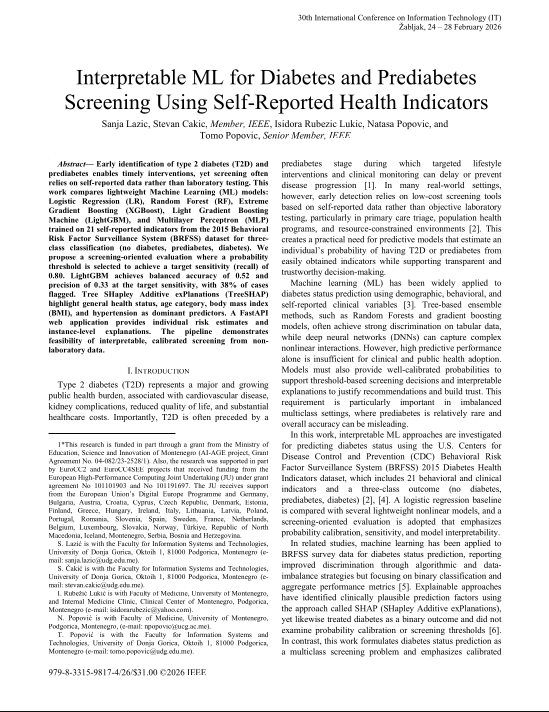
AI-AGE team presented a paper titled “Interpretable ML for Diabetes and Prediabetes Screening Using Self-Reported Health Indicators” by S. Lazic, S. Cakic, I. Rubezic Lukic, N. Popovic, and T. Popovic at the 30. Annual Conferenc on Information Technology IT 2026. This was part of mentoring activities and efforts related to development of young researchers.
Image source AI-AGE
ABSTRACT – Early identification of type 2 diabetes (T2D) and prediabetes enables timely interventions, yet screening often relies on self-reported data rather than laboratory testing. This work compares lightweight Machine Learning (ML) models: Logistic Regression (LR), Random Forest (RF), Extreme Gradient Boosting (XGBoost), Light Gradient Boosting Machine (LightGBM), and Multilayer Perceptron (MLP) trained on 21 self-reported indicators from the 2015 Behavioral Risk Factor Surveillance System (BRFSS) dataset for three-class classification (no diabetes, prediabetes, diabetes). We propose a screening-oriented evaluation where a probability threshold is selected to achieve a target sensitivity (recall) of 0.80. LightGBM achieves balanced accuracy of 0.52 and precision of 0.33 at the target sensitivity, with 38% of cases flagged. Tree SHapley Additive exPlanations (TreeSHAP) highlight general health status, age category, body mass index (BMI), and hypertension as dominant predictors. A FastAPI web application provides individual risk estimates and instance-level explanations. The pipeline demonstrates feasibility of interpretable, calibrated screening from non-laboratory data.
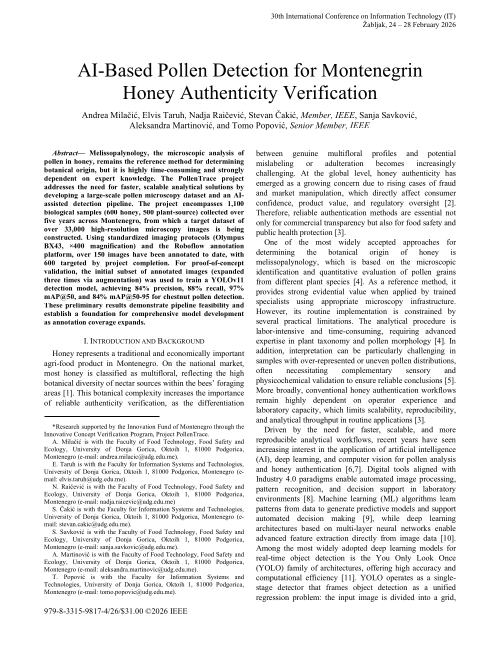
At the IEEE IT2026 conference in Žabljak, researchers from the University of Donja Gorica presented PollenTrace, an innovative project combining Artificial Intelligence and High Performance Computing (HPC) to enhance honey authenticity verification. Traditional pollen analysis (melissopalynology), while reliable, is time-consuming and dependent on expert knowledge. PollenTrace addresses this limitation by developing a large-scale microscopy dataset and an AI-driven detection pipeline capable of automatically identifying pollen grains in honey samples.
The project is building a dataset of over 33,000 high-resolution microscopy images derived from more than 1,100 biological samples collected across Montenegro, enabling the development of robust and scalable AI models. As a proof of concept, a deep learning model based on YOLOv11 was trained on annotated microscopy images, achieving 84% precision and 88% recall, demonstrating strong potential for automated pollen detection and future large-scale deployment.
HPC resources played a key role in enabling efficient model training and handling of high-resolution image datasets, highlighting the importance of national HPC infrastructure—such as that provided through NCC Montenegro -in supporting advanced AI applications in agri-food systems. This is also cross-project collaboration.
PollenTrace represents a step forward toward digital, scalable, and reproducible food authenticity verification, with strong potential to support laboratories, regulatory bodies, and industry in ensuring product quality and consumer trust. PollenTrace is supported as a PoC project by the Innovation Fund of Montenegro.
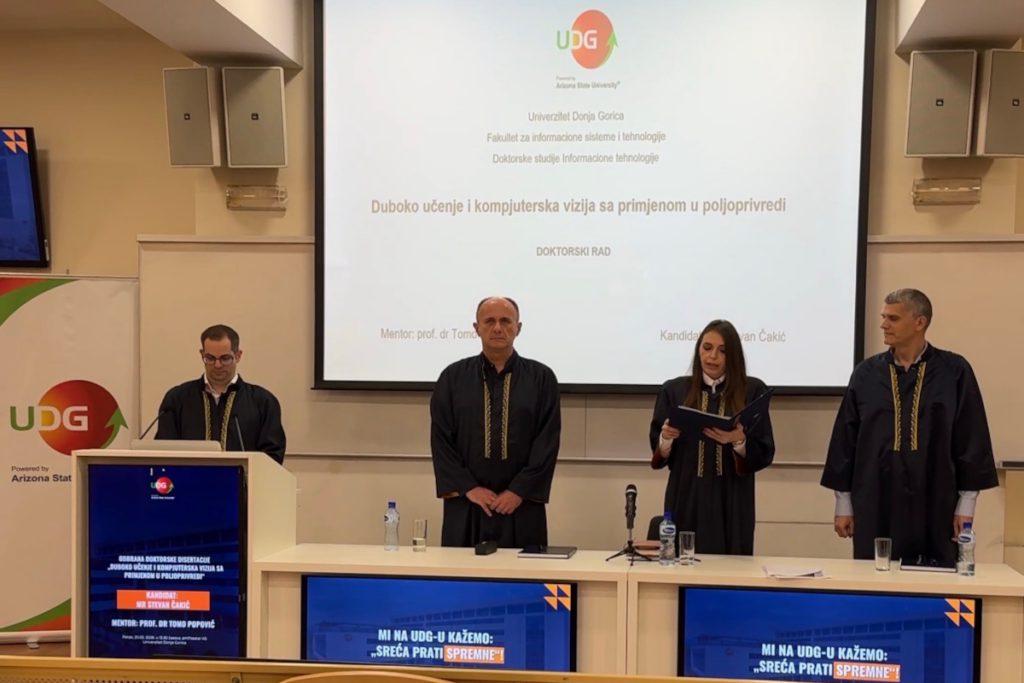
The University of Donja Gorica, through the Faculty for Information Systems and Technologies, proudly announces the successful PhD defence of Mr. Stevan Čakić, focused on the application of Artificial Intelligence and High-Performance Computing in precision agriculture.
The research addresses key challenges in modern agriculture, particularly in poultry farming, by leveraging deep learning and computer vision models for real-time monitoring, early disease detection, and improved farm management. The models were developed and trained using HPC resources, enabling efficient experimentation and achieving high prediction accuracy exceeding 92% . A significant contribution of this work lies in the integration of HPC-based model development with deployment on edge devices in real farm environments, demonstrating a complete AI-to-industry pipeline. The research also explores the use of generative AI and synthetic data to reduce dependency on large annotated datasets, accelerating innovation cycles.
mr Stevan Cakic presenting his PhD Thesis on AI/HPC in precision agriculture
Importantly, part of this research was conducted in synergy with the FFplus experiment and in direct collaboration with industry partners, highlighting the role of HPC in enabling real-world, industry-driven AI applications. This achievement further demonstrates the impact of the NCC Montenegro and EuroCC2 & EuroCC4SEE initiatives in supporting advanced research, fostering academia-industry collaboration, and promoting the adoption of HPC technologies in strategic sectors such as agriculture.
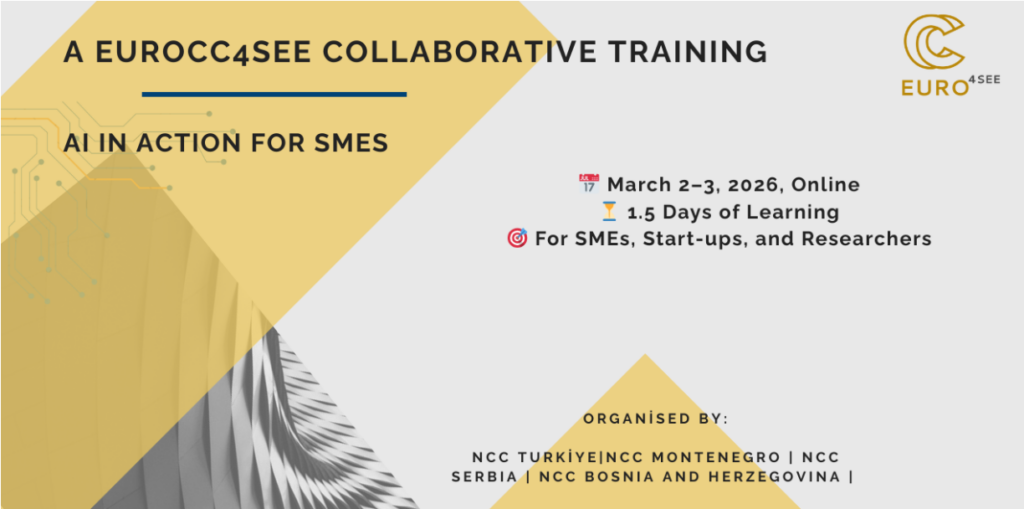
We are pleased to announce the upcoming “AI in Action for SMEs” training, organized within the EuroCC4SEE initiative by NCC Montenegro, NCC Serbia, NCC Bosnia and Herzegovina, and NCC Türkiye. This training will take place March 2-3, 2026.
Click on image for more info and registration
The 1.5-day online training is designed for SMEs, start-ups, technical leads, and researchers interested in practical adoption of Artificial Intelligence supported by High-Performance Computing (HPC).
The programme focuses on applied AI methods with live demonstrations and real-world use cases.
Day 1 covers Time Series Forecasting with AI & Machine Learning and Explainable AI (XAI), including HPC-enabled demonstrations and practical insights for business and healthcare applications. NCC Montenegro will actively contribute to the time-series and HPC session, presenting practical approaches relevant for SMEs.
Day 2 is dedicated to Applied Data Anonymization Techniques, addressing data protection challenges and practical anonymization approaches essential for responsible AI deployment
Invitation to Participants from Montenegro
As a co-organizer, NCC Montenegro will also present during the programme. We invite companies, researchers, and innovators from Montenegro to register and participate in this regional training.
This is an opportunity to:
Learn from hands-on AI & HPC demonstrations
Connect with regional NCC experts
Strengthen AI adoption capacity within your organization
Participation is free, and registration is open via the event page.
We look forward to strong participation from Montenegro.
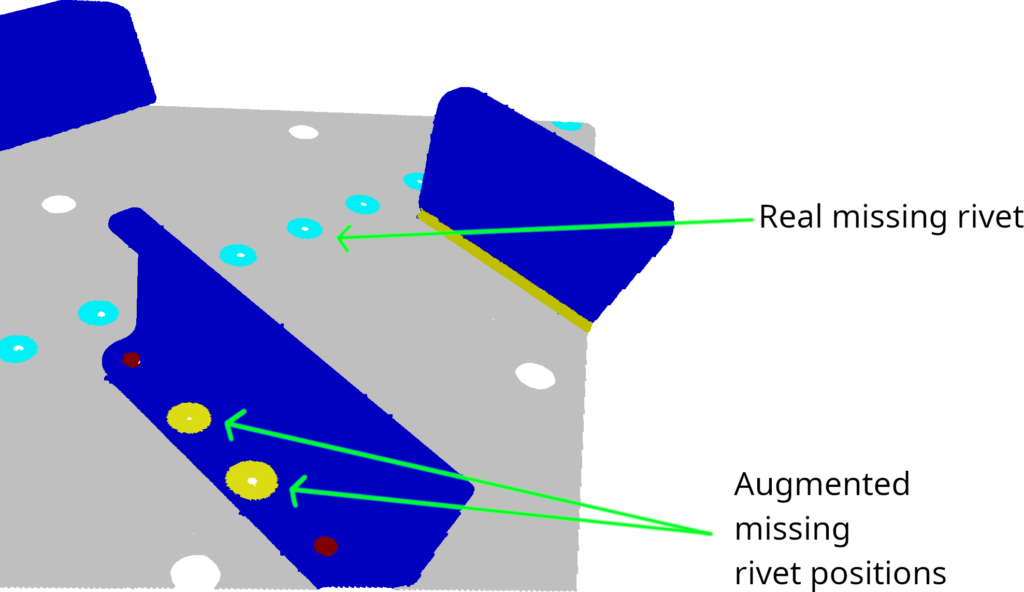
We are pleased to announce that the research team from the Faculty of Science and Mathematics has published a scientific paper titled “Data augmentation for fuselage panel inspection via 3D point cloud segmentation” in the Journal of Electronic Imaging. The paper presents advanced data augmentation methods to improve fuselage panel inspection using 3D point cloud segmentation, contributing to more accurate and reliable AI-based inspection systems. The research was enabled by access to the Leonardo HPC supercomputing resources, granted through the EuroCC2 project, which allowed the team to process large datasets and develop high-performance models efficiently. More info at: https://doi.org/10.1117/1.JEI.35.3.031202