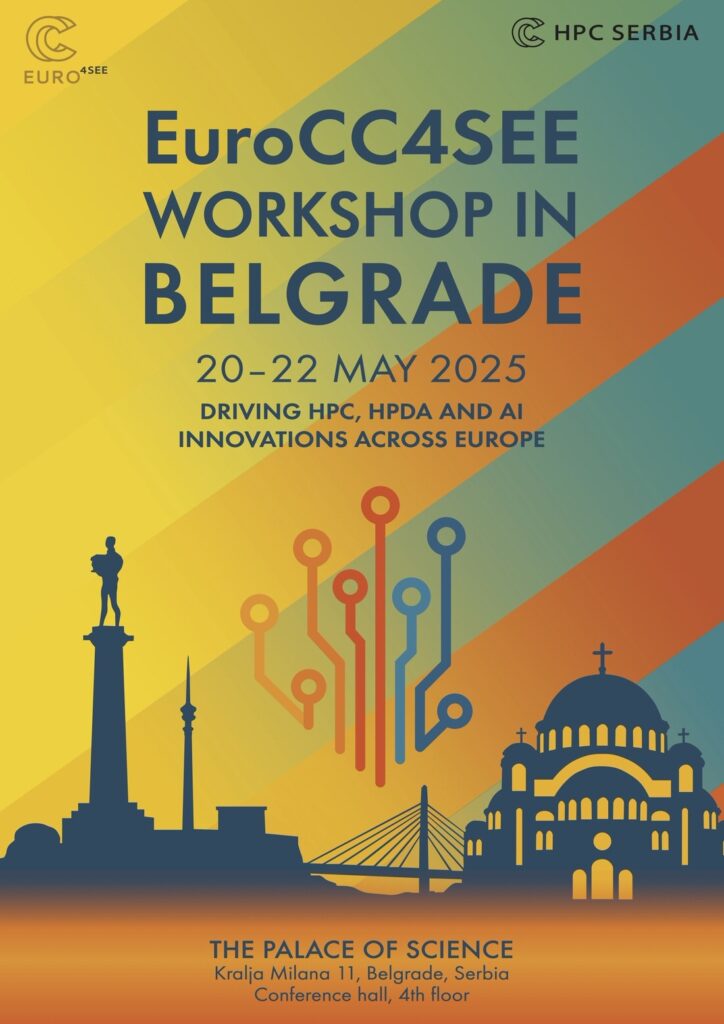
HPC Serbia is organizing a face-to-face regional EuroCC4SEE Workshop in Belgrade from 20 to 22 May 2025. The workshop will commence around noon on 20 May and conclude by noon on May 22. During the first half-day, we will hold sessions tailored for researchers. The second half-day will focus on SMEs, while the afternoon of the second day will feature presentations on the use of HPC in public administration. On the third day, we will showcase examples of HPC applications in the region. NCC Montenegro team members will participate in the event and give presentation on 22 May. You can learn more about the event at the following link: https://indico.ipb.ac.rs/event/590/
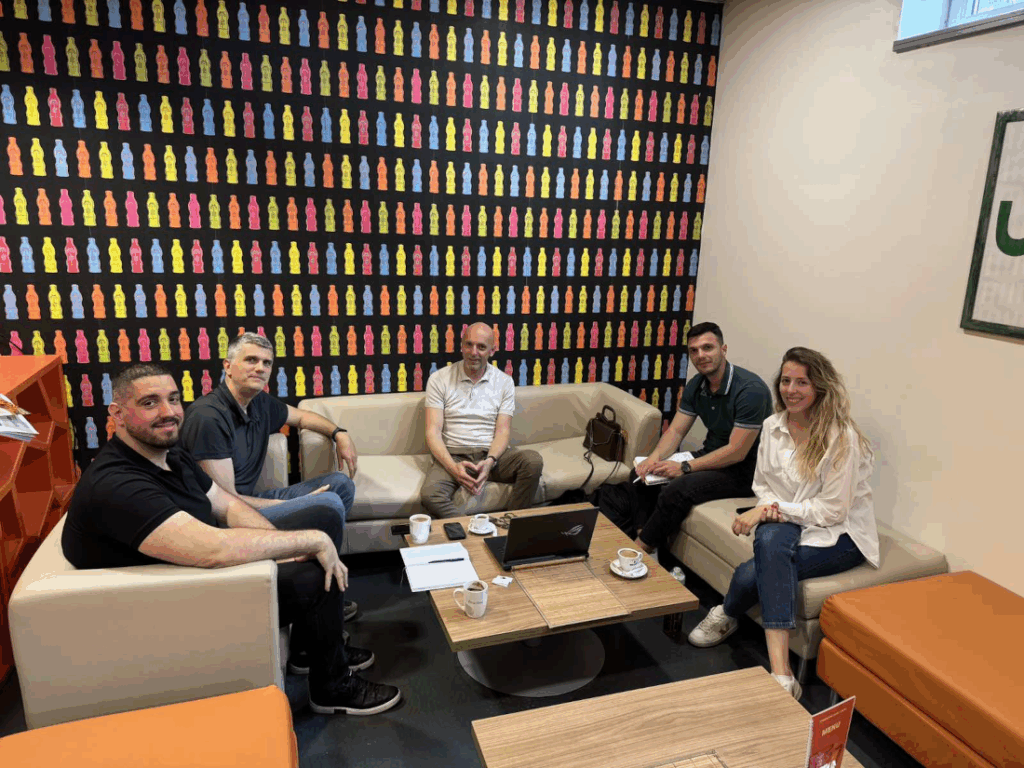
On May 2025, NCC Montenegro and the University of Donja Gorica welcomed Igor Mitrić, founder and CEO of the Montenegrin startup HRUPTY, for an initial consultation on potential collaborations in the field of high-performance computing (HPC). HRUPTY is recognized as an innovation-driven company registered under the Ministry of Science and Innovation and is focused on developing cutting-edge AR/VR tools for a wide range of industries including real estate, tourism, art, education, and industrial training.
Innovative Startup Hrupty visited NCC Montenegro for initial consultations
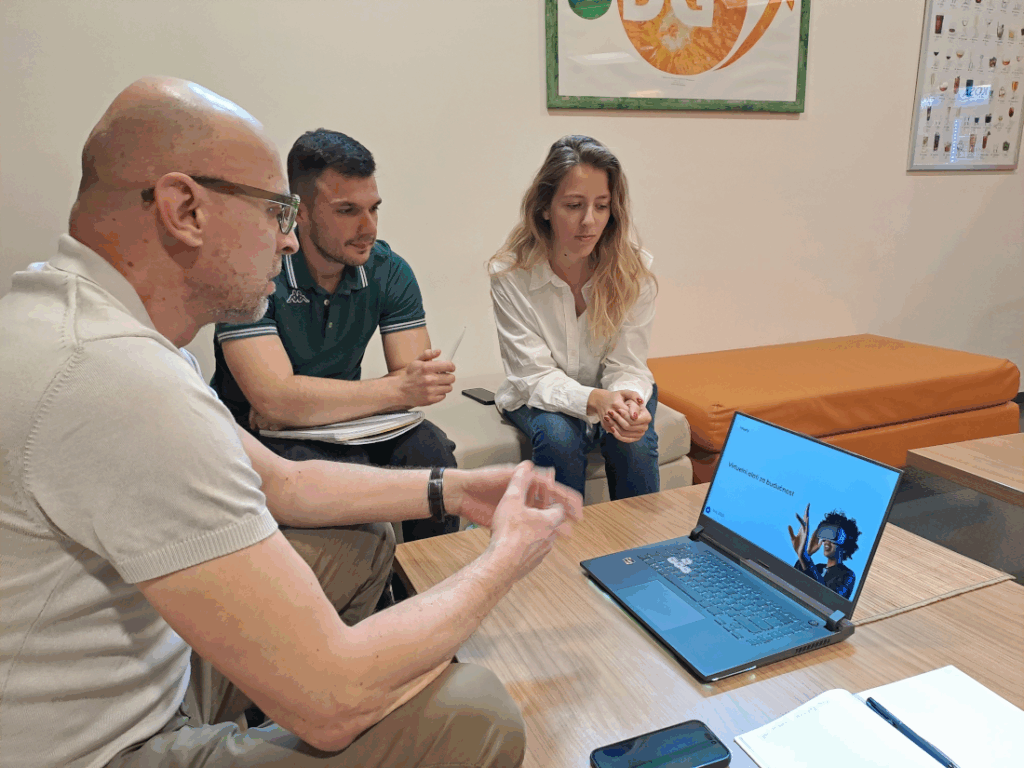
During the meeting, Mr. Mitrić presented the company’s suite of digital 3D products—such as VirtuSale, VirtuTrainPro, and VirtuEdu—that are already being deployed in global projects with partners from Europe, North America, and Asia. These platforms combine immersive virtual experiences with artificial intelligence to revolutionize how users interact with real-world scenarios in virtual environments.
We went over the Hrupty roadmap and also provided support for the HPC4SME self assessment process
The discussion with NCC Montenegro representatives—Dejan Babić, Ivan Jovović, and Tomo Popović—focused on identifying where HPC resources could support HRUPTY’s innovation roadmap, especially in areas requiring large-scale rendering, simulation, and AI model training. As part of the session, HRUPTY also completed the HPC4SME self-assessment to better understand its HPC readiness and potential for adopting advanced computing technologies. This visit marks the beginning of what we hope will become a fruitful collaboration between the startup and the national HPC competence center.
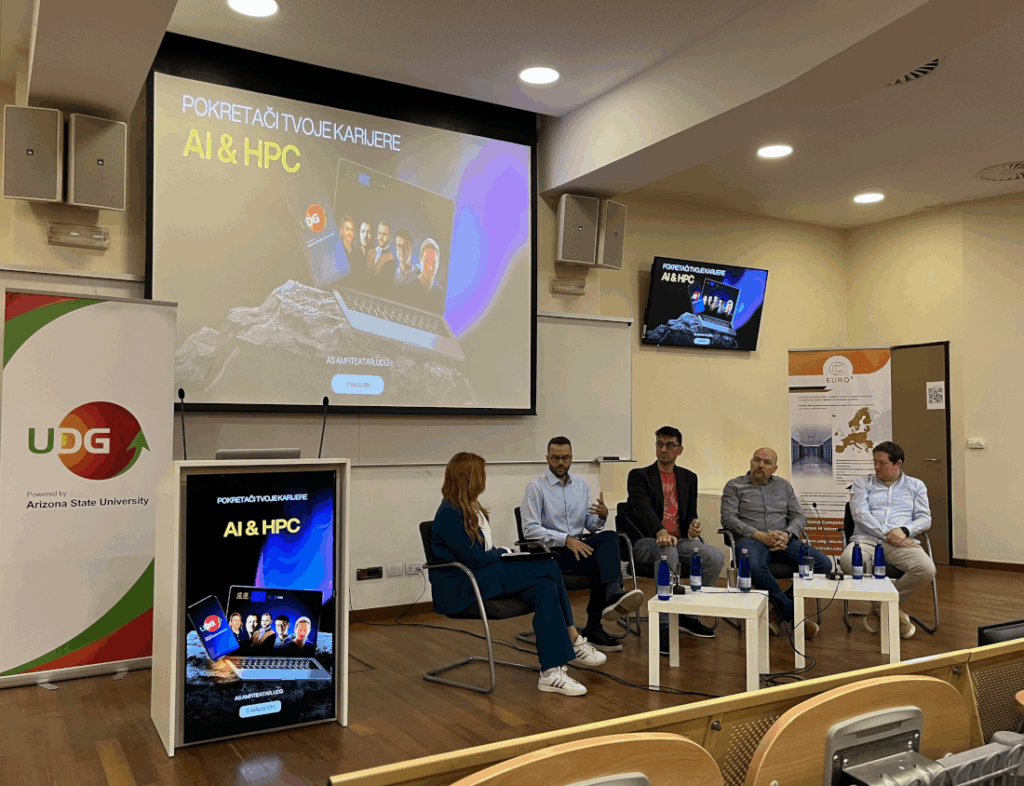
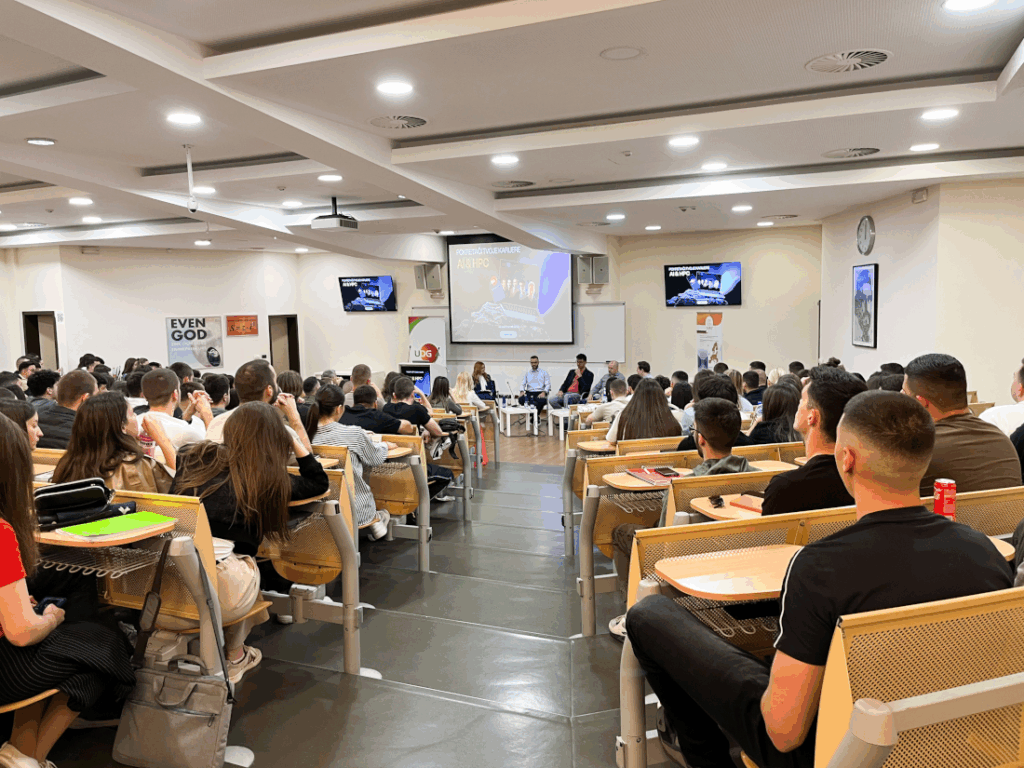
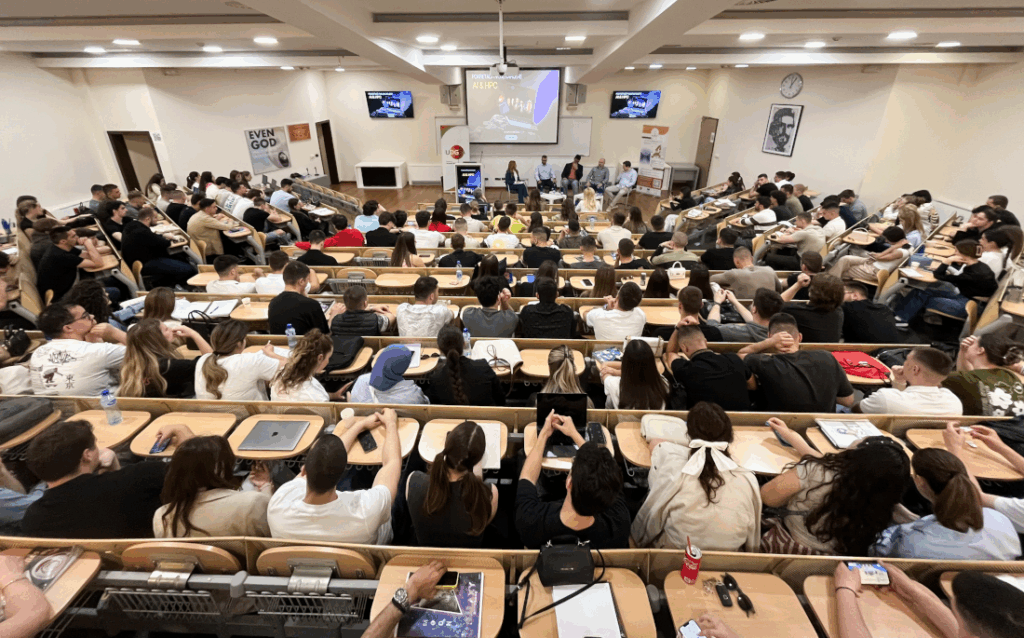
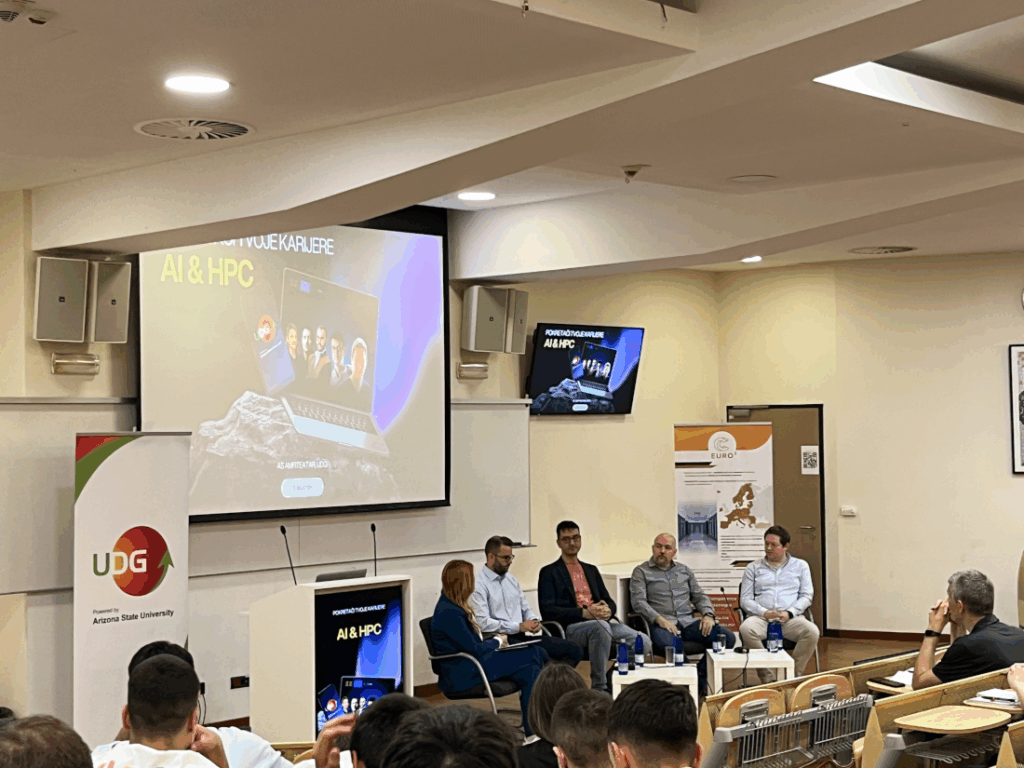
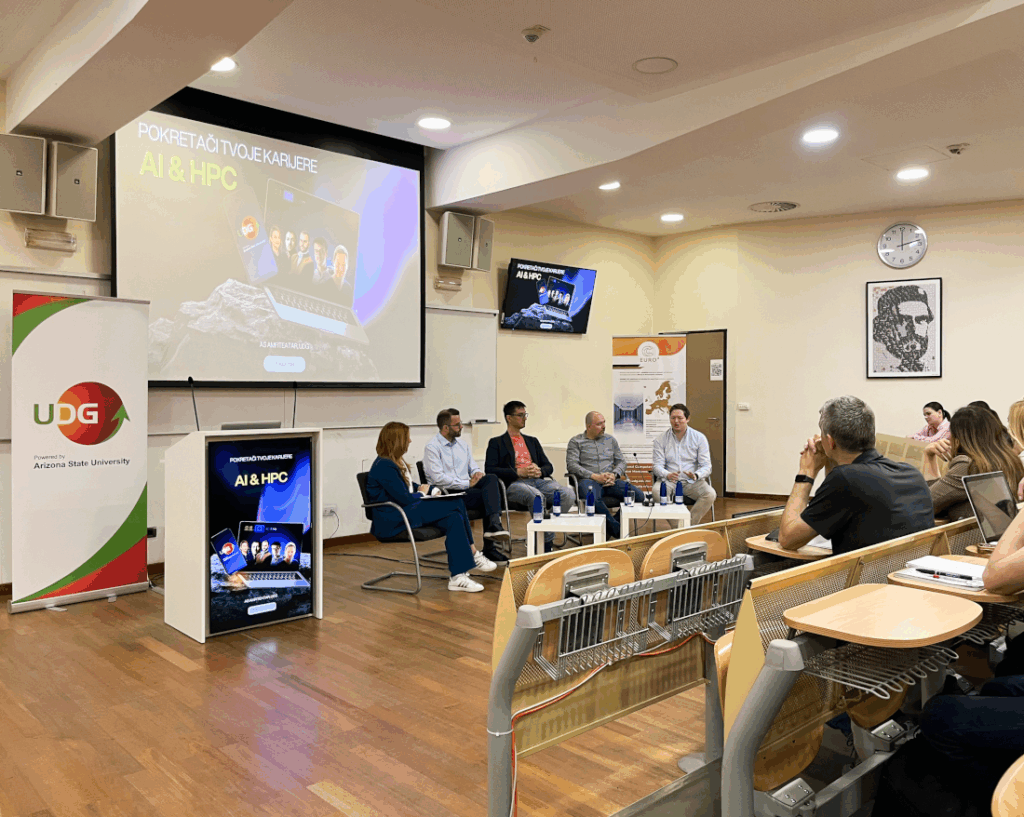
During the panel “AI and HPC: drivers of your career” held at the University of Donja Gorica as part of the EuroCC project, our alumni sent clear messages that changes do not come by themselves, but are driven by people ready to learn, take responsibility and act. At a time when the borders between the real and digital world are being erased faster than ever before, Montenegro is increasingly positioning itself as a place where ideas with global potential are born.
Panel je uključio 4 eksperta i osnivača uspješnih firmi u Crnoj Gori
In the opening address, it was pointed out that AI and HPC are not just abstract technological terms, but concrete tools that change the way we live, work, educate and communicate. Today, more than ever, the question is not whether AI will change our daily lives, but how we, as individuals and as a community, will respond to those changes. In that spirit, the panelists shared their experiences, dilemmas and visions, but also sent strong messages to students who will be the bearers of that transformation.
Veliko interesovanje kod studenata
Anton Jurovicki, CEO of Coinis, spoke about the necessity for the education system in Montenegro to make a step towards a more practical and flexible approach to learning. As he says, technologies change almost on a daily basis, and that is why it is crucial that young people do not wait for the system to prepare them, but actively search for knowledge themselves, through projects, practices and direct cooperation with industry. He especially emphasized that today’s students are the ones who already have the opportunity to shape the local technological ecosystem and make Montenegro the digital center of the region. He encouraged male and female students not to hesitate to step into these fields, because their very presence can bring a key change in the way technology shapes our society.
Preko 100 posjetilaca je ispratilo diskusiju
Milutin Pavićević, commercial director of Alicorn, with extensive experience in the video game industry, spoke about the role of artificial intelligence in creative processes. He pointed out that AI is not the enemy of creativity, but a tool that can expand the boundaries of imagination and accelerate the development of games, narratives and digital worlds. However, as he says, it is crucial that people remain at the center of that process, because AI does not understand context, emotion and purpose, and that these are values that only human consciousness can bring. Milutin pointed out the challenges faced by male and female students when entering the industry, from lack of practical experience to lack of understanding of business processes. He emphasized that employers are not only looking for technical knowledge, but the ability to learn quickly, communicate clearly and think critically. In this sense, he called on young people to develop soft skills, but also to take responsibility for personal improvement, because the industry is no longer waiting but looking for those who are ready today.
Svi učesnici panela su već ostvarili saradnju sa NCC Montenegro i UDG
Miodrag Vujković, founder of Inovative, spoke about how to overcome the fear of technology. He said resistance often comes from a lack of understanding rather than an actual inability to apply the technologies. His message was clear: “Technology should be an ally, not a threat.” Through specific examples, he explained how AI and HPC can help in market analysis, resource optimization and making better business decisions. He particularly referred to the future of business in which, as he believes, AI will play a key role, but with the active participation of people who understand the wider context. The entrepreneurs of the future, according to him, will be those who know how to combine analytics, intuition and ethics.
Stevan Šandi, the founder of BixBit, shared his experience on the development of AI products from the perspective of a domestic company. A successful AI product, in his opinion, depends not only on code but on clear purpose, understanding of users and continuous optimization. He also warned that technologies like AI and HPC require responsible behavior, especially when it comes to data security and privacy. Stevan underlined that individuals, not systems, bear the greatest responsibility for the protection of their data, as well as the data of other people. In a world where everything is connected, the boundaries of privacy are getting thinner, and trust is becoming the most valuable currency.
In the end, all the speakers agreed that the key is in education, critical thinking, openness to collaboration and willingness to constantly learn. AI and HPC are not replacing humans but opening the door to completely new ways of working and thinking. But only those who are ready to recognize these changes, adapt and take responsibility will be the leaders of the future.
As part of the EuroCC4SEE project, the participating countries — Türkiye, Serbia, Montenegro, North Macedonia, and Bosnia and Herzegovina — are collaboratively designing an SME-focused HPC training.
🎯 To ensure that the program is relevant and targeted, we are conducting a needs assessment survey with input from all partner countries.
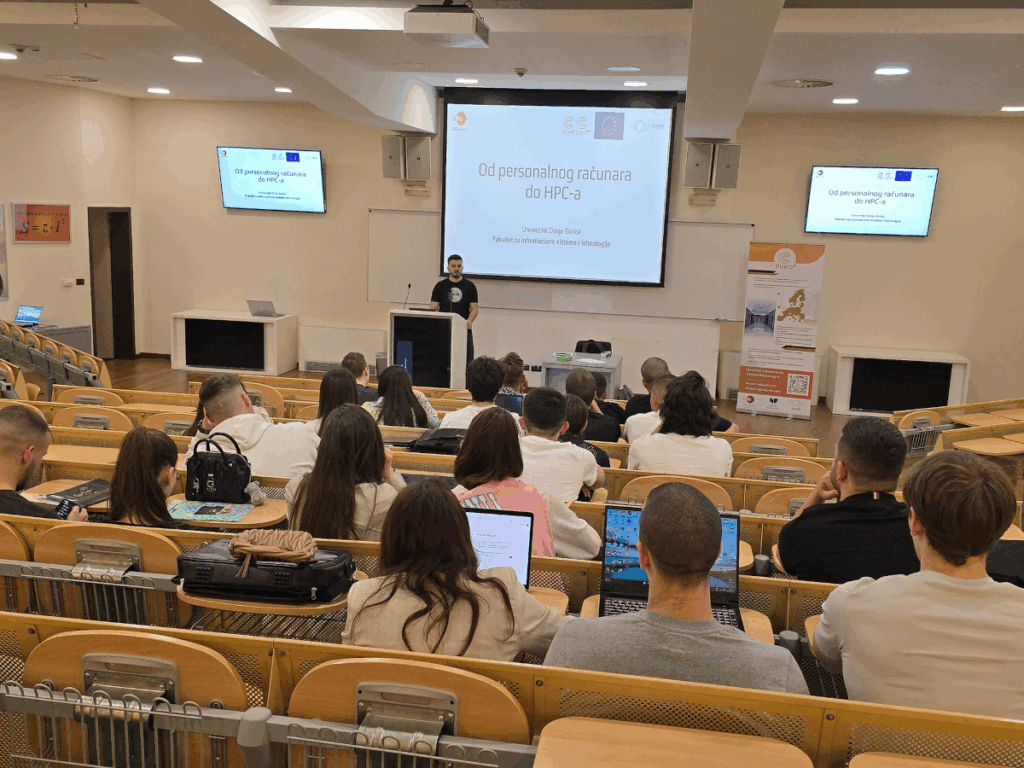
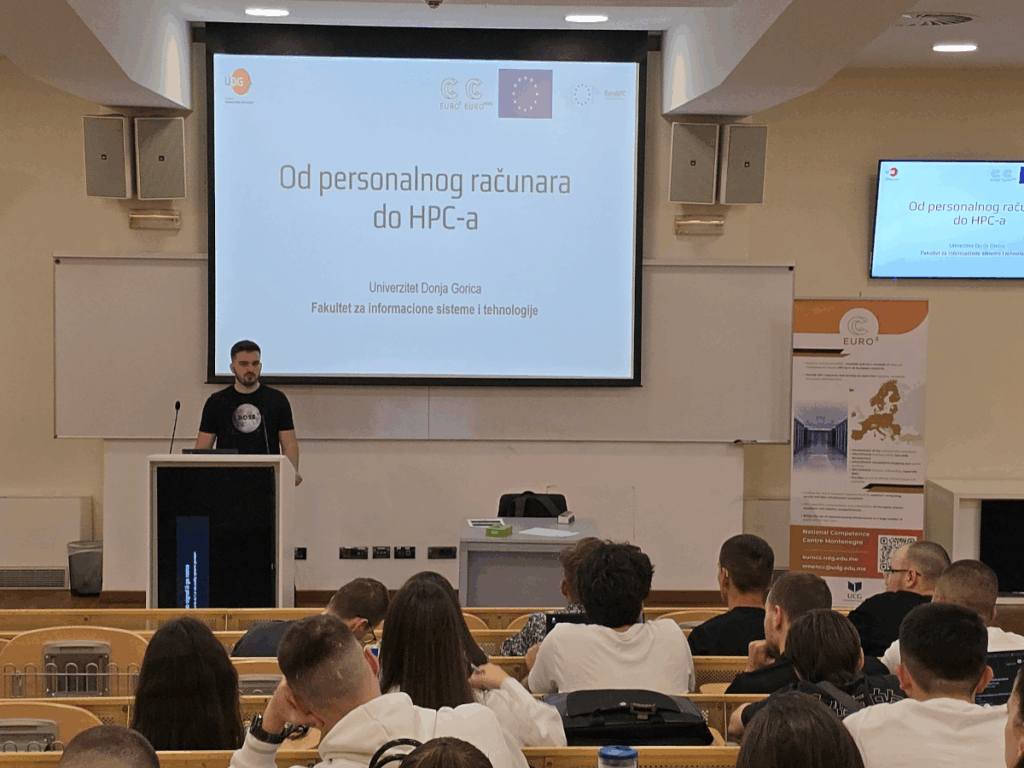
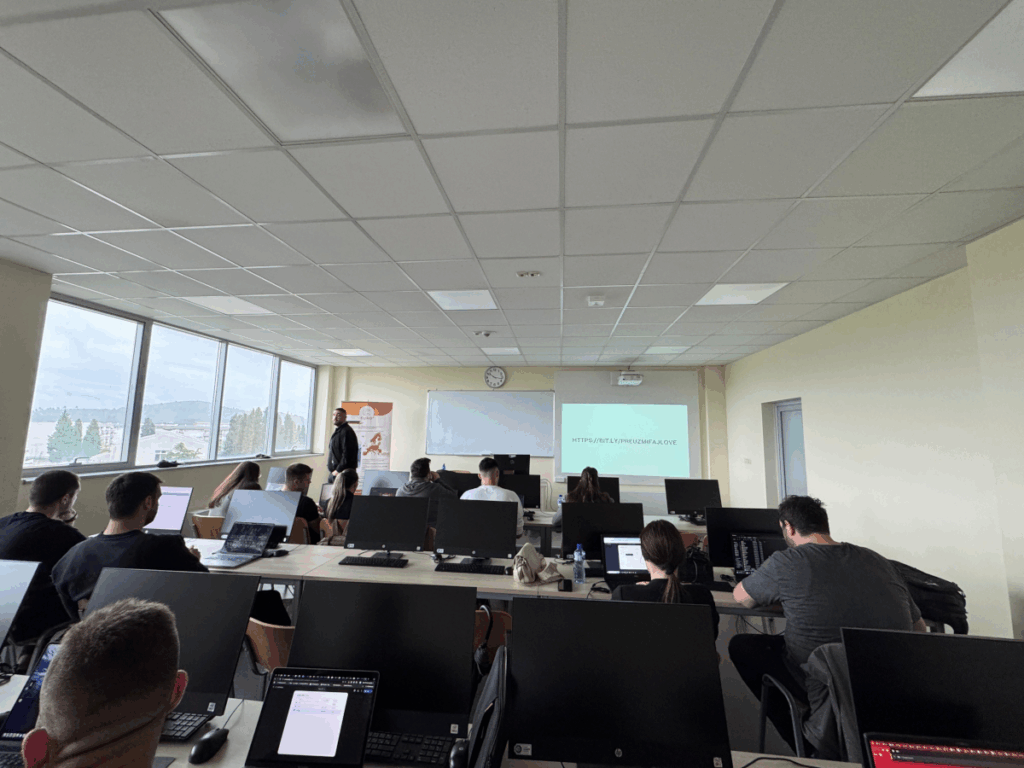
The one-day short course “From Personal Computing to HPC”, held on April 29, 2025, successfully brought together around 20 participants from academia, industry, and public institutions. The course offered a practical introduction to the evolution from everyday computing environments to high-performance computing (HPC), with a focus on real-world applications and national infrastructure.
There was around 20 attendees, mainly students from the second year of Information Systems and Electrical Engineering
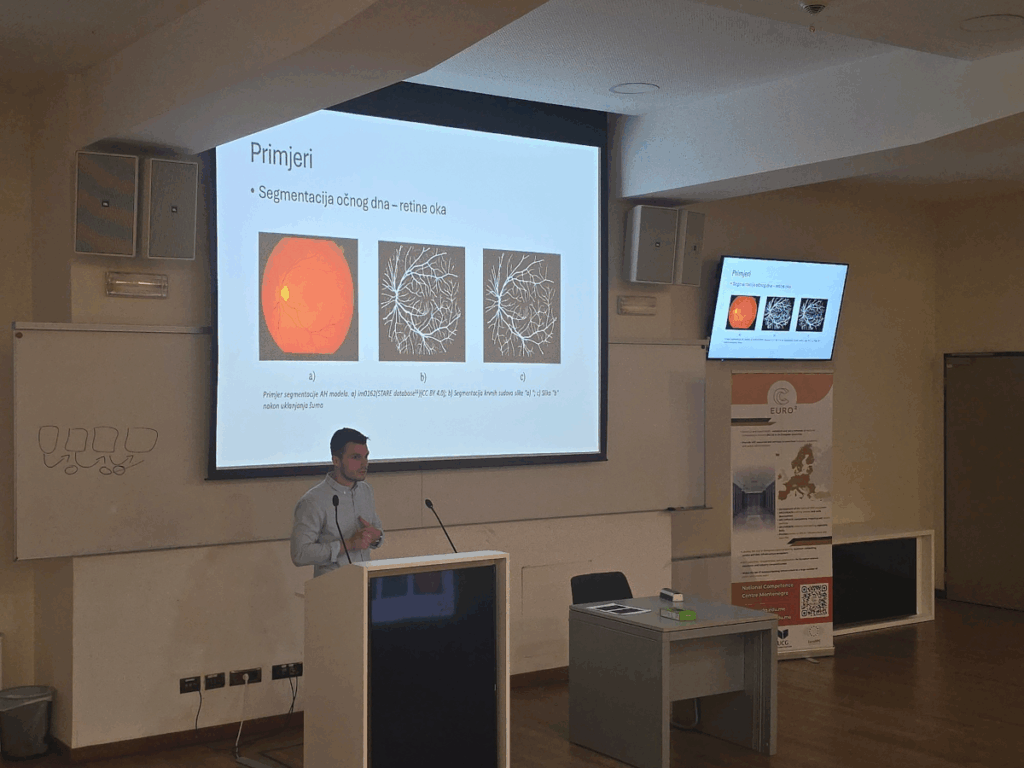
Lecturers Dejan Babić and Elvis Taruh guided attendees through key concepts, showcasing how HPC resources can be leveraged for data-intensive tasks and advanced simulations. Through interactive discussions and live demonstrations, participants gained insights into the capabilities of Montenegro’s EuroCC infrastructure and how to access and utilize HPC resources for their own research or professional needs. The course sparked meaningful exchanges and interest in further training, highlighting the growing demand for computational skills in diverse fields.
Mr. Elvis Taruh gave introduction to UDG clkuster and his experiences with moving experiments to HPC environmentMr Dejan Babic gave presentation on the use of UDG cluster for solving his research use case (AI in medicine)
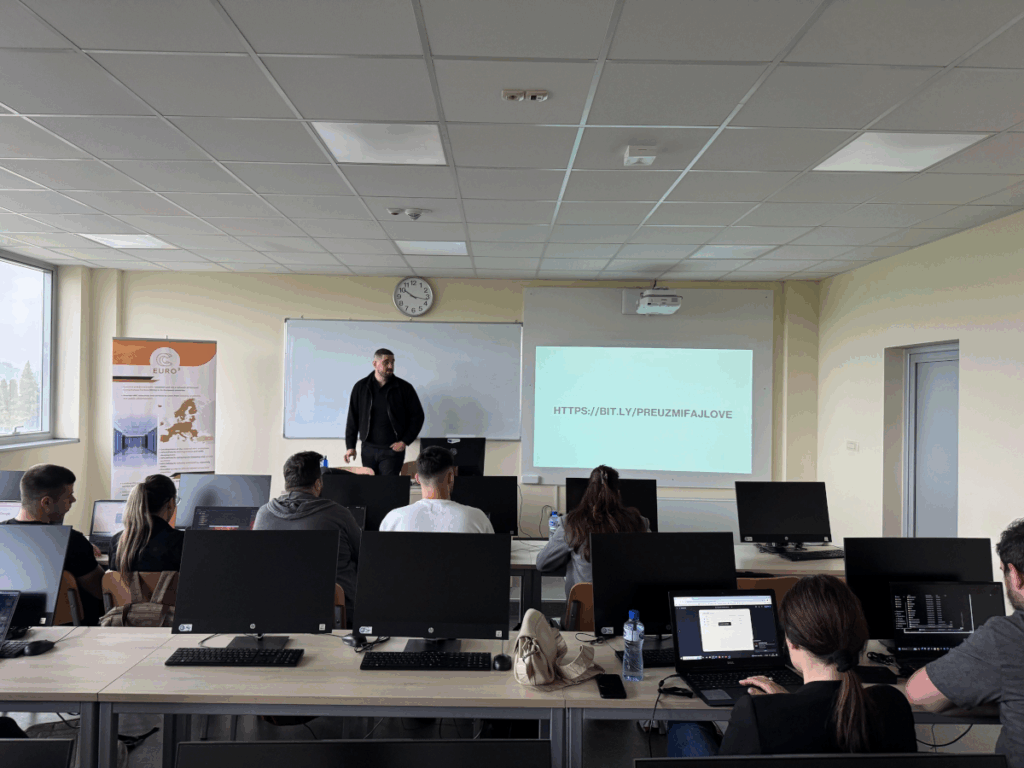
Across two focused sessions, the course covered key aspects of modern web development and machine learning integration. The first session introduced the development of dynamic web applications using Python and Flask, emphasizing structured user management, authentication systems, clean interface design, and automated email notifications to enhance functionality.
Mr. Ivan Jovovic was responsible for second part that took place on 26.4.2025.
The second session built on this foundation by integrating machine learning models for real-time image recognition within the web application. Participants worked on deploying pre-trained AI models, handling image uploads, and managing prediction outputs, with a brief overview of how high-performance computing (HPC) resources can support model training and updates.
There was about 20 people in this hands on session
Together, these sessions demonstrated a complete workflow — from backend development to AI model integration — highlighting how advanced technologies can be combined to create intelligent, scalable web solutions.
The University of Donja Gorica and NCC Montenegro are organizing a panel discussion within the hashtag#EuroCC project, a European initiative dedicated to the development of national competence centers in the field of high-performance computing, artificial intelligence and big data analysis.
The event brings together successful UDG alumni and researchers, who today lead innovative companies and projects in Montenegro and beyond. Through personal stories and practical insights, speakers will show how knowledge from AI and HPC can become key levers for career development.
Panelists:
Anton Jurovicki – CEO & Co-Founder, Coinis | The founder of the zaposli.ME platform