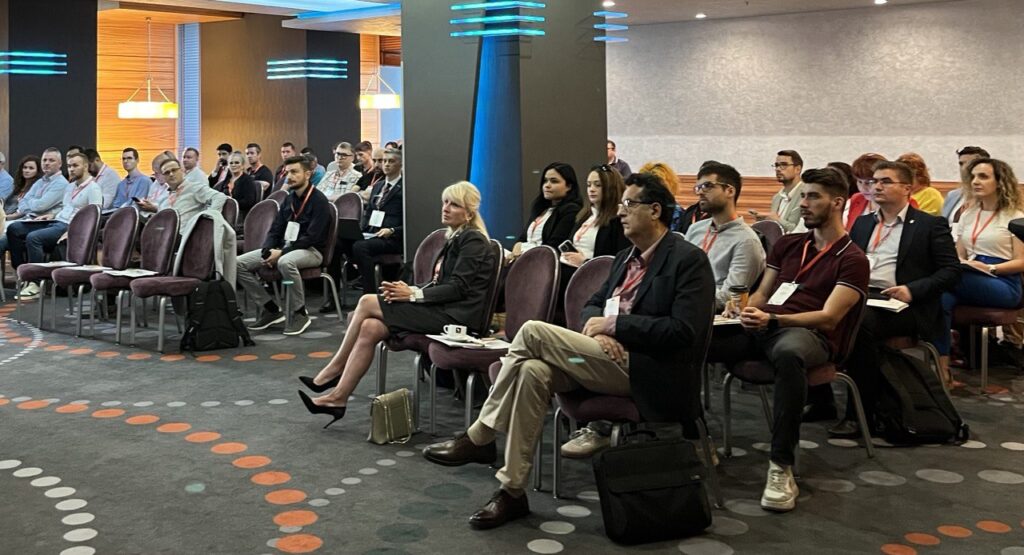
The EuroHPC Joint Undertaking is organising its first EuroHPC USER DAY!
This dissemination event will bring together EuroHPC Users and is an opportunity for users to showcase their projects, learn about different topics and deepen their understanding on the possibilities offered by the EuroHPC Joint Undertaking🌐
This onsite event will also be a great networking opportunity.
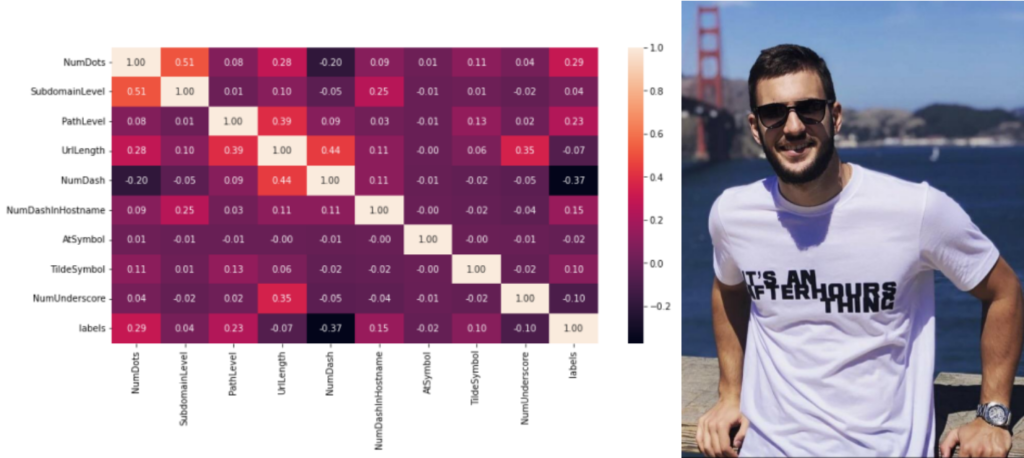
The thesis underscores the effectiveness of artificial intelligence in combating phishing attacks and underscores the importance of continued research and innovation to safeguard users and their data in the digital realm. Beyond technical aspects, the paper provides a theoretical framework on cyber security, phishing attacks, and the role of artificial intelligence in modern cyber defense. It emphasizes the ongoing need for research and improvement in this area due to the evolving nature of cyber threats. This BSc theis work was done by Mr Ivan Novakovic under the menthorship of prof. Armin Alibasic.
Mr Novakovic defended his BSc thesis on AI in cybersecurity
ABSTRACT – This thesis addresses the critical issue of detecting phishing URLs, a prevalent cyber threat, using advanced artificial intelligence techniques. It examines three models—Logistic Regression, Random Forest, and LightGBM—through rigorous analysis and real data testing to assess their effectiveness in identifying malicious URLs. The results demonstrate that these models, when properly trained and calibrated, can achieve high accuracy in predicting the maliciousness of URLs.
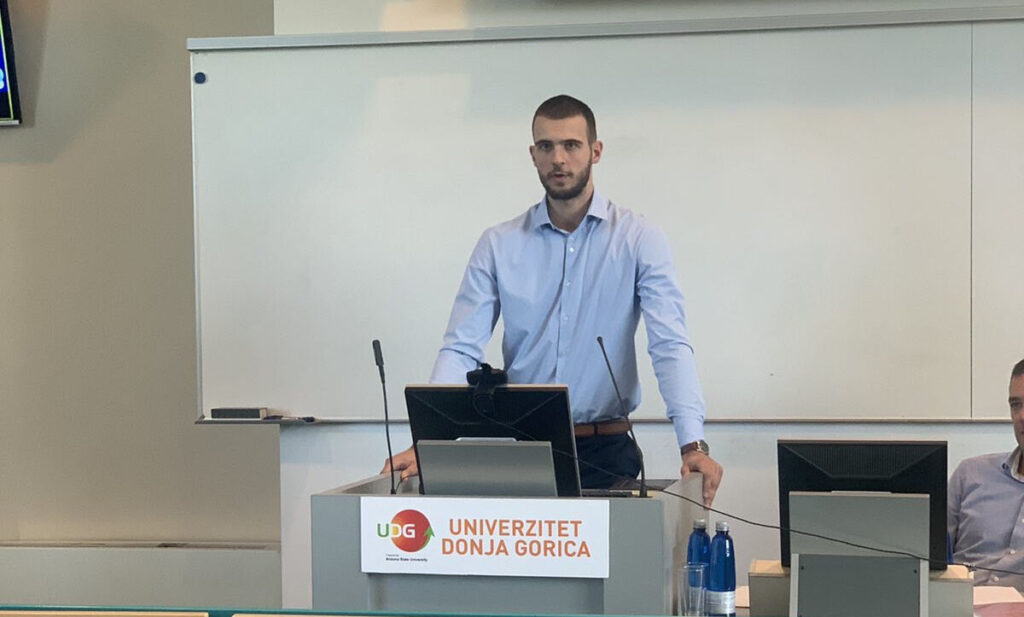
The widespread use of ChatGPT has reshaped the labor market, offering both opportunities and challenges for companies and employees across various industries. This thesis has highlighted that the most positive impacts are likely to be seen in fields like medicine, trade, and education, while sectors such as customer support, media, and administration face significant challenges. ChatGPT should be viewed as a valuable ally for enhancing daily business tasks and boosting productivity. Ths BSc theis was done by Marko Raicevic under the mentorship of prof. Armin Alibasic.
Mr Marko Raicevic defending his BSc thesis on ChatGPT and AI in business
While the current version of this technology excels in certain areas like automation, information processing speed, and knowledge base, it is not poised to replace the majority of employees in the labor market. The future of businesses hinges on how we harness and deploy ChatGPT; it can either be a chance or a threat, depending on our development and utilization of this technology.
ABSTRACT – This thesis examines the groundbreaking impact of OpenAI’s ChatGPT, a revolutionary conversational AI, on the field of natural language processing. ChatGPT’s exceptional performance and capabilities have led to widespread adoption for daily business tasks, setting new trends in the job market. The paper explores ChatGPT’s role in various branches of artificial intelligence and its implications for diverse industries, considering its potential, limitations, and ethical concerns. The research draws on relevant literature to highlight the opportunities and challenges this technology presents. While routine tasks may be automated, ChatGPT is seen as a tool to enhance productivity, emphasizing that workers will not be replaced but augmented by its usage.
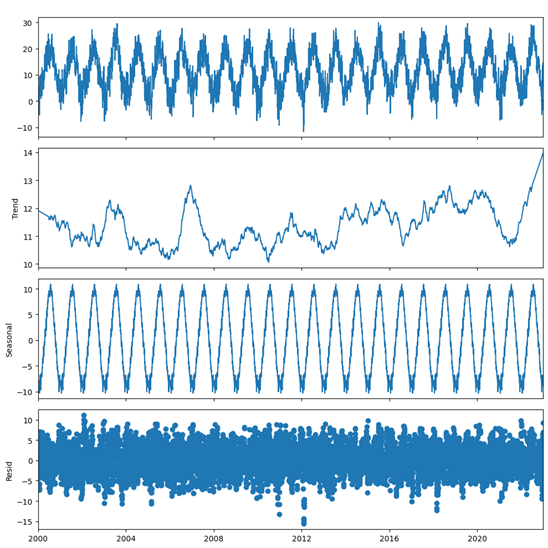
Mr Anel Gredic defended his BSc thesis titled “Time series and their application in meteorology” under mentorship of prof. Luka Filipovic. Thesis discusses the significance of time series analysis in meteorology. Time series, which are continuous records of meteorological data like temperature, precipitation, humidity, and wind speed, play a vital role in meteorological science. They are collected by specialized weather stations and satellites and are essential for meteorologists and climate researchers. Time series analysis involves using statistical methods and models to understand the variability of weather conditions over time. It helps identify seasonal patterns, trends, and extreme events, which in turn aids in weather forecasting and climate change monitoring. The application of time series analysis extends beyond meteorology, impacting various aspects of everyday life. This research has profound implications for society and various industries, improving safety, sustainability, and efficiency.
ABSTRACT – Time series are continuous sequences of meteorological data, such as temperature, precipitation, humidity, wind speed, etc., recorded over time at the same location. These data sets are often collected by specialized weather stations and satellites, and are an invaluable resource for meteorologists and climate researchers. Time series analysis is a fundamental component of meteorological science. Through the use of statistical methods, models and techniques, meteorologists can better understand the variability of weather conditions over time. This analysis enables the identification of seasonal patterns, trends and extreme events. It also helps develop models for weather forecasting and climate change monitoring. The application of time series extends to various aspects of our everyday life. Analysis of time series and their application in meteorology are crucial for understanding and predicting weather phenomena, climate change and protection against extreme weather events. This research has a profound and far-reaching impact on our society and various industries, contributing to the improvement of safety, sustainability and efficiency.
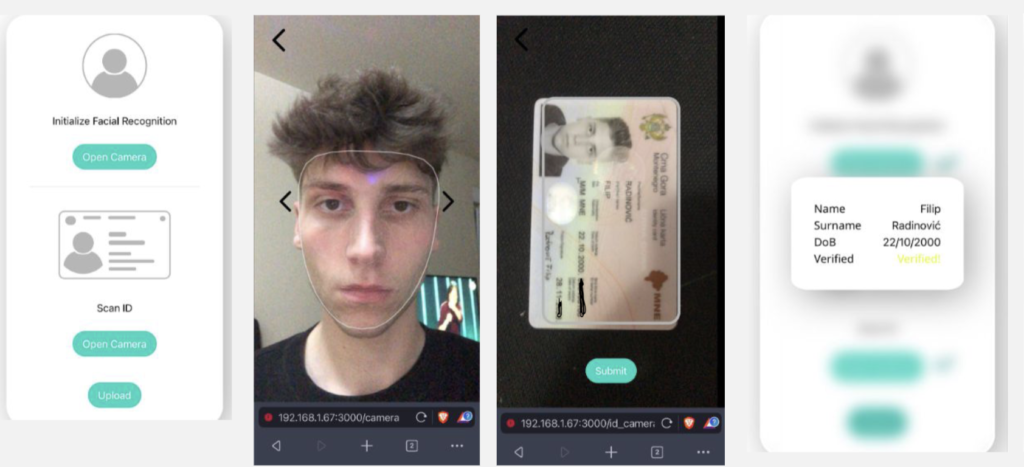
Mr Filip Radinovic defended his BSc thesis “A system for analyzing identification documents by leveraging Computer vision and Deep Learning” under co-mentorhsip of mr Stevan Cakic and prof. Tomo Popovic. The thesis focuses on the importance of identity in our digital world and how it impacts the security measures used by organizations. The main goal of the thesis is to use artificial intelligence to verify a person’s identity online. The researchers trained a model using various datasets and images, teaching it to spot even the smallest inconsistencies. The most significant discovery they made is that this model is very accurate, with a precision rate of around 90%. Additionally, the model is very efficient, taking only 3 to 4 seconds to process data, which is much faster than manual methods. Overall, the thesis highlights the potential of using AI for identity verification, making it both precise and time-saving.
The thesis focused on the use of computer vision and HPC/AI to develop tools for ID document analysis
ABSTRACT – Identity is one of the most sacred values and currencies in our digital era, affecting the working models of private and public institutions. This causes many strict security measures and protocols with a price of time, which is where this thesis’ goal arises. The approach of the thesis is leveraging artificial intelligence to accomplish identity verification over the web. The model was trained on a myriad of datasets and images, utilizing standard deep learning algorithms. By the end of training, it was able to detect the most subtle inconsistencies, making it quite precise. The biggest research finding is the potential that a model like this holds. Its precision varies around 90%, which is a good number by today’s standards and model’s testing conditions and hardware. The other aspect is time, in which the model excels. From the point when the model receives the data, the processing of it begins and it takes 3 to 4 seconds (on modest hardware). This implies superior efficiency than manual or alternative ways of accomplishing the same goal.
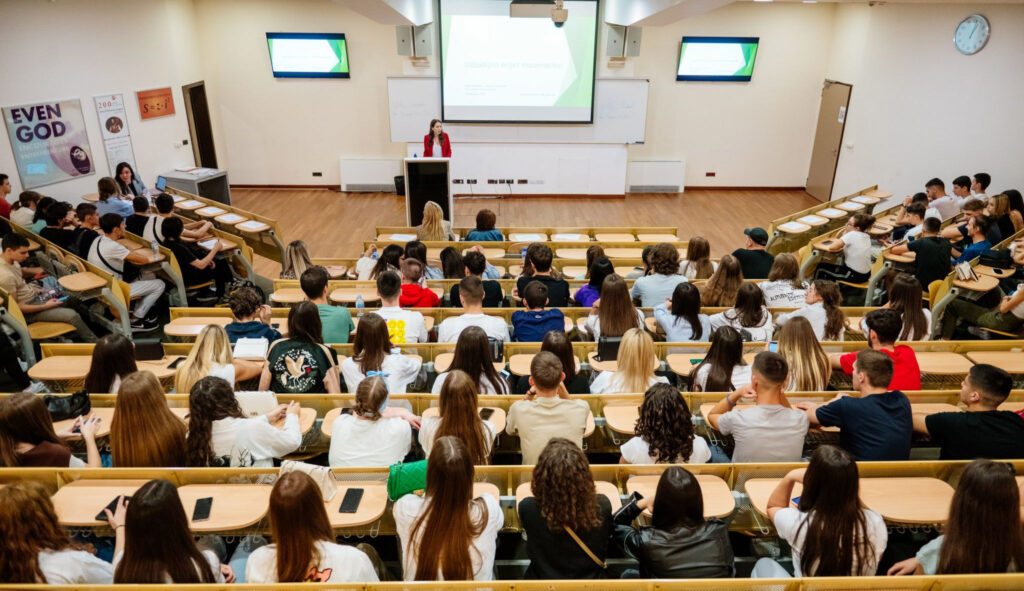
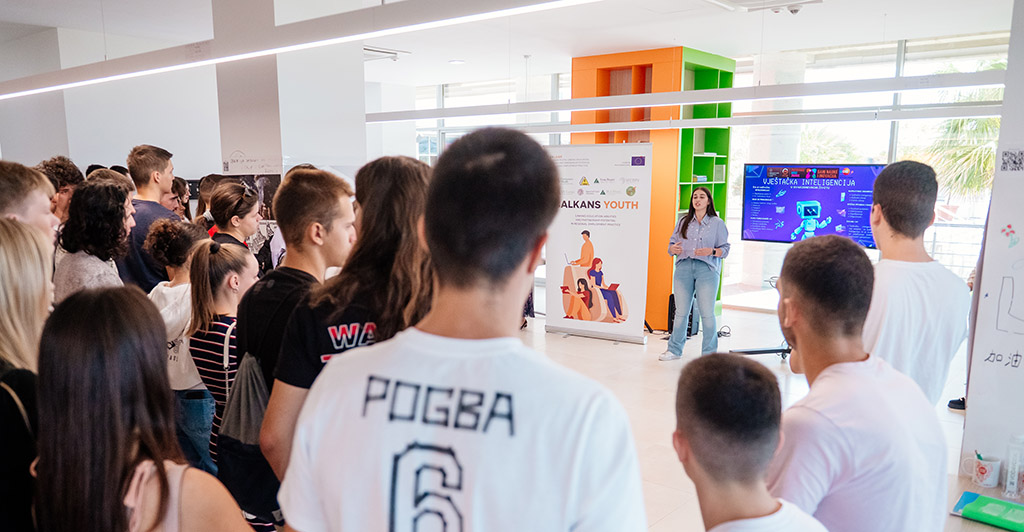
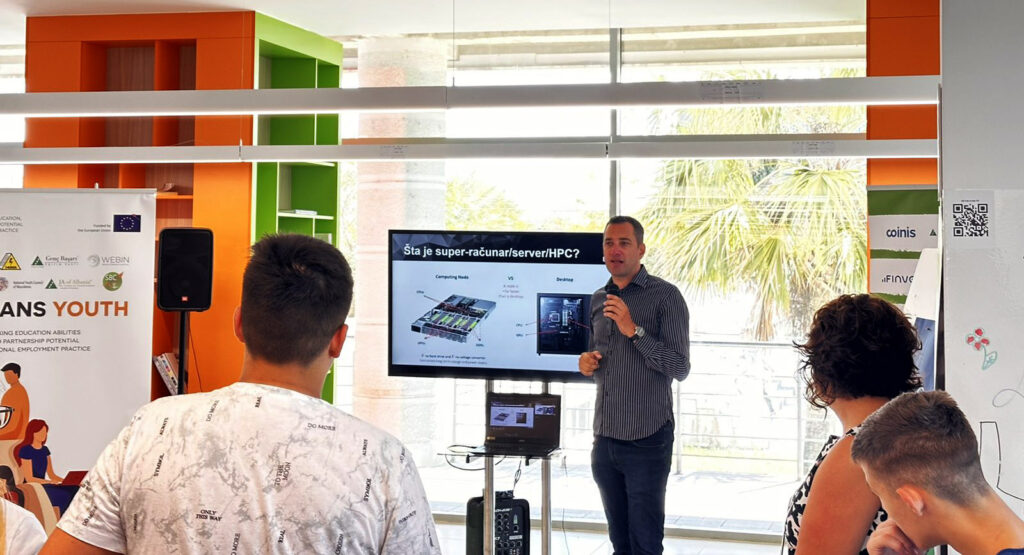
An event “STEMpower” was held at the University of Donja Gorica (UDG) as part of the “Days of Science and Innovation” Festival. Students from high schools from Podgorica, Bar and Pljevlja had the opportunity to listen to interesting lectures about supercomputers, artificial intelligence and machine learning and to visit the laboratories of the UDG.
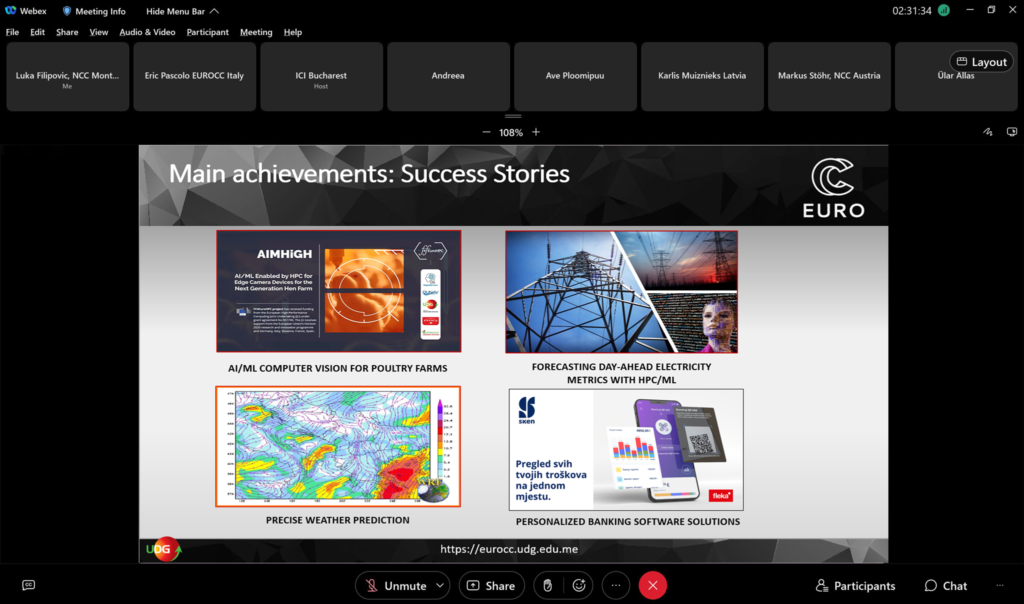
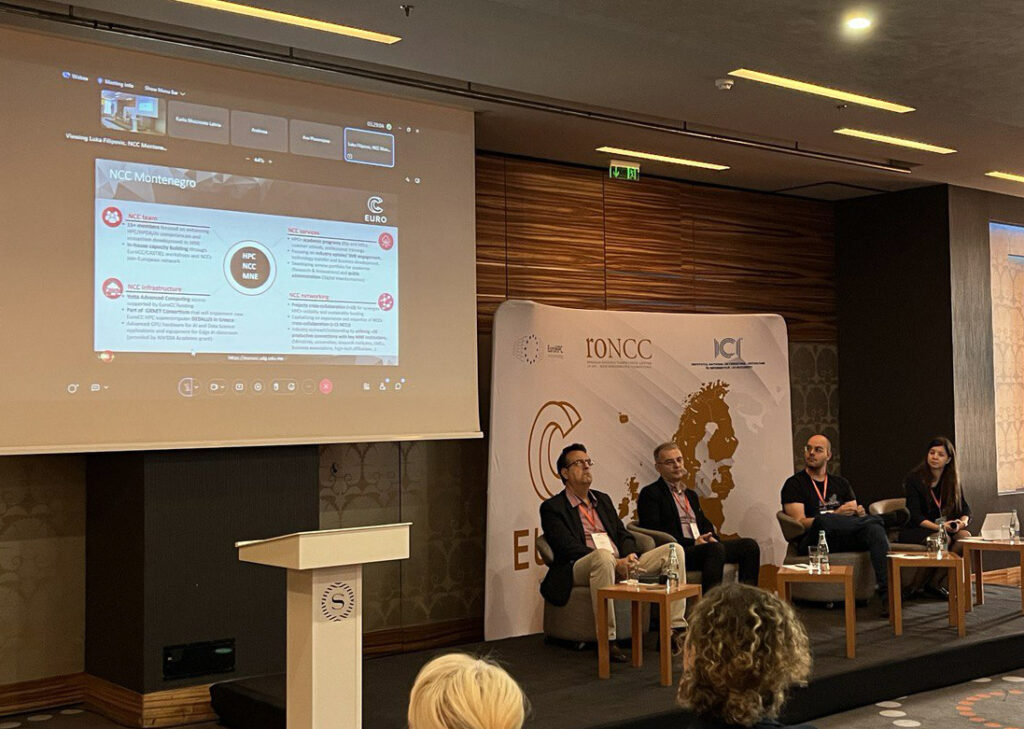
NCC Montenegro representative Luka Filipovic gave a presentation on Romanian HPC event “HPC and Al Technologies: Accelerating Innovation through collaboration”. Luka spoke on “Empowering Breakthroughs through HPC Collaboration” panel and gave presentation about NCC activities and Montenegrin success stories.