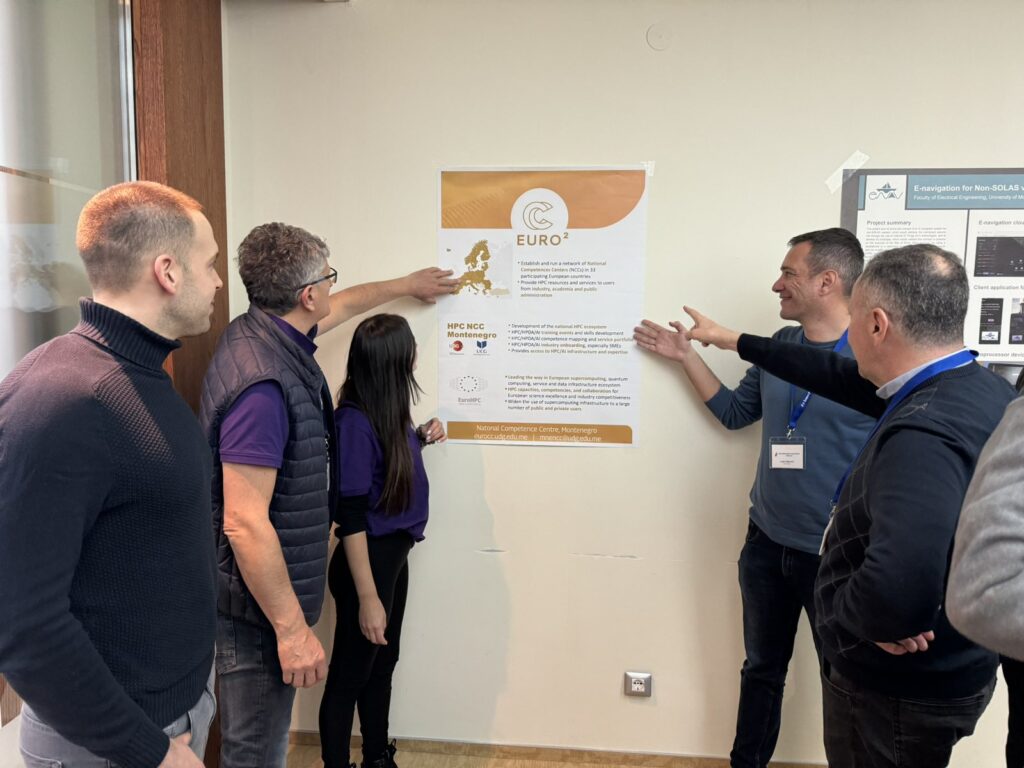
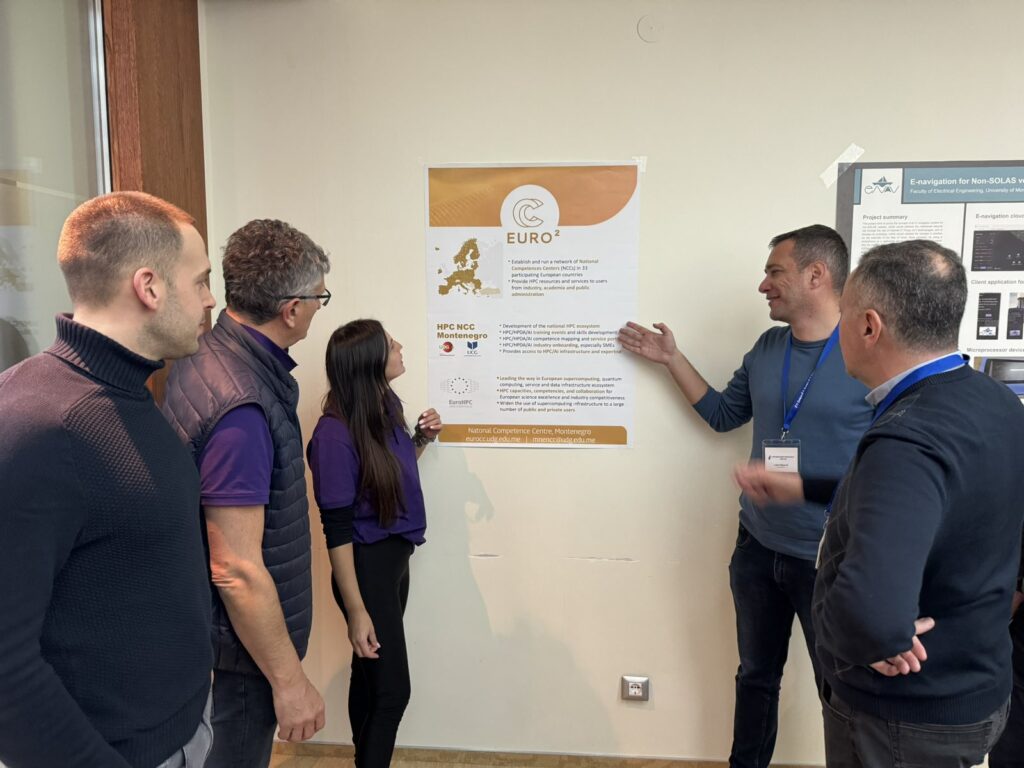
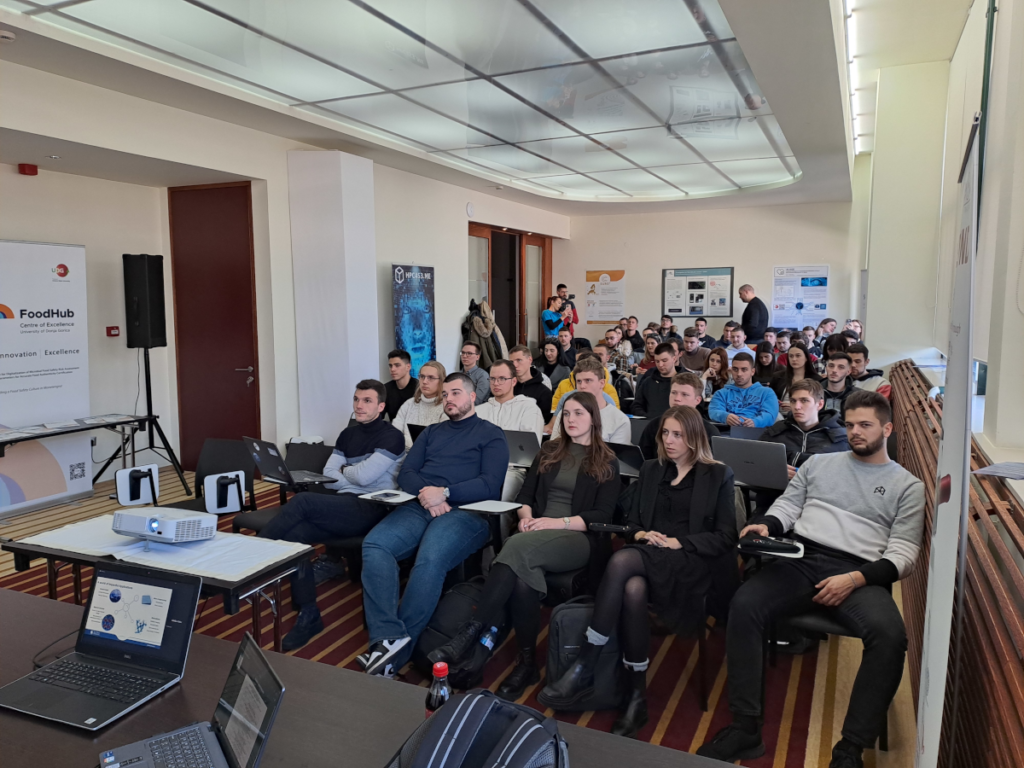
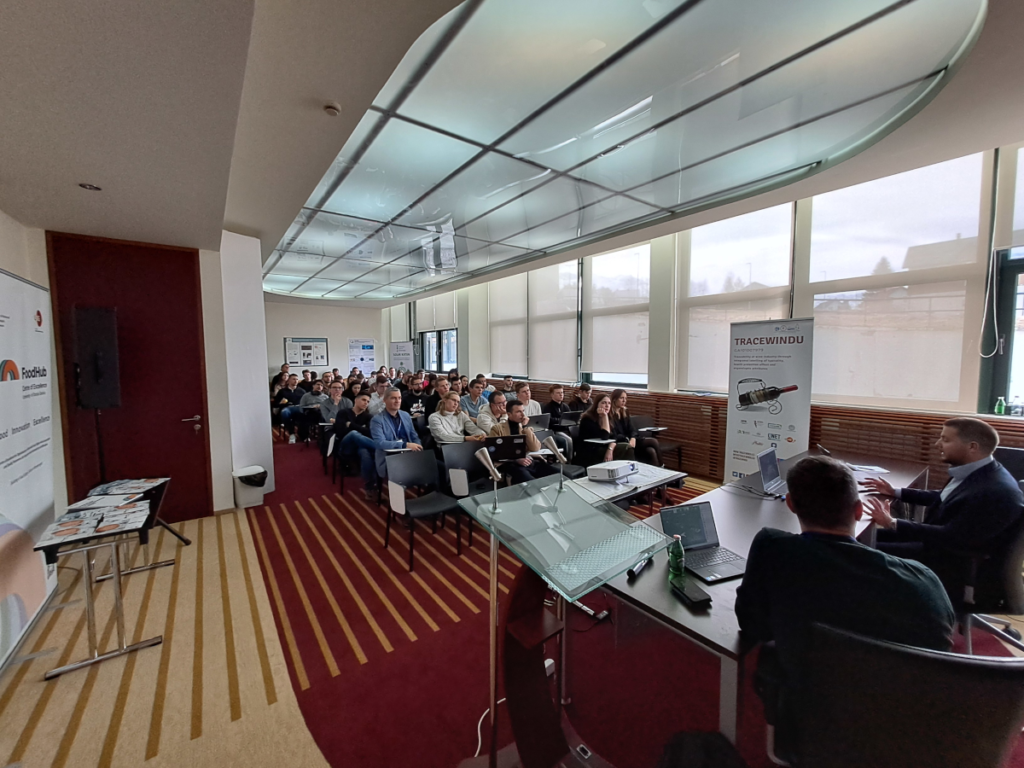
EUROCC2 project was presented at the 28th IEEE IT2024 Conference that took place 21-24 Feb 2024 in Zabljak, Montenegro. The presentation took place in a dedicated poster section for project presentations. We had a chance to talk to conference attendees, our colleauges from Montenegro and abroad. Also, the next day we had a large group of students participating in the EuroCC Workshop on HPC and Industry Applications, where we had a chance to discuss the project posters and take their attention to EUROCC and related projects such as HPC4S3ME, AI-AGE and others.
EUROCC2 featured in the poster section dedicated to project presentationsMs Bojana Malisic and dr Luka Filipovic were presenting EUROCC2 projectAttendance at the EUROCC workshop on HPC and Industry Applications
During 28th international IT IEEE conference in Zabljak, Montenegro, the EuroCC2 HPC/HPDA/AI Workshop gathered together presenters from 6 NCCs and 5 companies providing a brief overview on more than 20 PoCs, use cases, and success stories, driven by computationally-intensive demand and innovative application portfolio. The workshop was attended by almost 140 participants from academia and industry (up to 60 joining virtually and another 80 in person), who had an opportunity to gain valuable insights and deepen their understanding of HPC benefits within industrial, interdisciplinary and international context.
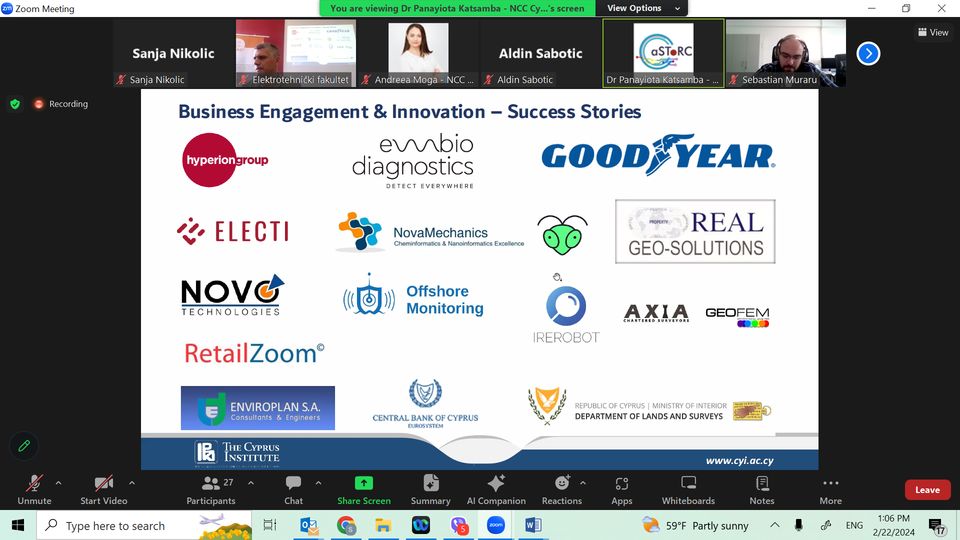
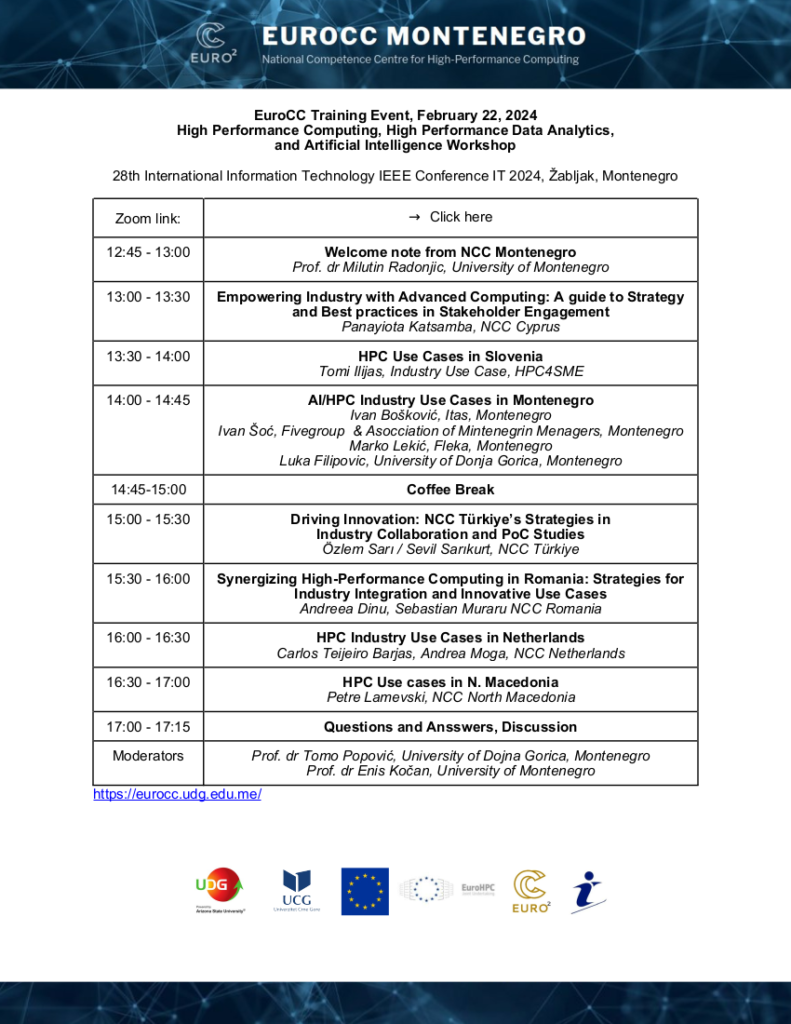
The workshop was opened by Panayiota Katsamba’s presentation on NCC Cyprus’ strategic framework for industry steering, emphasizing the importance of cohesive pitching and managing companies’ expectations through the industry scout concept which resulted in numerous success stories.
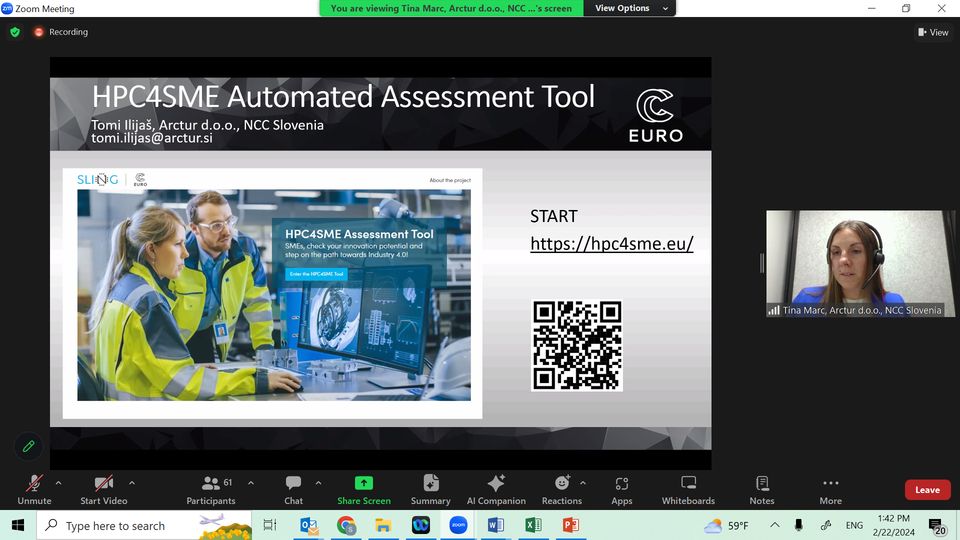
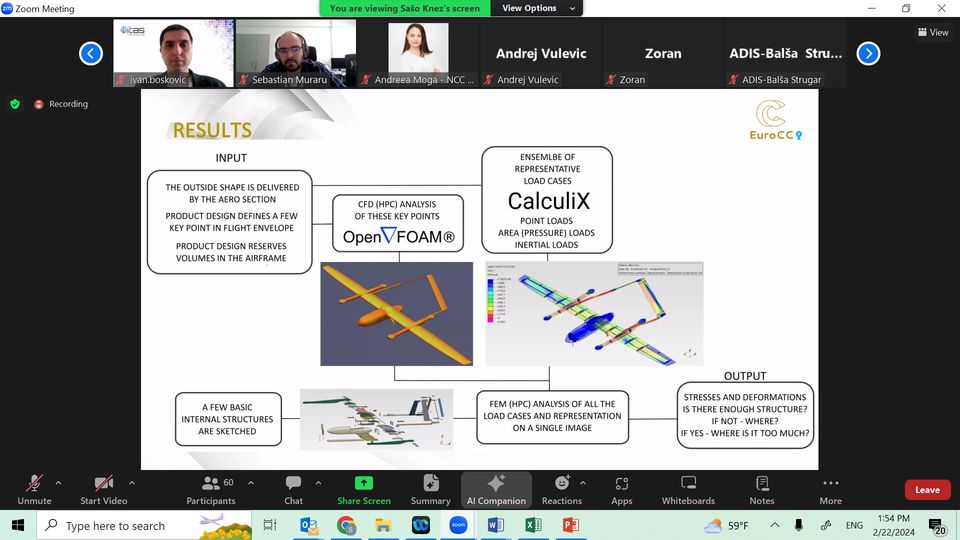
Colleagues from Slovenia, Mrs Tina Crnigoj Marc from Arctur d.o.o. presented an HPC4SME automated tool designed for assessing Cloud HPC readiness among the companies, while Saso Knez, CEO of AFormX, shared insights on advanced aviation projects, talking about challenges on light aircraft configuration that were successfully addressed by HPC resources and simulations.
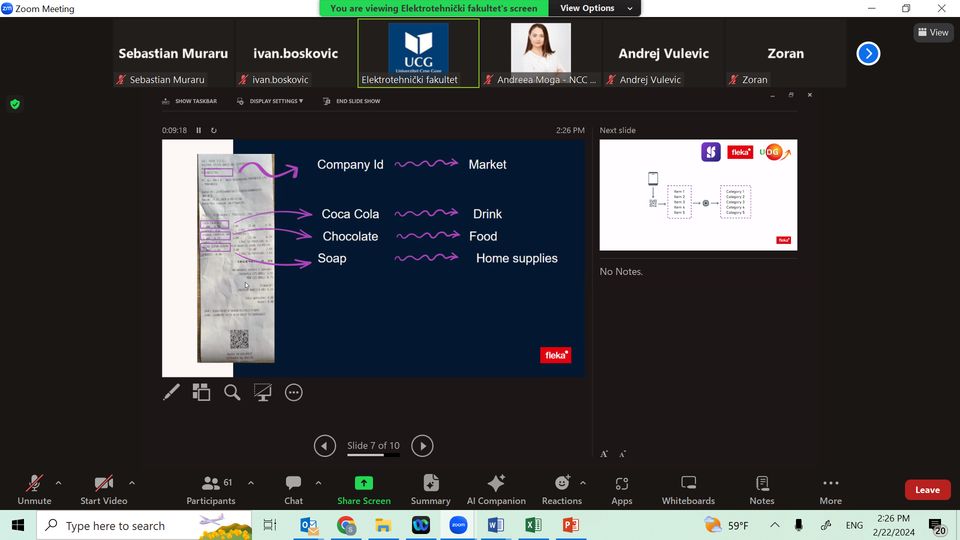
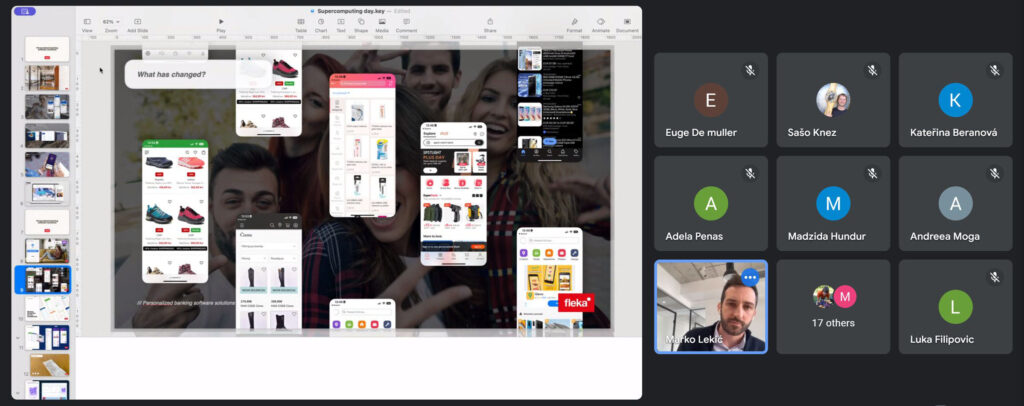
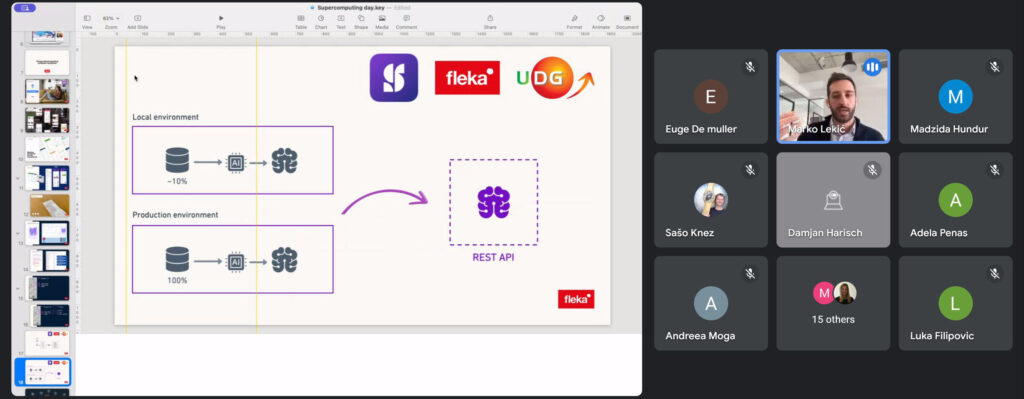
Three Montenegrin IT companies presented their AI-driven or HPC-supported industry cases. Ivan Boskovic, CEO of ITAS introduced us to their software solutions and business perspective in integrating LegalTech and FinTech opportunities. Ivan Soc, CEO of FiveGroup, discussed about EdTech tools and services, and ambitions to enhance classroom learning through VR/AR/Gaming-based experiences.. Marko Lekic, CTO of Fleka presented personalized banking software solutions, SKEN App – personal expense tracker, and ML/NLP-based classification algorithm developed with the support of HPC expert Luka Filipovic from NCC Montenegro, which enables automatic categorization of consumer transactions into spending categories.
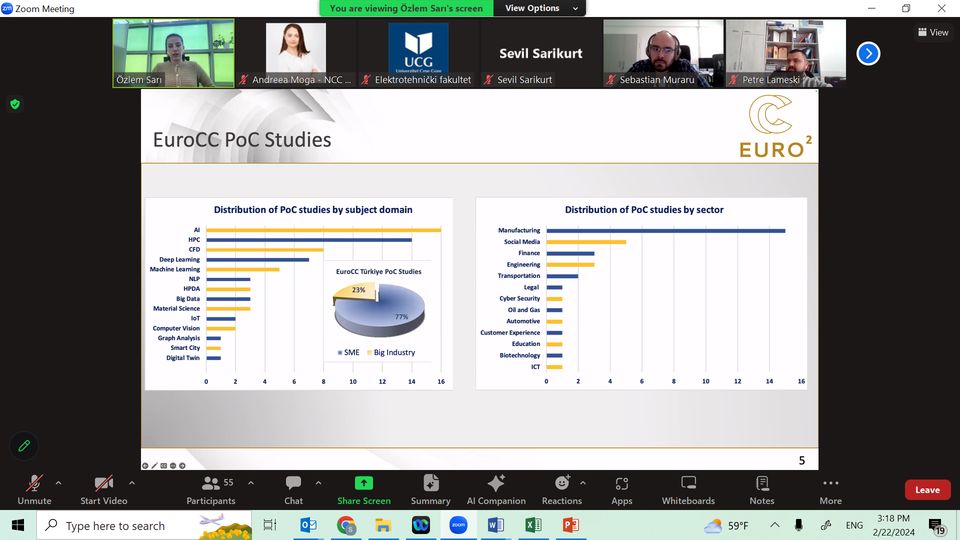
At the beginning of the second part of the workshop, Ozlem Sari demonstrated NCC Turkey’s industry excellence, through well-structured industry interaction, PoC evaluation and HPC onboarding process, resulting in 12 Success Stories in various technology and industry domains.
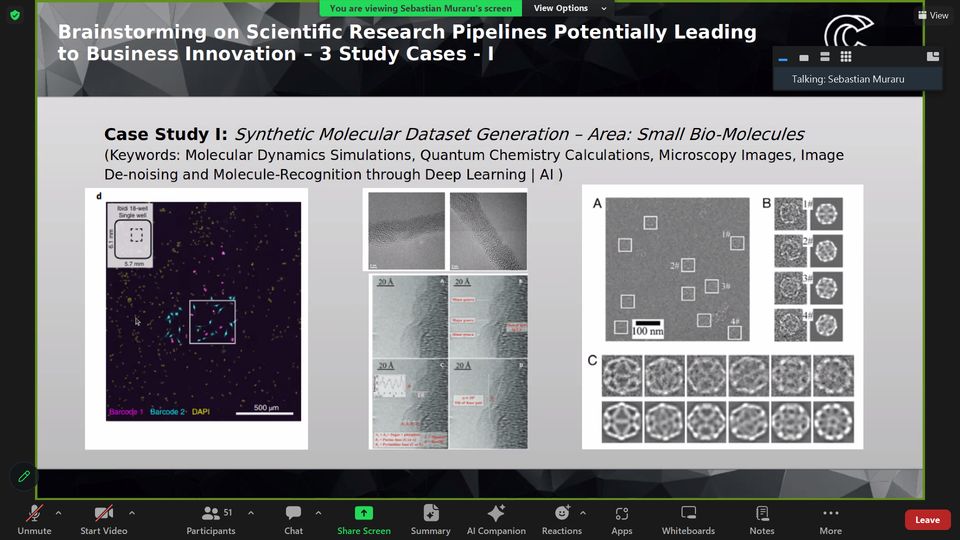
Andreea Dinu and Sebastian Murau from Romania shared their NCC experience on opportunities and challenges in fostering productive industry interaction, elaborating further on use cases and study cases. Following them, Andreea Moga from the Netherlands successfully presented their NCC industry services, engagement and customer journey process, followed by inspirational PoC/use cases including the development of AI models based on satellite data for soil nutrient monitoring/regenerative agriculture or AI models based on drone data to calculate oil spills surface and thickness.
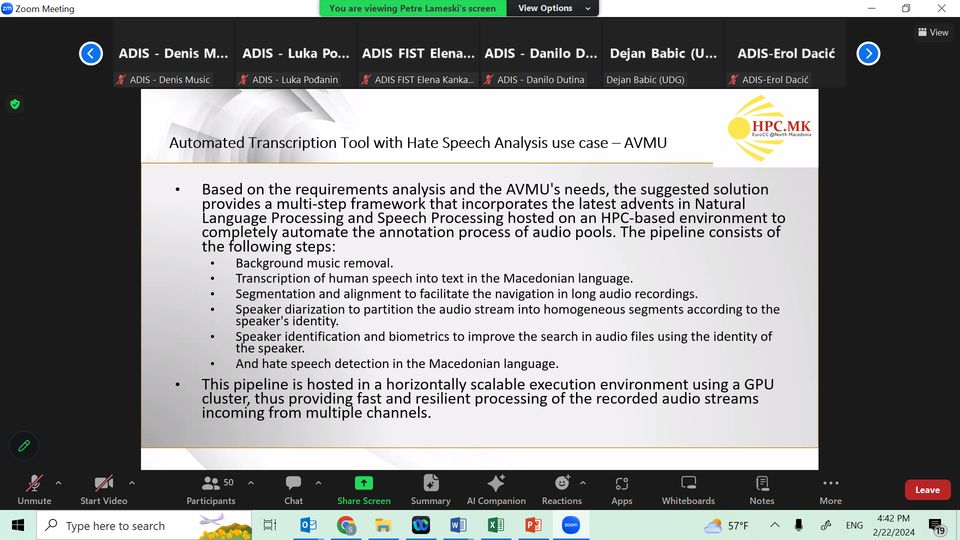
The workshop concluded with Petre Lameski’s presentation, highlighting HPC use cases that promote industry collaboration within NCC North Macedonia: Scalable Electricity Meters Data Processing with 42Dynamics, Voucher Generation case with Interctec and Automated Transcription Tool with Hate Speech Analysis use case for Agency for Audio ad Audiovisual Media Services.
We are pleased to inform you that the Program of the 28th IT Conference and the schedule of sections are posted on the site within the links “Conference program” and “Sections schedule”. You can access it on the conference’s website.
We would like to inform you that you can follow the work of the Conference via a videoconference link. Authors of papers will be able to present their papers using the ZOOM video conferencing system. Access links are posted on the Conference website, within the links “Section schedule” and “Conference program”. More detailed information is published on the website or you can get it from the technical secretary at it@ucg.ac.me.
For a user to use the ZOOM video conferencing system, the computer must have:
Representatives from NCC Cyprus will actively participate in the upcoming 28th IT IEEE scientific and professional conference in Zabljak, Montenegro, contributing with their industry engagement and AI/ML expertize.
Dr. Panayiota Katsamba, Services to and Interaction with Industry Task Leader, will share valuable insights at the HPC industry workshop with her presentation titled “Empowering Industry with Advanced Computing: A Guide to Strategy and Best Practices in Stakeholder Engagement.” Her presentation will focus on utilizing HPC infrastructure to empower industries competitiveness and business innovations.
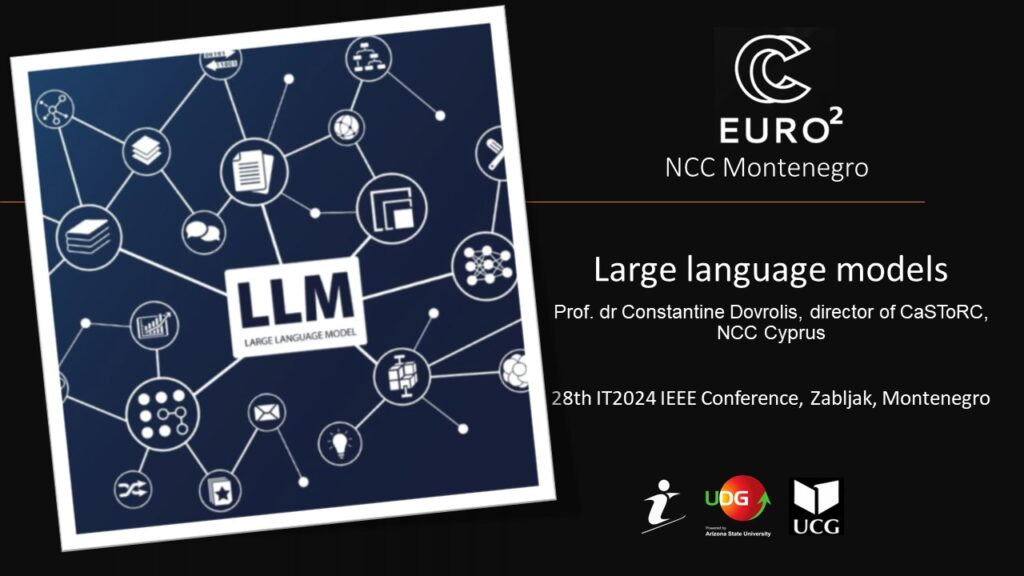
Dr. Constantine Dovrolis, Director of the Center for Computational Science and Technology (CaSToRC) at The Cyprus Institute (CyI), will visit NCC Montenegro and deliver a captivating academic lecture on the Large Language Models (LLMs). He will further lend his expertise by participating in the AI panel at the conference, fostering valuable discussions on the current state and future of AI/LLM technology.
The participation at the Montenegrin conference, along with the on-site visit by the representative of Cypriot team, signifies continued collaboration and twinning activities between NCCs, focusing on knowledge sharing and best practice exchange regarding industry interaction and AI training portfolio supported by European HPC resources and opportunities.
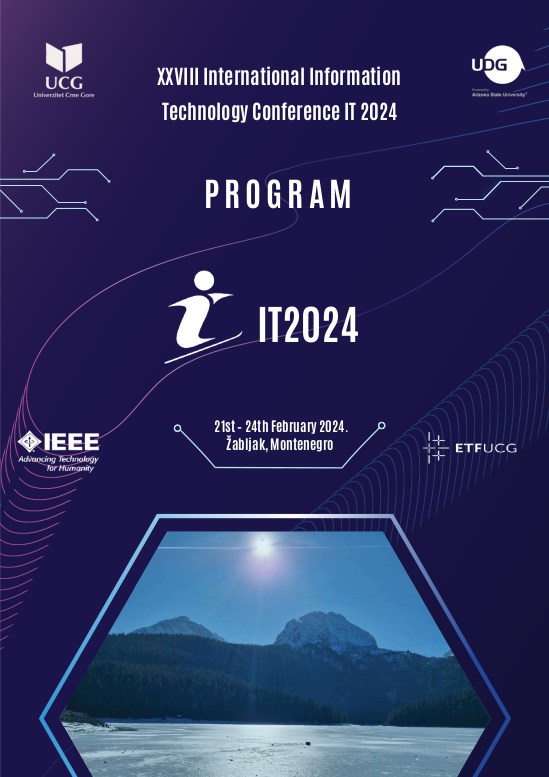
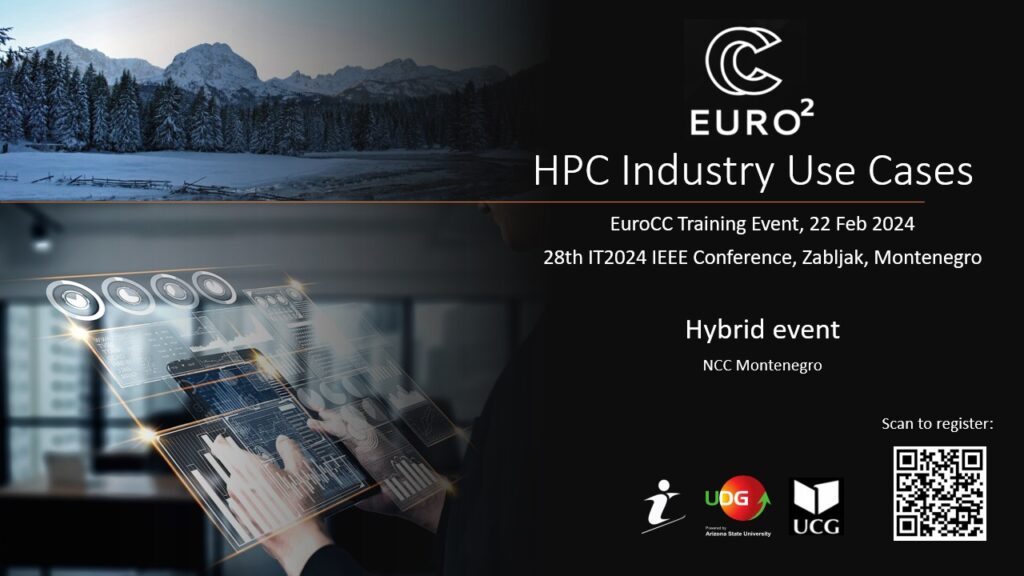
Registration is open for the upcoming EuroCC Training Event – High Performance Computing and Industry Applications. This event is organized in alignment with the 28th International Information Technology IEEE Conference IT 2024, traditionally taking place in Žabljak, Montenegro. The workshop is organized in hybrid mode. EuroCC NCC Montenegro is organizing this event in collaboration with NCCs from Cyprus, Slovenia, Turkiye, Romania, Netherlands, and North Macedonia. You can register for the event by clicking on the image below or at this link.
Click on image to register
You can access the draft version of the agenda here. Please note that the Zoom link is made available in the latest Agenda.
Zoom link available here. The workshop starts on 12:45, 22 Feb 2024.
NCC Montenegro and NCC Spain, collaborators at the EuroCC project, organized the “HPC and AI Workshop” designed for academia, scholars, researchers who are interested in learning how to use Artificial Intelligence and High-performance Computing in real case scenarios. This has been achieved through five lectures featuring educators from Spain and Montenegro presenting successful case studies:
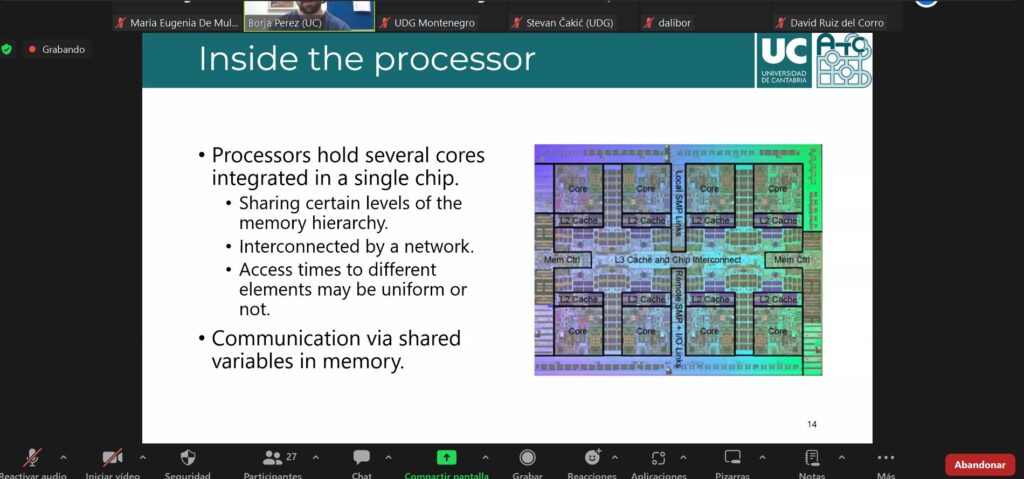
Borja Perez Pavon, from Universidad de Cantabria, talked about HPC systems and highlighted they are available for different research projects by accessing various free access calls.
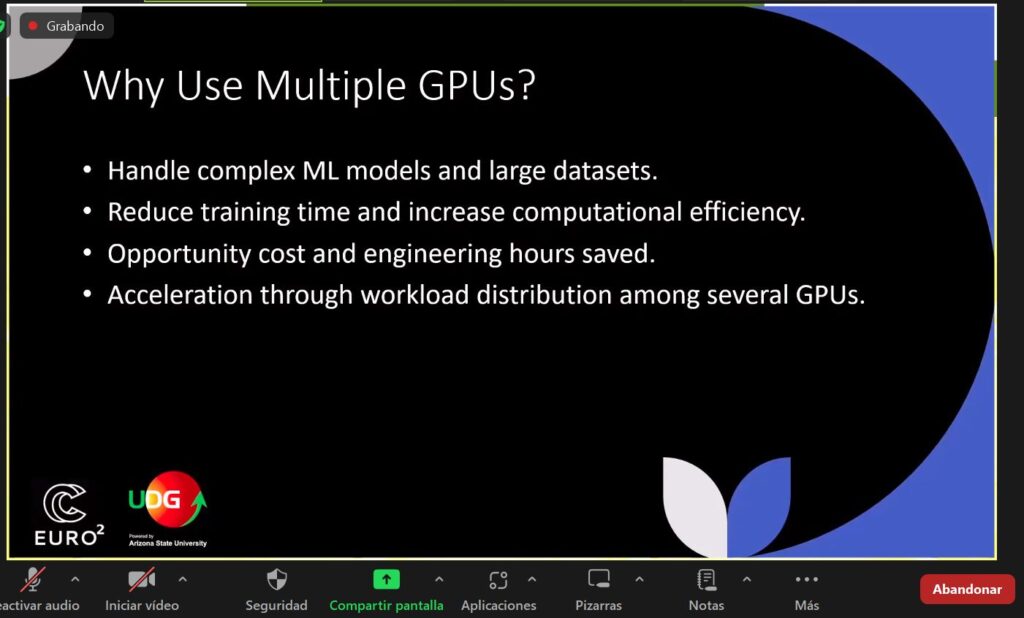
Ivan Jovovic, AI researcher and PhD candidate at the University of Donja Gorica explained from the use of multiple GPUs to handle large data sets to the cons and pros of data parallelism.
Stevan Cakic is a PhD student at the University of Donja Gorica, talked about the application of AI and HPC in agriculture, delving into deep learning and high-performance computing.
Ahmad Al Mughrabi, active researcher and multidisciplinary predoctoral scholar at the Universitat de Barcelona, discussed the applications of HPC and generative AI, acknowledging certain challenges that need consideration in the implementation of HPC in real-case scenarios.
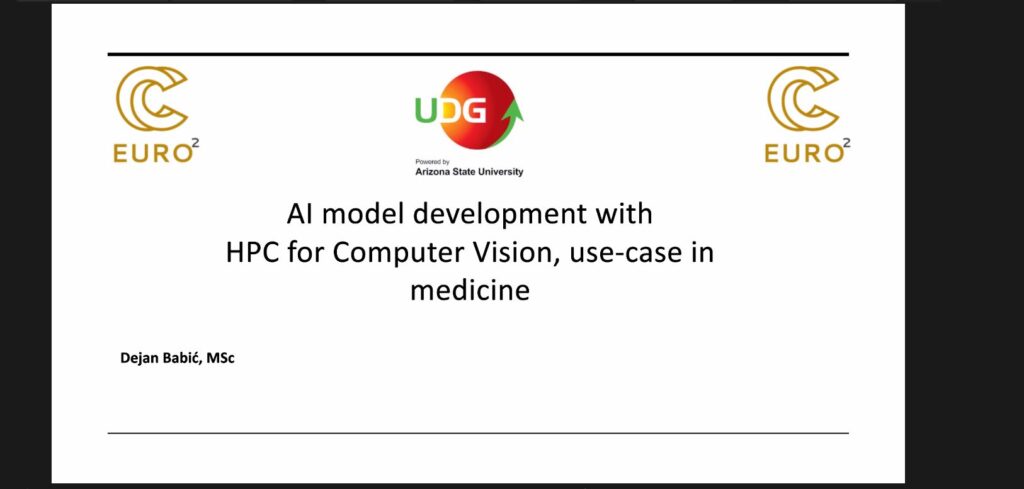
Dejan Babic, a PhD candidate at the University of Donja Gorica presented the concept AI and HPC use cases in medicine.
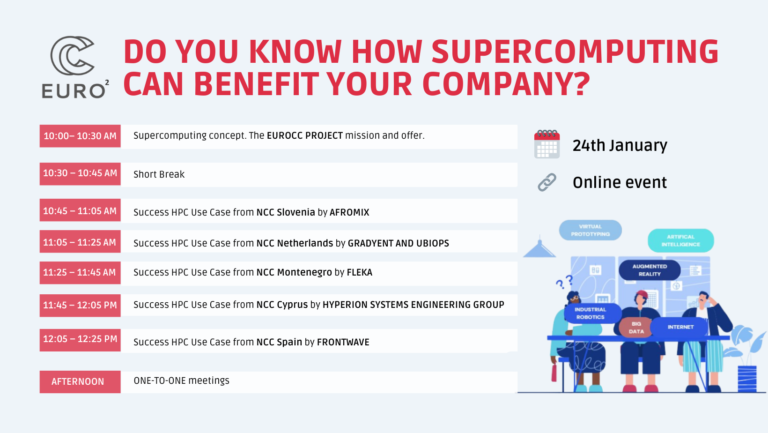
NCC Spain, NCC Netherlands, NCC Slovenia, NCC Cyprus and NCC Montenegro organized collaborative” Supercomputing INFO DAY” where companies from different industries shared their experience on using HPC infrastructure which improved their products and services, optimized business workflows and elevate industry competitiveness. Participants had the opportunity to explore how they could access supercomputing resources for free and in an easily accessible manner.
Marko Lekic, Fleka CTO, company shown personalized banking software solutions and improvements using NLP and ML classification algorithm.