Want to learn how to use artificial intelligence in scientific research? Or how to write efficient parallel code for computations on multiple graphical accelerators?
Join one of the upcoming NVIDIA bootcamps – fully online, free of charge, and led by experts from the field. Registration capacity is limited – don’t wait too long!
AI for Science Bootcamp (27-28 May 2025)
Learn how to use tools like PyTorch, NVIDIA Modulus, and NeMo to tackle scientific problems using artificial intelligence.
Training on AI for Science (source EuroCC2 & EuroCC4SEE)
Multi-GPU Programming Bootcamp (17-18 June 2025)
Interested in performance scaling and parallel programming across multiple graphical accelerators? This course will walk you through writing efficient multi-GPU code using libraries such as NCCL and NVSHMEM.
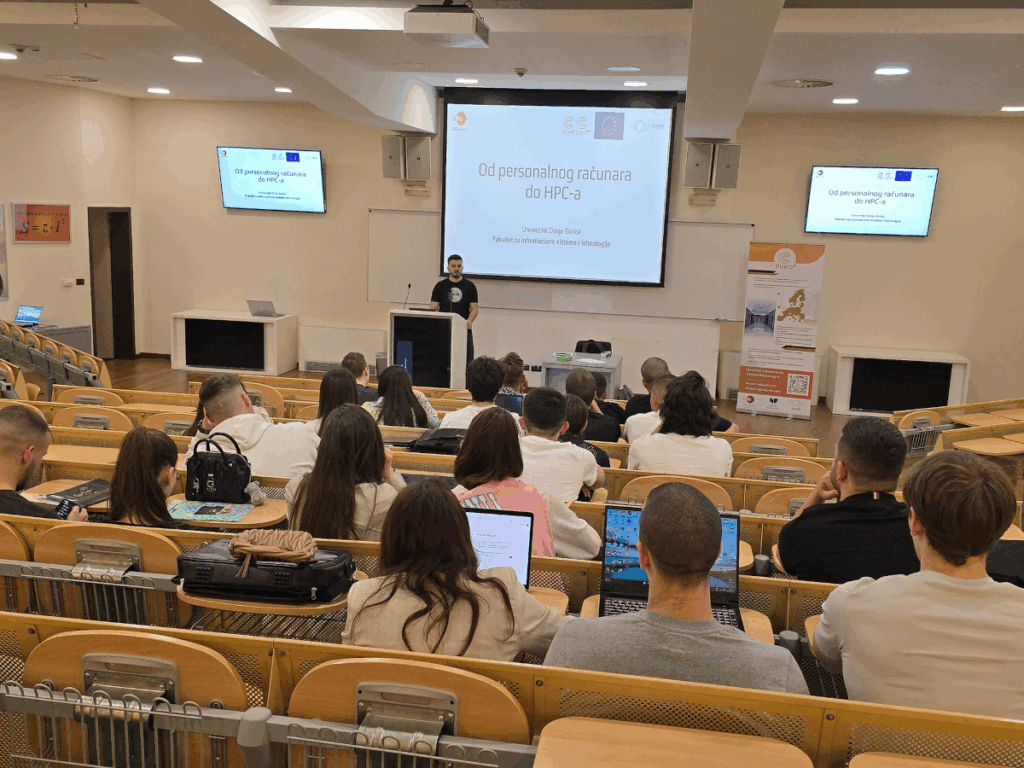
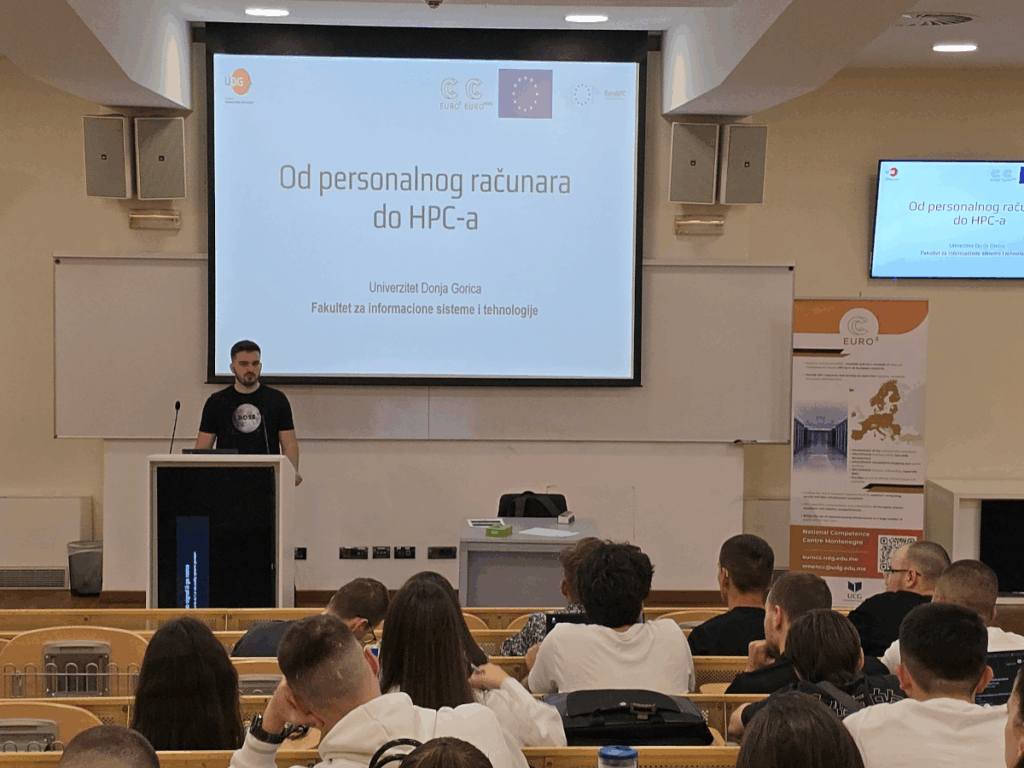
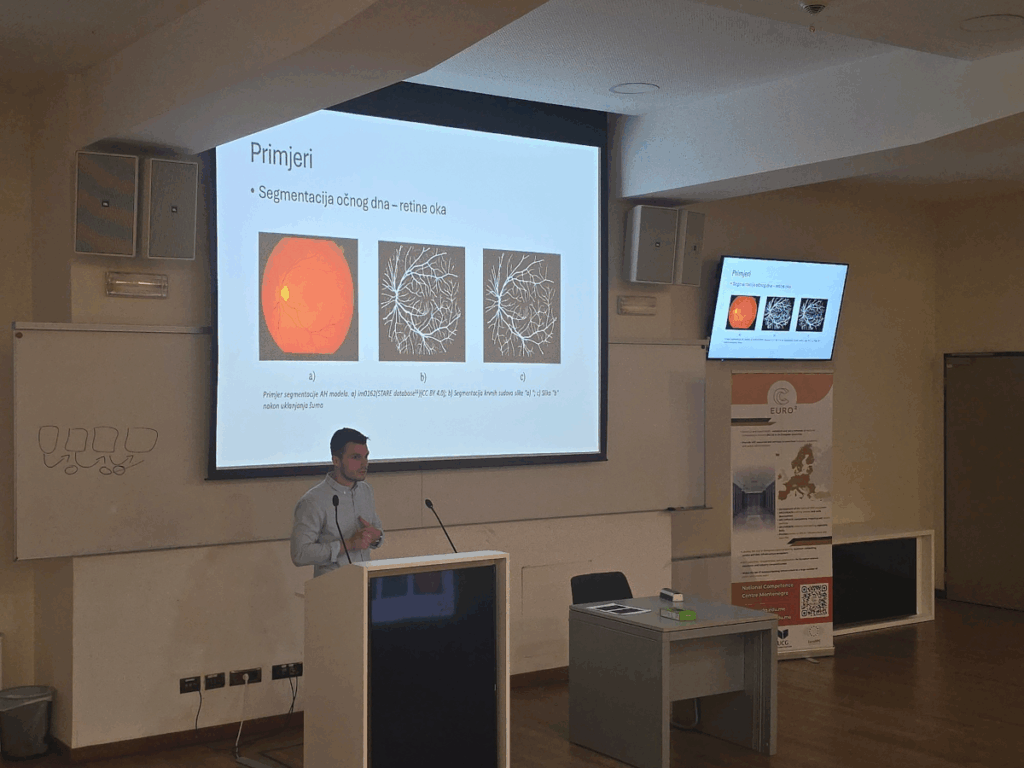
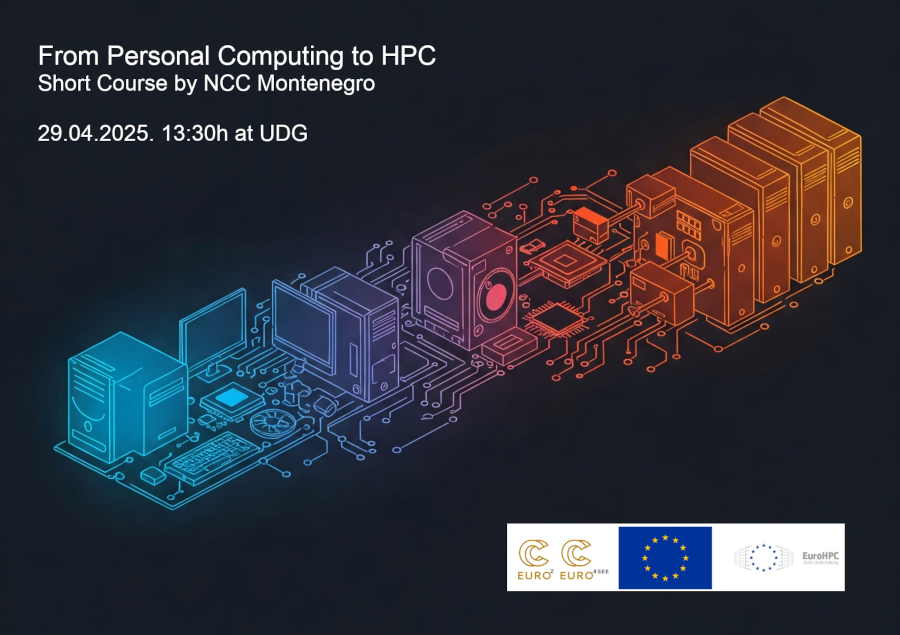
On Monday, April 14, the workshop “Introduction to High Performance Computing” will be held at the Faculty of Electrical Engineering in Podgorica, in Room 348, starting at 12:30 p.m.
Workshop on HPC at Faculty of Electrical Engineering, UoM
The workshop “Introduction to High Performance Computing (HPC)” aims to provide a fundamental understanding of the concepts, architecture, and applications of HPC systems. Participants will become familiar with the basics of parallel computing, distributed environments, and the practical aspects of using supercomputers for scientific research, engineering, and processing large volumes of data. Special focus will be placed on available HPC resources in Montenegro and the opportunities to access European supercomputing infrastructures (such as EuroHPC systems). The workshop is intended for students, researchers, and professionals from various fields who wish to begin working in the area of high performance computing.
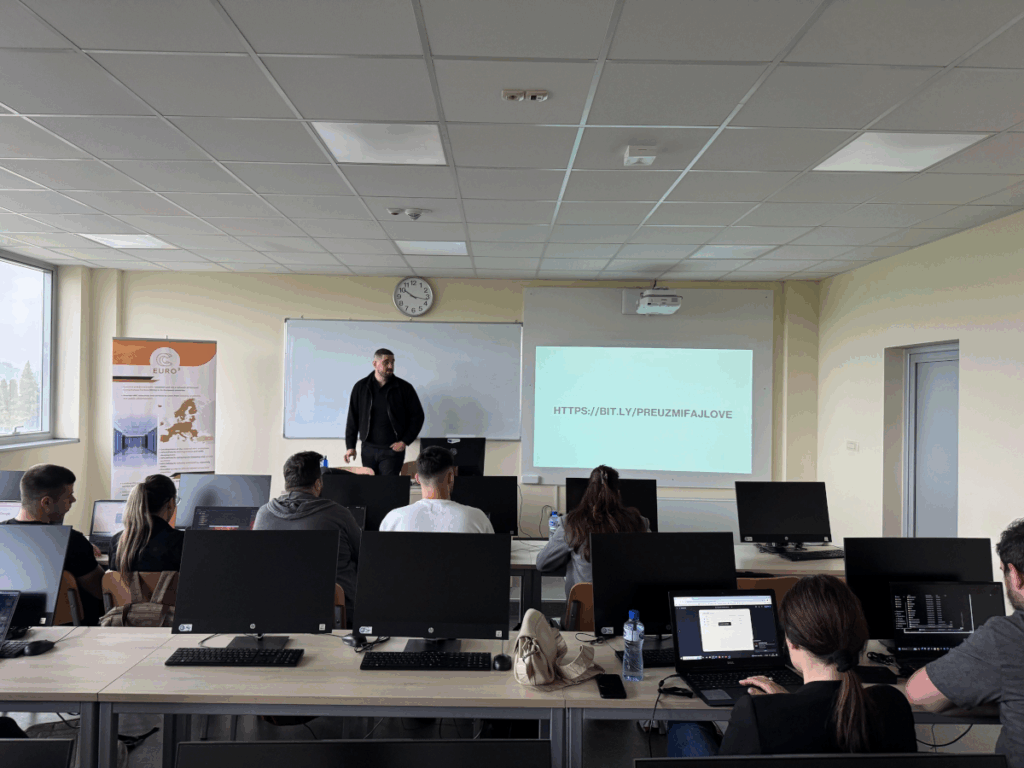
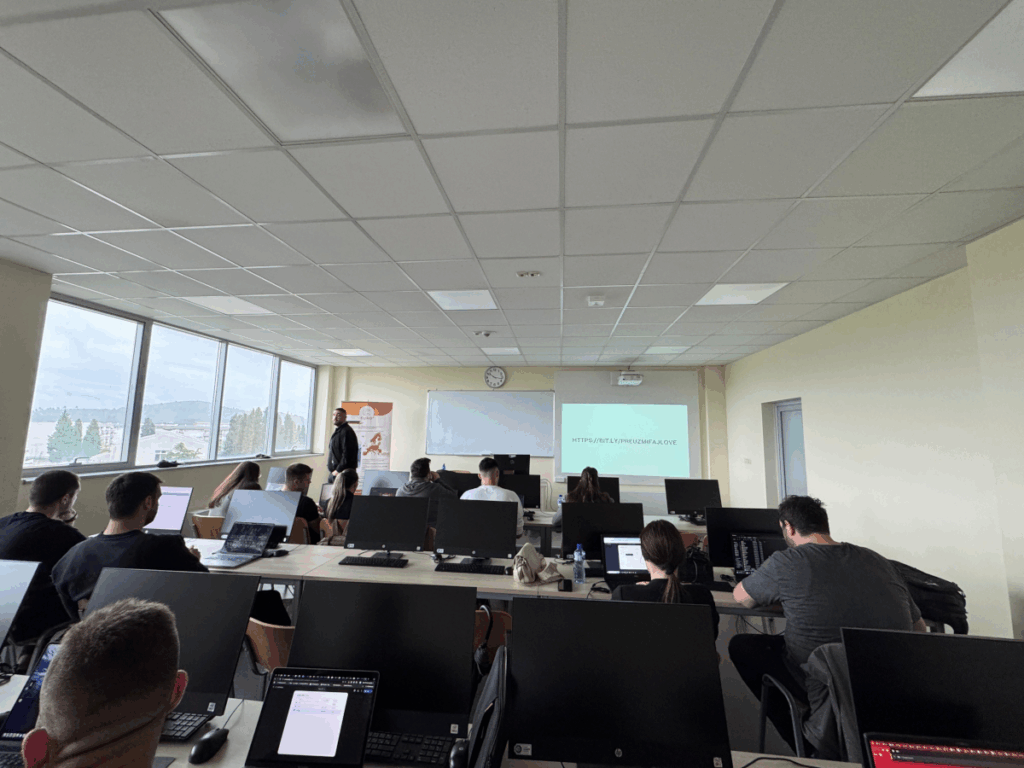
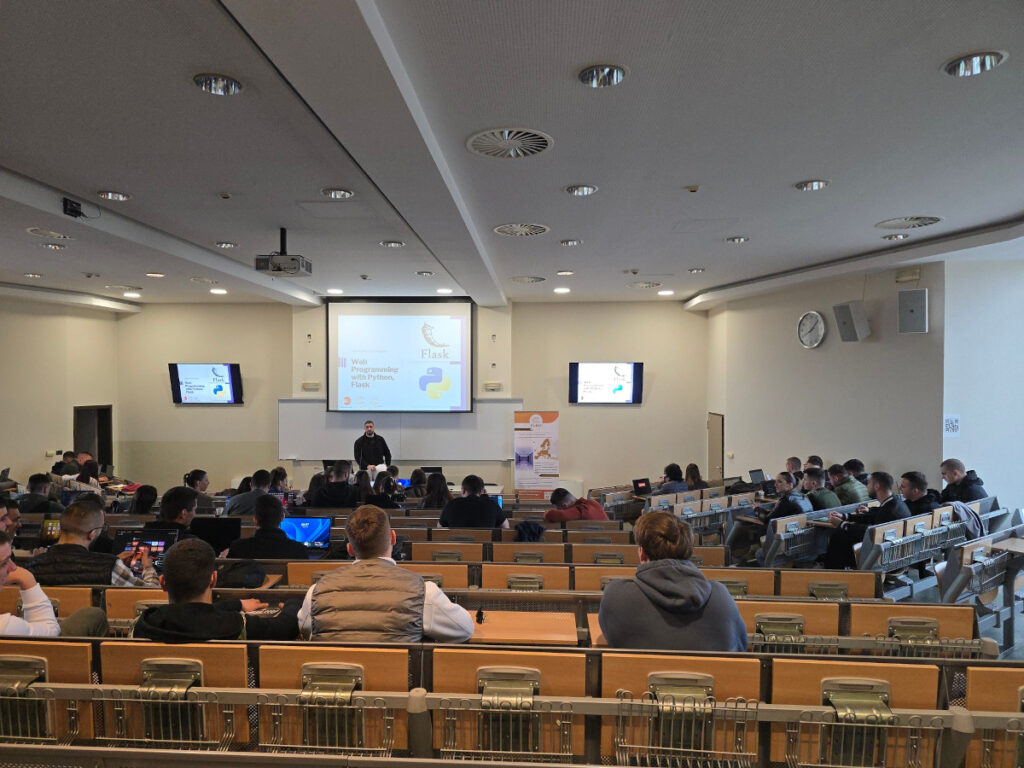
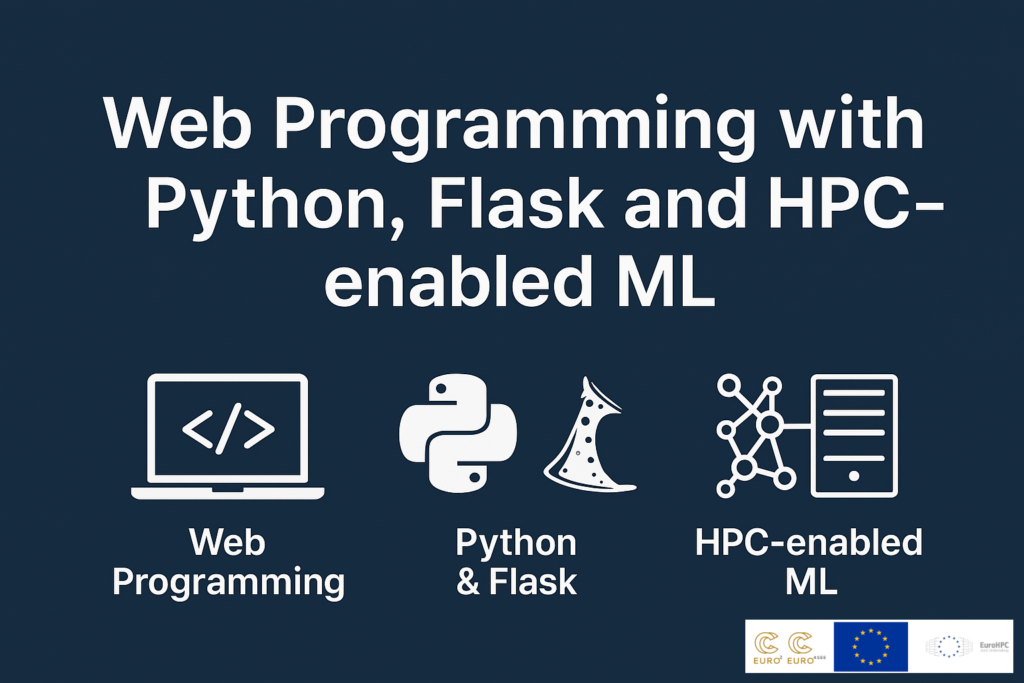
We are excited to invite students, researchers, and professionals to our 2-day hands-on short course on Web Programming with Python, Flask and HPC-enabled Machine Learning.
Registration open until 16 Apr 2025.
This dynamic course is designed to introduce participants to web development using Python and Flask, while exploring how machine learning applications can be accelerated with High Performance Computing (HPC). Whether you’re a beginner or looking to extend your skills to include scalable ML solutions, this course is the perfect opportunity to learn from experienced instructors and work on real-life examples. More information abou t the course can be found at [link].
Course Schedule Part 1: Thursday, April 17, 2025 Starts at 8:00 AM University of Donja Gorica (UDG)
Part 2: Saturday, April 26, 2025 Starts at 9:00 AM University of Donja Gorica (UDG)
What You’ll Learn
Fundamentals of web development with Python and Flask
How to design and deploy simple web applications
Integration of machine learning models into web apps
Basics of HPC and how to run ML workloads efficiently
Real-world applications and interactive coding sessions
We have just enrolled over 25 people interested for the Prompt Engineering course. The course is implemented as a self-paced online course via LMS. We mainly enrolled students at BSc and MSc level, but there are few people coming from the industry sector (mainly IT). Most of the students are from Montenegro, but we have a couple of people coming from Bosnia and Serbia. Our target is that all of the enrollees finalize their work by 1 May.
The course starts on 7 AprilThis is a self-paced online course implemendet via LMS platform
As part of the ongoing H2020-MSCA TRACEWINDU initiative to foster digital innovation and transparency across value chains, a hands-on workshop on chatbot development using Large Language Models (LLMs) and the Azure platform was held at the National Competence Center for High-Performance Computing (NCC Montenegro), hosted by the University of Donja Gorica (UDG).
This workshop was implemented as a cross-collaboration of TRACEWINDU and EUROCC2/EUROCC4SEE ptojects
The workshop brought together a vibrant group of PhD, Master’s, and Bachelor students, alongside AI and HPC researchers and mentors from UDG—key TRACEWINDU and EUROCC4SEE project partners—highlighting the growing interest and expertise in cutting-edge AI technologies across disciplines.
Leading the session were Ms. Daliborka Nedić and Ms. Senka Gajinov from DunavNET, an innovation-driven technology company and core partner in the TRACEWINDU consortium. Their expert lecture provided attendees with valuable insights into the rapidly evolving world of generative AI and practical guidance on building intelligent chatbot solutions using Microsoft’s Azure OpenAI services.
Around 20 people attended, mostly PhD, MSc and BSc researchers interested in AI and HPC
The workshop covered key concepts such as:
The fundamentals of Large Language Models (LLMs) and their applications in chatbot development
Integration of LLMs within the Azure AI ecosystem
Best practices in prompt engineering and knowledge grounding
Real-life use cases aligned with transparency, automation, and user engagement in value chains
Beyond chatbot development, the discussion extended to the integration of computer vision models—particularly those aimed at automating data collection in value chains—and the use of HPC resources to support their deployment. Participants explored ideas for combining conversational AI interfaces with real-time computer vision capabilities, opening up possibilities for smarter, more interactive systems across agri-food and other sectors.
This collaborative brainstorming set the stage for future joint initiatives, where chatbots could serve as intuitive front-ends to complex AI models running on high-performance computing infrastructures—bridging accessibility and computational power for impactful solutions. This workshop is part of a broader capacity-building effort within TRACEWINDU and EUROCC4SEE, designed to empower young researchers and professionals with the tools and knowledge needed to innovate responsibly in the age of AI TRACEWINDU continues to bridge digital technologies and real-world value chain transformation.
Ms Daliborka Nedic and Ms Senka Gajinov from DNET at UDG
We invite your company to join our specialized training on High-Performance Computing (HPC) and Artificial Intelligence (AI), designed for business users. The training will take place on April 16, 2025, at 10:00 AM at the University of Donja Gorica (UDG).
Introduction to HPC is a short course that requires no prior technical knowledge. It is designed to provide beginners with fundamental insights into high-performance computing, addressing key questions: WHY and HOWto use supercomputers.
This course offers practical insights into how HPC and AI can enhance research, development, and innovation, optimize business processes, and transform business models across various industries.
HPC/AI training for business users
During the course (90 minutes + direct consultations upon request), participants will:
Gain an understanding of the technical and commercial aspects of HPC systems and applications
Explore the possibilities and benefits of HPC and AI through industry examples and success stories
Learn how to assess readiness for adopting HPC technologies
Learn how to access Europe’s top supercomputers (at no additional cost! 😊).
The course is tailored for managers, experts, and professionals who want to understand the potential of modern technologies and their applications in everyday business operations. It is ideal for those seeking advanced computing solutions (HPC) and intelligent algorithms (AI) to enhance their work and business.
Join us and discover how HPC and AI can become your competitive advantage!
📅 Date & Time: April 16, 2025, at 10:00 AM 📍 Venue: Amphitheater AS, University of Donja Gorica 📝 Registration:https://forms.gle/wHq31ioQaQbLjqMU9
The N-Ways to GPU Programming Bootcamp offers a comprehensive introduction to GPU programming. Participants will learn about various methods for adapting scientific applications to GPUs using NVIDIA CUDA, OpenACC, OpenMP offloading, and standard programming languages.
Throughout the bootcamp, attendees will work alongside teaching assistants to explore multiple GPU programming models. They will also learn how to analyze GPU-enabled applications using NVIDIA Nsight Systems. The program includes hands-on activities that allow participants to apply their newly acquired skills to real-world problems.