We are pleased to invite you to the 30th International Scientific and Professional Conference INFORMATION TECHNOLOGIES 2026.
📌 Important notice for authors: Upon authors’ request, the paper submission deadline has been extended to January 25, 2026.
🔹 Accepted papers may be presented in oral or poster sessions 🔹 Online presentations via ZOOM are also available
We invite the academic community, industry professionals, and the wider public to follow the Conference activities online, via videoconferencing links available on the official Conference website.
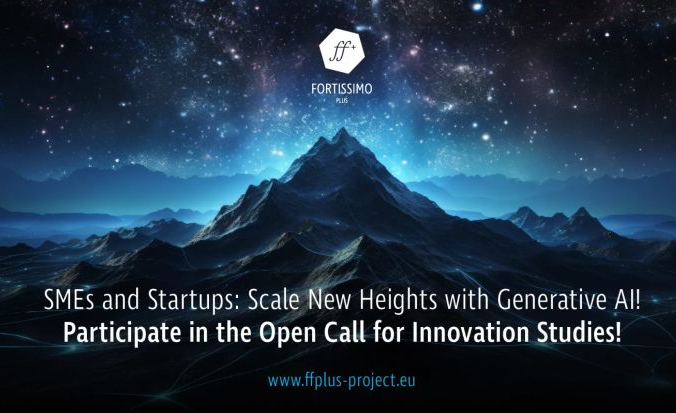
The FFplus Innovation Studies Open Call is now open, offering European SMEs and start-ups a focused opportunity to develop and validate generative AI (GenAI) solutions using large-scale European supercomputing resources. The call opens on 3 February 2026 and targets early-stage, high-impact projects with a clear proof-of-concept orientation.
Click on image to open the link for application (image source: FFplus)
Coordinated by HLRS (High-Performance Computing Center Stuttgart), FFplus supports innovation at the intersection of AI and HPC, enabling companies to overcome computational barriers and scale beyond conventional cloud or on-premise infrastructures.
Key facts
Funding: up to €300,000 per project
Deadline:25 February 2026 (or earlier if 250 proposals are submitted)
Eligible applicants: European SMEs and start-ups
Scope and impact
The call supports feasibility studies and PoCs for GenAI use cases such as:
Training or fine-tuning large language and multimodal models
Generative design, simulation, and optimization workflows
AI-driven data synthesis and advanced analytics across multiple sectors
Selected projects gain access to EuroHPC-class supercomputers, expert technical support, and increased visibility within the European innovation ecosystem. National Competence Centres within the EuroCC play a key role in supporting applicants.
Support from NCC Montenegro
The NCC Montenegro is available to support SMEs and start-ups from Montenegro during the proposal preparation phase, including:
Clarification of call scope and eligibility
Guidance on aligning use cases with HPC and GenAI requirements
Initial technical advice on suitable architectures and workloads
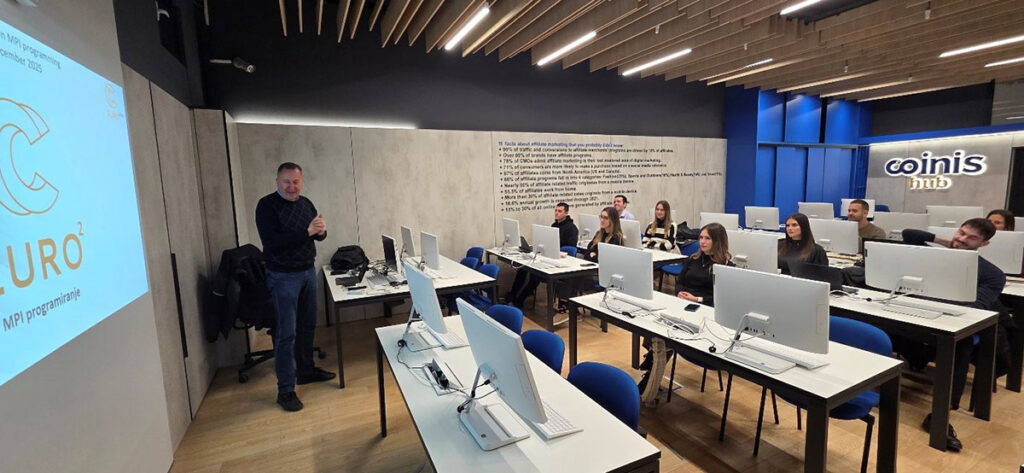
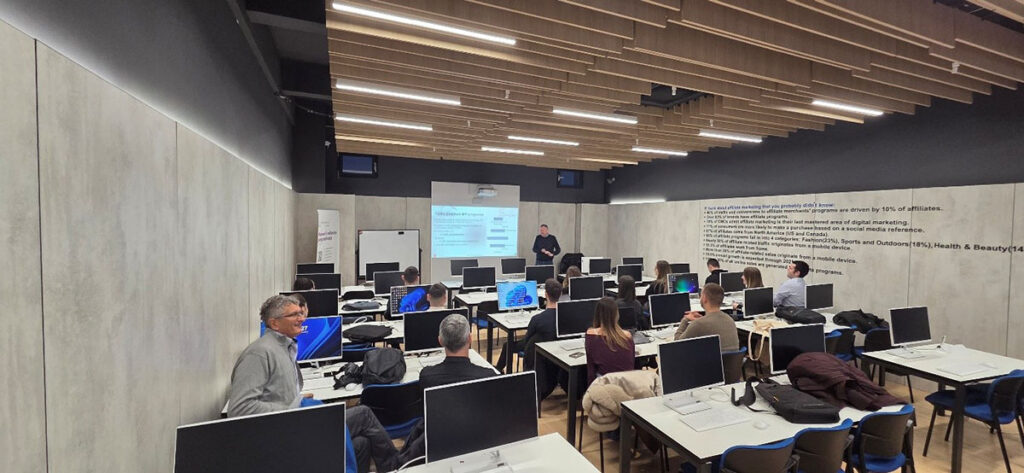
On 23 December 2025, at premises of the Faculty of Electrical Engineering, University of Montenegro, NCC Montenegro (EuroCC) successfully delivered a hands-on training session on MPI programming in Python using mpi4py. The event introduced participants to the fundamentals of the message passing paradigm for distributed-memory systems and explained how the MPI standard enables scalable parallel applications across multiple processes.
Hands-on training session on MPI programming in Python using mpi4py
The training combined concise theory with practical demonstrations. Core MPI concepts such as SPMD execution, communicators, process rank and size, and the basics of point-to-point communication using Send/Recv (including tags and common communication patterns) were covered. Participants also learned how to set up and run MPI programs with mpiexec, verify their environment, and interpret parallel output behaviour.
Hands-on training session on MPI programming in Python using mpi4py
A key part of the session was a step-by-step example of parallelizing a numerical computation using the trapezoidal rule for integration. Through this case study, workload partitioning across processes and collection of partial results were demonstrated, along with a discussion of typical performance considerations such as synchronization overhead and potential bottlenecks at the root process.
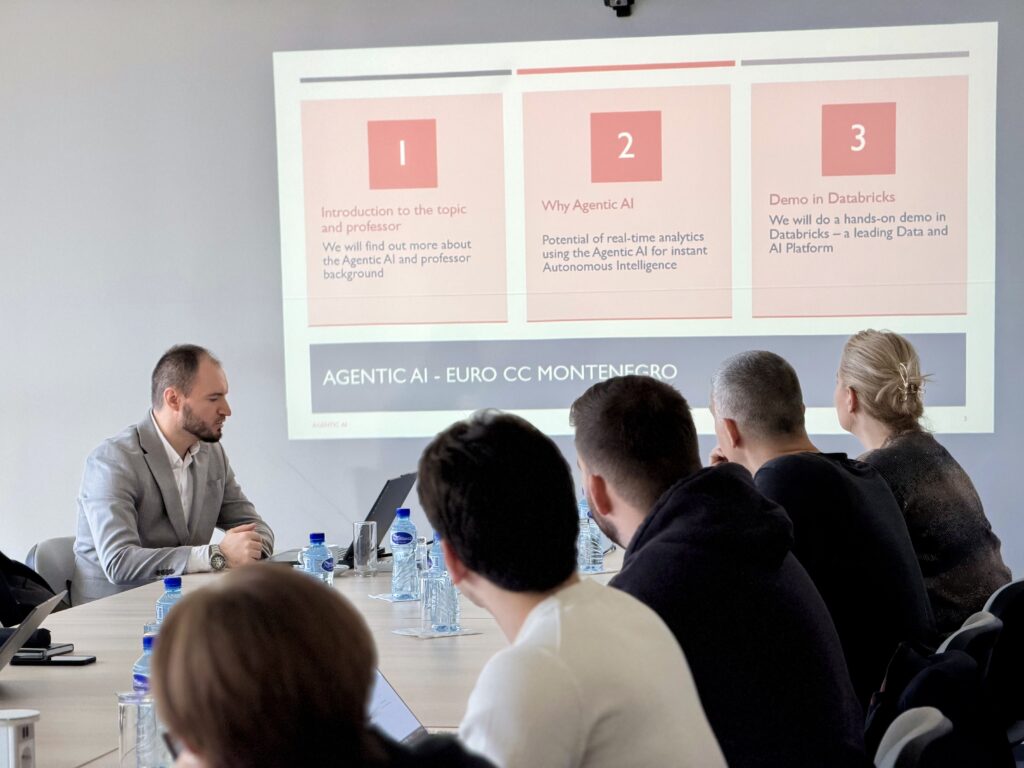
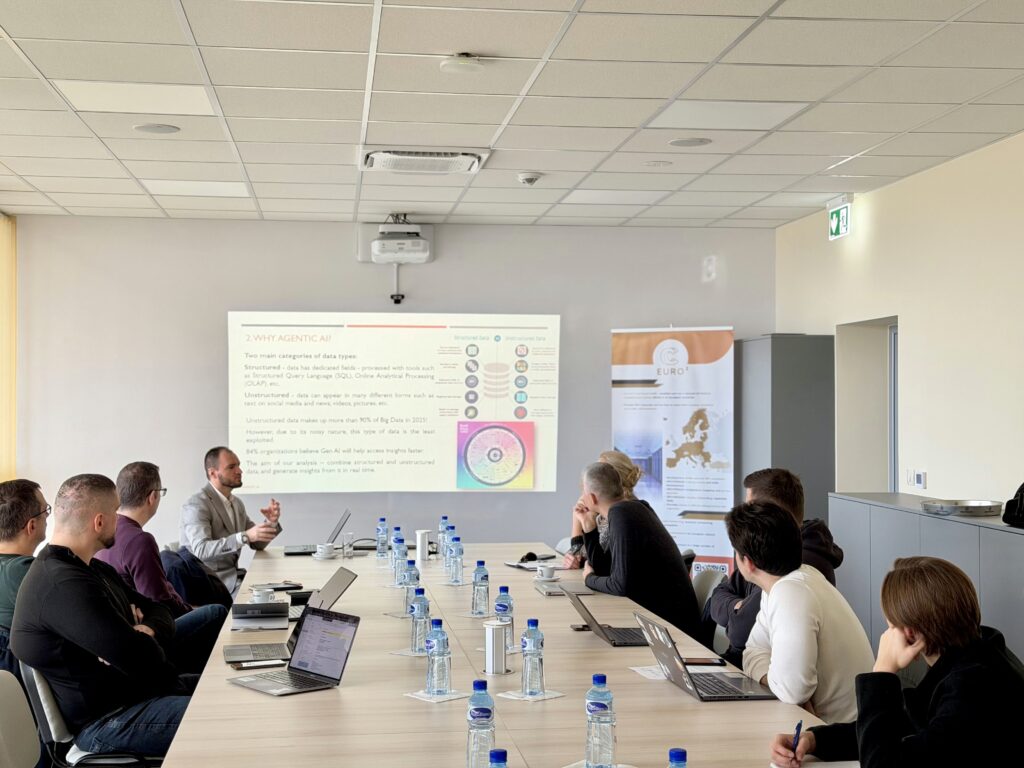
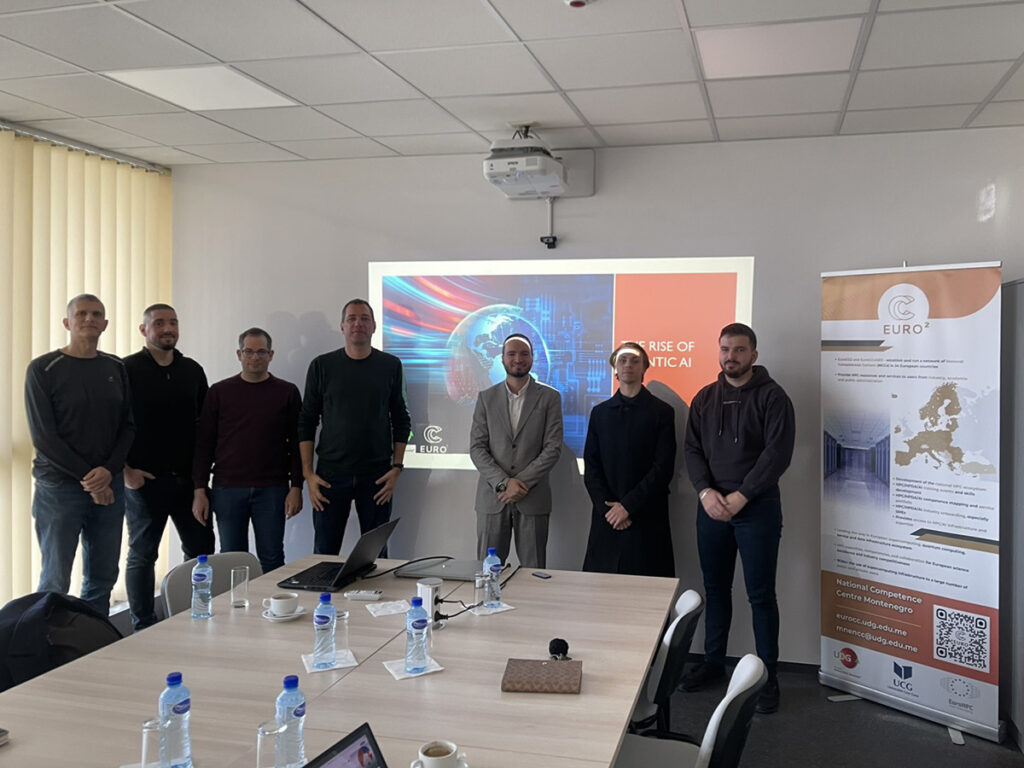
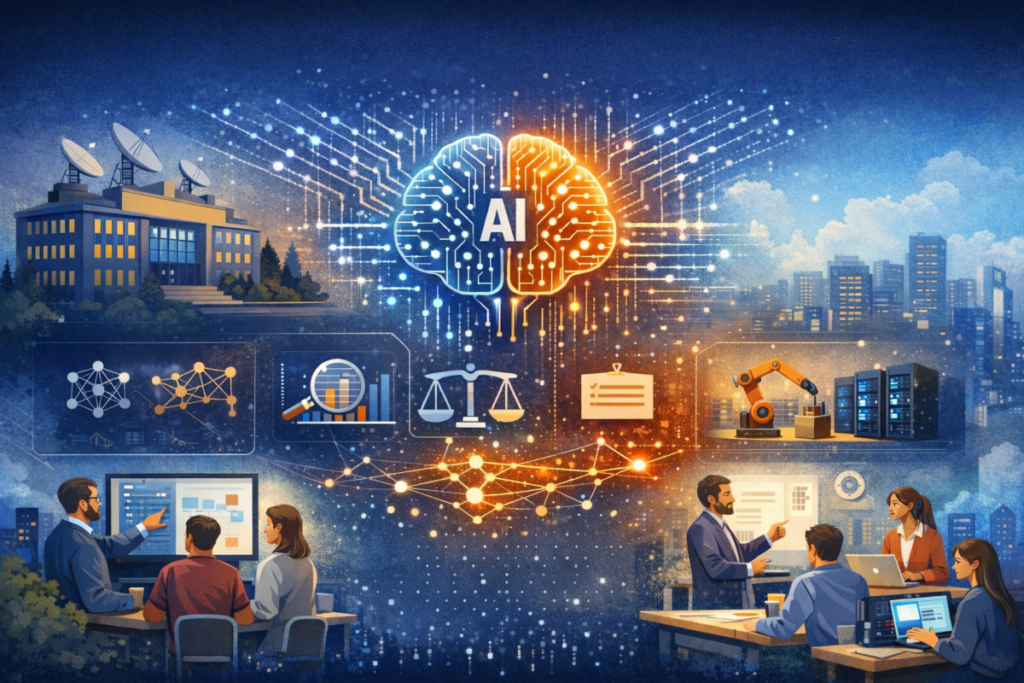
Agentic AI is emerging as a powerful enabler of next-generation digital transformation, business automation, and real-time decision-making. Unlike traditional AI solutions, Agentic AI systems operate as autonomous, goal-driven agents capable of planning, reasoning, and adapting over time, making decisions without continuous human intervention, and collaborating with tools, systems, and dynamic environments. Recognising its growing relevance, NCC Montenegro organised a Train the Trainers workshop for NCC members, focused on the application of Agentic AI within experience-driven industries.
Train the Trainers Workshop @ NCC Montenegro: Agentic AI
The workshop was delivered by the NCC representative, Dr Armin Alibasic, who combined academic and industry expertise with his international and interdisciplinary experience across the automotive, airline, and theme park industries. The session highlighted the potential of real-time analytics enabled by Agentic AI, demonstrating how autonomous intelligence can support instant, data-driven decision-making. These concepts were illustrated through real-life industry applications and a hands-on demonstration on Databricks, a leading Data and AI platform.
Presentation of Dr Armin Alibasic
The Train the Trainers approach addressed two complementary dimensions. The first focused on capacity building, providing participants with a structured and in-depth understanding of Agentic AI concepts, system architecture, required skills and tools, as well as the key challenges associated with designing and deploying agent-based AI solutions. These foundations were reinforced through business-oriented use cases, ensuring a clear link between theoretical principles and real-world industry practice. The second dimension emphasized knowledge transfer, equipping participants with the competencies needed to design, adapt, and deliver high-quality training activities tailored to SMEs, complex organizational systems, and strategic decision-makers.
Why Agentic AI?
By empowering trainers with both deep technical insight and practical training capabilities, NCC Montenegro ensures that Agentic AI knowledge can be effectively disseminated, scaled, and transformed into business value for industry, SMEs, and the broader digital innovation ecosystem.
As part of the ongoing activities of the National Competence Centre for High-Performance Computing and Artificial Intelligence in Montenegro (HPC NCC Montenegro), a new undergraduate course entitled Artificial Intelligence has been successfully implemented during the current academic year. The course was delivered to students of the Faculty for Information Systems and Technologies (FIST) as well as the Faculty of Applied Sciences – Electrical Engineering and Computer Science programme, further strengthening the AI and HPC components within undergraduate curricula.
AI Education Bridging Academia and Industry
The course was designed as an introductory yet comprehensive overview of fundamental concepts, methods, and applications of artificial intelligence, aiming to provide students with a solid theoretical foundation alongside essential practical skills. The focus was placed on machine learning, data analysis and processing, decision-making algorithms, and the role of AI in digital transformation and real-world problem solving. In addition, ethical challenges and societal implications of AI technologies were explicitly addressed. The course content and learning outcomes were aligned with contemporary academic and industry standards, including hands-on use of tools recommended by the industry experts.
A distinctive feature of the course was its close collaboration with industry partners, fully aligned with the objectives of the EuroCC-2 and EuroCC4SEE projects, which promote strong links between academia, industry, and the HPC ecosystem. Representatives from Alicorn, BixBit, Inovativa, and DigitalSmart actively participated in the course delivery, contributing through guest lectures and weekly discussions with students. This collaboration allowed students to gain first-hand insights into how AI and HPC technologies are applied in real industrial environments.
Through direct interaction with industry professionals, students discussed concrete use cases of artificial intelligence in areas such as data-driven decision making, process automation, intelligent systems development, and scalable AI solutions supported by HPC infrastructures. These exchanges significantly enriched the learning experience, fostering critical thinking, practical understanding of market needs, and awareness of real-world constraints and opportunities.
The implementation of the Artificial Intelligence course represents a concrete example of how EuroCC initiatives contribute to the systematic enhancement of undergraduate curricula with AI and HPC content, while simultaneously strengthening cooperation with industry. In this way, students are not only equipped with fundamental technical knowledge but are also introduced to the broader European HPC and AI ecosystem, gaining a clear perspective on the role of AI and high-performance computing in modern research, innovation, and industry.
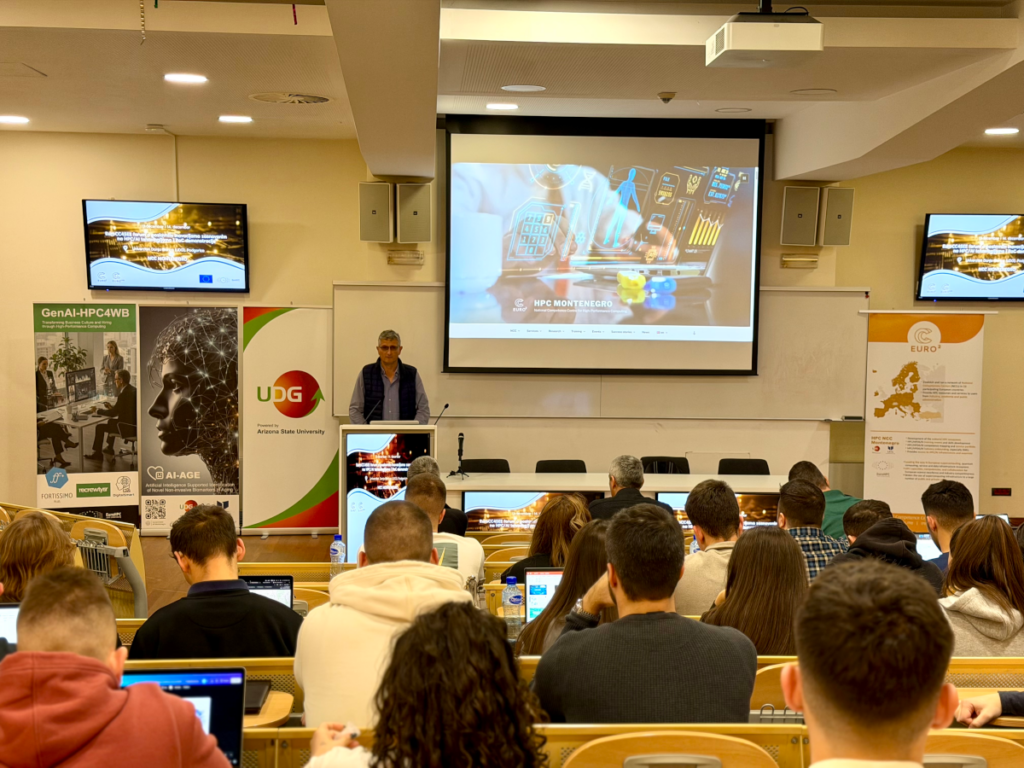
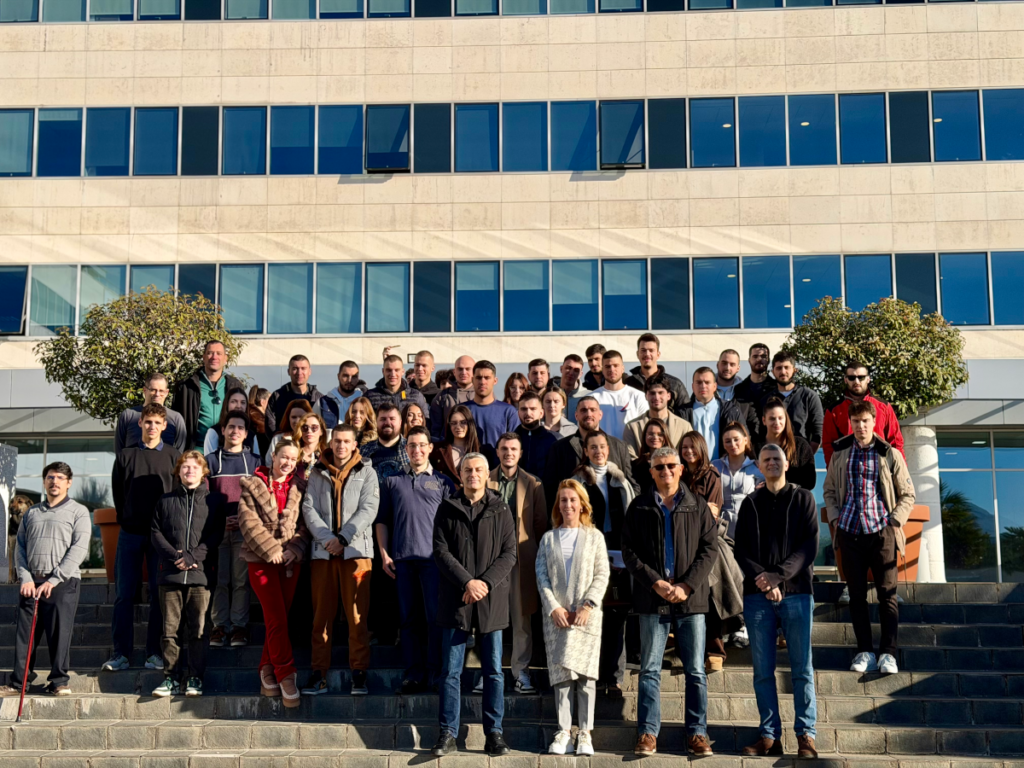
On 13–14 December, NCC Montenegro hosted the EuroCC4SEE Forum dedicated to business innovation supported by High-Performance Computing (HPC) and Artificial Intelligence (AI). The event brought together representatives from academia, industry, the public sector, and the startup ecosystem, with the aim of strengthening national capacities and supporting Montenegro’s digital transformation.
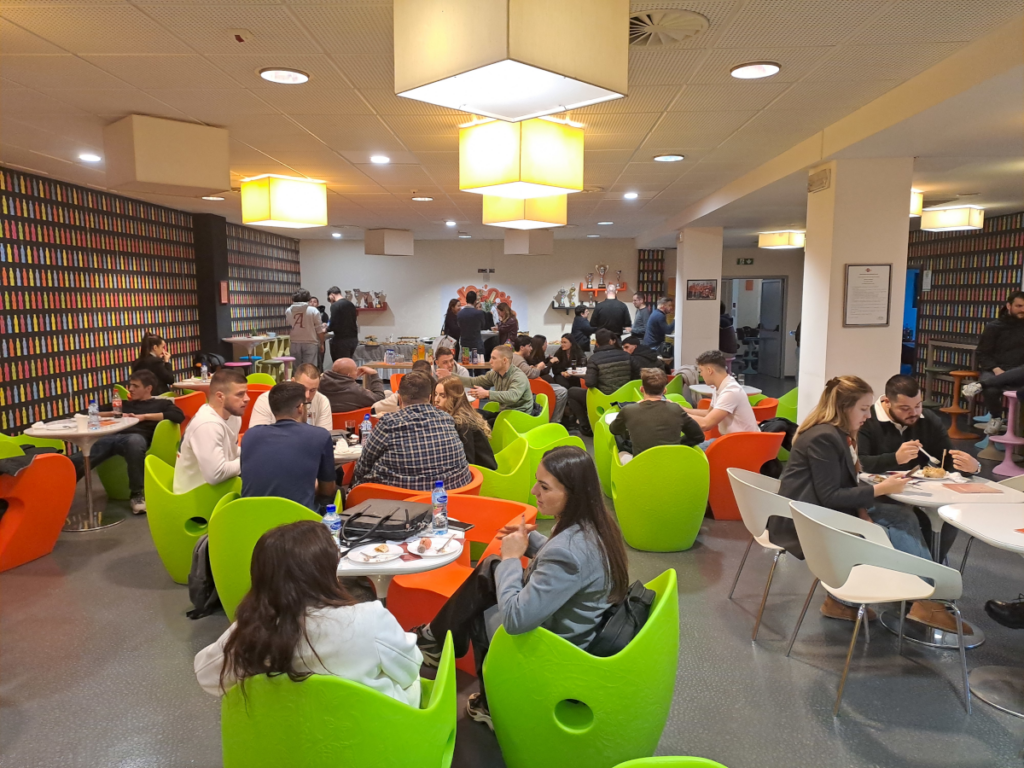
Welcome note from NCC Montenegro – prof. Bozo KrstajicWe organized networking activities during the breaks
During the two-day program, participants explored practical applications of HPC and AI through Proof-of-Concept demonstrations in the fields of energy, agriculture, health, and mobility, alongside discussions on innovation policies, MLOps approaches, skills development, and business–academia collaboration.
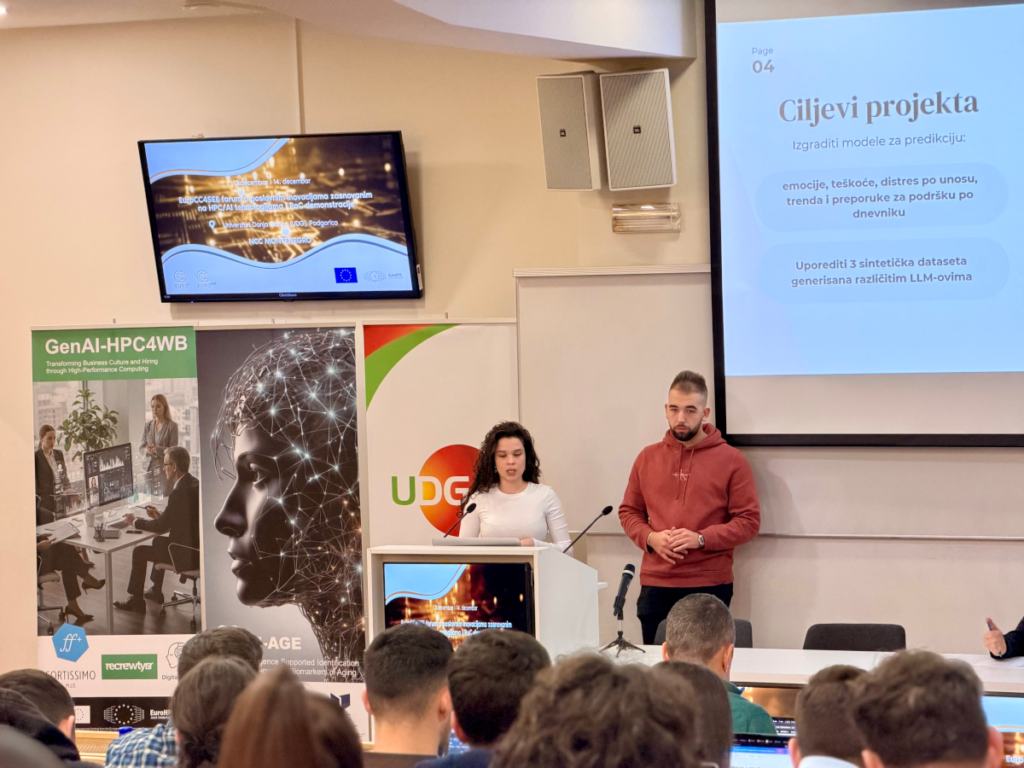
Discussions were focused on AI/HPC driven innovation in business and PoC demonstratorsPoC presentations were based on acamia-industry collaboration
The forum also highlighted the importance of regional and European cooperation, EU funding opportunities, and future activities within the EuroCC4SEE network, contributing to the strengthening of Montenegro’s position within the regional HPC/AI ecosystem. A proceedings booklet with brief elaborations of all covered topics will be made available on the project website.
This MPI programming training will take place on December 23, 2025, and is designed for anyone who wants a hands-on introduction to parallel programming on distributed-memory systems. The course covers the SPMD approach, communicators (COMM_WORLD), process rank/size, and point-to-point communication (Send/Recv, blocking and non-blocking). Through practical examples in Python (mpi4py)—including a simple parallelization demo such as numerical integration using the trapezoidal rule—participants will learn how to write and run MPI programs using mpiexec.
Date: December 23, 2025 Location: University of Montenegro, Faculty of Electrical Engineering Room: Coinis (L2) Time: 15h – 18h