Training on High Performance Computing Held at the Faculty of Electrical Engineering

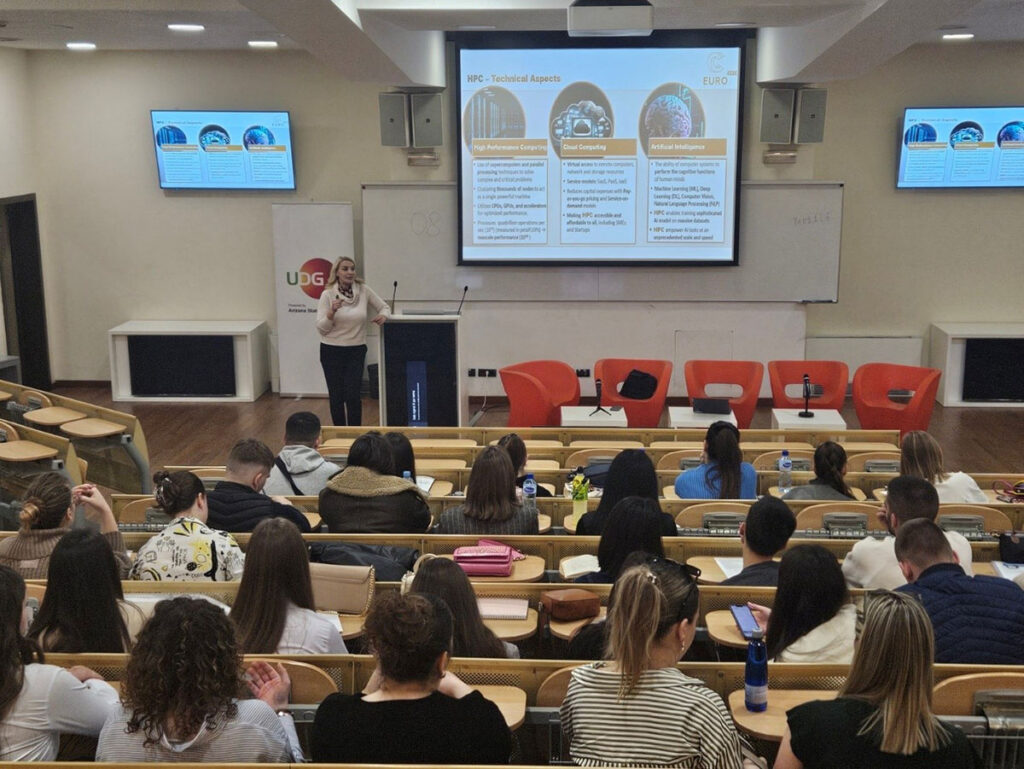
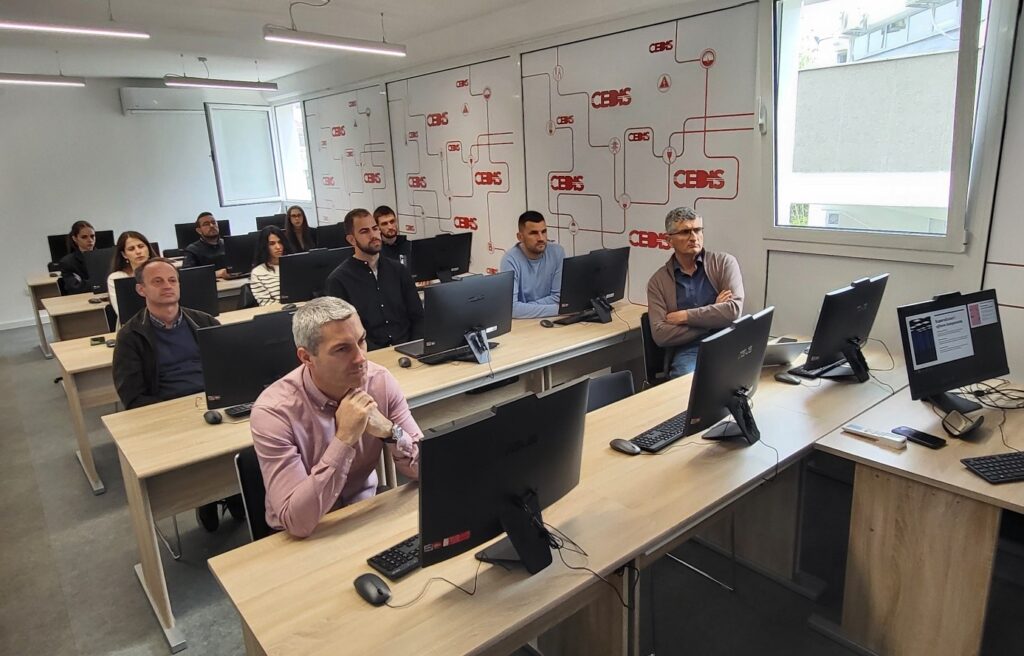
On April 14, 2025, a training session titled “Introduction to High Performance Computing (HPC)” was held at the Faculty of Electrical Engineering, University of Montenegro. The event gathered faculty members and young researchers from various scientific fields.

The training was led by Dr. Milutin Radonjić, NCC Montenegro team member, who introduced participants to the fundamental concepts of high performance computing, including HPC architectures, supercomputer components, and current applications across science, engineering, healthcare, and finance.

NCC team organized a training session at the Faculty for Electrical Engineering

Key topics included:

  • The historical development of HPC – from early mainframes to modern exascale systems,
  • The architecture of supercomputers, including CPUs, GPUs, interconnects, and memory,
  • Challenges in scalability, energy efficiency, and data security,
  • Opportunities to access HPC resources through the EuroHPC Joint Undertaking initiatives, including systems such as LUMI, Leonardo, MareNostrum 5, and others.

Participants were also introduced to services of National Competence Centre for HPC, and were guided through application procedures for EuroHPC Development, Benchmark, and Regular Access Calls.

This training represents an important step toward integrating HPC into local research initiatives and strengthening collaboration with the European supercomputing ecosystem.

Introduction to High Performance Computing (HPC)

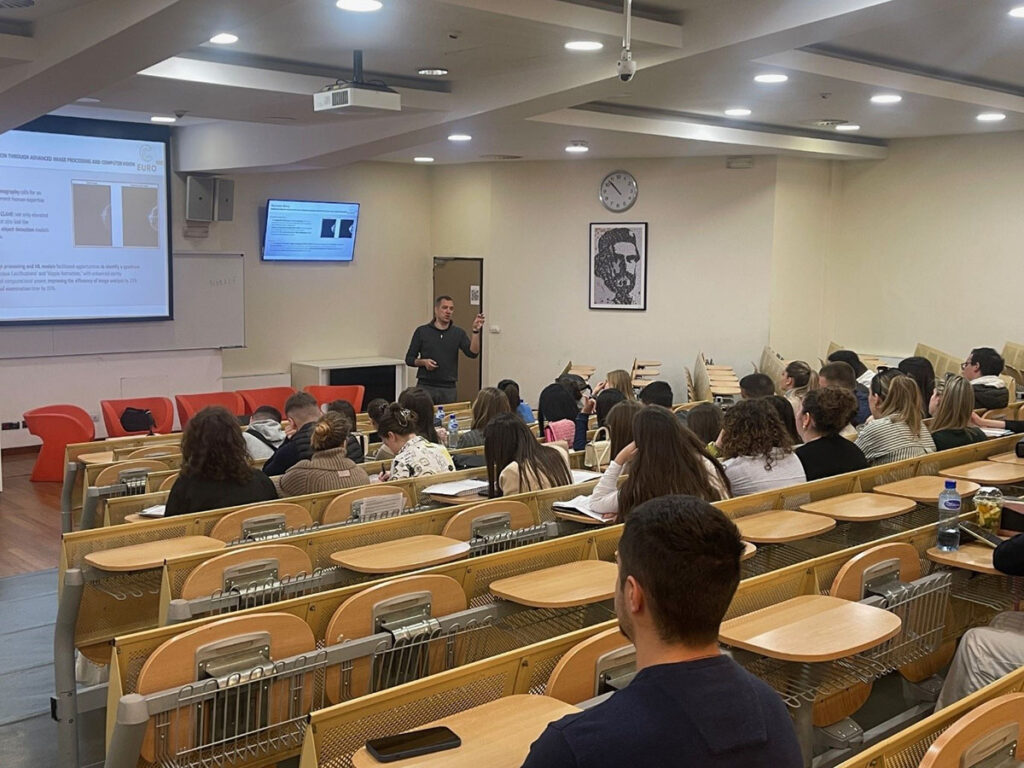
Workshop on High Performance Computing at the Faculty of Electrical Engineering

On Monday, April 14, the workshop “Introduction to High Performance Computing” will be held at the Faculty of Electrical Engineering in Podgorica, in Room 348, starting at 12:30 p.m.

Workshop on HPC at Faculty of Electrical Engineering, UoM

The workshop “Introduction to High Performance Computing (HPC)” aims to provide a fundamental understanding of the concepts, architecture, and applications of HPC systems. Participants will become familiar with the basics of parallel computing, distributed environments, and the practical aspects of using supercomputers for scientific research, engineering, and processing large volumes of data. Special focus will be placed on available HPC resources in Montenegro and the opportunities to access European supercomputing infrastructures (such as EuroHPC systems). The workshop is intended for students, researchers, and professionals from various fields who wish to begin working in the area of high performance computing.

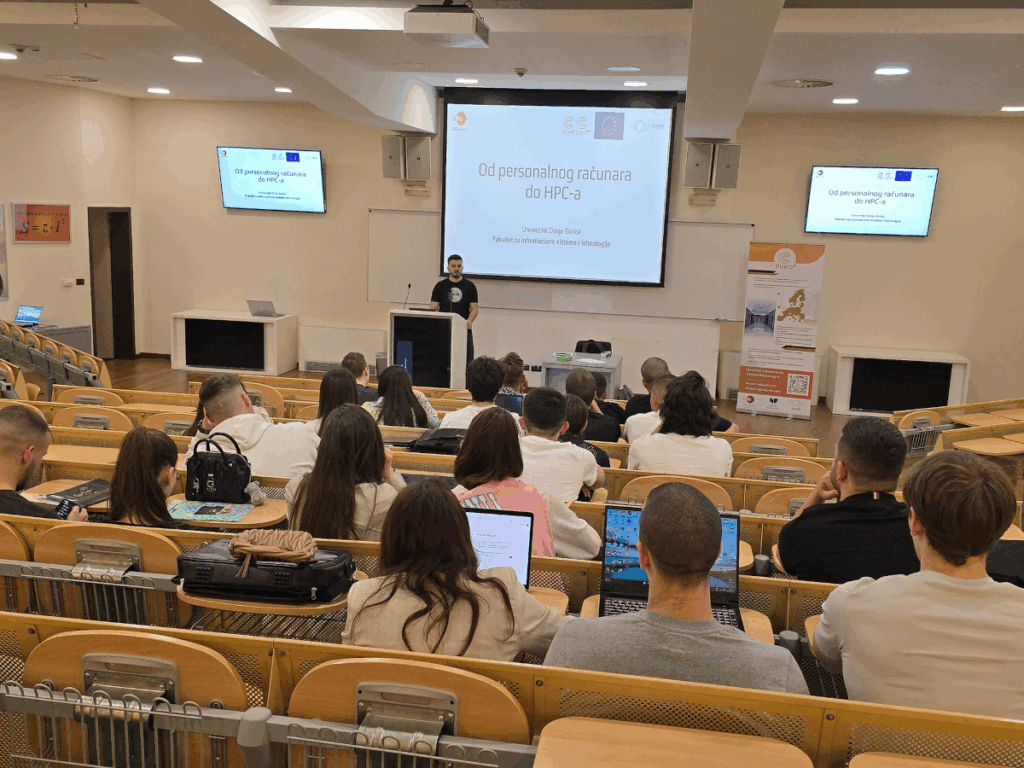
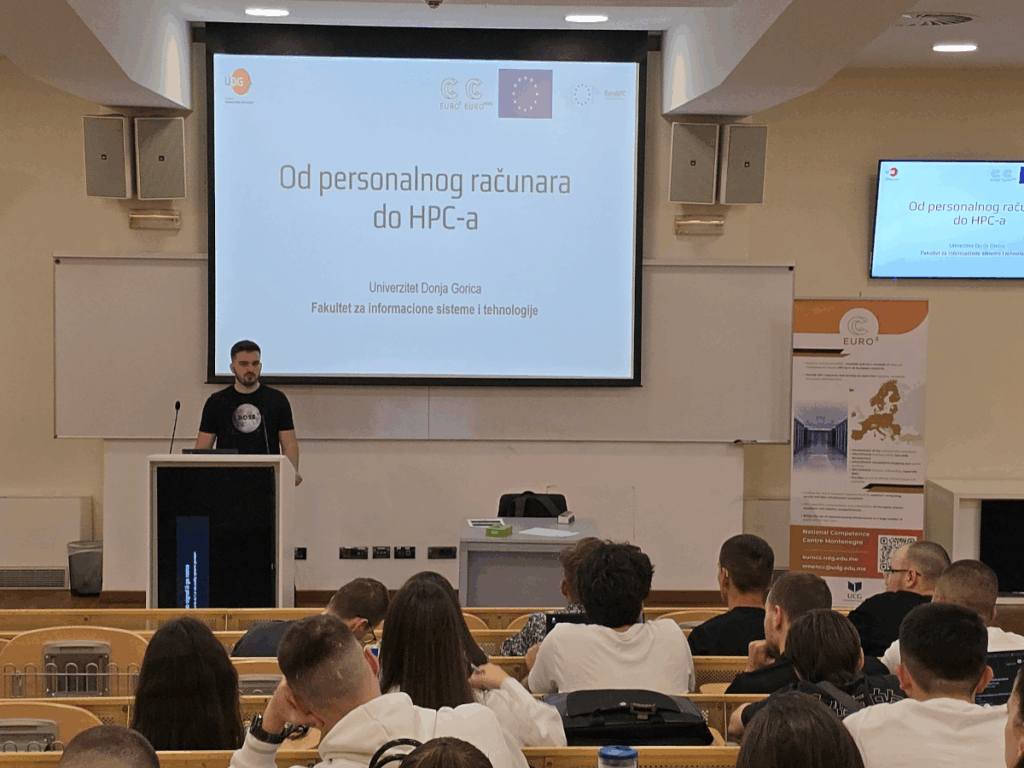
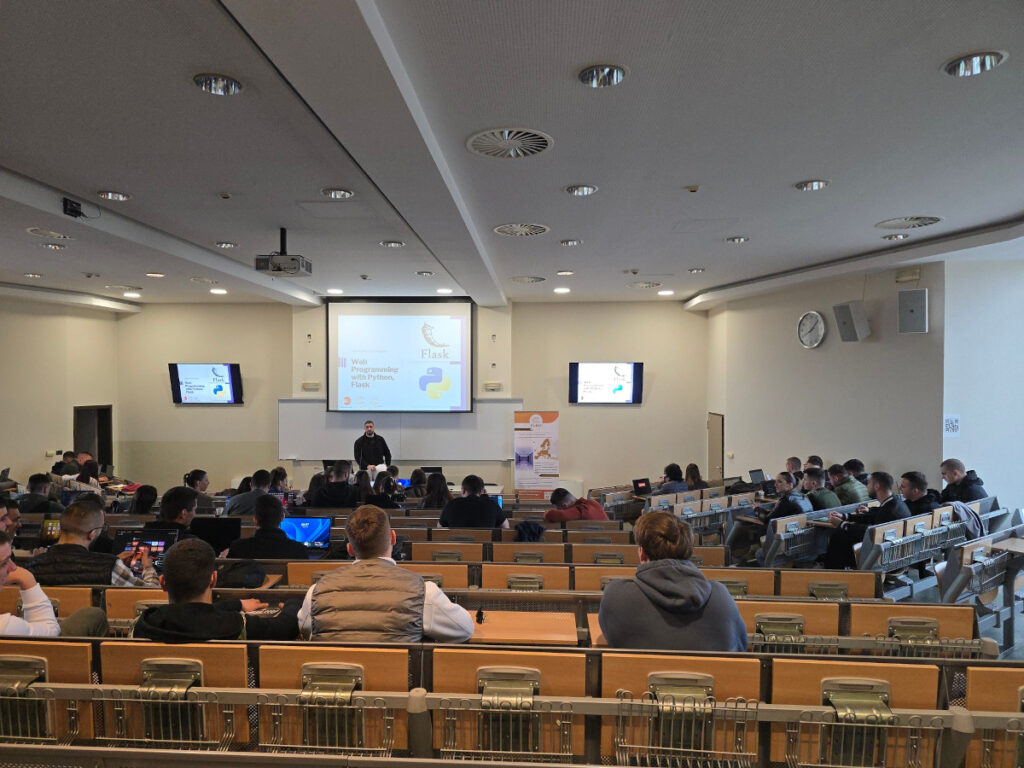
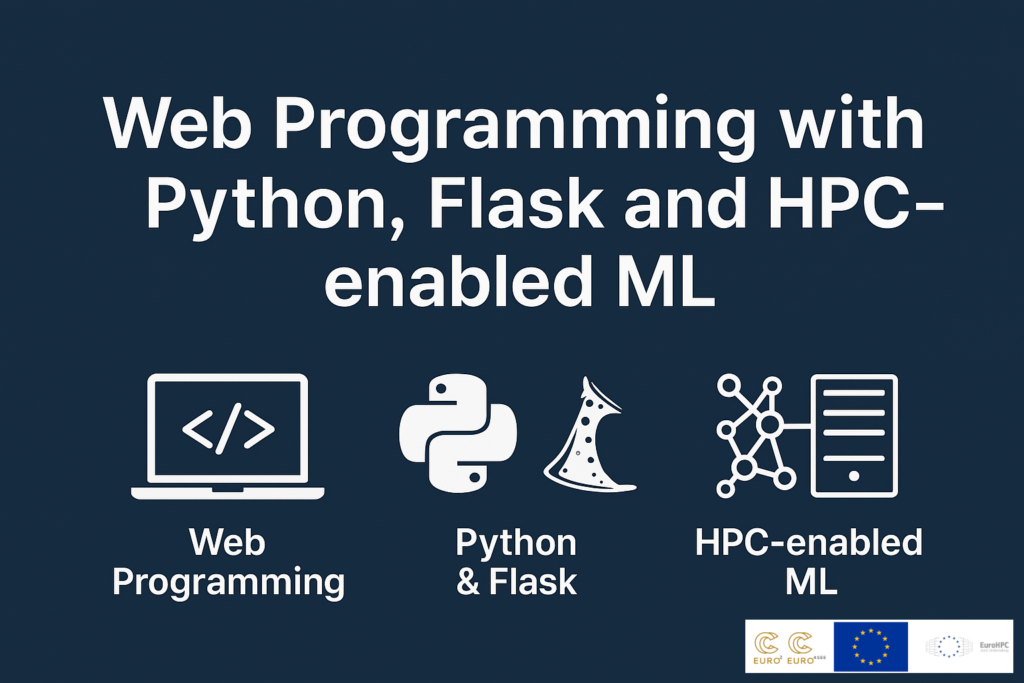
Join Our 2-Day Course: Web Programming with Python, Flask and HPC-enabled ML

We are excited to invite students, researchers, and professionals to our 2-day hands-on short course on Web Programming with Python, Flask and HPC-enabled Machine Learning.

Registration open until 16 Apr 2025.

This dynamic course is designed to introduce participants to web development using Python and Flask, while exploring how machine learning applications can be accelerated with High Performance Computing (HPC). Whether you’re a beginner or looking to extend your skills to include scalable ML solutions, this course is the perfect opportunity to learn from experienced instructors and work on real-life examples. More information abou t the course can be found at [link].

Course Schedule
Part 1: Thursday, April 17, 2025
Starts at 8:00 AM
University of Donja Gorica (UDG)

Part 2: Saturday, April 26, 2025
Starts at 9:00 AM
University of Donja Gorica (UDG)

What You’ll Learn

  • Fundamentals of web development with Python and Flask
  • How to design and deploy simple web applications
  • Integration of machine learning models into web apps
  • Basics of HPC and how to run ML workloads efficiently
  • Real-world applications and interactive coding sessions

Registration

  • Registration is open until April 16, 2025.
  • Secure your spot now via the following [link].

Online Course on Prompt Engineering Starts on 7 April

We have just enrolled over 25 people interested for the Prompt Engineering course. The course is implemented as a self-paced online course via LMS. We mainly enrolled students at BSc and MSc level, but there are few people coming from the industry sector (mainly IT). Most of the students are from Montenegro, but we have a couple of people coming from Bosnia and Serbia. Our target is that all of the enrollees finalize their work by 1 May.

The course starts on 7 April
This is a self-paced online course implemendet via LMS platform

Invitation to participate in a short HPC/AI training for business users

We invite your company to join our specialized training on High-Performance Computing (HPC) and Artificial Intelligence (AI), designed for business users. The training will take place on April 16, 2025, at 10:00 AM at the University of Donja Gorica (UDG).

Introduction to HPC is a short course that requires no prior technical knowledge. It is designed to provide beginners with fundamental insights into high-performance computing, addressing key questions: WHY and HOW to use supercomputers.

This course offers practical insights into how HPC and AI can enhance research, development, and innovation, optimize business processes, and transform business models across various industries.

HPC/AI training for business users

During the course (90 minutes + direct consultations upon request), participants will:

  • Gain an understanding of the technical and commercial aspects of HPC systems and applications
  • Explore the possibilities and benefits of HPC and AI through industry examples and success stories
  • Learn how to assess readiness for adopting HPC technologies
  • Learn how to access Europe’s top supercomputers (at no additional cost! 😊).

The course is tailored for managers, experts, and professionals who want to understand the potential of modern technologies and their applications in everyday business operations. It is ideal for those seeking advanced computing solutions (HPC) and intelligent algorithms (AI) to enhance their work and business.

Join us and discover how HPC and AI can become your competitive advantage!

📅 Date & Time: April 16, 2025, at 10:00 AM
📍 Venue: Amphitheater AS, University of Donja Gorica
📝 Registration: https://forms.gle/wHq31ioQaQbLjqMU9

📩 For more information:  Sanja.nikolic@udg.edu.me

BSc Thesis: Attendance System Based on Face Recognition

Mr Aleksandar vesovic defended his BSc thesis on the use of AI and HPC to develop a solution for attendance records in schools or universities. His mentors were Stevan Cakic and Tomo Popovic. He defended his theses on Friday, 28 March.

The theses and presentation discussed the integration of AI models into a web application and HPC integration

ABSTRACT – This thesis addresses the challenge of tracking student attendance in lectures through facial recognition. The aim of the research is to develop and implement a system that allows for automatic and accurate attendance tracking, thereby eliminating traditional methods that are often prone to errors and manipulation. The study analyzes the latest technologies in artificial intelligence, machine learning, and high- performance computing ( HPC) to achieve optimal accuracy and system efficiency. The implementation was tested on a sample of students and demonstrated high accuracy in facial recognition and attendance recording. This work also considers ethical aspects and p r ivacy concerns, given the sensitivity of the data collected and processed. The results suggest that applying facial recognition technology in an educational setting can significantly improve administrative processes while maintaining student security and privacy. Finally, possible future applications and recommendations for further system discussed.

HPC4S3ME and EUROCC2/EUROCC4SEE team members mentored and supported this research

Exploring AI and Misinformation: Workshop and Panel Discussion

A workshop and panel discussion on the topic of AI and Misinformation took place at the University of Donja Gorica (UDG) on March 27th. The event was organized in collaboration with the Montenegrin EU House, the Young European Ambassadors (YEA) for Montenegro, and NCC Montenegro. The event brought together students, faculty, and youth ambassadors in an engaging and insightful session led by young AI expert Igor Ćulafić. Opening remarks were delivered by prof. Tomo Popović (NCC Montenegro, UDG) and Dado Dervanović, a representative from the EU House, setting the tone for a stimulating evening of discussion.

Event took place at UDG, opening remarks by prof. Tomo Popovic and Dado Dervanovic

Igor Ćulafić’s presentation delved into both the constructive and malicious uses of artificial intelligence, with a particular focus on how AI can be misused for spreading misinformation. Through vivid examples, including several from his own work, Ćulafić demonstrated the power of AI-generated content and the importance of digital literacy in an AI-driven world. The talk also highlighted how advances in HPC have accelerated the capabilities of AI models, making them more powerful and accessible — but also more susceptible to misuse.

There was around 60 attendees

A key message of the event was the importance of education and awareness in combating misinformation. Attendees were introduced to practical methods for identifying manipulated content online and were inspired to think critically about the information they consume and share. Ćulafić also emphasized the empowering aspects of AI, encouraging students not to fear these tools but rather to explore how they can be used for innovation and societal benefit. In this context, HPC plays a crucial role in supporting large-scale data processing and training of AI models, providing the necessary infrastructure for research, experimentation, and development of trustworthy digital tools.

Kee messages were to promote responsible AI adoption and utilisatino of powerful technology such as HPC

The event exemplified EUROCC2’s mission to promote responsible AI adoption, HPC awareness, and digital skills among young people in Montenegro. By fostering dialogue between experts, students, and institutions, it highlighted the importance of collaboration in building resilience to online threats while unlocking the positive potential of artificial intelligence and high-performance computing technologies.