Journal Technology and Health Care: Verification of temperature, wind and precipitation fields for the high-resolution WRF NMM model over the complex terrain of Montenegro

Researchers from NCC Montenegro presented a paper at the “Special Issue for magazine Technology and health care: official journal of the European Society for Engineering and Medicine”.  The paper titled “Verification of temperature, wind and precipitation fields for the high-resolution WRF NMM model over the complex terrain of Montenegro” is written by Zečević Aleksandar, Filipović Luka and Marčev Angel.

ABSTRACT :

BACKGROUND: The necessity of setting up high-resolution models is essential to timely forecast dangerous meteorological phenomena.

OBJECTIVE: This study presents a verification of the numerical Weather Research and Forecasting non-hydrostatic Mesoscale Model (WRF NMM) for weather prediction using the High-Performance Computing (HPC) cluster over the complex relief of Montenegro.

METHODS: Verification was performed comparing WRF NMM predicted values and measured values for temperature, wind and precipitation for six Montenegrin weather stations in a five-year period using statistical parameters. The difficult task of adjusting the model over the complex Montenegrin terrain is caused by a rapid altitude change in in the coastal area, numerous karst fields, basins, river valleys and canyons, large areas of artificial lakes on a relatively small terrain.

RESULTS: Based on the obtained verification results, the results of the model vary during time of day, the season of the year, the altitude of the station for which the model results were verified, as well as the surrounding relief for them. The results show the best performance in the central region and show deviations for some metrological measures in some periods of the year.

CONCLUSION: This study can give recommendations on how to adapt a numerical model to a real situation in order to produce better weather forecast for the public.
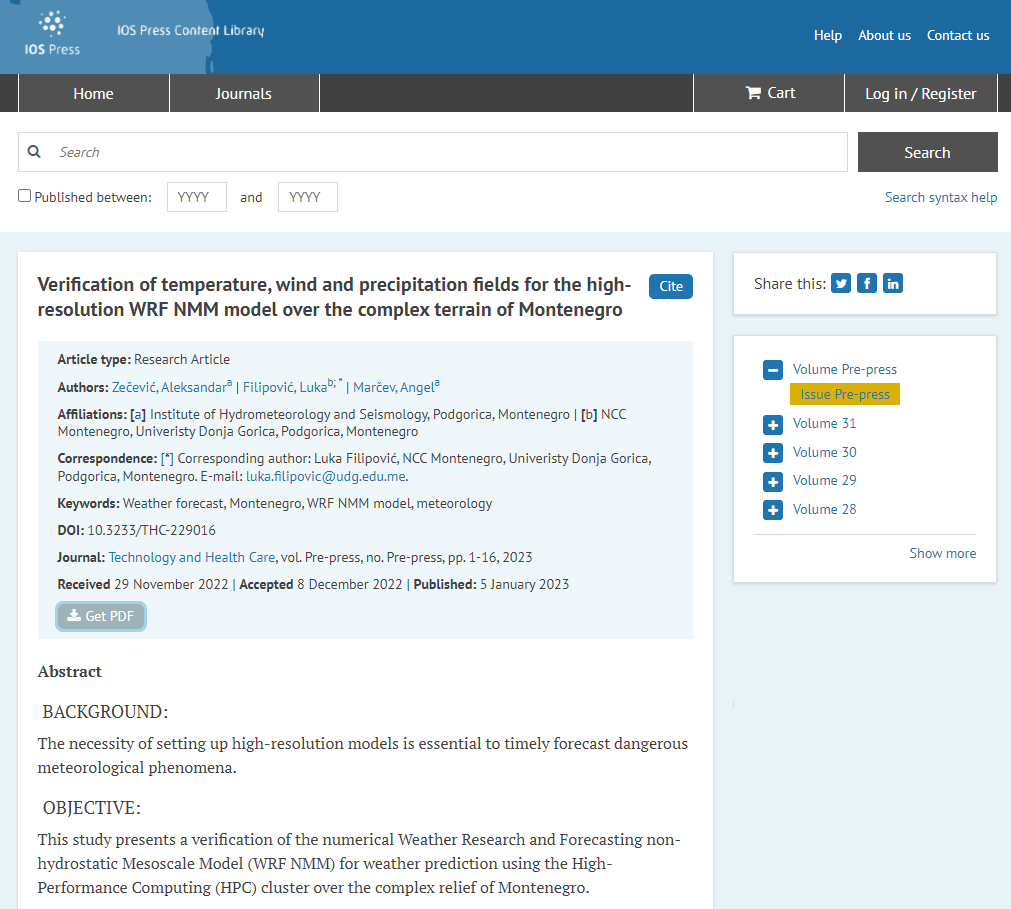
Link : https://content.iospress.com/articles/technology-and-health-care/thc229016


UDG and EuroCC Montenegro at the upcoming IEEE IT 2023 Conference

In the period from 15th – 18th of February the 27th international scientific and professional conference “INFORMATION TECHNOLOGIES 2023” (IEEE IT 2023) will traditionally be hosted in Zabljak. The conference will be held in the organization of: University of Montenegro – Faculty of Electrical Engineering, University of Donja Gorica – Faculty of Information Systems and Technologies, IT Society Montenegro, University of Belgrade – Faculty of Organizational Sciences, IEEE Association and IEEE Section for Serbia and Montenegro, with full support of the company Cikom from Podgorica. The chairman of the conference is prof. dr Bozo Krstajic from the Faculty of Electrical Engineering, University of Montenegro.

IT2023 – click on image to open website

Lectures and round table discussions will be organized at the Conference on trends in the development of information and communication technologies in the world, as well as current events in this field in Montenegro. Special session dedicated to project presentations will include EuroCC2 project – National Competence Centres for HPC, two H2020-MSCA projects TRACEWINDU and ODDEA, H2020 projects NI4OS-Europe and DEMETER, Eureka TRADE, Erasmus DigNest, and others.

The conference will include: a short course for Edge AI in IoT solutions (organzed by ANSO and EuroCC Montenegro), an HPC/AI workshop with applications, a presentation of the European cloud of open science and the results of successful international projects. This year, a student workshop will also be held as part of the DigNEST project, which will focus on IT innovations in the field of health and agriculture. In addition to the above mentioned, the papers that have arrived and refer to topics from these areas will also be presented at the Conference.

Click to watch

All those interested can follow the activities at the Conference online as well, through the video conference access links available on the official website of the Conference (link).

HPC4S3ME IPA Project

The full title of this new project is “Building scientific and innovation potential to utilize HPC and AI for S3 Smart Specialisation in Montenegro – HPC4S3ME” and it is funded by the IPA II program, call reference EuropeAid/172-351/ID/ACT/ME.

The overall objective of HPC4S3ME project is to contribute to straightening research excellence by building scientific and innovation potential based on the use of high performance computing and artificial intelligence (AI) for applications in industrial domains proposed by the Smart Specialisation Strategy (2019-2024) for Montenegro. The implementation of this project will provide a state-of-the-art environment for young researchers to gain experience in research and development in computer science, more specifically to apply machine learning and deep learning algorithms supported by HPC in order to create innovative information-communication technology solutions for applications in agriculture and food value chain, health and tourism, energy and sustainable environment, namely the priority domains identified by the smart specialisation strategy. This is a two-year project and it starts in Jan 2023.

Click on image to open HPC4S3ME website

MAIA – Montenegrin AI Association

MAIA – Montenegrin AI Association is a Non-Governmental organization, founded in September 2022 with an ambition to bring together the Montenegrin AI community. Our goal is to popularize Artificial Intelligence related research and spread awareness of its importance in our country, but also encourage our society to join the fast wave of AI innovation in the World. Several NCC Montenegro team members are taking part in this initiative. Check MAIA website for more details at the following link.

Click on image for more info on MAIA

“Deep Learning and HPC” training successfully completed

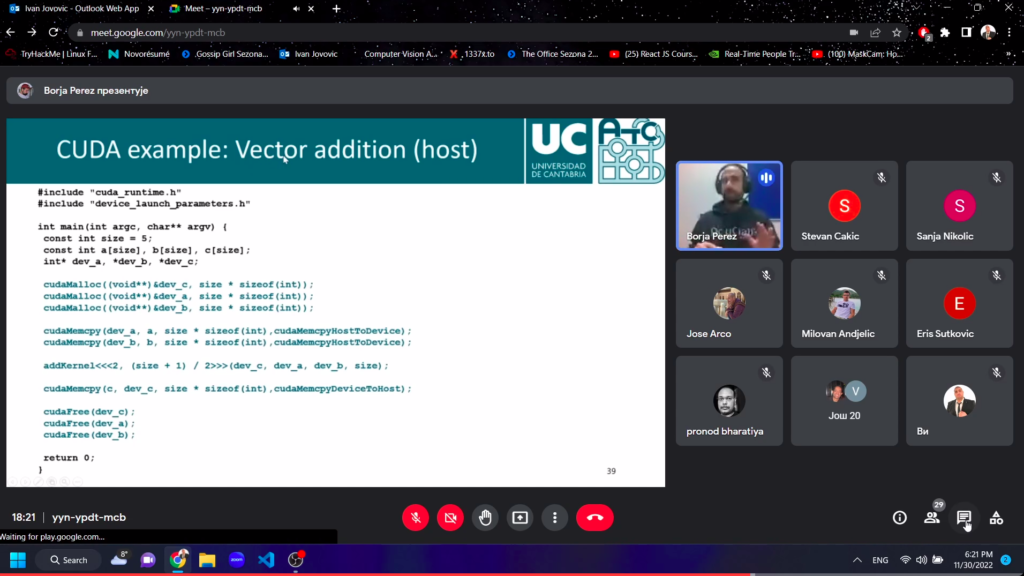
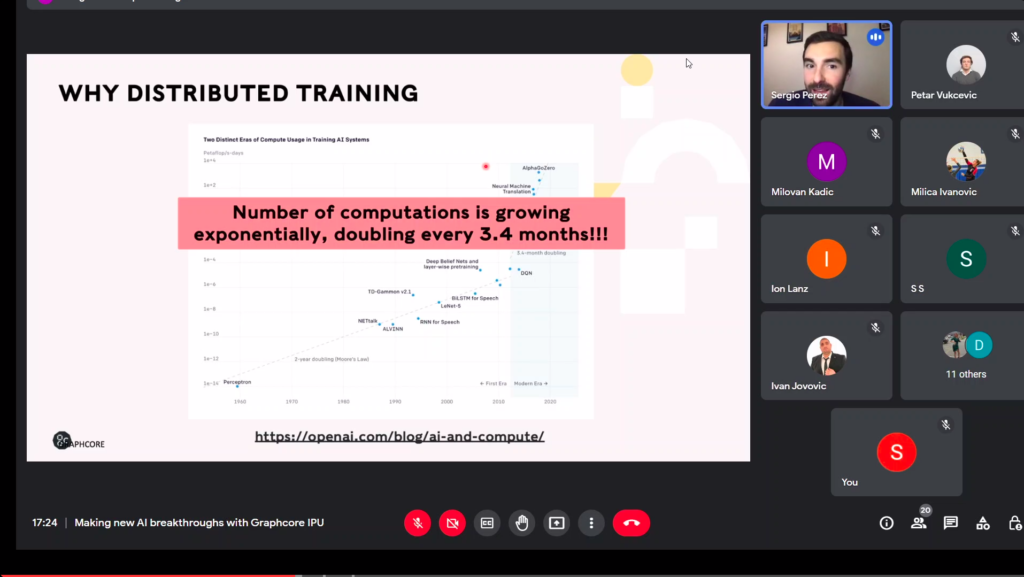
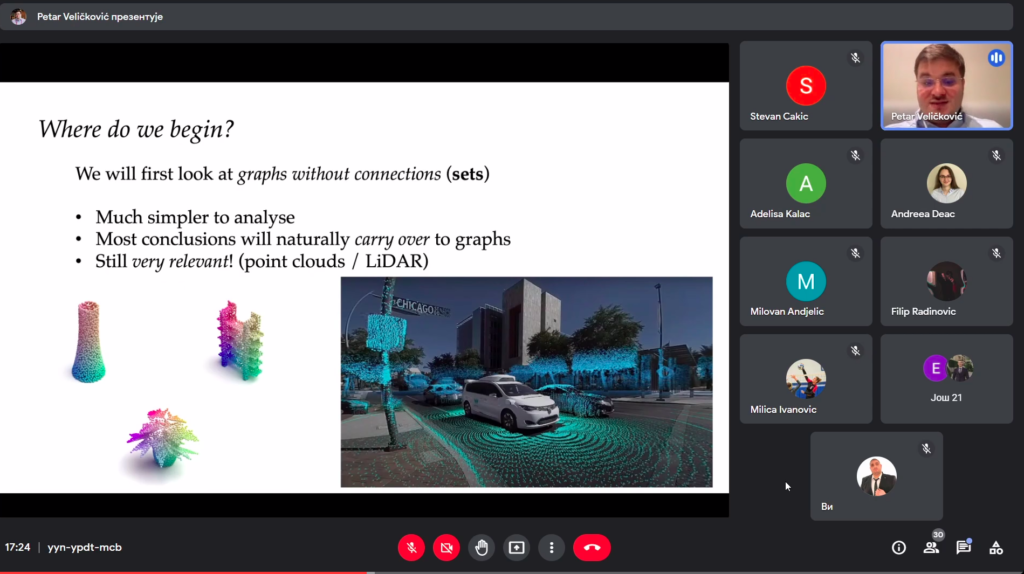
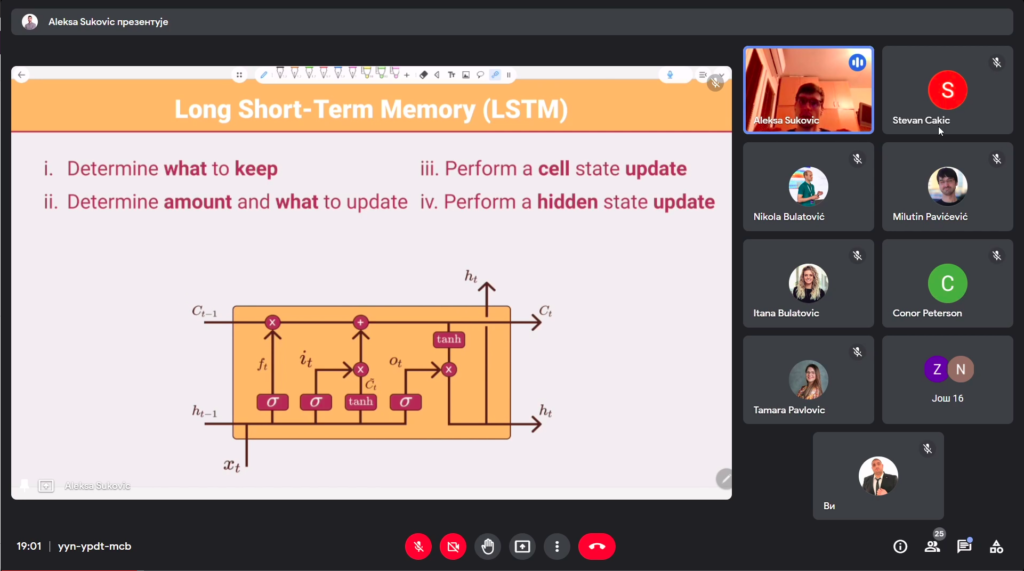
The University of Donja Gorica (UDG), EuroCC Montenegro (national competence center for supercomputers) in cooperation with the National Center of Spain (NCC Spain) organized the course “Deep Learning and HPC”. Guest lecturers from renowned institutions such as Petar Veličković from the University of Cambridge and DeepMind (Introduction to Graph Neural Network), Borja Pavon from Universidad de Cantabria and Barcelona Supercomputing Centre (High-Performance Computing systems), Sergio Perez from Graphcore and Imperial College London (Making new AI breakthroughs with Graphcore IPU), Itana Bulatović from AI Clearing and Shanghai Jiao Tong University China (Deep Learning for Computer Vision), Andreea Deac from  Montreal Institute for Learning Algorithms (Deep Reinforcement Learning), Aleksa Šuković from Max Planck Institute (Advanced NLP), Nikola Bulatović from University of Montenegro and Uhura (Introduction to NLP),  were involved in the implementation of the training. These classes are organized online for all interested participants.

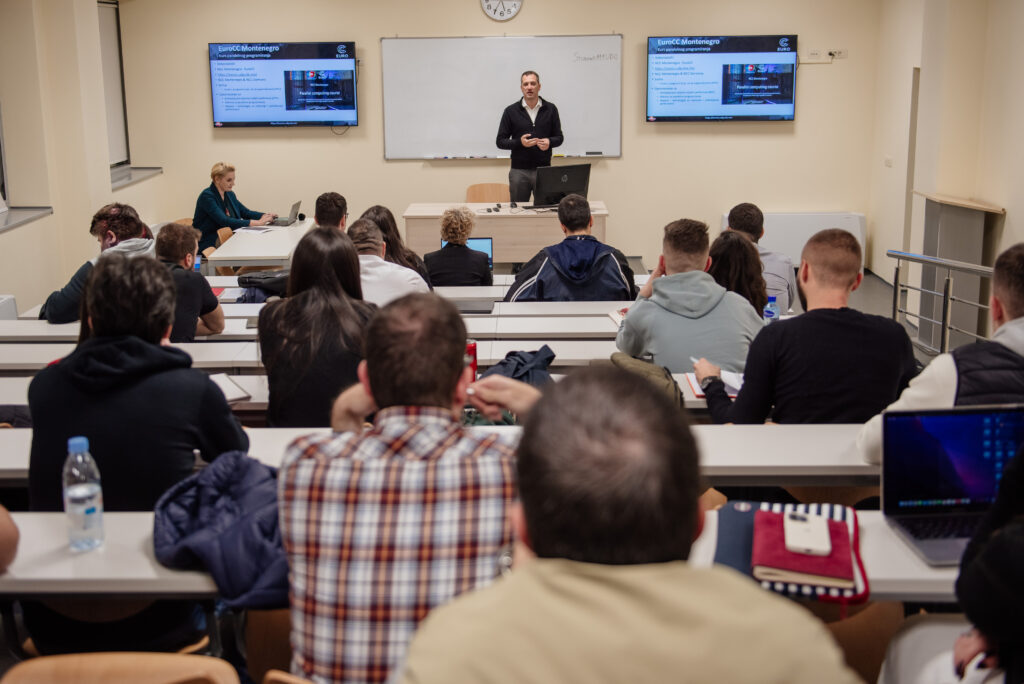
During this training, we had 30 to 35 active participants from the start to the end of the course. The first and last classes were organized by teachers from UDG and NCC Montenegro (Stevan Čakić and Stevan Šandi) in person for students from UDG (Introduction to Deep Learning, Deep Learning for HPC, Deep Learning with Business and Ethics in AI). The course was mandatory for students of the master’s program Artificial Intelligence as an integral part of the course Deep Learning.

HPC systems
Making new AI breakthroughs with Graphcore IPU
Deep Learning and Computer Vision
Deep Reinforcement Learning
Introduction to NLP

Advanced NLP

Appreciative feedback on Parallel Computing Course

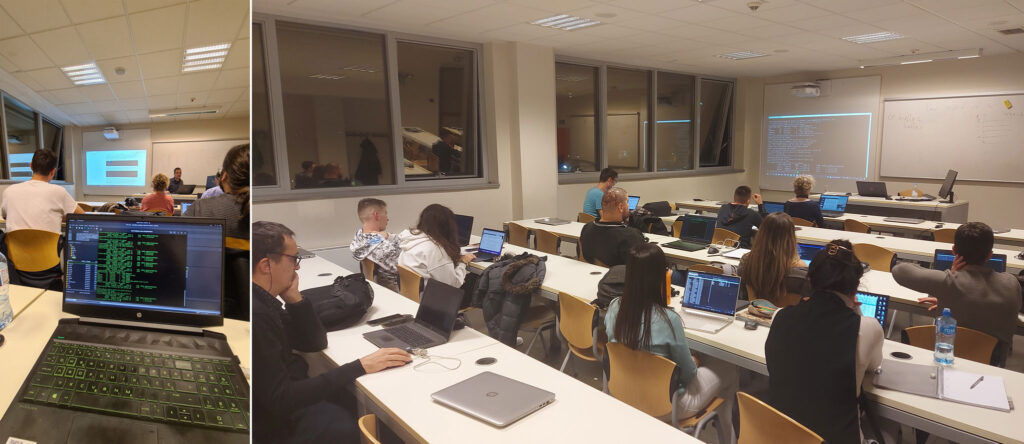
Parallel Programming training course was organised by UDG and HPC NCC Montenegro in cooperation with NCC Germany, from 8th November to 14th of December 2022. The training was dedicated both to companies interested in the parallel programming skills and to students eager to learn on theoretical basis and practical features of parallel computing, with 54 attendees registered in total. Program course covered: Concepts of parallel computers – purpose, architecture, division; Practical guidelines for the development of parallel programs based on the architecture of shared and distributed memory as well as on the hybrid model; Analysis of the performance of parallel programs including decomposition of serial program and transformation into parallel programs. Beside the theoretical part, the training also included practical examples, use cases and hands-on exercises that allowed participants to apply and test their parallel programming knowledge on supercomputing systems/HPC-working environment. Participants learned to identify parallelization problem, analyse parallel programs complexity and efficiency, and develop simple parallel program, with dedicated support of academic professors and HPC experts dr Luka Filipovic from NCC Montenegro and lecturers from The Leibniz Computing Center, NCC Germany.    


After the training, survey forms were sent out to regular participants, revealing interesting statistics on training activity, industry appeal and further expectations.

Regarding academic participants, this was an obligatory course for students of the MSc program Artificial Intelligence, but also 1/3 of students came from Engineering and IT faculty level programs. Regarding industry participants, the majority were coming from the ICT sector, with working experience up to 5 years (but also 38% with 15+ years).

Decision to attend Parallel Programming course was dominantly influenced by: 1) personal interest in developing parallel computing skills, 2) possibility to obtain practical experience and 3) engagement of international and experienced lecturers.

With regard to level of complexity, the majority of participants considered the program course demanding, but successfully managed. With regard to teaching program and course organisation, 65% and 71% of participants evaluated them with the highest grade, respectively. With regard to communication with lecturers, knowledgeable answers and useful consultations were highly appreciated. 86% of surveyed participants confirmed that the training course fully or mostly met their expectations. 

Being asked what they liked the most about the course, participants stated: hands-on approach, practical examples, expertise of lecturers and open source application used by NCC in Germany. And when it comes to possible improvements, focus was on providing more practical examples and tasks. Over 70% participants would be further interested in Artificial Intelligence, Machine Learning and Deep Learning training opportunities, and all industry representatives confirmed interest in potential cooperation with UDG on project activities.

The general aim of the training course was to increase the parallel programming skills in Montenegro, but also to promote EuroCC projects and supercomputing resources, and to encourage HPC-based project ideas and partnerships. 

Participation of NCC Montenegro @ 3rd EUROCC/CASTIEL global conference

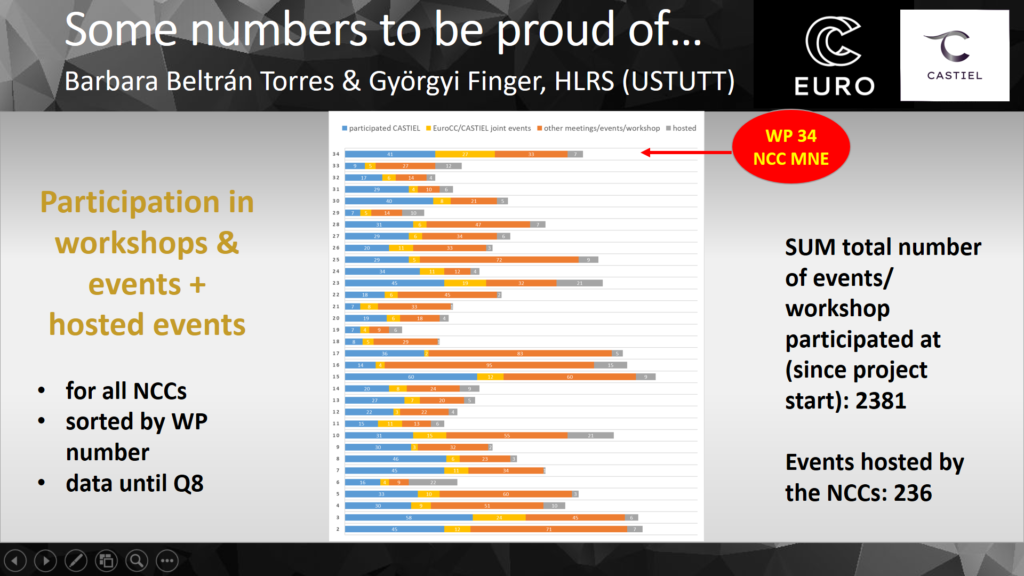
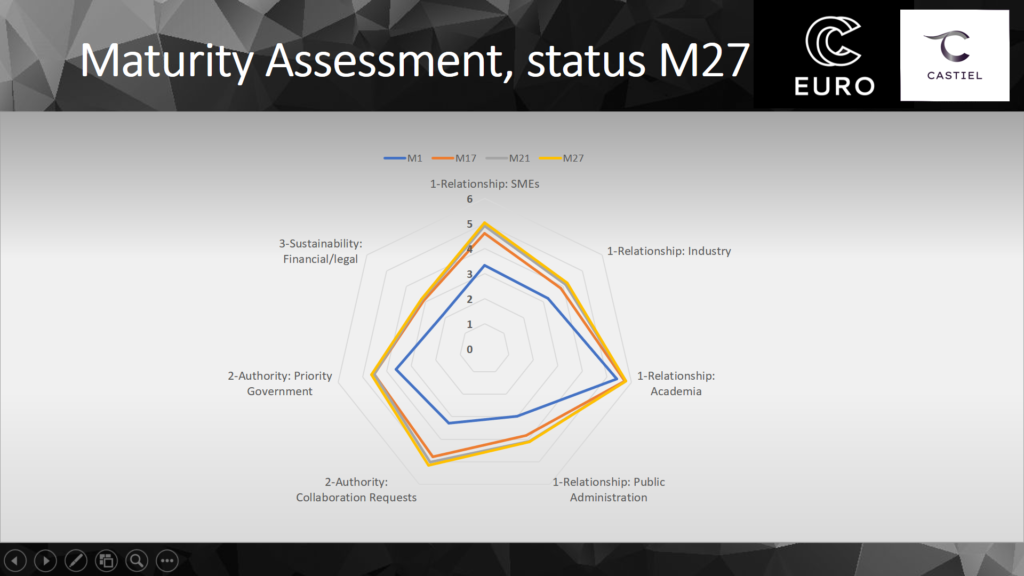
Sanja Nikolic, representative of HPC NCC Montenegro participated at 3rdEUROCC/CASTIEL global conference, organized with an aim of presenting of main results, key achievements and NCCs successful deliverables within EuroCC1 project phase.

EUROCC/CASTIEL representatives presented key highlights of EUROCC 1 project management with regard to Competence Map building; Training/Mentoring /Twinning activities; Industrial interaction support and Awareness Creation events and actions.

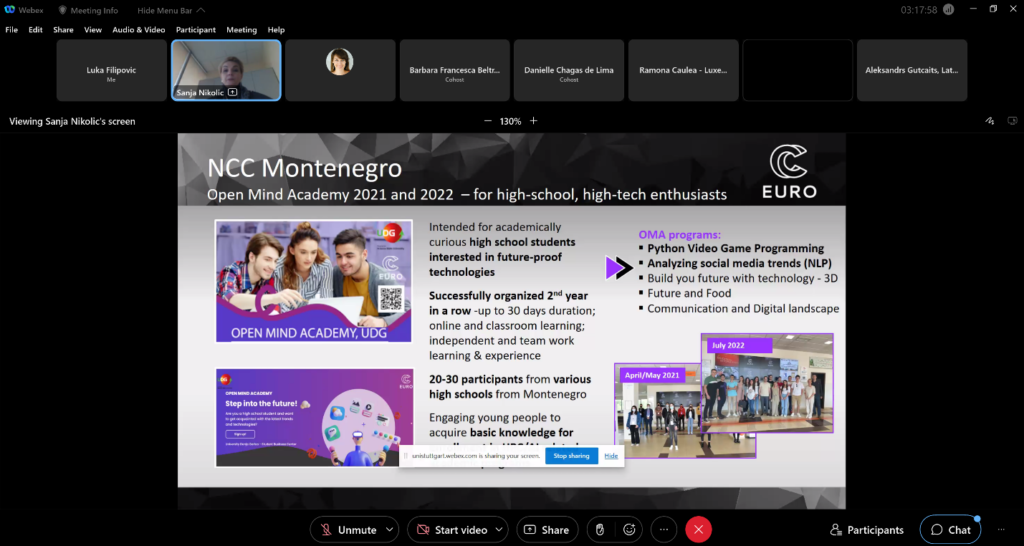
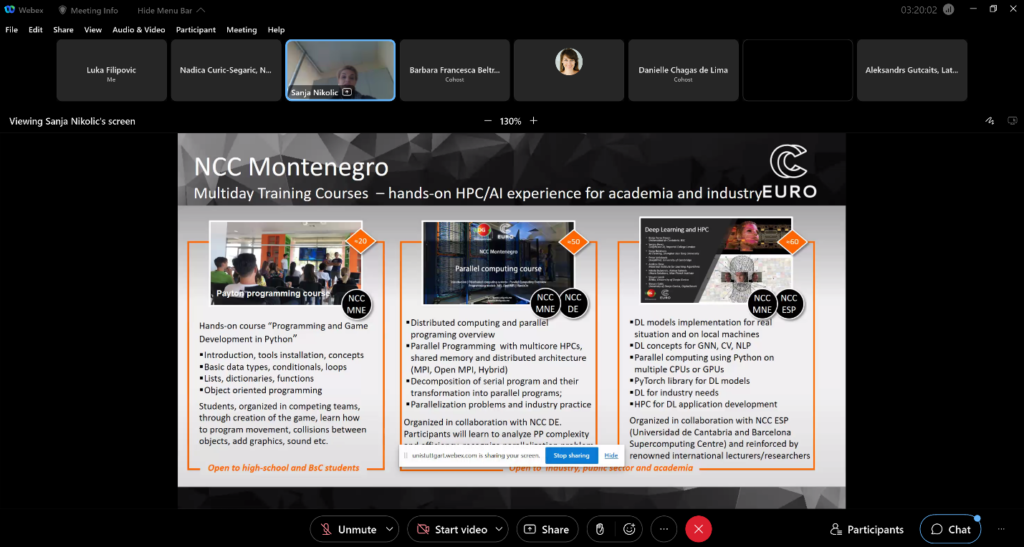
In the second part of the conference NCCs Finland, Luxembourg, Montenegro, Slovenia, Sweden and Turkey presented key achievements and EUROCC1 contributions in their respective working packages and selected project activities. NCC Montenegro presented multiple activities and overall results in the project segment related to HPC/HPDA/AI Trainings and Skills development.