Exploring AI and HPC Collaboration in Medical Imaging: Visit to Poliklinika Filipović

As part of the ongoing EuroCC2 activities, representatives of the HPC National Competence Center (NCC) Montenegro, hosted at the University of Donja Gorica (UDG), visited the private medical institution Poliklinika Filipović in Podgorica. During the visit, the NCC team met with Dr. Verica Stanišić, a radiology specialist at the clinic, to discuss opportunities for collaboration in the application of High-Performance Computing (HPC) and Artificial Intelligence (AI) in medical diagnostics.

The purpose of the meeting was to introduce the clinic to the mission of EuroCC2, and to explore how state-of-the-art computational technologies can support the analysis of medical images, particularly in the context of early detection and prevention of breast cancer. The NCC Montenegro team shared insights into available national and European resources for HPC and AI, and highlighted use cases relevant to image analysis and clinical decision support.
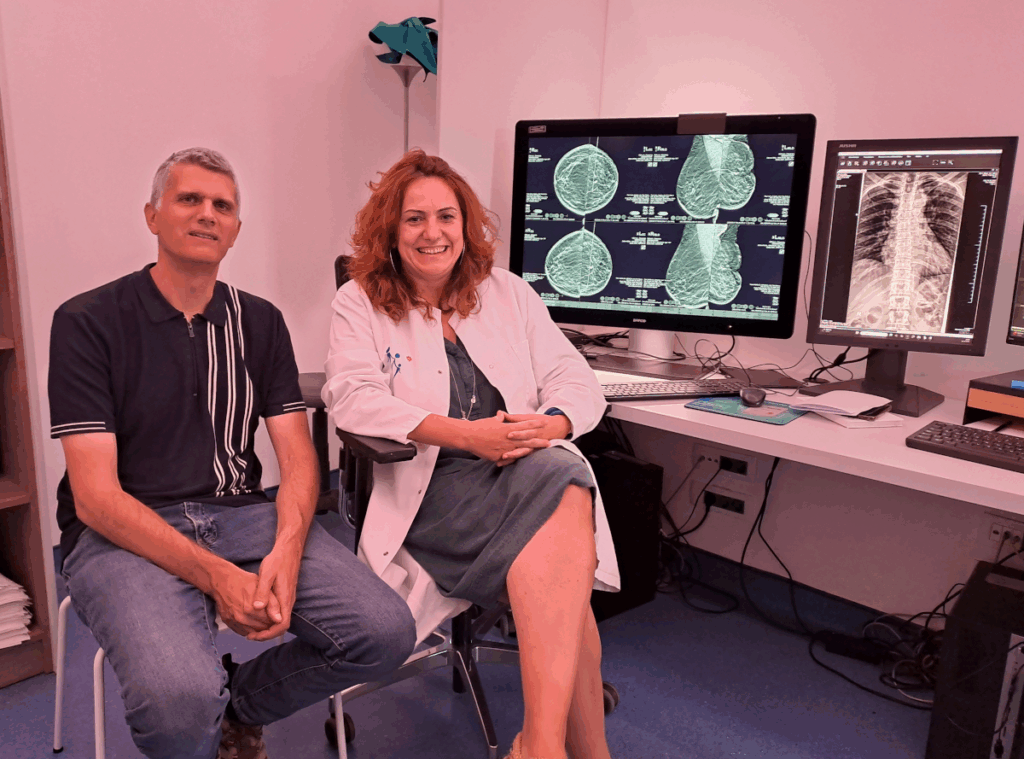
Our host was dr Verica Stanisic

Our hosts presented the work of Poliklinika Filipović and demonstrated some of the latest imaging technologies they employ, including digital mammography, ultrasound, and elastography, which are crucial for early breast cancer detection and monitoring. These technologies are supported by a highly professional team and modern diagnostic infrastructure, forming a strong foundation for innovative clinical research and development.

The meeting concluded with a mutual interest in establishing future cooperation, including the joint exploration of pilot use cases in AI-assisted image interpretation and diagnostics. A follow-up meeting is already planned, where additional team members from both NCC Montenegro and Poliklinika Filipović will join the discussion to define next steps.
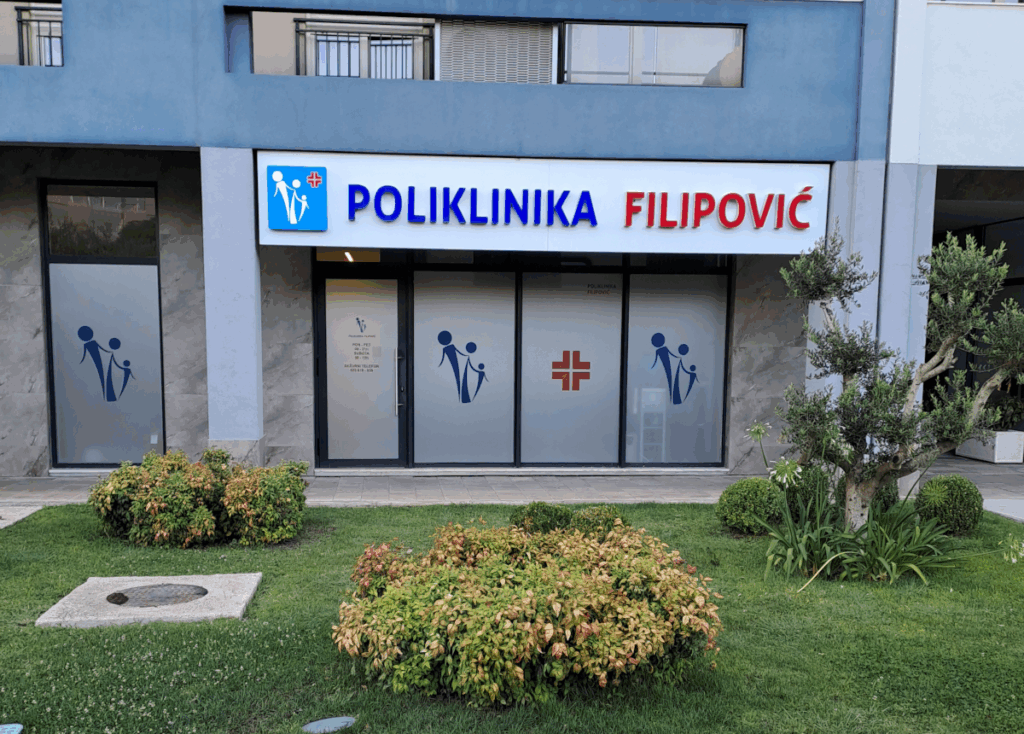
Another consultation meeting will be organized soon

This visit represents another important step in building cross-sectoral bridges between the HPC/AI community and healthcare professionals in Montenegro, paving the way for innovations that benefit both clinicians and patients.
Open Call for Funding Opportunity: Business Experiments

FFplus (Fortissimo plus), the European initiative highlighting and promoting the adoption of High-Performance Computing (HPC) by SMEs and start-ups across Europe, has announced its second Open Call to fund business experiments.

Key Call Details:

  • Submission Deadline: August 26th, 2025 at 17:00 Brussels local time
  • Expected duration of experiments: maximum 15 months with targeted commencement January 1st, 2026
  • The indicative total funding budget for all sub-projects funded under this call is € 4M.

This announcement is the second call for proposals to address the uptake of HPC by SMEs in order to solve specific business challenges of SMEs that have had no prior use of, or experience with, HPC services. The resulting sub-projects will perform “business experiments” (also referred just as experiments) that should demonstrate to the broader European SME ecosystem that HPC uptake solves business challenges and leads to positive business impact through the use and deployment of HPC-based computational methods. Thus, their key outputs are success stories that promote, communicate, and disseminate the business impact of HPC uptake to the SME ecosystem.

Proposals are sought that address business challenges from European SMEs from varied application domains, whereby SMEs whose adoption of advanced HPC services will create the highest business impact will be prioritized. SMEs with an academic focus or activities with a potential impact only in the long term are not within the scope of the call.

In the context of the second Open Call for Business Experiments, FFplus offered two webinars to the public to receive all the information concerning the Call and answer questions.

More info : https://www.ffplus-project.eu/en/open-call/business-experiments/

Consultations with Five Group company for report preparation and new project application

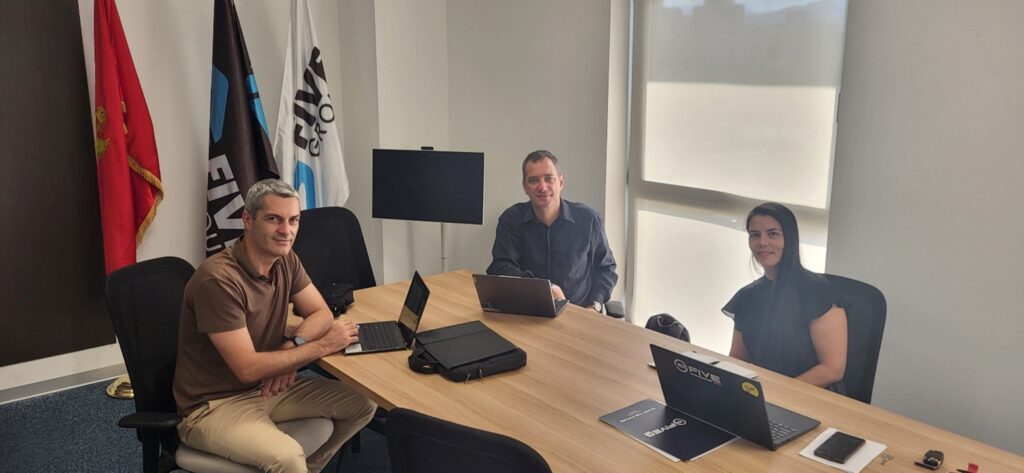
 The members of the NCC Montenegro team, Prof. dr. Enis Kočan and Assist. prof.  Luka Filipović, have visited the Five Group company on July 18, 2025. At this meeting, the report form for Benchmark projects was presented and instructions were given to the Five Group company on how to prepare and complete this report, since the period of use of the obtained resources on Leonardo HPC for this company expires at the end of July. The members of the NCC Montenegro team have also held consultations with this company on the next steps in the preparation of the new project application. Based on the presented project proposal and the estimated needs of the Five Group company, it was recommended that after submitting the report for the Benchmark project, they prepare an application for the Development open call for the use of HPC resources.

Support to young researchers from the Faculty of Electrical Engineering

The NCC Montenegro team at the University of Montenegro (UoM) regularly meets and collaborates with various research groups within the university. In this way, they stay updated on new research projects, emerging research directions, and especially the topics pursued by young researchers. As a result, the need for high-performance computing (HPC) resources has been identified for the master’s research conducted by two research assistants at the Faculty of Electrical Engineering, UoM, led by Assistant professor Miloš Brajović.

Their research deals with Graph Neural Networks (GNNs), with a particular focus on data representation, interpretability and scalability for complex scientific datasets. GNNs have demonstrated remarkable potential in modeling relational and structured data across various domains, including physics, chemistry, biology and computer vision. However, despite their predictive power, their “black-box” nature poses challenges in terms of explainability and trustworthiness, especially in critical applications such as scientific discovery and engineering.

Successful submission for EuroHPC call

To benchmarking state-of-the-art GNN architectures, evaluate their performance and scalability, and develop and test new GNN models and interpretability techniques for graph-based applications, these two researchers will require access to HPC resources. Therefore, the NCC Montenegro team supported them in preparing and submitting an application for the Development call to gain access to the Leonardo HPC. As a result, they got access to the Leonardo Booster partition, securing 4,500 node hours for their research.

Collaboration with NVIDIA, OpenACC and six NCCs

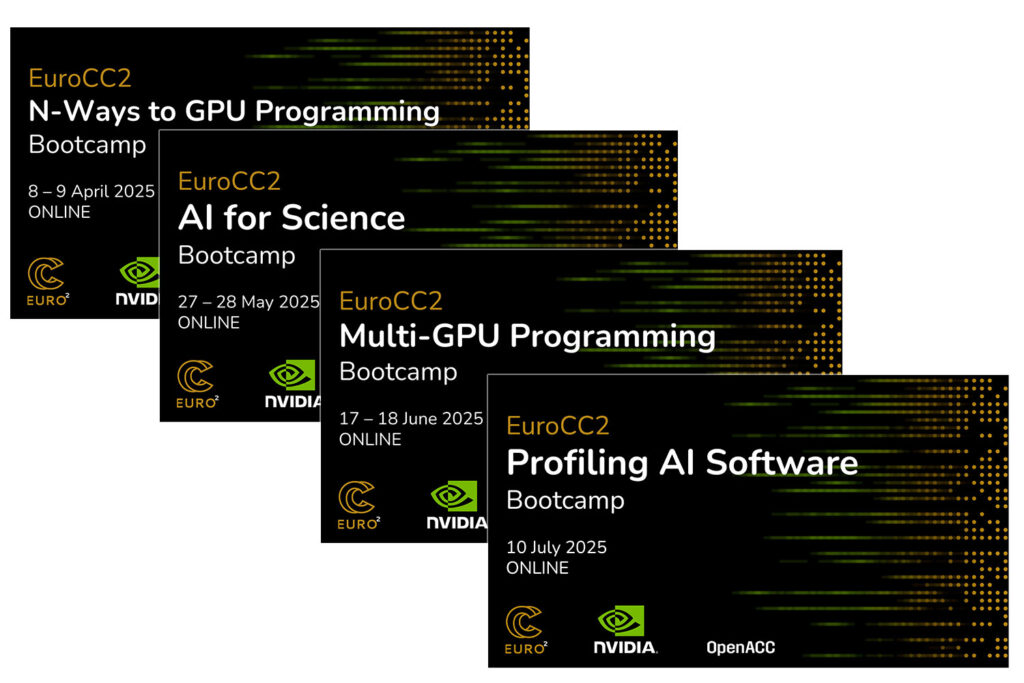
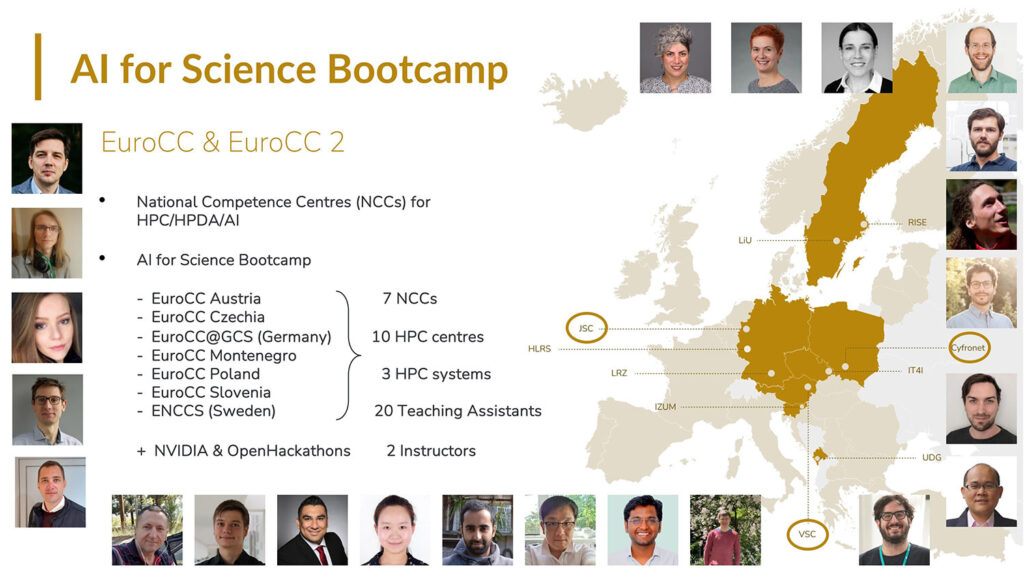
In collaboration with NVIDIA and the OpenACC organization, a group of National Competence Centers from Austria, Czechia, Germany, Montenegro, Poland, Slovenia, and Sweden organized several Bootcamps for the European HPC and AI user community.

Students, researchers from UDG and UoM, enthusiasts, and industry experts in the fields of high-performance computing and artificial intelligence, together with hundreds of participants from across Europe, attended courses on parallel programming (N-Ways-GPU and Multi-GPU) and AI (AI for Science and AI Profiling). Researchers from Montenegro also contributed as teaching assistants.

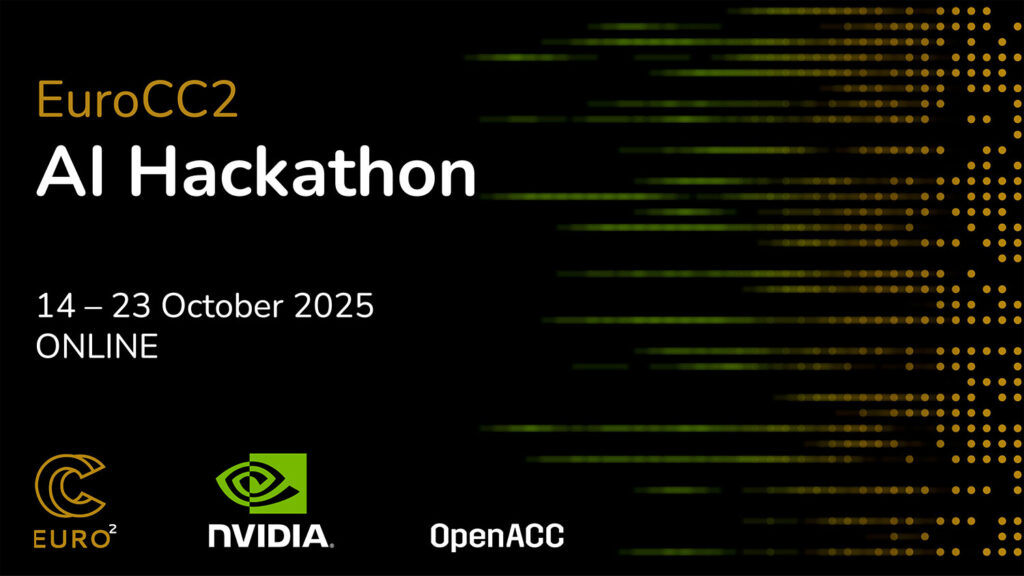
As one of the events of this collaboration, we are pleased to announce the OpenAI Hackathon, which will take place from October 14 to 23, 2025. The event is led by NVIDIA and the OpenACC, together with the EuroCC National Competence Centres of Austria, Germany, and Poland.  Open AI Hackathons are multi-day, intensive hands-on events designed to help AI and ML engineers and data scientists accelerate, optimize, and scale their real-world projects leveraging the latest technologies. The event pairs participating teams with dedicated expert mentors to enhance the performance, efficiency, and scalability of their applications using state-of-the-art programming models, libraries, and tools. Whether you’re working on deep learning, data analytics, or model optimization, this hackathon provides a unique opportunity to push the boundaries of innovation using an advanced AI and ML infrastructure.

Important dates

  • 05 August 2025 – Application Deadline
  • Aug/Sep 2025 – Notification about Acceptance
  • 14.–23.10.2025, 09:00 – 17:00 CEST, Hackathon ONLINE (using Zoom)

More info, agenda and registration at LINK.

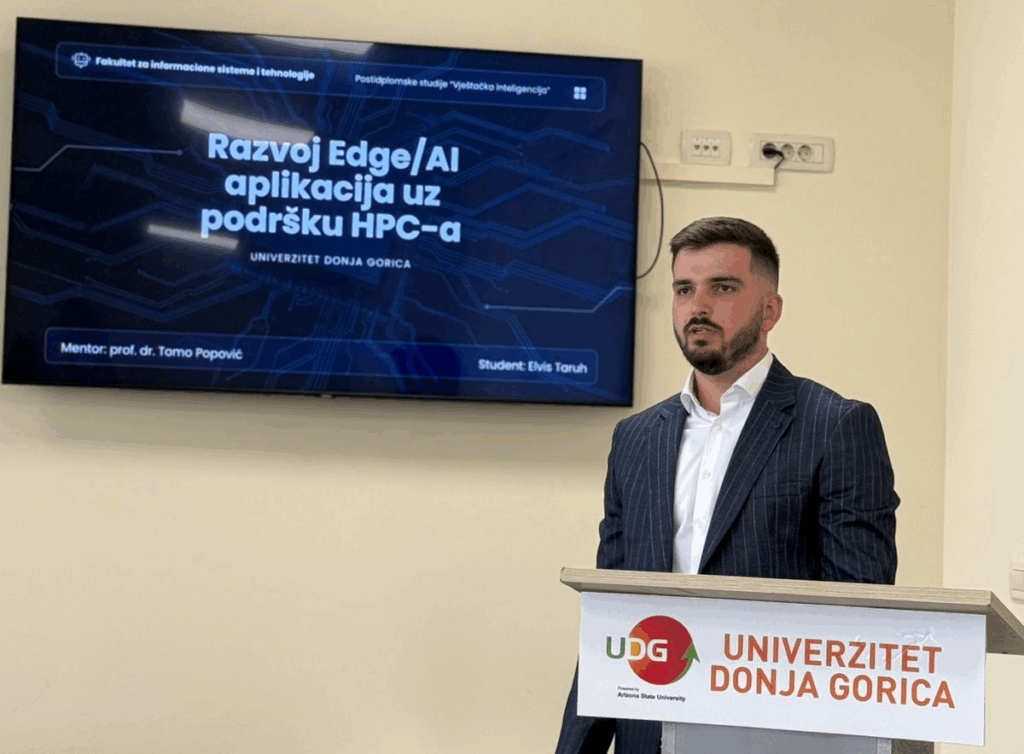
Master Thesis Defense: Development of Edge/AI Applications with HPC Support

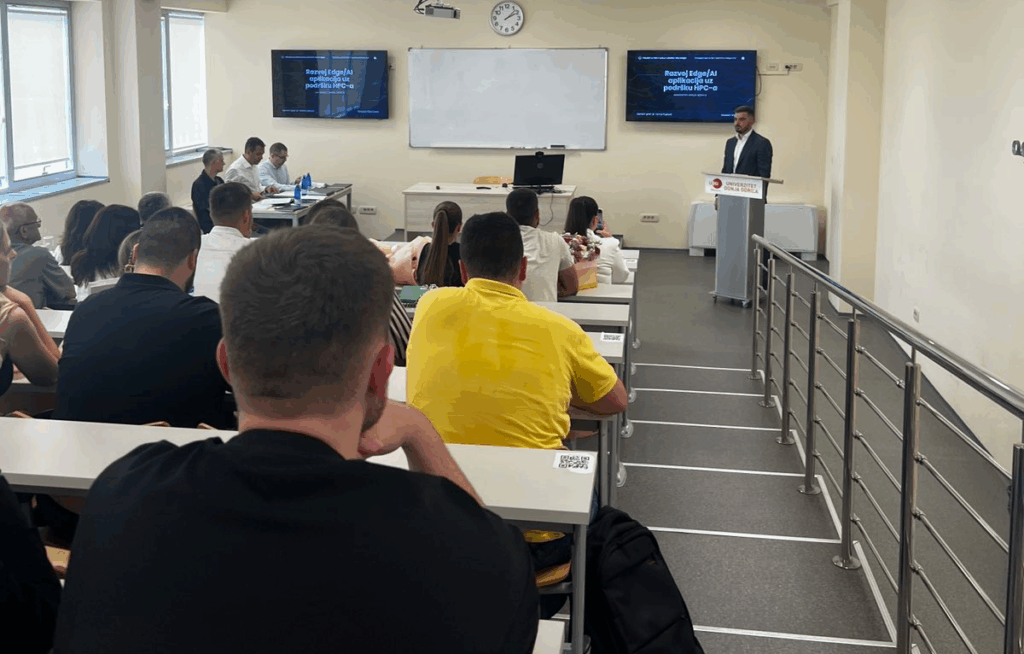
Mr. Elvis Taruh successfully defended his master’s thesis titled “Development of Edge/AI Applications with HPC” at the Faculty of Information Systems and Technologies, University of Donja Gorica.

Mr Elvis Taruh

ABSTRACT – The efficiency of training artificial intelligence (AI) models has become a crucial factor in modern research, especially when dealing with complex systems that require substanial computational power. This study explores how the application of high-performance computing (HPC) and Edge devices can optimize the AI model training process, reducing processing time and improving efficiency. Through an experimental approach, AI model training was analyzed across three different platforms. Local computer, Google Colab and the HPC cluster at the University of Donja Gorica. As a practical example, livestock detection was used. By comparing the training time, memory consumption, and model accuracy, the research demonstrates that HPC clusters significantly accelerate the training process compared to traditional methods, while Edge devices enable faster real-time data analysis.

There was around 30 people attending. This was a small celebration for EuroCC2 and EuroCC4SEE projects

Master Thesis Defense: AI Tutors with LLMs and HPC

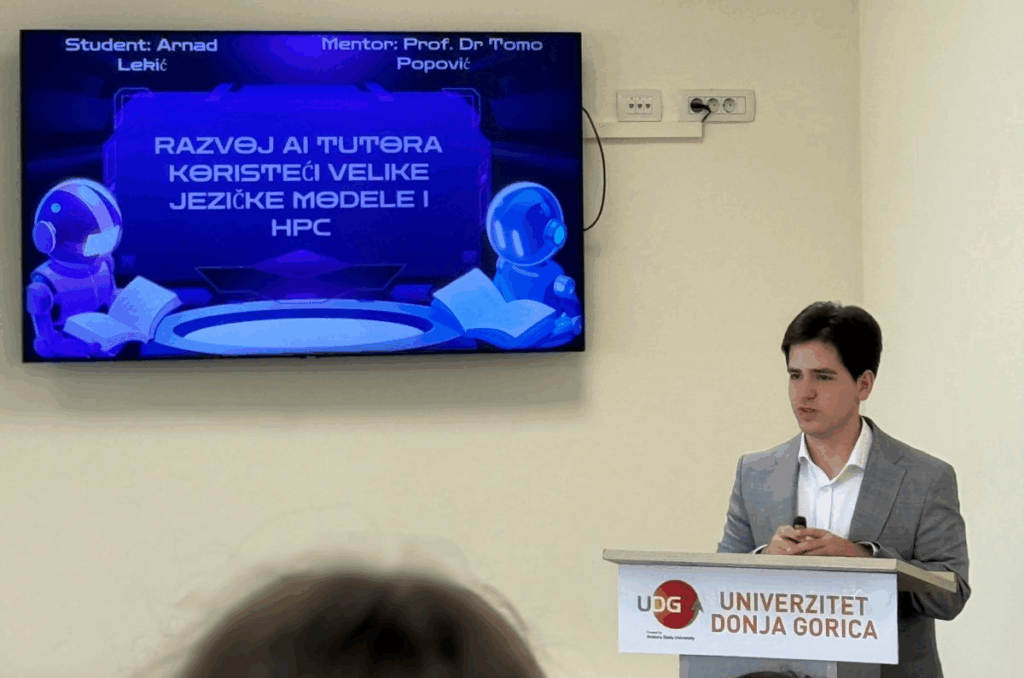
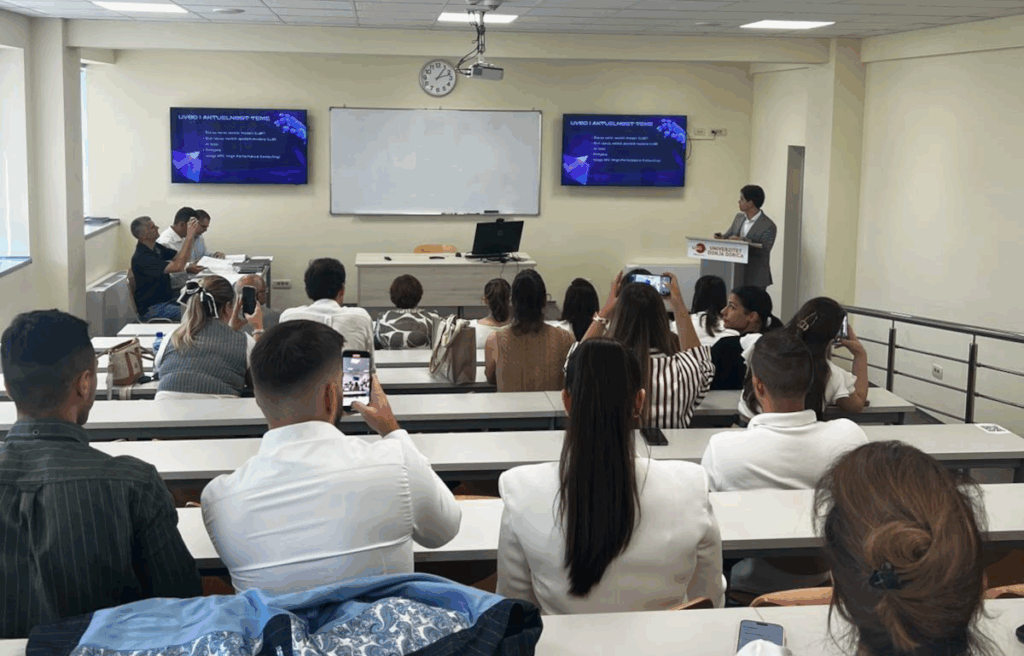
Mr. Arnad Lekić successfully defended his master’s thesis titled “Development of an AI Tutor Using Large Language Models and HPC” at the Faculty of Information Systems and Technologies, University of Donja Gorica.

Mr Arnad Lekic

ABSTRACT – This thesis explores the development of a personalized AI tutor using large language models (LLMs), with a specific focus on the LLaMA architecture and the application of High-Performance Computing (HPC) resources. The research involves the acquisition, setup, and evaluation of an open-source LLaMA model, with the goal of building a system capable of automated test grading. Special emphasis is placed on the training efficiency and feasibility of running the model locally using the available computing nodes, compared to cloud-based solutions like Google Colab. Beyond the technical implementation, the study also addresses the ethical challenges of using generative AI in education. Through experimental analysis, the research demonstrates that open models can be effectively adapted for educational purposes, with the potential to expand to grading diverse exam formats and generating educational content. The work provides directions for future development of systems leveraging advanced multimodal models for more complex tasks.

The defence was attended by over 30 people. We had three candidates that day, all in the context of EuroCC2 and EuroCC4SEE