HPC resources to continue research in the field of AI segmentation and inspection by 3D scanning

In order to successfully conduct new research directions within the project “AI Segmentation and Inspection by 3D Scanning,” researchers from the Center for Computer Sciences at the Faculty of Science and Mathematics have developed another successful application for utilizing HPC resources provided by EuroHPC Joint Undertaking. After completing the report for previous resource usage under the Benchmark call, and with the support of the NCC Montenegro team from the University of Montenegro, an application was prepared to access the Leonardo supercomputing center under the Development call.
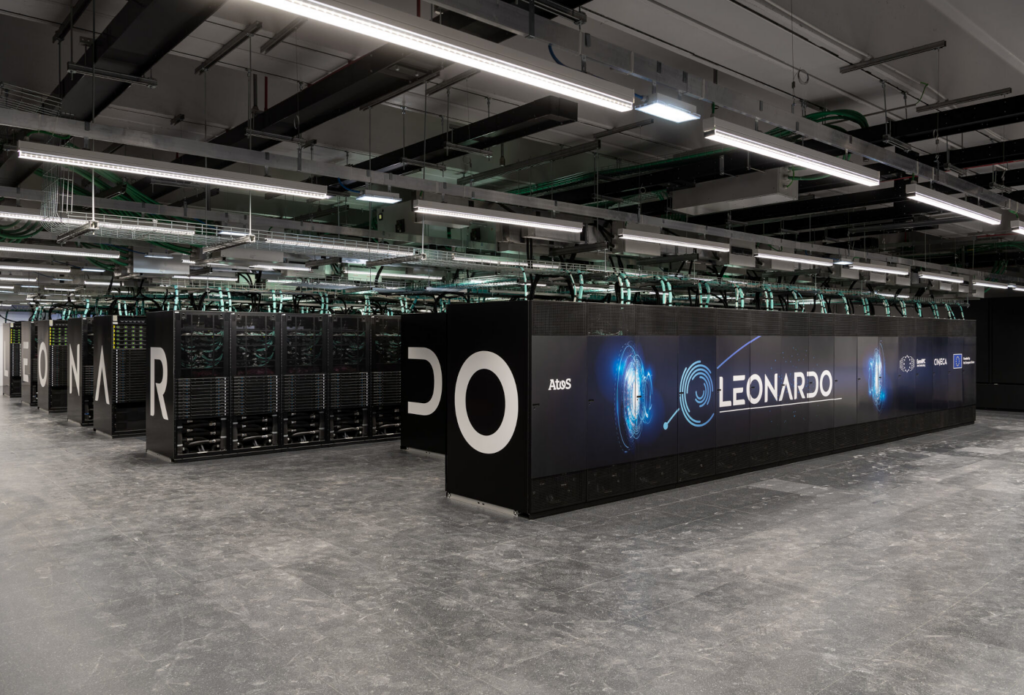
As a result of this project, it is anticipated that the system for automatic segmentation of 3D representations of mechanical assemblies obtained through 3D scanning will be expanded. This opens up possibilities for applications in fields such as reverse engineering, quality control, augmented reality (AR), virtual reality (VR), and more. Additionally, the project is expected to culminate in the defense of a doctoral dissertation in this area.
Another successful application for HPC resources for Five Group

After completing the experiment on the Leonardo booster partition, obtained through the Benchmark Call, Five Group successfully applied for HPC resources again — this time through the Development Call. In consultation with the NCC Montenegro team, it was recognized that their new project idea, stemming from the ongoing “Wasco AI – Custom AI Assistant Optimization via HPC” project, aligns better with the conditions of the Development Call for EuroHPC JU resources. Consequently, Five Group prepared another application with the support of the NCC Montenegro team, and since mid-August, they have once again gained access to the Leonardo Booster partition, this time for a period of one year.

Wasco AI – Custom AI Assistant Optimization via HPC

Conference Paper: Real-time Image Generation on ARM-based Edge Devices

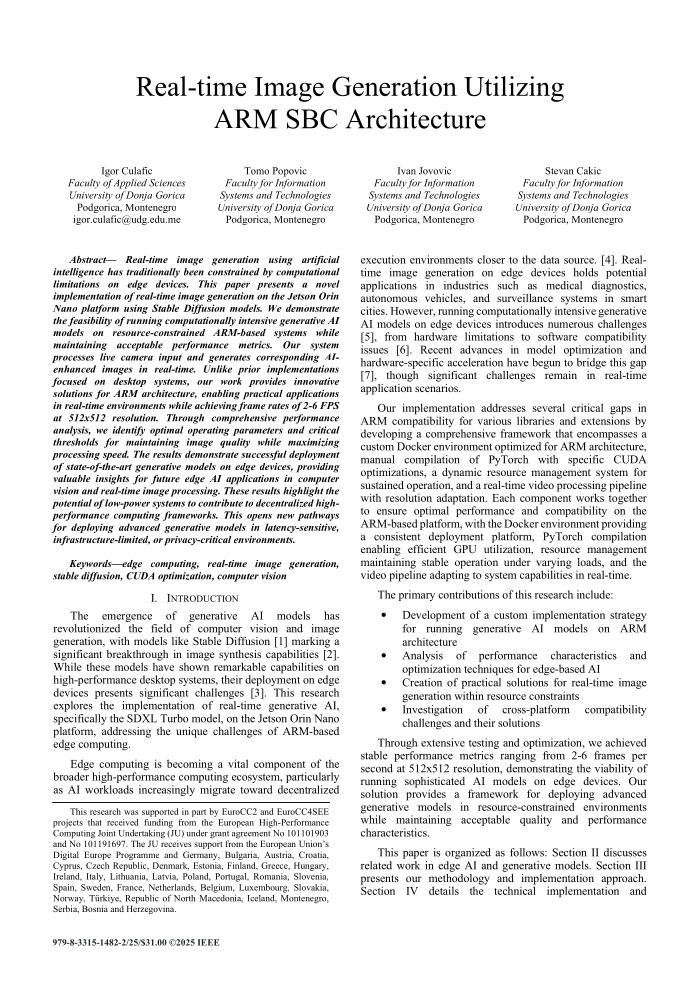
We are pleased to share that researchers from the University of Donja Gorica (UDG) presented their latest work at the 2025 IEEE International Symposium on Applied Sciences (ISAS). The paper, titled “Real-time Image Generation Utilizing ARM SBC Architecture”, is now published by IEEE and available at the following [link].

Click on image to open

The paper, authored by Igor Ćulafić, Tomo Popović, Ivan Jovović, and Stevan Ćakić, explores the deployment of advanced generative AI models on ARM-based edge devices, specifically the NVIDIA Jetson Orin Nano platform. Traditionally, real-time image generation with models such as Stable Diffusion has required powerful desktop GPUs or HPC clusters. This research demonstrates that, through careful CUDA optimization, ARM compatibility adjustments, and dynamic resource management, real-time performance of 2–6 FPS at 512×512 resolution can be achieved directly on low-power edge hardware.

The work addresses thermal management, memory constraints, and software compatibility challenges, proposing a custom ARM-optimized Docker environment and adaptive workload balancing. The results show how decentralized, low-power edge devices can complement high-performance computing ecosystems, opening new opportunities in fields such as healthcare, automotive, and smart city applications.

This publication also reflects the mission of NCC Montenegro to support academia and young researchers in advancing AI and HPC knowledge. By providing expertise, resources, and collaboration opportunities, NCC Montenegro helps integrate cutting-edge research with the broader European HPC ecosystem.

Consultations and Support for ITAS in Preparing the FFplus Application

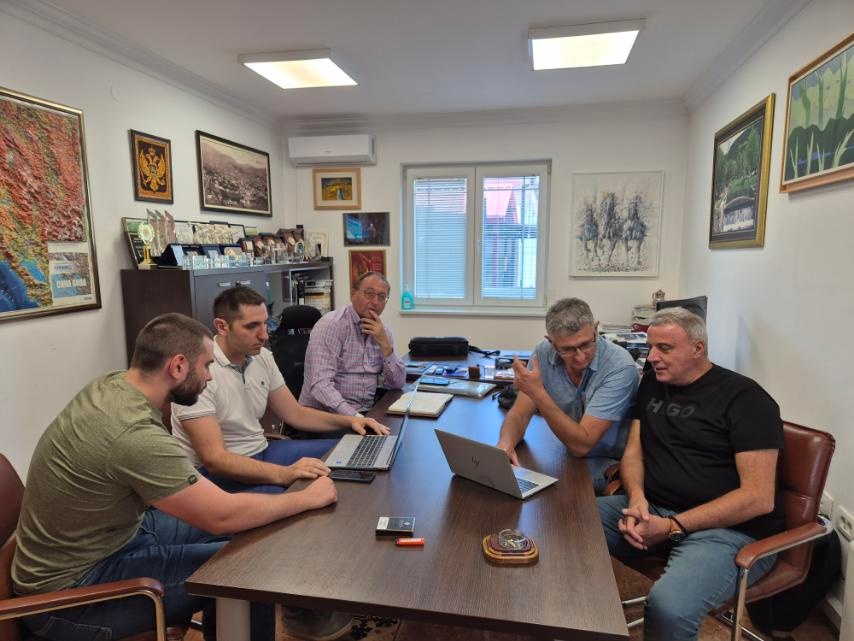
In June 2025, the NCC Montenegro team from UoM visited ITAS. During the visit, they presented details about FFplus Project Call 2 – Type 1, which focuses on Business Experiments. ITAS, an SME specializing in IT and realizing several innovative projects, recognized this opportunity and decided to prepare a project proposal related to their ongoing fintech project.

NCC Montenegro visiting ITAS

As part of the support services provided by the NCC Montenegro team, professor Božo Krstajić visited ITAS on Thursday, July 31, while professor Enis Kočan participated online in the meeting. During the session, all necessary information about the FFplus project call was shared with the ITAS team. The meeting also discussed the potential involvement of the NCC Montenegro team as a supporting partner, mainly providing technical support for the use of HPC resources.

Next steps for drafting the project proposal and identifying potential partners were agreed upon.

AI and HPC Potential in 3D Printing: Visit to 3D Soba

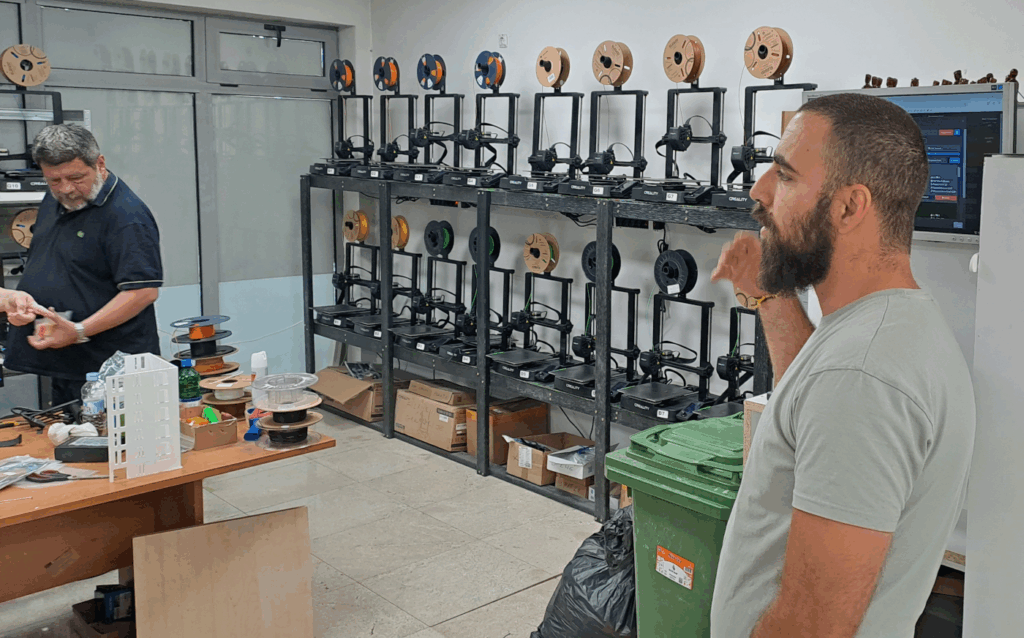
As part of ongoing outreach activities within the EuroCC2 project, representatives from NCC Montenegro (University of Donja Gorica) visited 3D Soba, a Montenegrin SME specializing in professional 3D printing and additive manufacturing solutions. The meeting was held in July 2025 at 3D Soba’s production site in Podgorica and marked an initial step toward potential collaboration in the areas of high-performance computing (HPC) and artificial intelligence (AI). 3D Soba is one of the first SME companies in the region to establish a full-scale 3D printer farm, offering rapid prototyping, custom product development, and small-batch manufacturing services to a growing number of clients across industries. Their innovative approach has positioned them as a regional pioneer in advanced digital fabrication.

3D Soba Production facility

During the visit, the NCC Montenegro team presented the goals and current activities of the EuroCC project, focusing on opportunities for SMEs to leverage HPC and AI to improve efficiency, optimize production pipelines, and explore innovative applications in digital manufacturing. Several interesting ideas emerged during the discussion, including the use of AI in 3D model generation and design optimization, the potential for simulation-supported prototyping using HPC resources, and integration of generative design techniques to streamline custom production workflows.

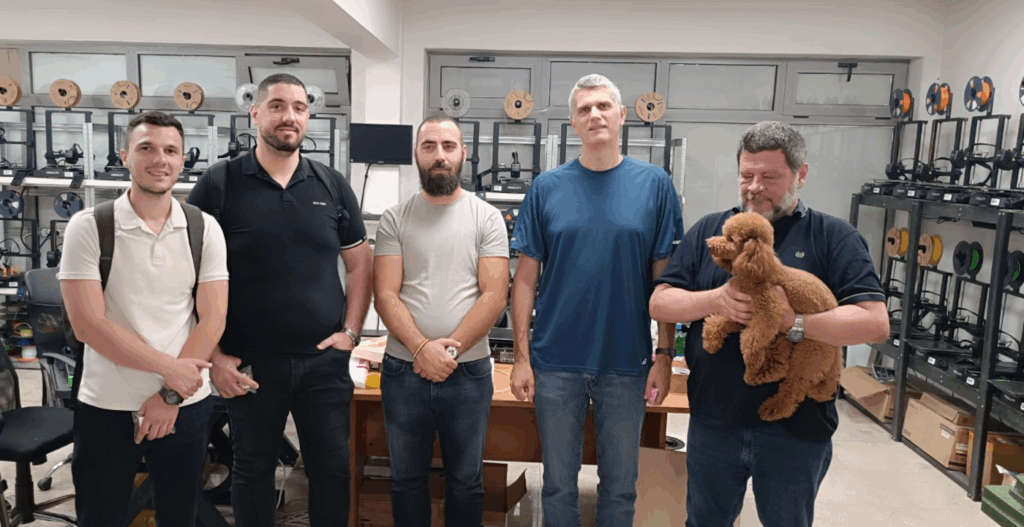
NCC Montenegro team visiting 3D Soba

The meeting was hosted by Miloš Grbović, General Director of 3D Soba, and Aleksandar Masić, Production Manager. Both expressed strong interest in further exploring the possibilities offered through EuroCC and NCC Montenegro support. A follow-up meeting is planned for the fall of 2025, where concrete use cases will be discussed in more detail.

NCC Montenegro Presented at EuroCC4SEE Seminar: AI Meets Precision Agriculture

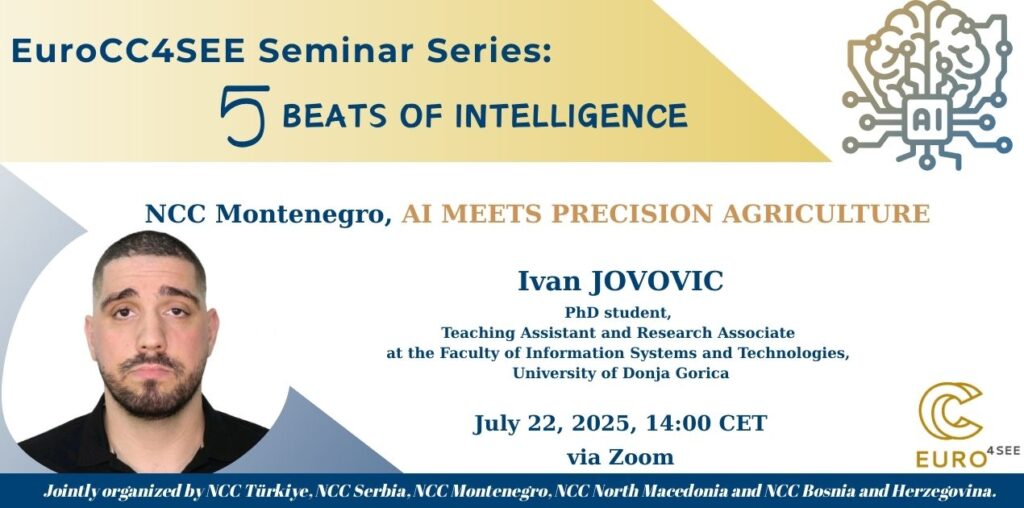
We are pleased to share that Ivan Jovović, MSc, from NCC Montenegro (University of Donja Gorica), delivered an invited presentation at the EuroCC4SEE seminar series titled “AI Meets Precision Agriculture” on July 18, 2025. The event was hosted by EuroCC Turkey and gathered around 20 participants from across the region.

There was about 20 attendess for this presentation

This presentation explored the transformative role of artificial intelligence in modern agriculture, with a focus on how data-driven technologies are redefining farming practices. Ivan highlighted practical applications of AI and machine learning for optimizing crop yields, monitoring environmental conditions, and enabling sustainable resource use. Real-world examples from Montenegrin vineyards and pilot Living Labs were discussed, emphasizing integration of AI, IoT, and edge computing in precision agriculture workflows.

The talk also showcased how HPC resources and national competence centers, such as NCC Montenegro, support the development and scaling of these intelligent solutions for the agri-food sector.

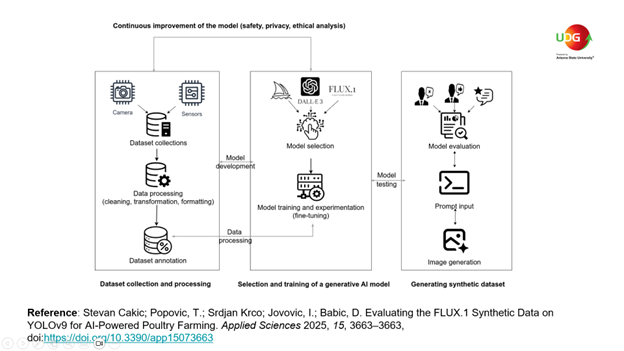
The presentation included HPC powered ML solution for poultry industry

This event is part of the EuroCC4SEE initiative, which promotes knowledge exchange and collaboration among national competence centers in Southeast Europe. We thank the organizers from EuroCC Turkey for the opportunity and look forward to future joint activities!

Company Coinis Granted EuroHPC Access for AI Text Authenticity Detection

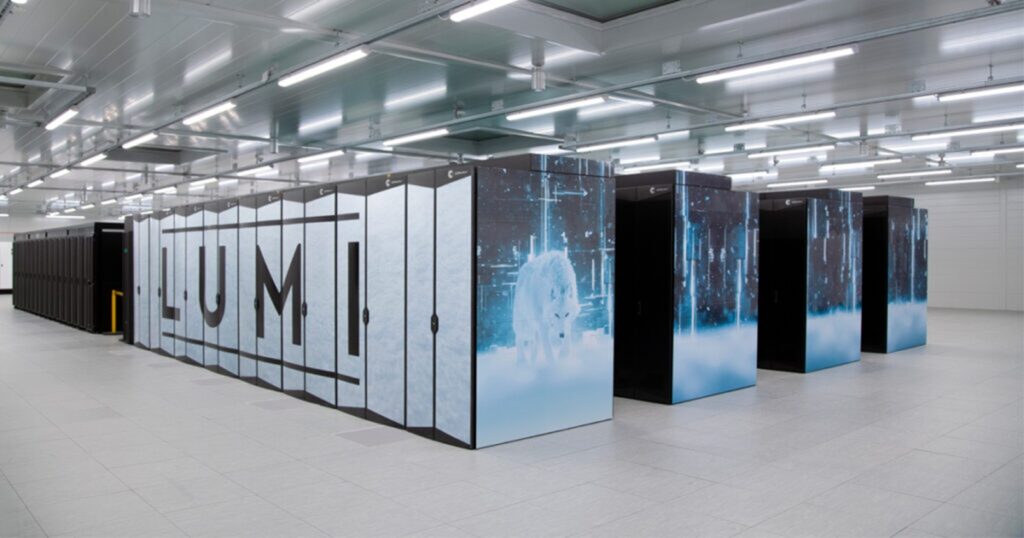
We are proud to announce that the Montenegrin Coinis, led by Tamara Pavlovic, has successfully secured resources through the EuroHPC JU Development Call to advance the development of their project AIChecker – an innovative platform for AI-generated text detection. The project has been awarded access to 4,500 node hours on the LUMI-G supercomputer, one of the most powerful computing systems in Europe, for a 12-month development phase starting in July 2025.

The team will focus on detection of AI generated text in digital media

Their project addresses a pressing global issue: the detection of AI-generated text in digital communication, education, and research. With the rapid rise of large language models (LLMs), the boundaries between human- and machine-written content are increasingly blurred. This project aims to safeguard writing integrity and foster the ethical use of generative AI technologies.

The project to be implemented during 12-month period using LUMI-G partition