
Podgorica, 13 February 2026 – The Faculty of Medicine at the University of Montenegro hosted a regional symposium dedicated to the application of High-Performance Computing (HPC) and Artificial Intelligence (AI) in healthcare and medical research.
The event was organized by NCC Montenegro, in collaboration with the Faculty for Information Systems and Technologies (UDG) and the Faculty of Medicine (UoM), within the framework of the EuroCC2 and EuroCC4SEE projects, with additional support from the AI-AGE research project.
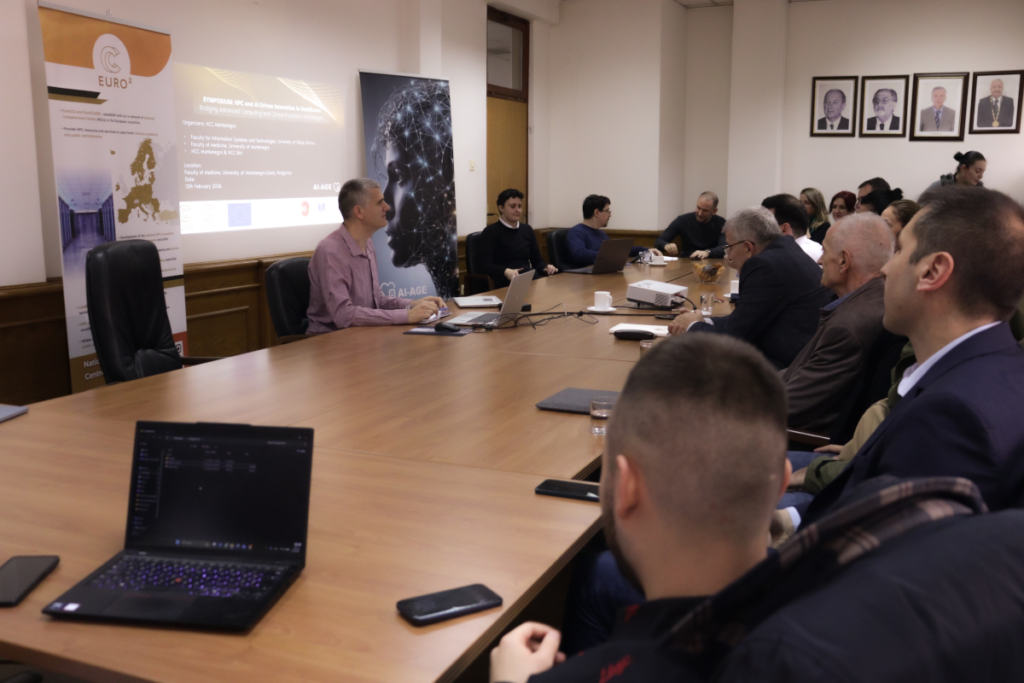
Bringing together approximately 20 participants from healthcare institutions, academia, innovative companies, and regional partners from Bosnia and Herzegovina, the symposium aimed to strengthen collaboration and advance the adoption of AI and HPC technologies in the health sector.
From Vision to Implementation
The programme combined strategic presentations, regional cooperation sessions, and technical demonstrations, creating a comprehensive overview of the current state of HPC and AI in healthcare.
NCC Montenegro presented Montenegro’s role as a national reference point for HPC, High-Performance Data Analytics (HPDA), and AI development. The presentation traced the entire pipeline—from clinical and biomedical data collection to AI model development and HPC-accelerated deployment.
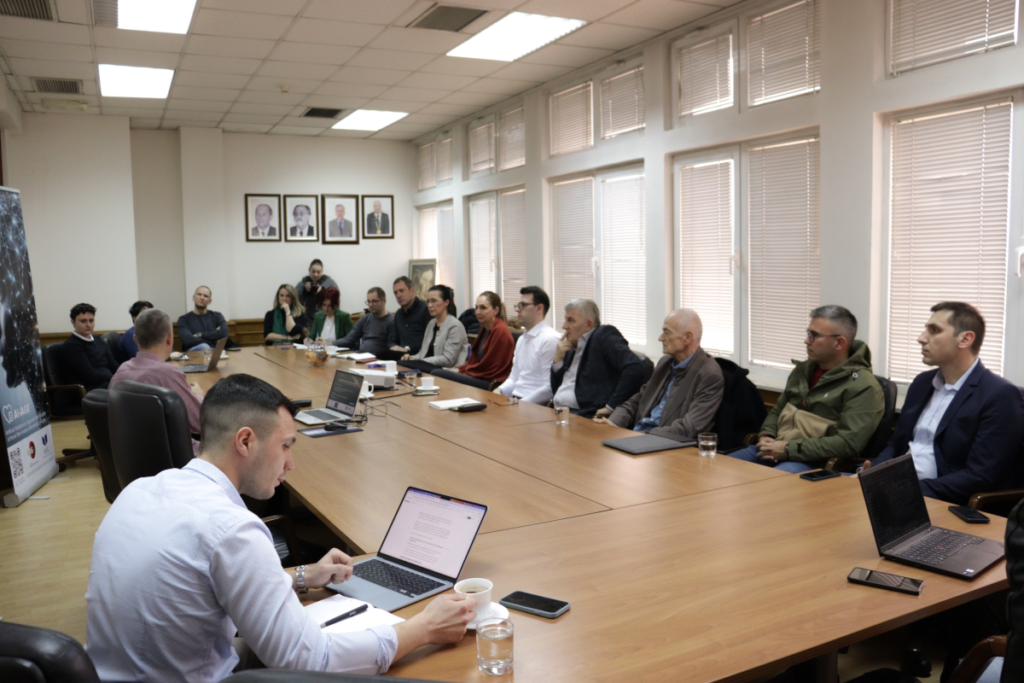
A central message of the event was clear: HPC in healthcare is not merely about computational speed. It enables rigorous validation, reproducibility, and scalable deployment of AI models in real clinical environments.
Use cases discussed during the symposium included radiology, digital pathology, cardiology, genomics, ICU monitoring, and public health forecasting
AI-AGE: Advancing Research on Ageing
A dedicated session focused on the AI-AGE project, which explores retinal fundus imaging as a potential biomarker for accelerated biological ageing.
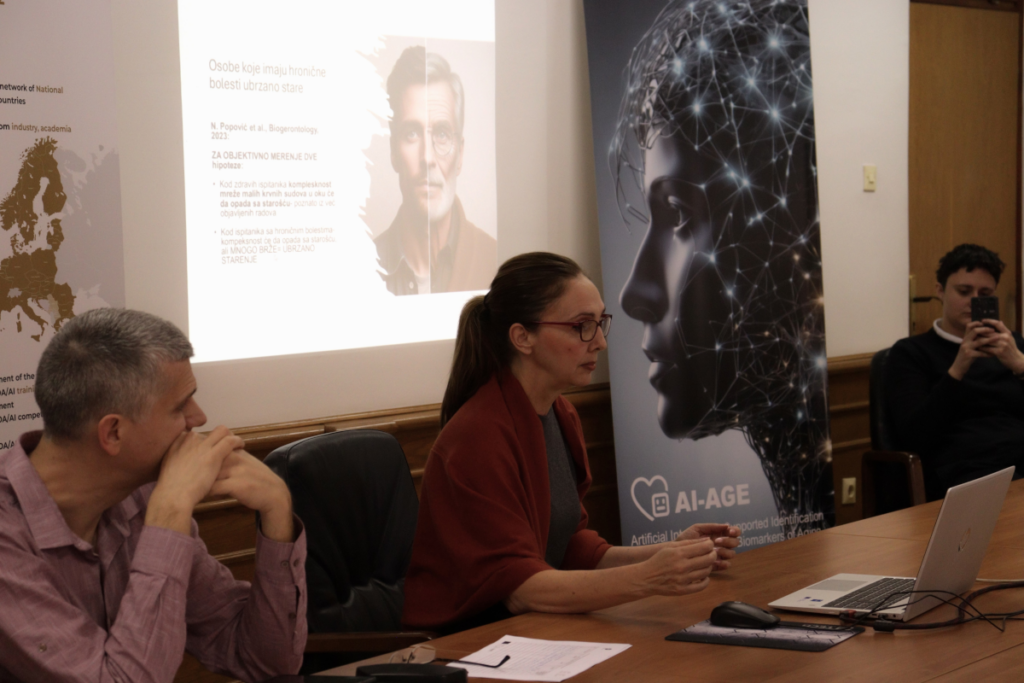
The interdisciplinary team presented research results based on UK Biobank data and datasets collected in Montenegro. Findings indicate that the complexity of retinal microvascular networks may decline more rapidly in patients with chronic diseases, highlighting potential applications in early diagnosis and monitoring.
Speakers emphasized the importance of careful model validation, addressing training bias, and ensuring responsible clinical deployment. The discussion also highlighted the potential of EuroHPC resources to further strengthen research capacity and computational scalability
Technical Showcase: AI Solutions Already in Practice
One of the most dynamic parts of the symposium was the Technical Showcase, where companies from Montenegro and Bosnia and Herzegovina presented concrete AI and HPC-enabled healthcare solutions.
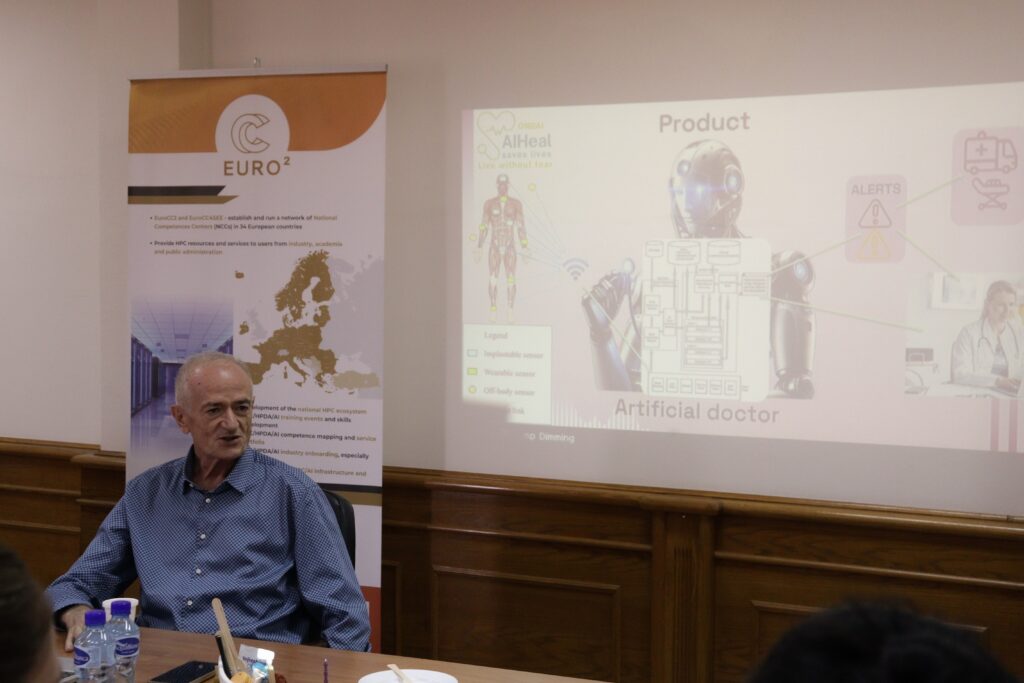
Among the showcased innovations were:
- AI-powered colon cancer detection in digital pathology using deep learning on high-resolution histopathology slides
- AI-driven IoT platforms supporting clinical decision-making and patient management
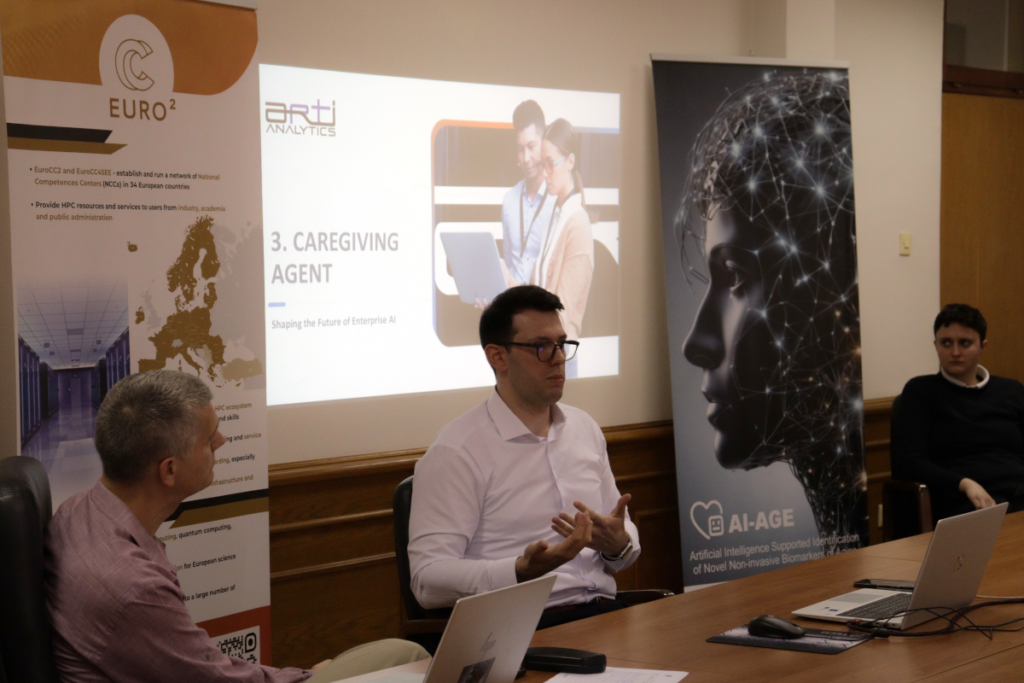
- AI systems for Alzheimer’s disease care, including predictive digital twins and multimodal reasoning tools
- HPC-supported computational simulations accelerating pharmaceutical drug development
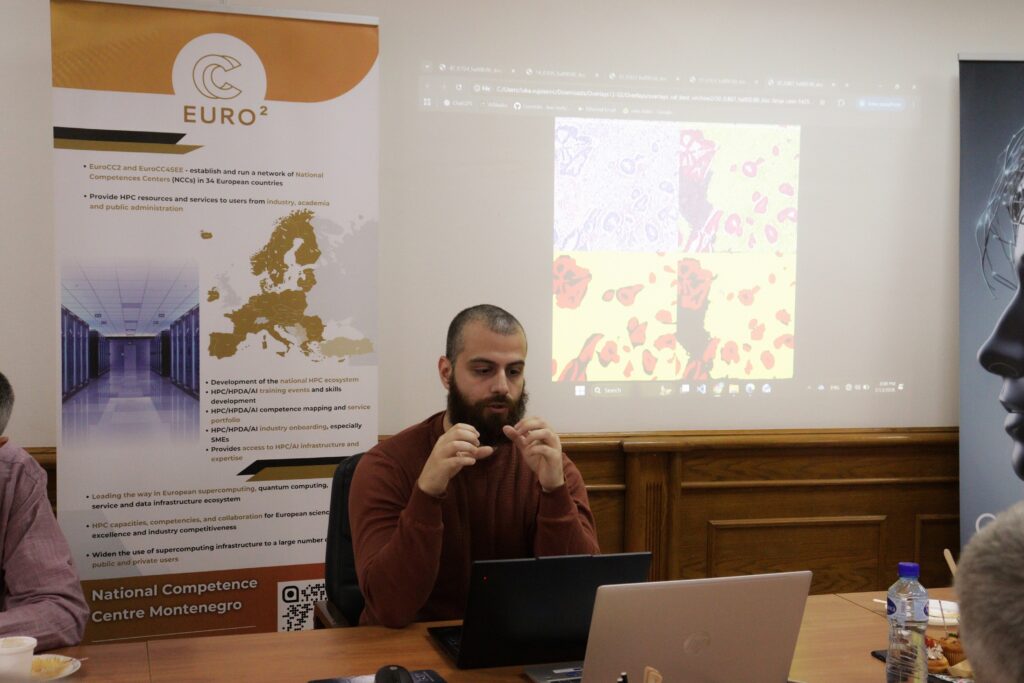
A particularly valuable component of the session was the sharing of experiences from companies that successfully applied for and received EuroHPC computing resources. These examples demonstrated how access to supercomputing infrastructure directly enhances model development, testing, and product readiness.
Strengthening Regional Cooperation
The symposium also included a regional twinning workshop between NCC Montenegro and NCC Bosnia and Herzegovina.
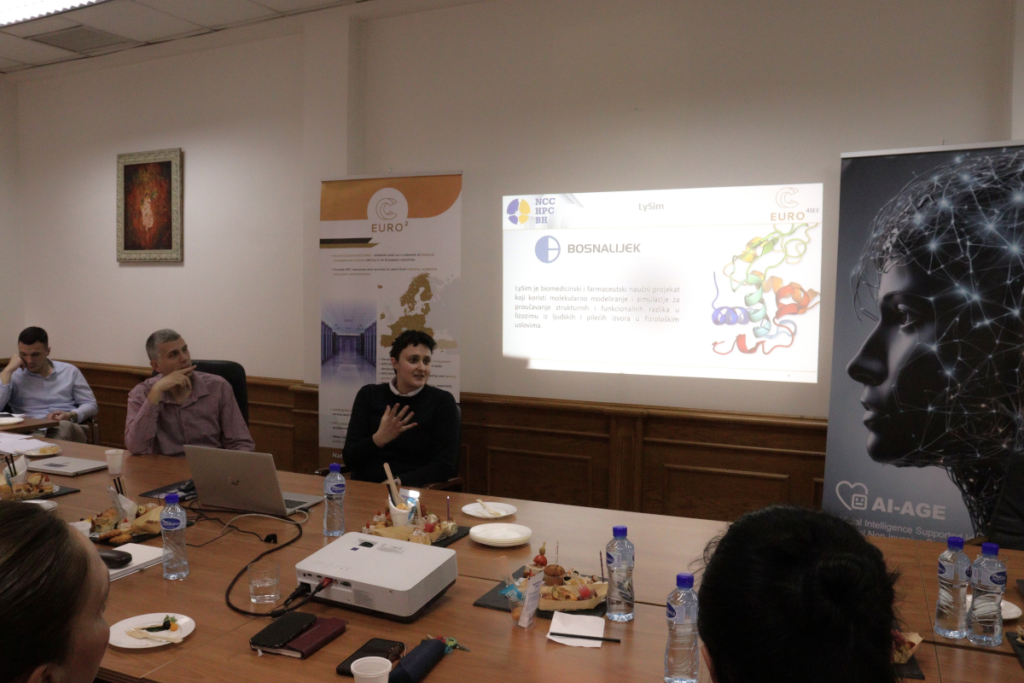
The session focused on joint strategies for stakeholder engagement, cross-border resource sharing, and knowledge transfer. The discussion confirmed that the twinning model is an effective mechanism for strengthening the South-East European HPC ecosystem and facilitating access to European supercomputing infrastructure.
Such cooperation is particularly important as the region prepares for the next phase of European HPC initiatives and increasing alignment with the EU AI Act and broader digital strategies.
Addressing Systemic Challenges
The event concluded with an interactive panel discussion titled “Orchestrating the Ecosystem.” Participants addressed key challenges facing AI adoption in healthcare, including:
- The healthcare data gap and fragmentation
- Regulatory complexity, particularly in the context of the EU AI Act
- The need for stronger partnerships between industry, academia, and healthcare institutions
While AI model architectures continue to mature rapidly, participants agreed that the primary bottlenecks lie in data heterogeneity, evaluation standards, and deployment constraints rather than algorithmic limitations.
Healthcare representatives acknowledged the growing importance of HPC and AI in medical research but emphasized the need to improve institutional readiness for strategic and sustainable adoption.
A Strategic Step Forward
The symposium concluded with a shared commitment to:
- Position AI and HPC as strategic priorities in healthcare innovation
- Continue expanding infrastructure and access to HPC resources
- Invest in skills development and capacity building
- Strengthen regional collaboration across South-East Europe
The event marked an important step in connecting research excellence, industrial innovation, and clinical practice—demonstrating that HPC-enabled AI in healthcare is no longer a future concept, but an emerging regional reality.