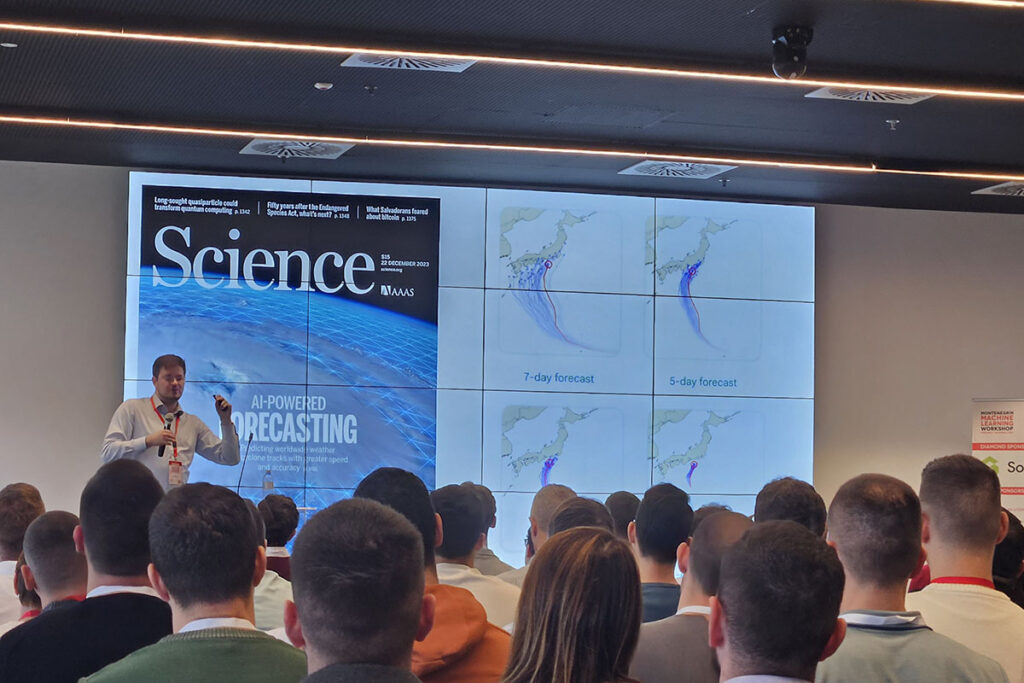
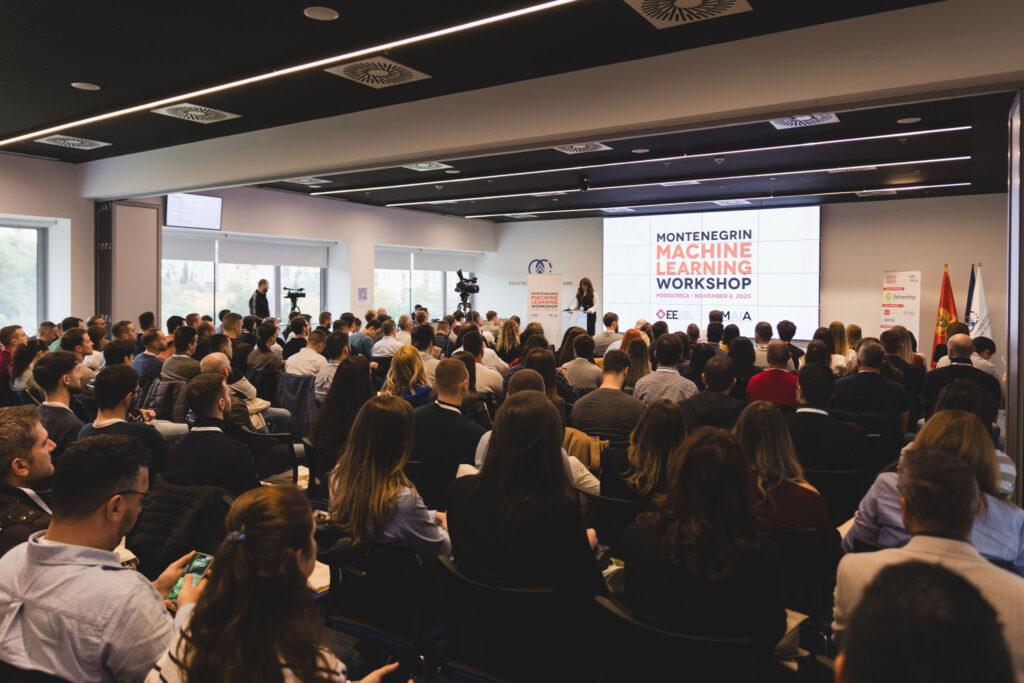
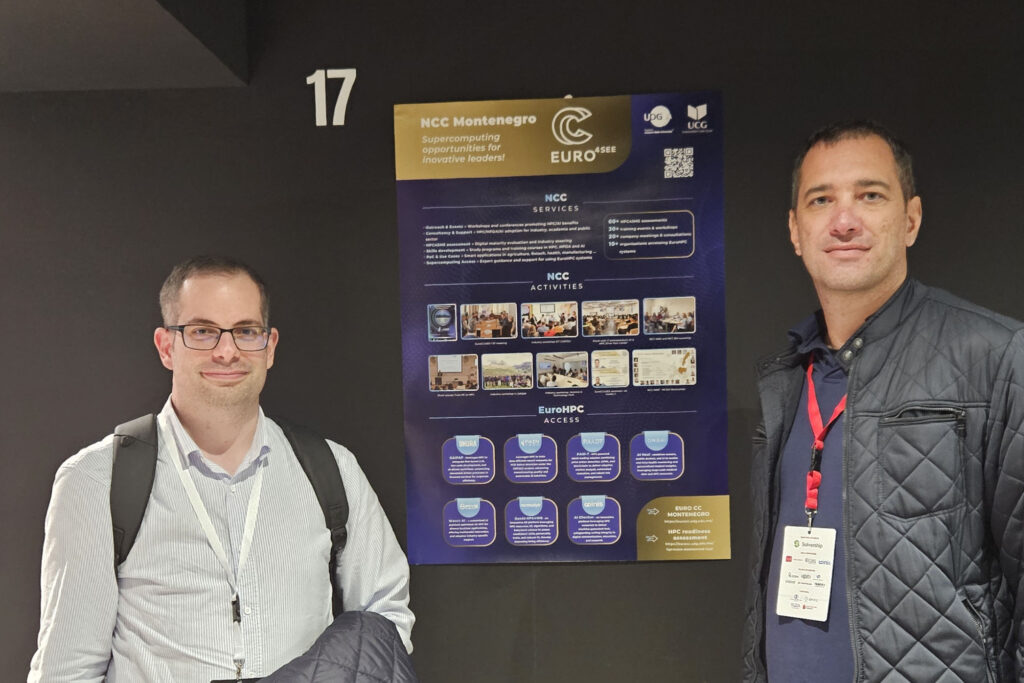
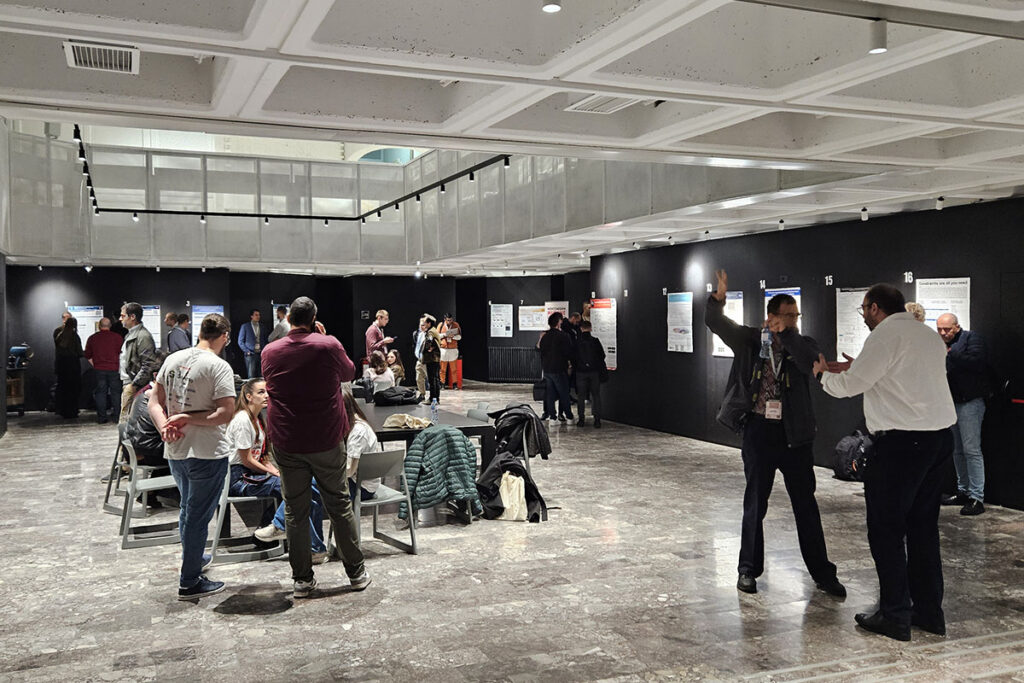
Researchers from EuroCC Montenegro participated in the Montenegrin Machine Learning Workshop, a one-day event aimed at popularizing topics related to Machine Learning (ML) and Artificial Intelligence (AI) among students, researchers, and practitioners. The workshop was organized in cooperation with the Montenegrin Artificial Intelligence Association (MAIA) as a satellite event to the EEML summer school. Participants attended lectures covering deep learning and its applications in earth observation, graph neural networks, power grids, biology and genomics.
During the poster session, visitors had the opportunity to learn more about the EuroCC project and its efforts to promote AI and HPC research in Montenegro.
Over the past two weeks we delivered two focused courses, conducted under the EUROCC 2 & EUROCC4SEE project, with an outstanding cohort of participants — students, researchers, and professionals who excelled in curiosity, teamwork, and results.
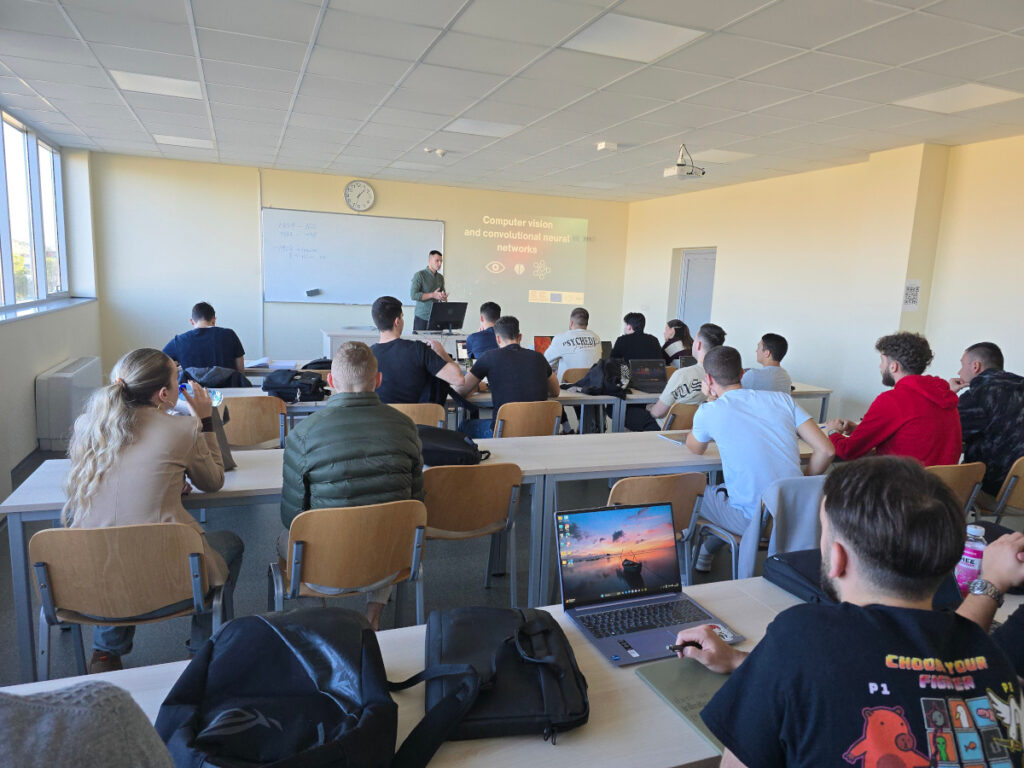
Dejan Babic giving presentation on CV &CNN supported by HPC
Computer Vision & CNNs with HPC – Short Course
From raw pixels to features and robust visual representations
Hands-on lab: building and training an image classifier
Running experiments on the NCC Montenegro HPC cluster
Participants mastered concepts quickly, asked sharp questions, and worked independently in the lab
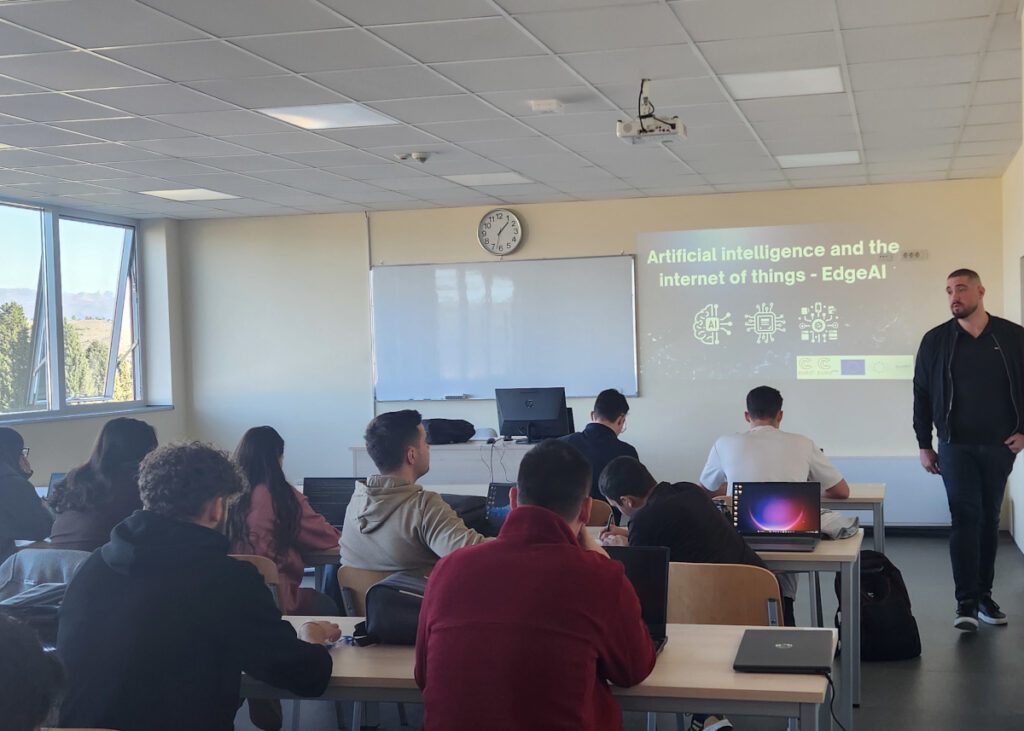
Ivan Jovovic, giving a presentation on Edge/AI supported by HPC
EdgeAI – Artificial Intelligence & the Internet of Things supported by HPC
Designing efficient AIoT data pipelines
Deciding when to process at the edge vs. in the cloud
Deploying lightweight ML models on resource-constrained devices
Model optimization using HPC infrastructure
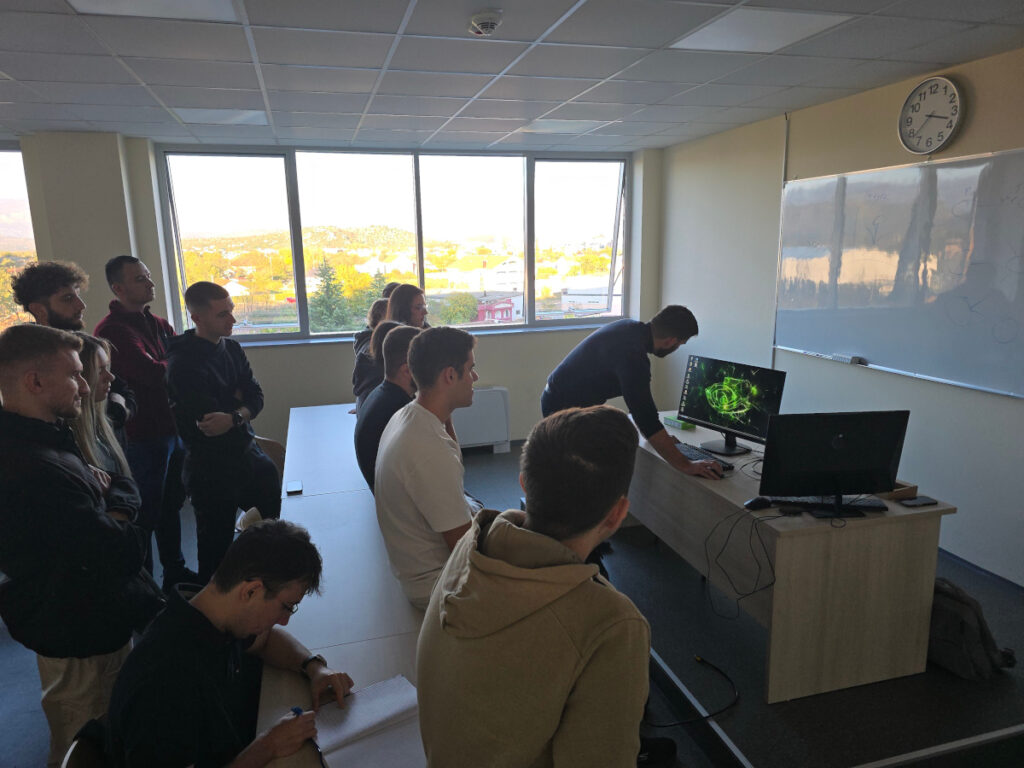
Demonstration by Elvis Taruh and Ivan Jovovic on running HPC created models on NVidia Jetson platform
Stay tuned for the next sessions and advanced workshops!
The Institute of Hydrometeorology and Seismology of Montenegro successfully secured HPC access from the EuroHPC JU Development Call for their project titled: “HPC Development for Very-High-Resolution Atmospheric Reanalysis Using a Nonhydrostatic Mesoscale Model over Montenegro (1995–2024)”. The project aims to enhance mesoscale weather modeling capabilities using the WRF-NMM (Nonhydrostatic Mesoscale Model) and to investigate the scalability and performance of nonhydrostatic dynamic cores on state-of-the-art high-performance computing (HPC) architectures.
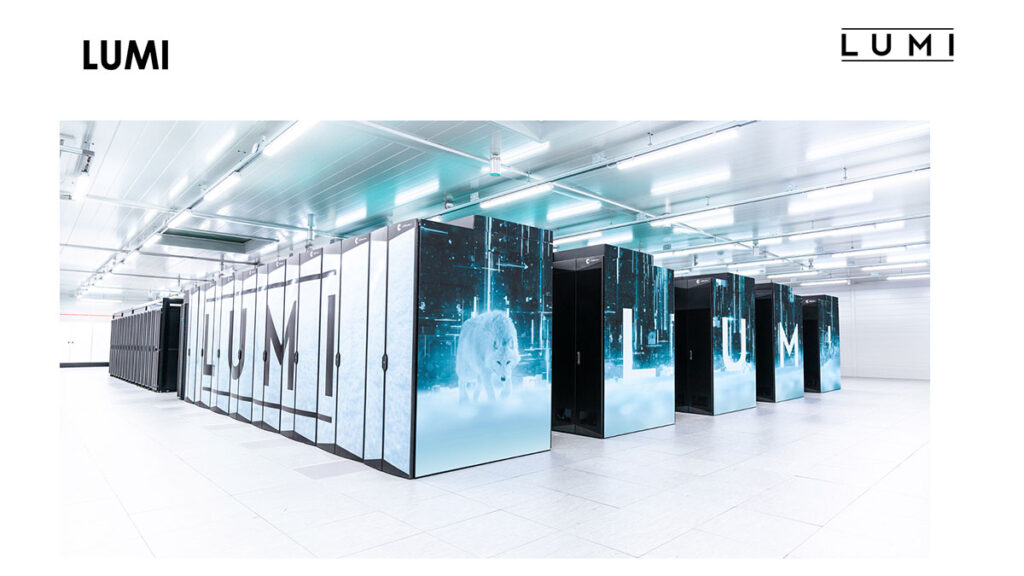
Through this initiative, the project was granted 4,000 node hours on the LUMI-C partition for a period of six months. The National Competence Centre (NCC) Montenegro provided support throughout the project application process.
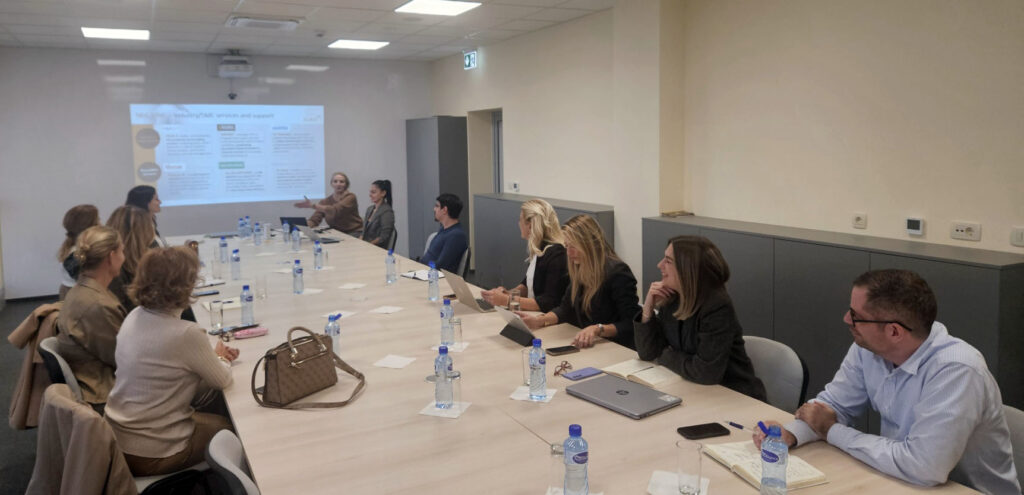
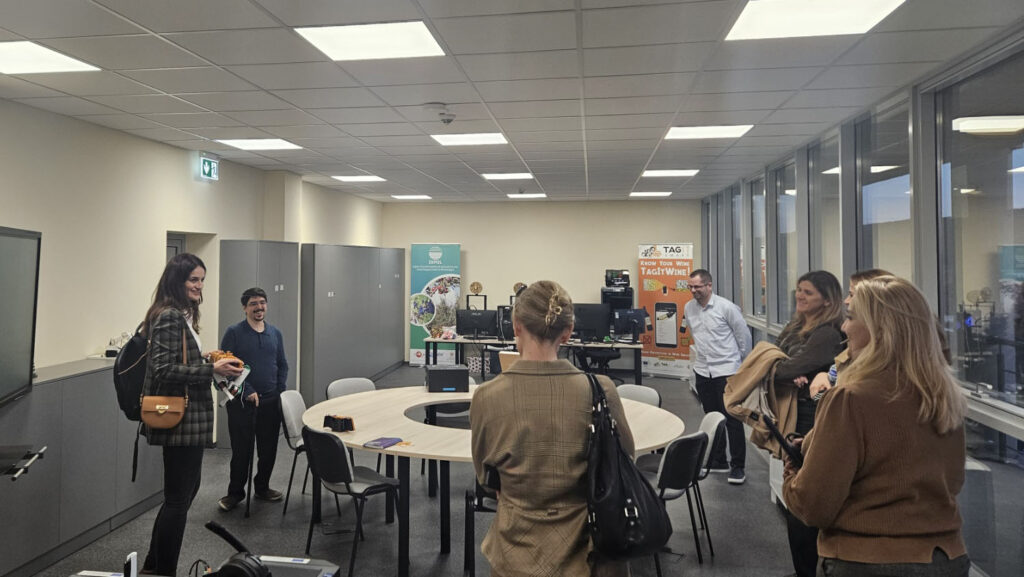
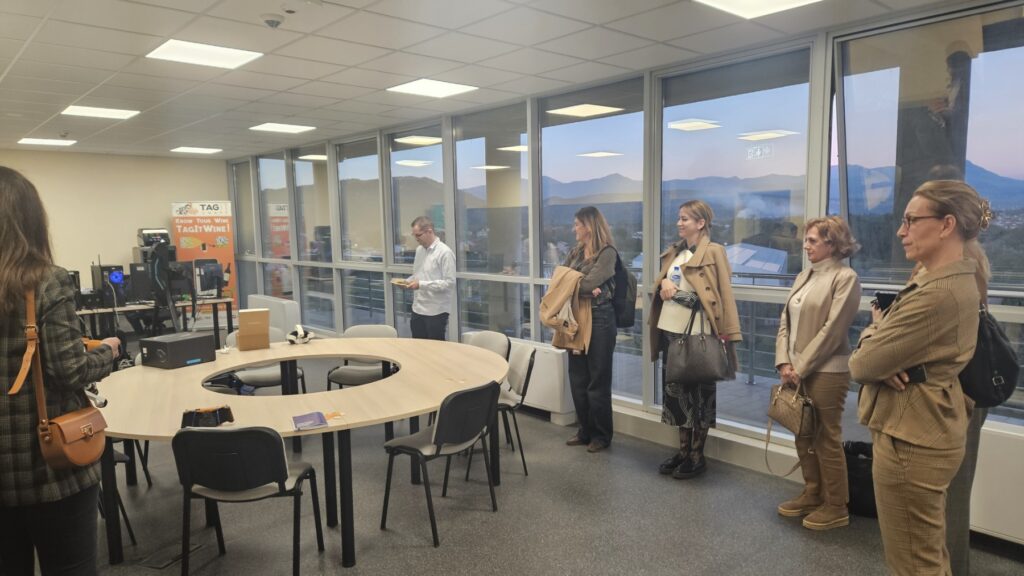
Representatives of NALED and Philip Morris International visited UDG, NCC Montenegro, and CoE FoodHub
Representatives of NALED (National Alliance for Local Economic Development), Serbia, and Philip Morris International visited the University of Donja Gorica, where they presented their leading projects — StarTech, Empower Innovation, and particularly PMInnovia — aimed at connecting science and industry, promoting the concept of open innovation, and supporting researchers and innovators in developing ideas to improve products, processes, and the competitiveness of the economy.
During the visit, the representatives of NALED and PMI were introduced to the research and project activities of UDG, the National Competence Center for Supercomputing (NCC Montenegro), and the Center of Excellence for Digitalization of Food Safety Risk Assessment and Precision Certification of Food Product Authenticity (CoE FoodHub), particularly in the areas of HPC and AI technology applications and support for digital innovations in smart agriculture, personalized medicine, monitoring the authenticity of Montenegrin food products, and bioinformatics for genomic profiling.
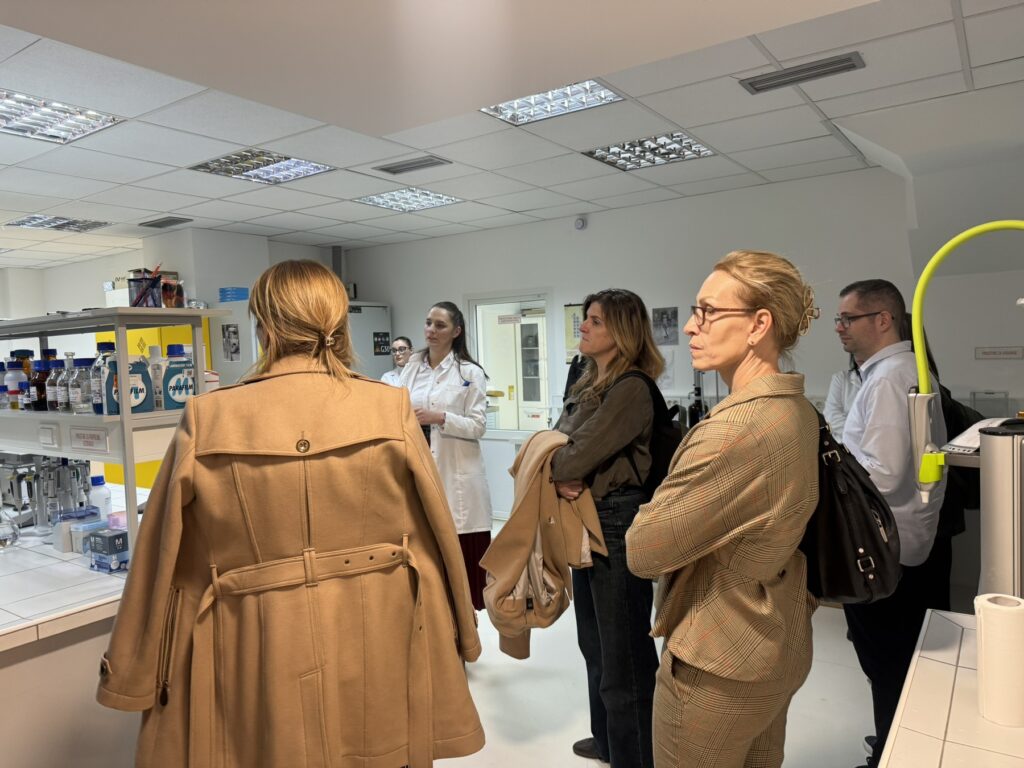
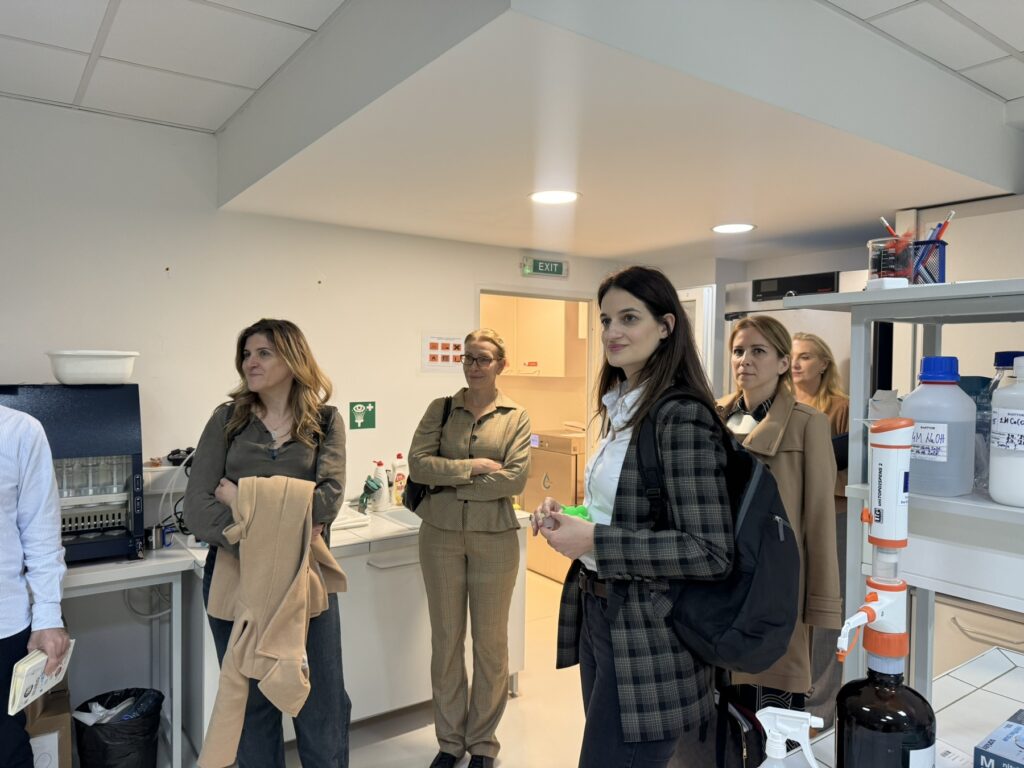
The delegation also toured the Virtual Reality (VR) and 3D Printing Laboratory, where student projects showcasing the connection between technology, robotics, research creativity, and industrial relevance were presented. They also visited the Food Safety and Quality Laboratory, where modern methods and equipment for physico-chemical and microbiological analyses were demonstrated, as well as the Entrepreneurial Nest, where they learned about business initiatives supporting innovation and students, such as UDG’s StartUp program and the Entrepreneurial Ideas Exchange.
The professional discussion focused on mapping regional expertise, biotechnological innovations, and exploring potential collaboration within interdisciplinary teams sharing a common vision of advancing the innovation ecosystem and the economic development of the region.