AI and HPC Potential in 3D Printing: Visit to 3D Soba

As part of ongoing outreach activities within the EuroCC2 project, representatives from NCC Montenegro (University of Donja Gorica) visited 3D Soba, a Montenegrin SME specializing in professional 3D printing and additive manufacturing solutions. The meeting was held in July 2025 at 3D Soba’s production site in Podgorica and marked an initial step toward potential collaboration in the areas of high-performance computing (HPC) and artificial intelligence (AI). 3D Soba is one of the first SME companies in the region to establish a full-scale 3D printer farm, offering rapid prototyping, custom product development, and small-batch manufacturing services to a growing number of clients across industries. Their innovative approach has positioned them as a regional pioneer in advanced digital fabrication.
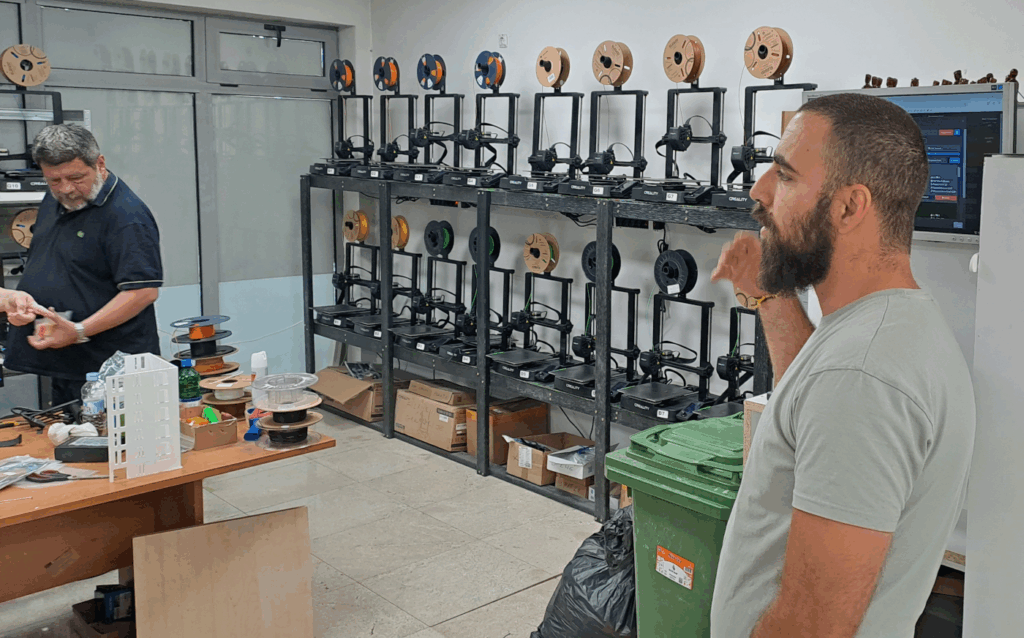
3D Soba Production facility

During the visit, the NCC Montenegro team presented the goals and current activities of the EuroCC project, focusing on opportunities for SMEs to leverage HPC and AI to improve efficiency, optimize production pipelines, and explore innovative applications in digital manufacturing. Several interesting ideas emerged during the discussion, including the use of AI in 3D model generation and design optimization, the potential for simulation-supported prototyping using HPC resources, and integration of generative design techniques to streamline custom production workflows.
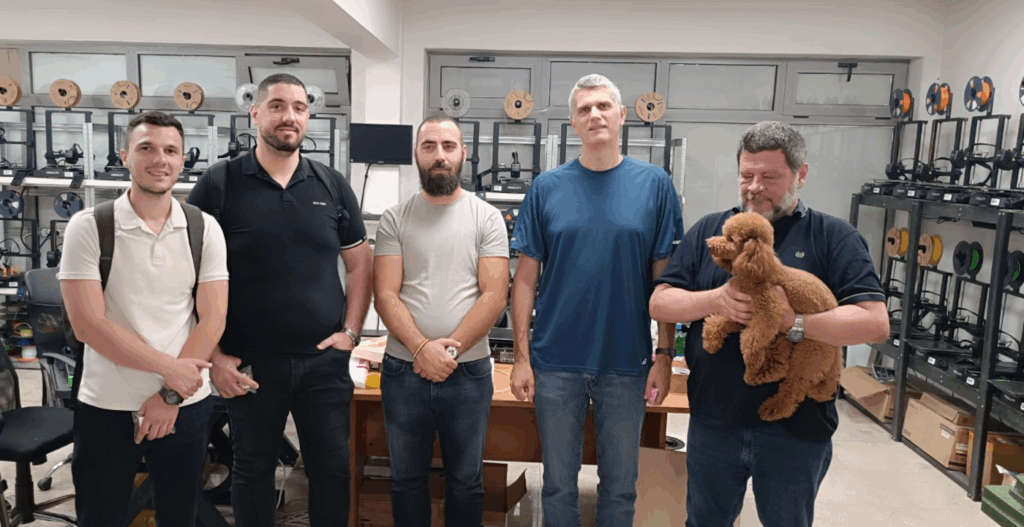
NCC Montenegro team visiting 3D Soba

The meeting was hosted by Miloš Grbović, General Director of 3D Soba, and Aleksandar Masić, Production Manager. Both expressed strong interest in further exploring the possibilities offered through EuroCC and NCC Montenegro support. A follow-up meeting is planned for the fall of 2025, where concrete use cases will be discussed in more detail.
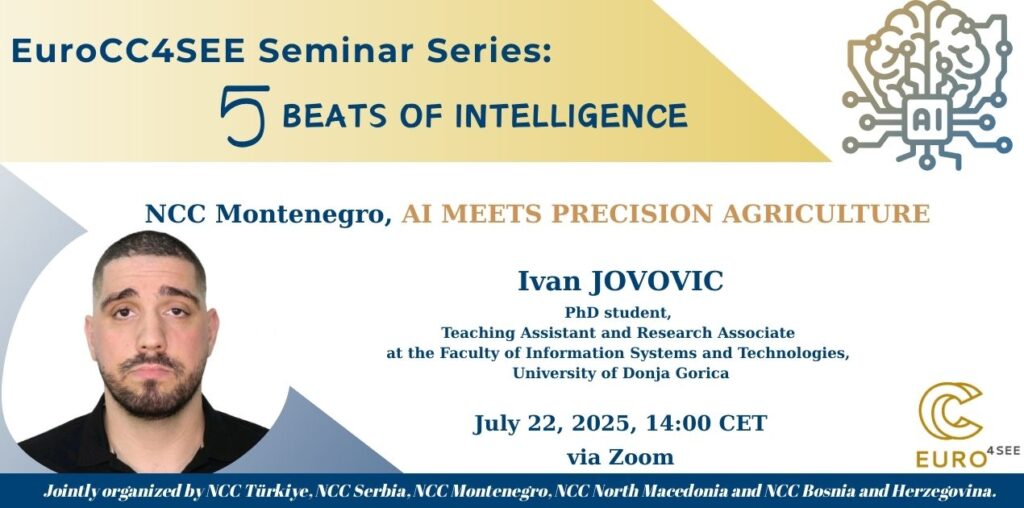
NCC Montenegro Presented at EuroCC4SEE Seminar: AI Meets Precision Agriculture

We are pleased to share that Ivan Jovović, MSc, from NCC Montenegro (University of Donja Gorica), delivered an invited presentation at the EuroCC4SEE seminar series titled “AI Meets Precision Agriculture” on July 18, 2025. The event was hosted by EuroCC Turkey and gathered around 20 participants from across the region.

There was about 20 attendess for this presentation

This presentation explored the transformative role of artificial intelligence in modern agriculture, with a focus on how data-driven technologies are redefining farming practices. Ivan highlighted practical applications of AI and machine learning for optimizing crop yields, monitoring environmental conditions, and enabling sustainable resource use. Real-world examples from Montenegrin vineyards and pilot Living Labs were discussed, emphasizing integration of AI, IoT, and edge computing in precision agriculture workflows.

The talk also showcased how HPC resources and national competence centers, such as NCC Montenegro, support the development and scaling of these intelligent solutions for the agri-food sector.

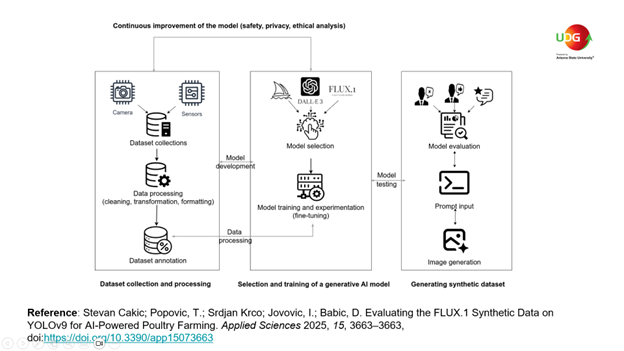
The presentation included HPC powered ML solution for poultry industry

This event is part of the EuroCC4SEE initiative, which promotes knowledge exchange and collaboration among national competence centers in Southeast Europe. We thank the organizers from EuroCC Turkey for the opportunity and look forward to future joint activities!

Company Coinis Granted EuroHPC Access for AI Text Authenticity Detection

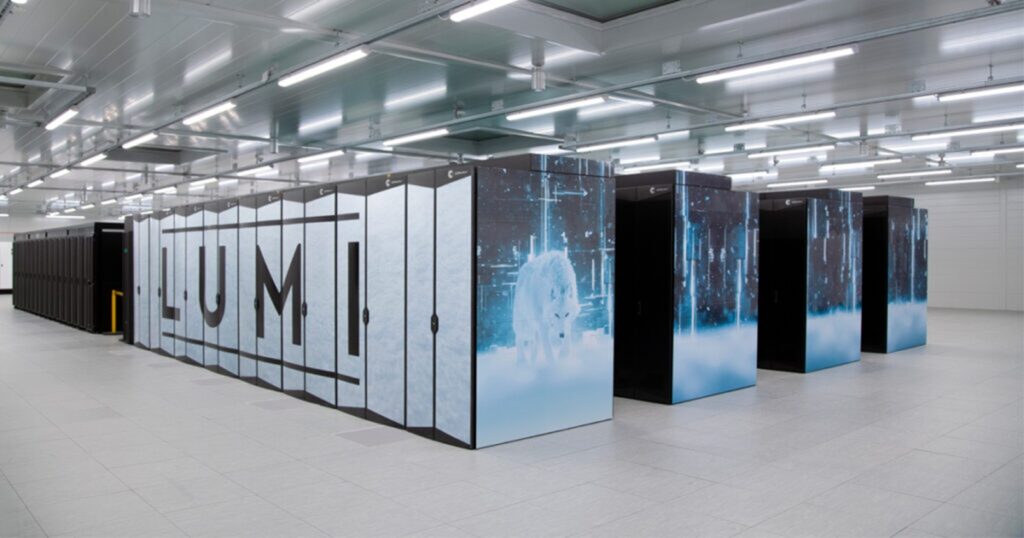
We are proud to announce that the Montenegrin Coinis, led by Tamara Pavlovic, has successfully secured resources through the EuroHPC JU Development Call to advance the development of their project AIChecker – an innovative platform for AI-generated text detection. The project has been awarded access to 4,500 node hours on the LUMI-G supercomputer, one of the most powerful computing systems in Europe, for a 12-month development phase starting in July 2025.

The team will focus on detection of AI generated text in digital media

Their project addresses a pressing global issue: the detection of AI-generated text in digital communication, education, and research. With the rapid rise of large language models (LLMs), the boundaries between human- and machine-written content are increasingly blurred. This project aims to safeguard writing integrity and foster the ethical use of generative AI technologies.

The project to be implemented during 12-month period using LUMI-G partition

Exploring AI and HPC Collaboration in Medical Imaging: Visit to Poliklinika Filipović

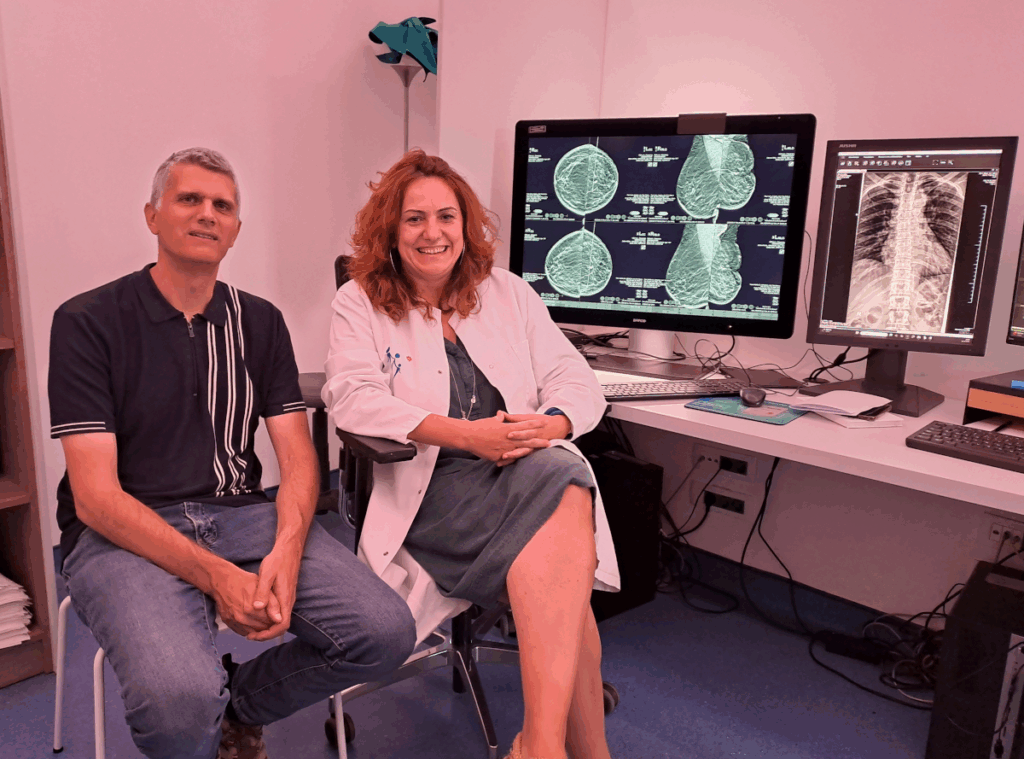
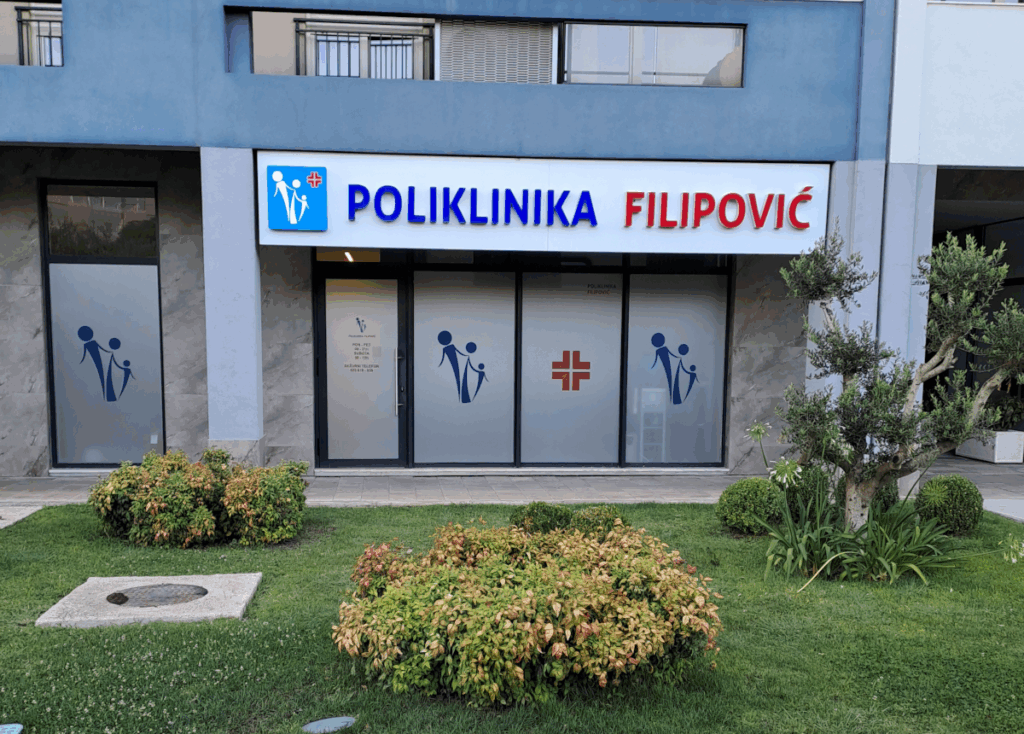
As part of the ongoing EuroCC2 activities, representatives of the HPC National Competence Center (NCC) Montenegro, hosted at the University of Donja Gorica (UDG), visited the private medical institution Poliklinika Filipović in Podgorica. During the visit, the NCC team met with Dr. Verica Stanišić, a radiology specialist at the clinic, to discuss opportunities for collaboration in the application of High-Performance Computing (HPC) and Artificial Intelligence (AI) in medical diagnostics.

The purpose of the meeting was to introduce the clinic to the mission of EuroCC2, and to explore how state-of-the-art computational technologies can support the analysis of medical images, particularly in the context of early detection and prevention of breast cancer. The NCC Montenegro team shared insights into available national and European resources for HPC and AI, and highlighted use cases relevant to image analysis and clinical decision support.

Our host was dr Verica Stanisic

Our hosts presented the work of Poliklinika Filipović and demonstrated some of the latest imaging technologies they employ, including digital mammography, ultrasound, and elastography, which are crucial for early breast cancer detection and monitoring. These technologies are supported by a highly professional team and modern diagnostic infrastructure, forming a strong foundation for innovative clinical research and development.

The meeting concluded with a mutual interest in establishing future cooperation, including the joint exploration of pilot use cases in AI-assisted image interpretation and diagnostics. A follow-up meeting is already planned, where additional team members from both NCC Montenegro and Poliklinika Filipović will join the discussion to define next steps.

Another consultation meeting will be organized soon

This visit represents another important step in building cross-sectoral bridges between the HPC/AI community and healthcare professionals in Montenegro, paving the way for innovations that benefit both clinicians and patients.

Open Call for Funding Opportunity: Business Experiments

FFplus (Fortissimo plus), the European initiative highlighting and promoting the adoption of High-Performance Computing (HPC) by SMEs and start-ups across Europe, has announced its second Open Call to fund business experiments.

Key Call Details:

  • Submission Deadline: August 26th, 2025 at 17:00 Brussels local time
  • Expected duration of experiments: maximum 15 months with targeted commencement January 1st, 2026
  • The indicative total funding budget for all sub-projects funded under this call is € 4M.

This announcement is the second call for proposals to address the uptake of HPC by SMEs in order to solve specific business challenges of SMEs that have had no prior use of, or experience with, HPC services. The resulting sub-projects will perform “business experiments” (also referred just as experiments) that should demonstrate to the broader European SME ecosystem that HPC uptake solves business challenges and leads to positive business impact through the use and deployment of HPC-based computational methods. Thus, their key outputs are success stories that promote, communicate, and disseminate the business impact of HPC uptake to the SME ecosystem.

Proposals are sought that address business challenges from European SMEs from varied application domains, whereby SMEs whose adoption of advanced HPC services will create the highest business impact will be prioritized. SMEs with an academic focus or activities with a potential impact only in the long term are not within the scope of the call.

In the context of the second Open Call for Business Experiments, FFplus offered two webinars to the public to receive all the information concerning the Call and answer questions.

More info : https://www.ffplus-project.eu/en/open-call/business-experiments/

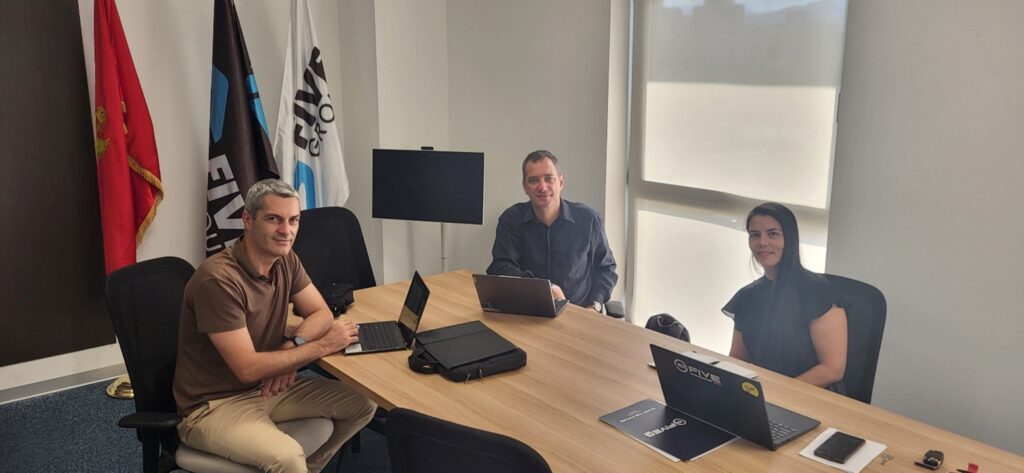
Consultations with Five Group company for report preparation and new project application

 The members of the NCC Montenegro team, Prof. dr. Enis Kočan and Assist. prof.  Luka Filipović, have visited the Five Group company on July 18, 2025. At this meeting, the report form for Benchmark projects was presented and instructions were given to the Five Group company on how to prepare and complete this report, since the period of use of the obtained resources on Leonardo HPC for this company expires at the end of July. The members of the NCC Montenegro team have also held consultations with this company on the next steps in the preparation of the new project application. Based on the presented project proposal and the estimated needs of the Five Group company, it was recommended that after submitting the report for the Benchmark project, they prepare an application for the Development open call for the use of HPC resources.

Support to young researchers from the Faculty of Electrical Engineering

The NCC Montenegro team at the University of Montenegro (UoM) regularly meets and collaborates with various research groups within the university. In this way, they stay updated on new research projects, emerging research directions, and especially the topics pursued by young researchers. As a result, the need for high-performance computing (HPC) resources has been identified for the master’s research conducted by two research assistants at the Faculty of Electrical Engineering, UoM, led by Assistant professor Miloš Brajović.

Their research deals with Graph Neural Networks (GNNs), with a particular focus on data representation, interpretability and scalability for complex scientific datasets. GNNs have demonstrated remarkable potential in modeling relational and structured data across various domains, including physics, chemistry, biology and computer vision. However, despite their predictive power, their “black-box” nature poses challenges in terms of explainability and trustworthiness, especially in critical applications such as scientific discovery and engineering.

Successful submission for EuroHPC call

To benchmarking state-of-the-art GNN architectures, evaluate their performance and scalability, and develop and test new GNN models and interpretability techniques for graph-based applications, these two researchers will require access to HPC resources. Therefore, the NCC Montenegro team supported them in preparing and submitting an application for the Development call to gain access to the Leonardo HPC. As a result, they got access to the Leonardo Booster partition, securing 4,500 node hours for their research.