

A PoC Demonstrates the Potential of AI and HPC for Developing Non-invasive Approaches to Colorectal Cancer Risk Assessment
Researchers from the University of Donja Gorica and the University of Montenegro have investigated the use of artificial intelligence (AI) to identify retinal patterns associated with colorectal cancer. Supported by HPC resources and interdisciplinary expertise, the study demonstrates how advanced computing can contribute to biomedical research and open new opportunities for future healthcare applications.
CHALLANGE
Colorectal cancer remains a major public health challenge, highlighting the importance of developing complementary, non-invasive approaches to disease assessment. Retinal photographs contain information about vascular and neurological structures that may reflect broader systemic health conditions. The challenge was to investigate whether deep learning could identify patterns associated with colorectal cancer using retinal images alone, without relying on conventional clinical or demographic inputs.
SOLUTION
The research team developed a deep learning approach based on the EfficientNet-B3 convolutional neural network, using 1,600 retinal fundus photographs from the UK Biobank, including 800 images from individuals with colorectal cancer and 800 from individuals without the disease.
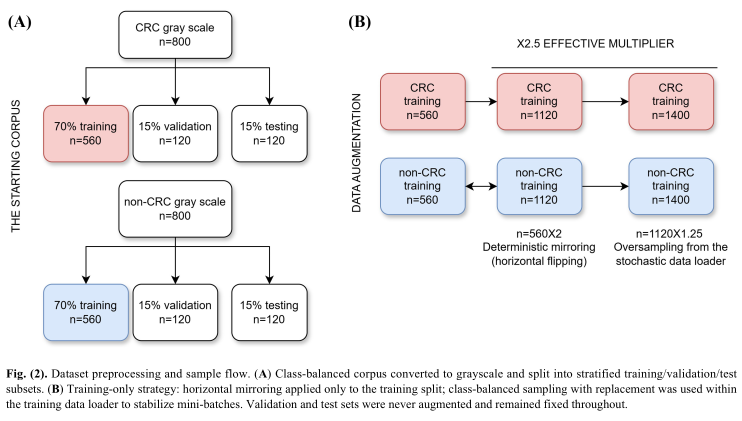
Model training and experimentation were performed on an in-house HPC cluster equipped with NVIDIA L40 GPUs, enabling the processing of high-resolution images and GPU-accelerated deep learning. On an independent test set, the model achieved an AUROC of 0.945, classification accuracy of 87.08%, sensitivity of 90.00%, and specificity of 84.17%.
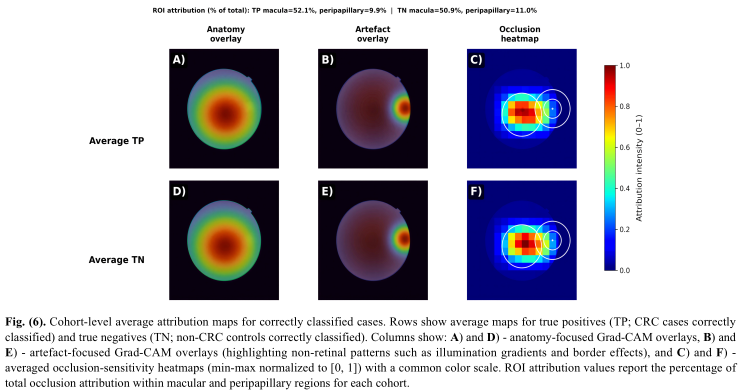
The results demonstrate the technical feasibility of identifying colorectal cancer-associated patterns in retinal images within a controlled research setting. While promising, the approach requires further independent and prospective clinical validation before any potential screening or diagnostic application.
BENEFITS
- HPC-enabled biomedical research: GPU-accelerated computing supported the processing of high-resolution retinal images and deep learning model training.
- Promising AI proof of concept: Demonstrated the feasibility of distinguishing colorectal cancer status from retinal photographs in a retrospective case-control study.
- Interdisciplinary collaboration: Connected expertise in AI, medical imaging, and clinical medicine.
- Potential for healthcare innovation: Established a foundation for further research into non-invasive biomarkers and AI-assisted risk assessment, with opportunities for future collaboration with healthcare institutions and medical technology companies.
This research was supported by the AI-AGE project and, in part, by HPC Montenegro (EuroCC2 and EuroCC4SEE), contributing to the development and application of HPC and AI capabilities in biomedical research.
Publication: Deep Learning Discrimination of Colorectal Cancer using Retinal Fundus Photographs: UK Biobank Case-Control Study, Current Medical Imaging, 2026.