

The Problem / Challenge
Honey authenticity verification remains a complex and resource-intensive process, particularly when determining botanical and geographical origin through traditional melissopalynological methods. Manual microscopic analysis of pollen grains requires highly specialized expertise, is time-consuming, and introduces variability between laboratories, making it difficult to scale verification while preserving consistency and reliability. For honey producers and farmers—especially small and medium-sized operations—these constraints limit access to premium and export markets, where verified origin and traceability are increasingly mandatory. The lack of fast, objective, and affordable verification tools weakens competitiveness and exposes producers to the reputational risks associated with honey adulteration and mislabeling. At the laboratory level, growing demand for authenticity testing further strains existing workflows. Laboratories face pressure to deliver faster results without compromising scientific accuracy, highlighting the need for a robust, automated, and data-driven solution capable of modernizing honey authenticity verification.
Solution
PollenTrace addresses these challenges through a Proof of Concept (PoC) platform implemented by the FoodHub Center of Excellence (CoE), integrating artificial intelligence (AI), computer vision, and high-performance computing (HPC) to automate pollen detection and analysis. The platform applies deep learning models to high-resolution microscopic images, enabling objective identification of pollen grains directly from honey samples.
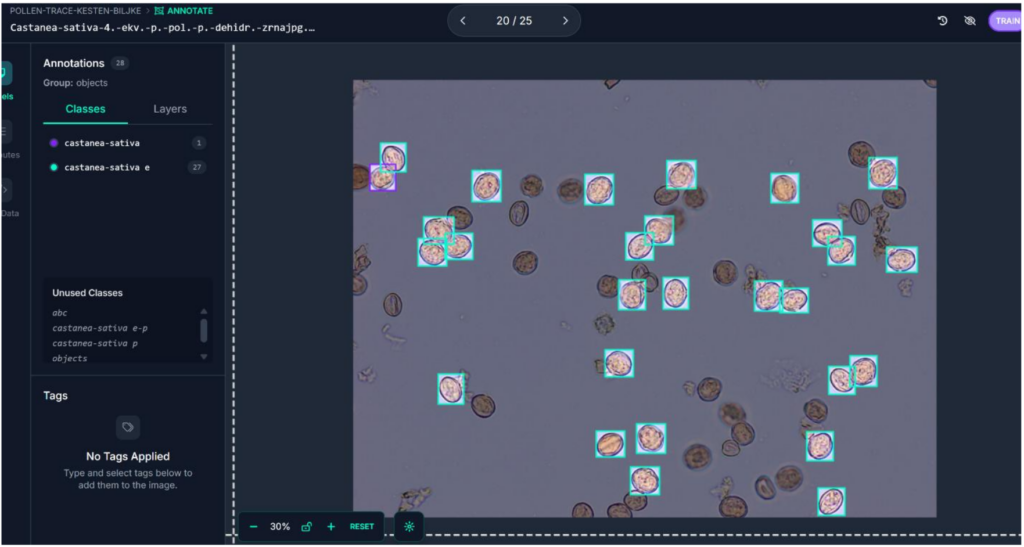
As part of the PoC, curated and annotated pollen datasets were prepared and processed using state-of-the-art object detection architectures. HPC resources provided through the NCC Montenegro cluster enabled efficient model training, large-scale evaluation, and rapid iteration, significantly reducing development time while ensuring robustness and reproducibility. The PoC demonstrated stable and reliable pollen detection performance (around / above 85% accuracy) on pollen extracted directly from honey, confirming that AI models can operate effectively in complex laboratory conditions. These results validate the feasibility of automating a traditionally manual process while maintaining scientific credibility and operational reliability.
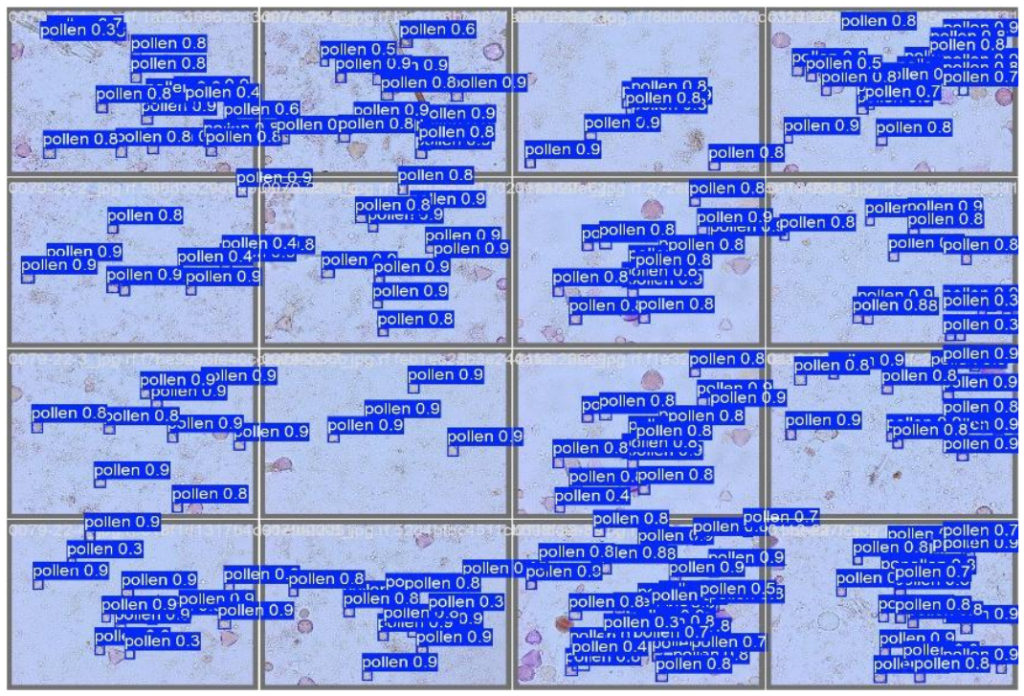
The project was co-funded by the Innovation Fund of Montenegro, supporting the transition from research to applied innovation. Validation was carried out with expert oversight from accredited laboratory professionals, demonstrating readiness for scaling and further integration into laboratory and HPC-enabled environments.
Benefits
- For honey producers and farmers: verified authenticity enables premium pricing, improved market access, and stronger protection against fraud
- For laboratories: automated analysis reduces manual workload, accelerates testing, and improves consistency of results
- For the honey industry: increased transparency and traceability strengthen consumer trust and product integrity
- For digital transformation: showcases the role of FoodHub CoE and NCC Montenegro in applying AI and HPC to agri-food quality control